
Motorcycle Brake Pads: What Buyers Should Look At Before They Order
Motorcycle brake pads are one of those parts that look simple right up until a buyer has to choose the right ones. In a workshop, on a parts shelf, or inside a procurement spreadsheet, they are never just “pads.” They are the friction interface that decides how a motorcycle, scooter, or small utility vehicle feels at the lever, how quickly it sheds speed, and how much service life a fleet can expect before the next replacement cycle. For sourcing teams and mechanics alike, the real question is not whether the pads fit a disc brake caliper in a general sense, but whether they match the rotor, the riding duty, and the maintenance rhythm the machine actually sees.
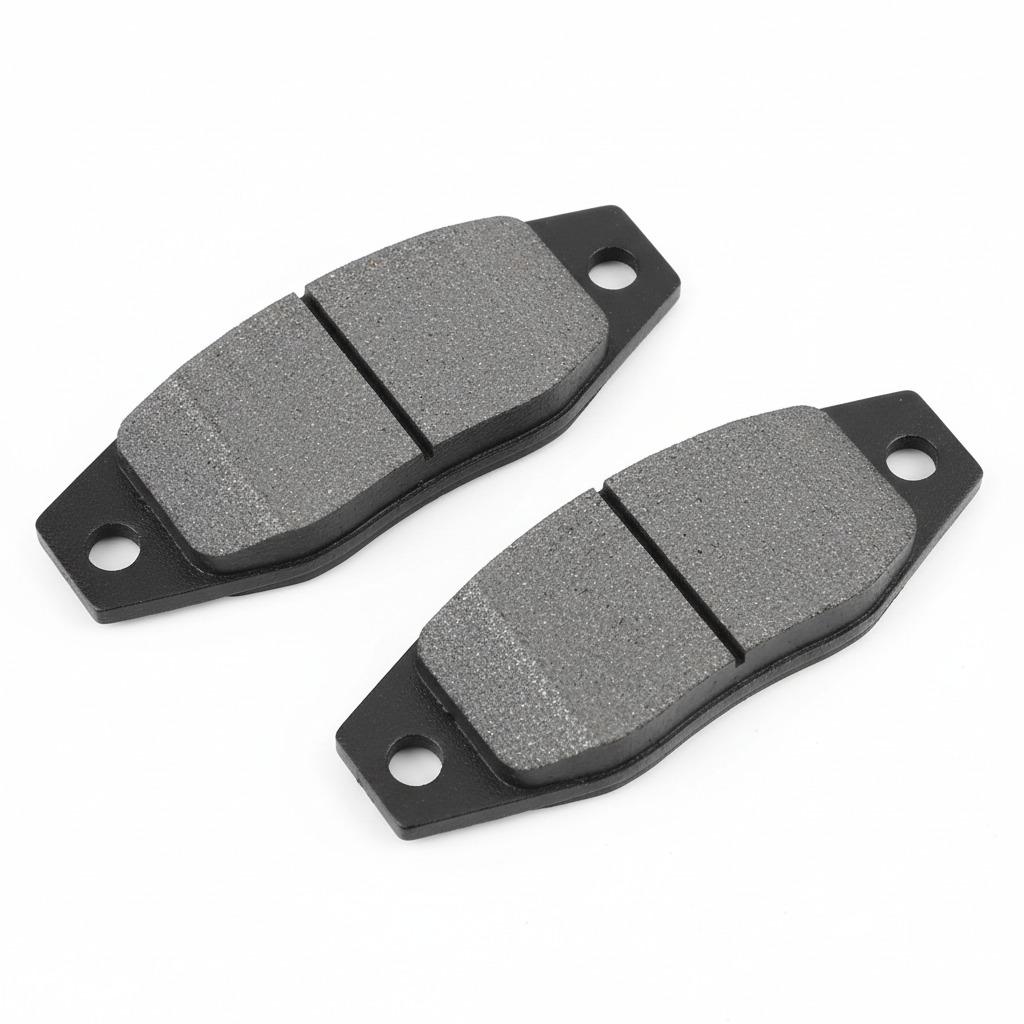
The visible product here is a matched pair of disc brake pads for motorcycles, with a curved profile, two mounting tabs or ears per pad, and three deep slots across the friction face. That alone already tells you something useful: this is a design meant to follow the rotor path closely and to manage heat, dust, and surface behavior in a controlled way. The gray, gritty lining suggests a sintered or semi-metallic style, though the exact compound cannot be confirmed from the image. For a buyer, that caution matters more than a glossy catalog description.
Why the Pad Design Matters More Than People Think
At first glance, a brake pad is just a shaped block of friction material bonded to a steel backing plate. In practice, the geometry and compound influence nearly every complaint riders bring to a service desk: noise, fade, dusting, uneven wear, lever feel, and wet-weather behavior. The pads shown here have three slots cut across the friction surface. Those slots are not decorative. They help manage debris, can reduce surface glazing, and give the pad a little breathing room as heat rises during repeated stops.
The curved outline is another practical detail. It helps the pad meet the rotor with a contact path that feels consistent rather than abrupt. The two mounting holes or locating holes on each pad are equally important from a maintenance standpoint. They suggest a pad style designed to be retained by hardware in a specific caliper arrangement, so fitment must be checked carefully rather than assumed from size alone.
For motorcycle brake pads, the wrong geometry can be more frustrating than the wrong material. A pad that is close but not exact may install poorly, rub oddly, or wear in a way that shortens service life. That is one reason experienced buyers ask for the caliper reference, the old pad sample, or a photo of both sides before placing a larger order.
Quick Reference: What You Can Tell from the Visible Features
If you are reviewing motorbike brake pads from a product image or a sample part, these are the details worth noting first:
The set contains two pads, which is the standard replacement format for one caliper position.
Each pad has a curved friction profile, indicating rotor-matching contact.
Each pad shows two mounting tabs or ears with circular holes.
The friction face has three deep grooves, a common feature for heat and debris management.
The surface looks speckled and uncoated, which is often associated with sintered or semi-metallic material, though that cannot be confirmed here.
Those are the kinds of observations that help a sourcing manager compare disc brake pads for motorcycles without guessing about specification details that are not visible.
Common Pad Types Buyers Will Run Into
Even when a supplier labels a part generically, motorcycle brake pads usually fall into a few broad families. The exact compound matters because it changes how the pad behaves under light city use versus repeated braking in heavier service.
Organic-style pads
These are often chosen for quieter operation and softer initial bite. They can be friendlier to rotors in some applications, but they may wear faster depending on duty cycle.
Semi-metallic pads
These typically balance stopping performance, durability, and cost. Many buyers like them for mixed riding conditions and general replacement stocking. They are common in applications where the user wants predictable braking without overthinking the compound.
Sintered pads
A sintered pad is generally associated with high durability and stronger performance in tougher conditions, though it can also be more abrasive on the rotor. The speckled, gritty appearance in the image is consistent with this family, but a buyer should never rely on appearance alone when the exact compound is not verified.
That last point is worth repeating because it comes up constantly in parts procurement: a pad can look metallic and still be manufactured differently than the next one on the bench. If the application is safety-critical, confirm the compound and vehicle fitment, not just the silhouette.
How These Pads Are Likely Built
The visible structure suggests a metal backing plate with friction material bonded or otherwise attached to it. In brake pad manufacturing, the usual process involves forming the backing plate, applying the friction material, and finishing the surface with slots, edges, or chamfers depending on the design. Some pads are molded and bonded; others use sintered material formed under heat and pressure. Without a cutaway or technical sheet, it is not safe to name the exact process for this part.
What matters from a buyer’s perspective is simpler: the backing plate needs to be rigid enough to support even pressure, and the friction material needs to stay stable under heat and repeated stops. The pad grooves in the image are a practical sign that the design is thinking about airflow, debris release, and consistency under load rather than just raw friction.
Selection Criteria That Save Trouble Later
When buyers are sourcing disc brake pads for motorcycles, the first temptation is to search by dimensions alone. That is not enough. Two pads can look nearly identical and still differ in hole spacing, overall height, or the way the retaining tabs engage the caliper.
A better buying checklist looks like this:
Fitment to the exact caliper or original pad reference
Rotor compatibility and expected wear behavior
Riding environment: city commuting, delivery duty, wet conditions, or heavier stop-and-go service
Noise sensitivity, especially for fleets or shared vehicles
Expected maintenance interval and stocking strategy
Visual consistency across batches, including slot placement and backing plate finish
For fleets or repair networks, the operational question is not “Which pad is best in theory?” It is “Which pad will stay predictable across a stock room, a busy shop, and a varied set of riders?” That is where a stable, repeatable motorbike brake pad specification matters more than marketing language.
Common Mistakes Buyers Still Make
One frequent mistake is mixing up similar-looking pads from different caliper families. Another is assuming that a grooved pad is automatically a premium pad. Grooves can be useful, but they do not make a bad compound good.
A second mistake is ignoring rotor condition. New motorcycle brake pads on a badly worn rotor can behave unpredictably, especially if the rotor has uneven scoring or thickness variation. In maintenance work, the pad and rotor are a system, not separate purchases.
A third mistake is underestimating application differences. A scooter used for deliveries in wet urban traffic does not always want the same pad character as a weekend motorcycle used for short leisure rides. The hardware may fit in both cases, but the service expectations are not the same.
Practical Buyer Advice for Sourcing Teams
If you are buying in volume, ask suppliers for the most boring details they have. The boring details are the ones that keep the parts from coming back. Request the exact fitment reference, the pad shape code if available, photos of both faces, and confirmation of the friction material family when that information is known. If the vendor cannot confirm compound type, treat the product as a generic replacement item and test it accordingly before committing to a larger stocking order.
It also helps to keep a reference pad from the field. A used original part, labeled by model or caliper reference, can eliminate a lot of uncertainty when comparing motorbike brake pads across suppliers. This is especially useful when the visible differences are subtle: hole placement, ear shape, slot count, or backing plate curvature.
For aftermarket stocking, consistency is often more valuable than chasing a tiny performance edge. Repair shops need parts that install cleanly and behave the same way from batch to batch. That is where careful inspection of disc brake pads for motorcycles pays off.
FAQ
Are these pads only for motorcycles?
Not necessarily. The visible style could also suit scooters, small ATVs, or other vehicles that use similar disc brake systems. Exact fitment still has to be verified.
Can I identify the material just from the image?
No. The surface looks like a sintered or semi-metallic compound, but that cannot be confirmed without technical data.
Do the grooves mean better braking?
Not automatically. Grooves can help with heat management and debris release, but braking performance depends on the full pad design, the rotor, and the application.
Why are the mounting holes important?
They help locate or retain the pad in the caliper. Hole spacing and tab geometry are part of fitment, not just appearance.
A Final Note for Buyers and Technicians
Brake parts are easy to underestimate until a machine starts coming back with noise, fade, or premature wear. The pads shown here are the kind of straightforward replacement item that looks routine but still deserves careful checking. If you are sourcing motorcycle brake pads for maintenance, repair, or stocking, focus on fitment, pad shape, hardware interface, and confirmed material family before you place a repeat order. That small discipline usually costs less than sorting out an unhappy install later.