
Motorcycle brake pads: the small part that decides how a bike feels at the lever
Motorcycle brake pads are one of those wear parts people tend to notice only when they start to complain. A lever that feels wooden, a front end that chatters under light braking, or a stop that takes a little too much room all point back to a component that is small, hidden, and doing hard work every time the wheel turns. For anyone sourcing replacement parts, the decision is not just about getting the bike moving again. It is about restoring predictable braking, protecting the disc, and avoiding the sort of “cheap fix” that creates a second repair job later.
That is especially true for disc brake pads for motorcycles used on compact bikes, scooters, and some ATV-style applications. The pad shape in this category is often small, curved, and built around a single mounting ear or hole, which means the geometry matters as much as the friction face. If the pad profile is wrong, even by a little, the caliper may not seat properly or the wear pattern can become uneven.
What buyers are really trying to solve
A sourcing manager, workshop owner, or product team usually comes to brake pads with a practical question: which replacement will keep the vehicle safe, quiet enough, and serviceable without unnecessary inventory risk? That sounds straightforward, but the market is full of lookalike parts.
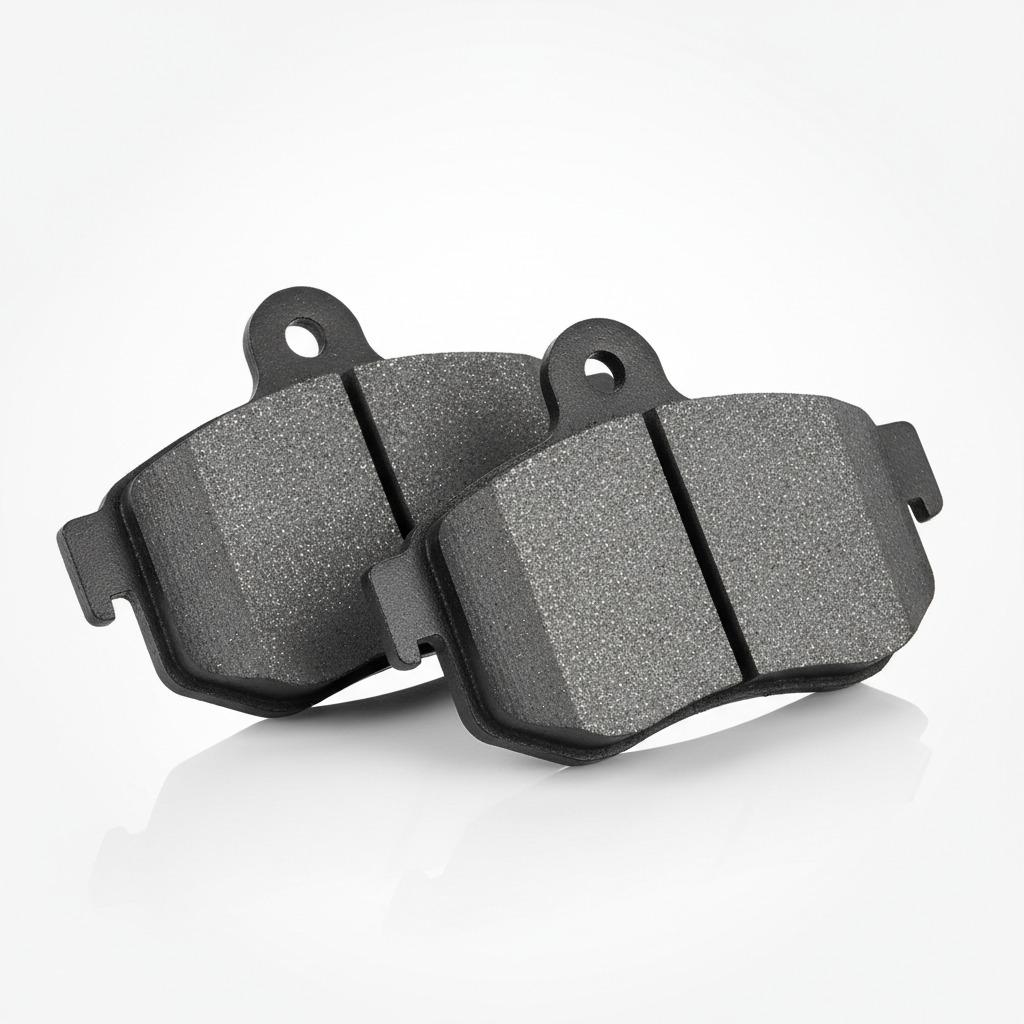
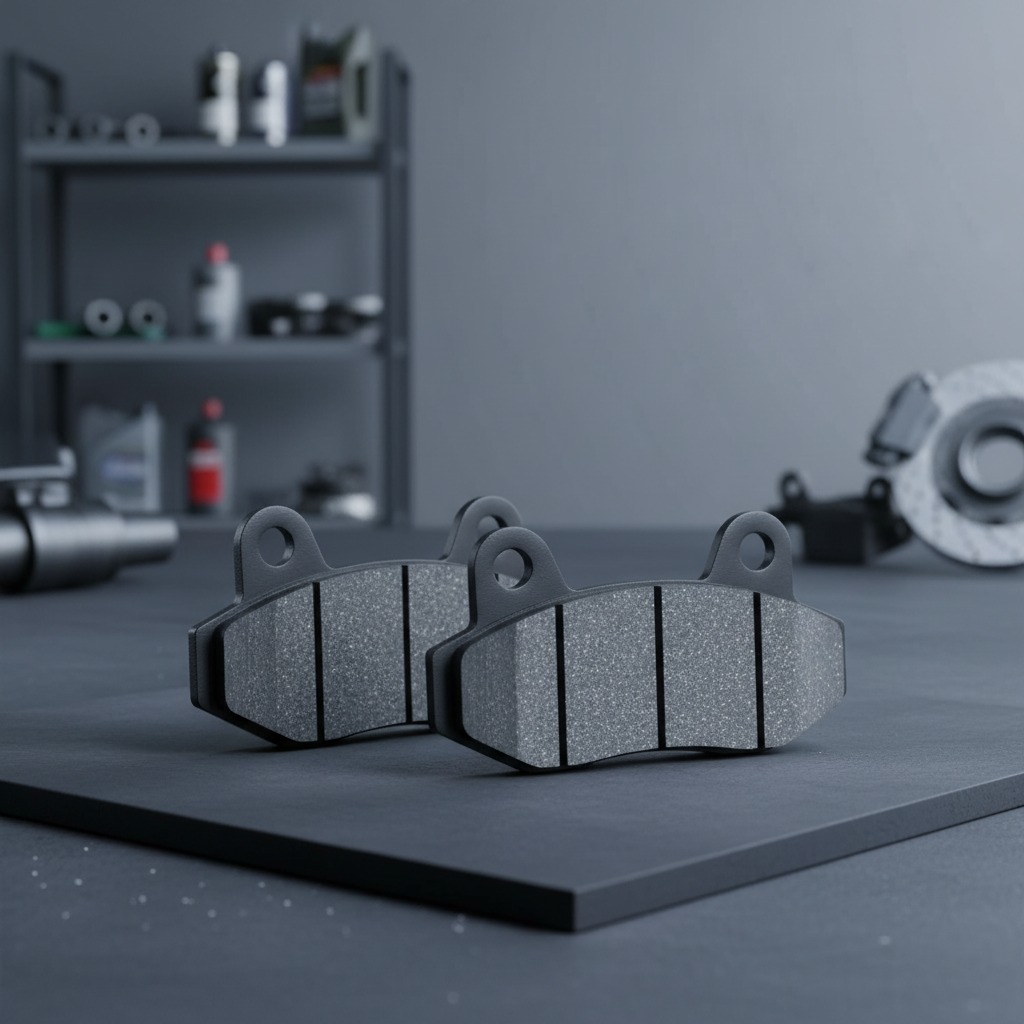
The visible pad style described here has a dark gray to black friction block, a black metal backing plate, a curved outer profile, and three visible grooves or slots across the face. Those grooves are not decorative. In many pad designs, slots help manage dust, water film, and heat behavior at the surface. They also give the eye a quick cue that the pad is meant for disc brake service, though the exact compound still cannot be identified from appearance alone.
For buyers, the key issue is fitment. A pad can look right and still be wrong in thickness, mount shape, or caliper contact area. That is why motorbike brake pads should be selected from verified vehicle references, not just from a photo that seems close enough.
What this pad style tells you at a glance
There are a few practical clues in this type of pad assembly.
The curved contact surface suggests it is designed to match a round brake disc and maintain contact across a broad arc rather than a flat edge. The single mounting ear with a hole indicates a compact caliper layout, common in smaller displacement motorcycles and scooter brake systems. The pair of identical pads also matters: many disc brake calipers use mirrored or matched pads that work as a set, so buying one side only is usually a mistake.
The coarse, speckled friction face may indicate a bonded composition intended for everyday service rather than a purely decorative or experimental part. Still, the exact friction compound is unknown from the image, and it would be unwise to promise temperature behavior, dust output, or noise performance without test data.
How motorcycle brake pads are built
Most replacement pads in this category are bonded assemblies. In plain terms, a friction material block is attached to a stamped or formed metal backing plate. The backing plate provides stiffness, helps transfer brake force, and gives the caliper something solid to push against.
That construction is simple, but the details matter.
Friction material
The friction block is the part that contacts the disc. Its job is to trade material for stopping power in a controlled way. Different compounds behave differently under heat, wet conditions, and repeated stop-and-go use. Without exact compound data, a buyer should treat the pad as a service part first and a performance part second.
Backing plate
The black metal backing plate helps support the block and maintain shape. A well-formed plate can contribute to steadier pedal or lever feel. If the plate is thin, bent, or poorly stamped, the pad may sit unevenly in the caliper.
Slots and surface texture
The three grooves across the friction face are worth noting. In real-world use, slots can help manage surface glazing and allow the pad to clear water or debris more effectively. They can also slightly change the way the pad bites at the beginning of braking. That does not make a slotted pad automatically better, but it does make it a sensible design choice in many everyday braking systems.
Motorcycle brake pads versus other small-vehicle pads
A lot of confusion in the aftermarket comes from the fact that motorbike brake pads, scooter pads, and ATV pads can share visual traits. The problem is that shape similarity does not guarantee interchangeability.
A scooter pad may have the same general curved profile but a different ear position. An ATV pad may look similar in outline yet differ in thickness or caliper clearance. Disc brake pads for motorcycles also vary widely by model family, even within the same brand. That is why cataloging should rely on exact part references, vehicle fitment data, or a measured sample.
If you are buying in volume, it is worth building a cross-check process around the pad outline, mounting hole location, backing plate shape, and wear envelope. A single mismatch can tie up stock and create return costs that erase any savings from a low unit price.
What to check before placing an order
This is where a careful buyer saves time later.
First, confirm the vehicle application. Do not rely only on “motorcycle” as a category. Small brake pad assemblies can be close enough to fool the eye but not close enough to fit.
Second, confirm whether the caliper uses a matched pair, and whether springs, pins, clips, shims, or wear indicators are part of the assembly. None of those extras should be assumed unless they are clearly supplied.
Third, ask for dimensional references if you are sourcing the part for the first time. Even basic outline checks can prevent a great deal of grief. If the sample has a single mounting ear with a hole, make sure the caliper hardware matches that format.
Fourth, think about the use case. A daily commuter scooter, a city motorcycle, and a lightly loaded utility ATV do not ask the same thing from a pad. A part that works adequately in one service pattern may feel vague or fade sooner in another.
Common mistakes buyers make
The most common error is treating friction material as a commodity with no real consequence. It is not. A poor pad choice can create noise, dust, rotor wear, or inconsistent lever feel. Even if the motorcycle stops, it may not stop in a way the rider trusts.
Another mistake is ignoring pad wear shape. If the removed pad shows taper wear, uneven glazing, or one edge eaten down faster than the rest, the caliper or sliding hardware may need attention too. Replacing only the pad without checking the system can hide the real issue.
There is also a habit of over-trusting photos. A clean product image is helpful, but pad geometry should never be approved from appearance alone. The market is full of near matches.
Practical buyer advice for sourcing and service teams
If you are maintaining stock for a workshop or parts business, it helps to separate reference samples by vehicle family and not by “generic motorcycle pad.” That is especially useful for compact brake pad designs with similar silhouettes.
When evaluating a supplier, ask for the same kind of information your technicians would need at the bench: fitment references, outline drawings if available, and confirmation of what is included in the box. If the answer is vague, the part probably needs more checking.
For service teams, a short road-test follow-up after installation is still worthwhile. The first few stops often reveal whether the pad seats cleanly and whether the lever feel is consistent. That is a small detail, but it is the sort that separates a decent repair from a frustrating comeback.
FAQ
Are all motorcycle brake pads interchangeable if the shape looks close?
No. Shape similarity is not enough. Mounting ear position, thickness, and caliper clearance all matter.
Can I identify pad compound from the photo alone?
Not reliably. The friction face gives some visual clues, but compound type, heat behavior, and dust performance need proper product data.
Do slots on the pad face guarantee better braking?
Not automatically. Slots can help with debris and surface behavior, but braking performance depends on the full pad design and the rest of the system.
Should replacement pads always come as a pair?
Usually yes for a single caliper position, though the exact packaging depends on the application. In practice, buyers should verify whether the vehicle uses mirrored pads or another layout.
A sensible next step
If you are sourcing motorcycle brake pads for inventory, repair work, or private-label evaluation, start with the vehicle fitment data and the pad geometry, not the marketing description. The part shown here is a compact bonded pad assembly with a curved friction face, slotted surface, and single-hole mounting ear, which makes it useful as a reference type for small disc brake systems. The right choice still depends on exact application details, but that is the point: braking parts reward careful checking.
When in doubt, compare the removed pad, verify the mounting layout, and keep the order tied to the actual caliper rather than to a broad category name. That extra half hour is usually cheaper than a wrong shipment.