
Motorcycle Brake Pads: What Buyers Should Look for Before They Order
Motorcycle brake pads do one job, but it is a job with very little margin for error: they turn rotor speed into heat and let the rider slow down with confidence. For sourcing managers, service shops, and product teams, that sounds straightforward until the buying list gets messy. One pad looks similar to another, the fit is not always obvious from a photo, and the wrong compound can feel noisy, grabby, or simply too short-lived for the application. If you are selecting motorcycle brake pads for maintenance stock or a replacement program, the real question is not just “will it fit?” It is “will it perform consistently in the conditions this machine actually sees?”
The small details matter. A pad shape with a curved outer profile, chamfered edges, and grooves across the friction face may look ordinary, but those features affect how the pad beds in, how it sheds dust, and how smoothly it contacts the disc. That is why buyers often need more than a part image. They need a practical way to compare pad types, understand manufacturing cues, and avoid purchasing a close-looking substitute that turns into a returns problem.
Quick takeaways for sourcing and maintenance teams
If you are reviewing motorbike brake pads for a catalog, workshop shelf, or fleet maintenance list, these are the points that usually matter first:
The pad is a wear part, but not a commodity in the loose sense. Fit, compound, noise behavior, and heat resistance all influence rider feel and stopping consistency.
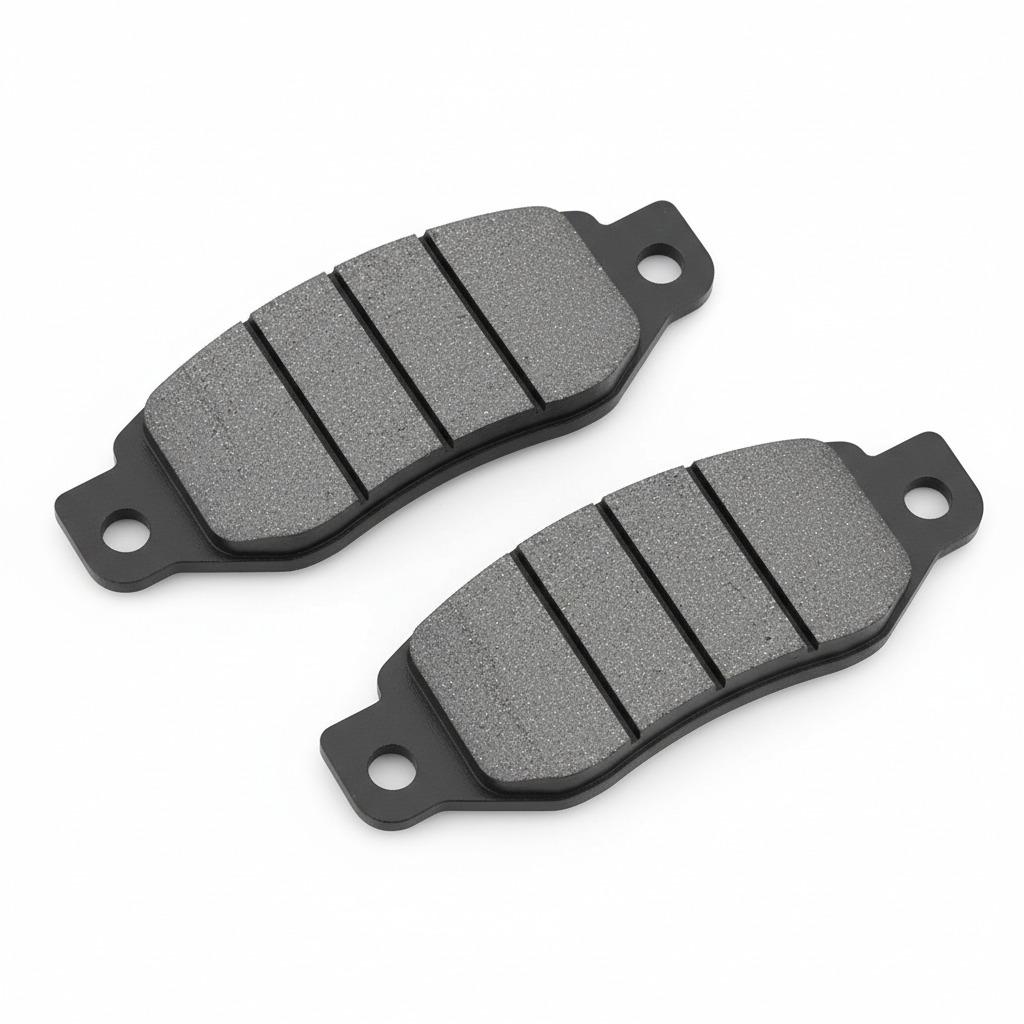
The visible construction in the supplied product information shows a matched pair of pads with a dark composite friction layer on a black metal backing plate. That is typical of a disc brake pad design, but the exact compound cannot be confirmed from the image alone.
Grooves, angled edges, and the mounting tab are not decorative. They help with installation, alignment, and sometimes with heat or debris management.
For procurement, the most common mistake is choosing by shape only. Shape is necessary, but not sufficient. Compatibility has to be verified against the caliper and rotor setup, and the buyer should confirm the friction material category before assuming interchangeability.
What the visible pad design tells you
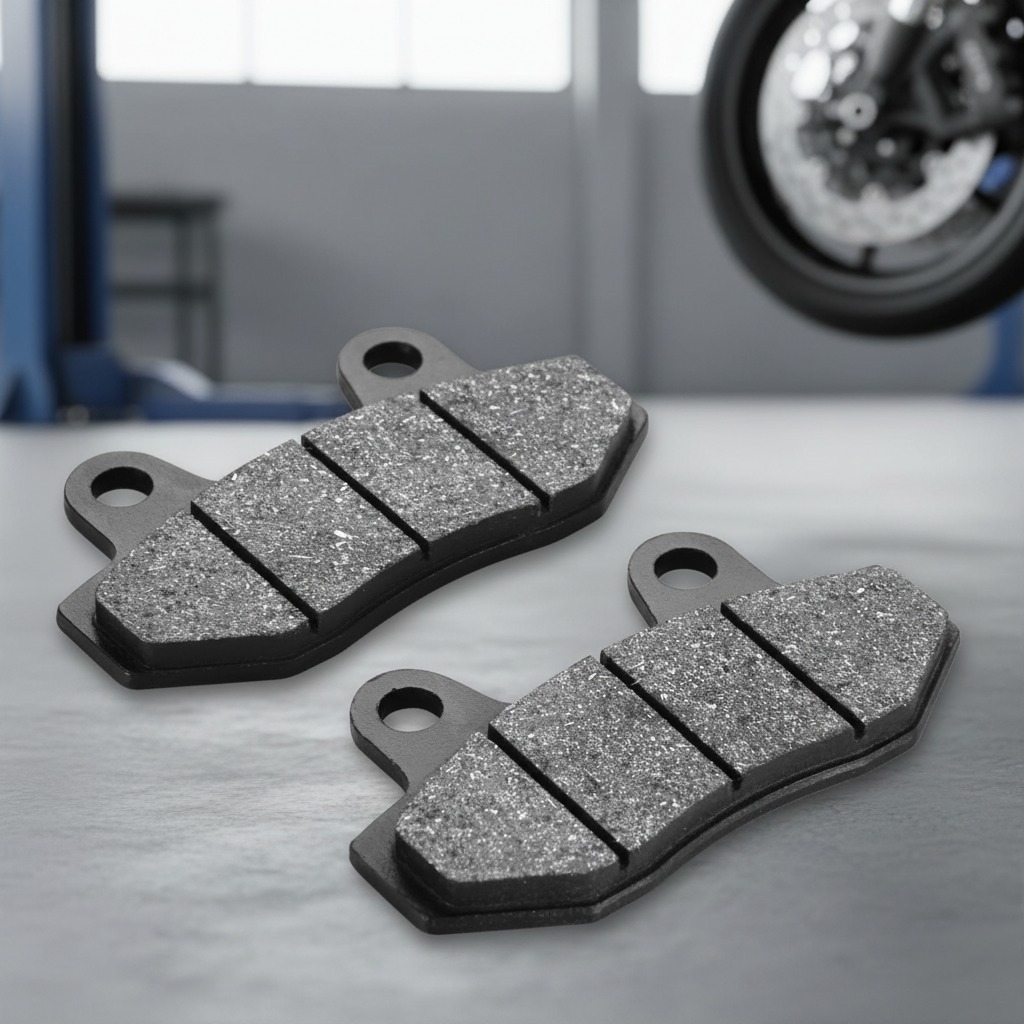
The pictured disc brake pads for motorcycles show several features that are worth reading like clues rather than marketing copy. Each pad has a curved outer profile and a single mounting ear or tab with a hole. That geometry suggests a pad intended to sit securely in a specific caliper design, where the tab helps locate the pad during installation and service.
The friction surface has three visible grooves running across it. In practical terms, grooves are often used to manage surface behavior as the pad wears. They may help break up glazed material, give water or dust somewhere to go, and create a cleaner initial contact pattern on the rotor. They are not a guarantee of quieter braking, and they are not a substitute for the right compound, but they are a meaningful feature when you are comparing alternatives.
The leading and trailing edges appear chamfered or angled. That is another common detail in brake pad production. A chamfer can reduce abrupt contact at the edge of the rotor and may soften initial bite. On some motorcycles, that creates a more predictable lever feel. On others, the difference is small. Still, it is the kind of detail a careful buyer notices because it can influence both feel and wear pattern.
Brake pad materials: why the compound matters more than the shape
When buyers discuss motorcycle brake pads, they often start with fitment. Fair enough. But the friction compound is what determines much of the real-world behavior once the pad is installed. The supplied information describes a dark composite lining with a granular, pressed or sintered appearance, but it does not confirm the exact formulation. That caution matters.
Broadly speaking, brake pad compounds for motorcycles can vary in how they trade off bite, noise, dust, heat tolerance, and rotor friendliness. A pad that works well on a commuter scooter may feel underwhelming on a heavier road bike or too harsh for a light machine used in stop-and-go delivery work. Likewise, a pad that is durable under repeated heat cycles may not offer the soft lever response some riders prefer.
For sourcing teams, the lesson is simple: do not assume a pad is interchangeable just because it looks similar in outline. Compound choice is application choice. If a supplier cannot clearly state the material category, the buyer should treat that as a gap, not a minor detail.
How these pads are typically made
The production path for brake pads usually combines a metal backing plate with a friction block that is pressed or bonded into place. In the supplied product information, the black steel backing plate and the dark friction layer fit that general model. Exact chemistry is not visible here, and it would be wrong to invent it, but the basic manufacturing logic is familiar across the sector.
A reliable pad starts with a stable backing plate. That plate has to hold the friction material firmly, transfer clamping force from the caliper, and resist distortion under heat. The friction material itself is then formed to match the intended shape, including the grooves, curved perimeter, and edge treatment. After that, manufacturers may finish the pad to improve consistency, fit, or surface condition. The final result looks simple in a parts tray, but the manufacturing tolerances behind that simplicity are where quality is won or lost.
This is why two pads that look nearly identical can behave differently on the road. One may have a more even bond line, cleaner edge formation, or better control of material density. Those differences are not always visible in a product photo, which is why reputable buyers ask for more than appearances.
Common buyer mistakes with motorcycle brake pads
One mistake is ordering by visual similarity alone. A curved profile and a single tab can still hide differences in thickness, hole placement, backing plate shape, and caliper interface. Even small deviations can create fitment problems.
Another mistake is assuming all disc brake pads for motorcycles will suit the same use case. A shop may stock a pad for fast turnover, but if the vehicle sees frequent load, wet riding, or urban braking, the duty cycle changes the requirement. The part may fit and still be the wrong answer.
A third mistake is ignoring the wear pattern on the old pad and rotor. If the original pads wore unevenly, glazed, or produced noise, replacing them with a visually similar part without checking the caliper condition can simply repeat the problem. Brake service is not only a parts replacement exercise; sometimes it is a system diagnosis.
How to evaluate a replacement pad before you commit
Buyers do not always have the luxury of lab data, and that is normal. Even then, there are practical checks that reduce risk.
First, confirm the pad shape against the caliper’s required geometry, not just against a catalog description.
Second, ask whether the friction compound is intended for the machine’s weight, use pattern, and braking load. The answer does not need to be elaborate, but it should be clear.
Third, inspect the pad features that are visible: grooves, chamfers, mounting tab design, and backing plate finish. These details help indicate whether the pad is designed as a serious replacement part or simply a generic lookalike.
Fourth, consider how the pad will be stocked or used. A maintenance warehouse for mixed two-wheel fleets may need a broader selection than a single-model retail shelf. In that setting, labeling and traceability are as important as the pad itself.
Motorbike brake pads in real-world use
In daily service, brake pads are judged less by technical language and more by how they feel after installation. Riders notice initial bite, lever progression, noise, and whether the brakes stay consistent as the rotor heats up. Shop technicians notice whether the pad seats cleanly, whether the hardware fits without drama, and whether the wear pattern looks even after a short run-in period.
That is why a good sourcing decision should reflect the end use. A commuter motorcycle that stops and starts all day may need a different balance than a scooter used for short urban trips or an ATV working on rough ground. The friction face on the pad is only one part of the story, but it is the part most directly tied to the rider’s confidence.
Practical checklist for sourcing teams
Before you place an order, keep the check simple and disciplined:
Confirm pad shape and mounting interface.
Verify the vehicle or caliper application, not just the product photo.
Ask what compound category the pad belongs to if that information is available.
Check whether the pad is sold as a matched pair, as shown in the supplied product information.
Review whether grooves, chamfers, and backing plate details match your performance expectations.
If the supplier cannot answer basic compatibility questions, pause. A brake part is one place where a cautious delay is cheaper than a field failure.
FAQ
Are these pads only for motorcycles?
Not necessarily. The supplied information indicates they are likely suitable for motorcycles, scooters, ATVs, or other small disc-brake systems that use this pad shape. Exact compatibility still has to be verified.
Do the grooves mean better braking?
Not automatically. Grooves can help with surface management and debris handling, but braking performance depends on the full pad design, the rotor, and the vehicle setup.
Can I identify the exact compound from the image?
No. The surface appears dark and granular, possibly pressed or sintered in appearance, but the exact material formulation is not verifiable from the image alone.
Why do small geometry details matter so much?
Because brake pads live in a tight mechanical space. A small difference in tab shape, hole placement, or edge profile can affect fit, feel, and wear.
What to do next
If you are sourcing motorcycle brake pads for replacement, stocking, or product development, treat the visible pad shape as the starting point, not the finish line. Compare the geometry, confirm the application, and ask for the compound description before you lock in a purchase. That approach takes a little more time at the front end, but it is usually the difference between a clean installation and an avoidable return.
For buyers managing recurring maintenance needs, the safest path is to standardize part verification: shape, fitment, material category, and intended use. It is not glamorous work, but brake parts rarely reward shortcuts.