
What a Coffee Machine Has to Do Well Before It Looks Good on the Counter
A coffee machine can win a place in a kitchen for very different reasons. Sometimes it is all about convenience. Sometimes it is the pull of a proper espresso shot, the kind that lands in a small cup with a layer of crema and enough body to stand up in milk. The compact countertop espresso machine described here sits in that second camp. It looks built for people who want more control than a basic drip brewer gives them, but do not need a full commercial footprint taking over the room.
That distinction matters. Buyers comparing an espresso machine, a home coffee machine, or a more general coffee maker are usually trying to solve one of three problems: speed, drink quality, or consistency. The right choice depends on which of those matters most, and whether the machine will live in a home kitchen, office pantry, or a small hospitality corner where a few drinks an hour is the real workload.
Quick read: what this type of machine is best for
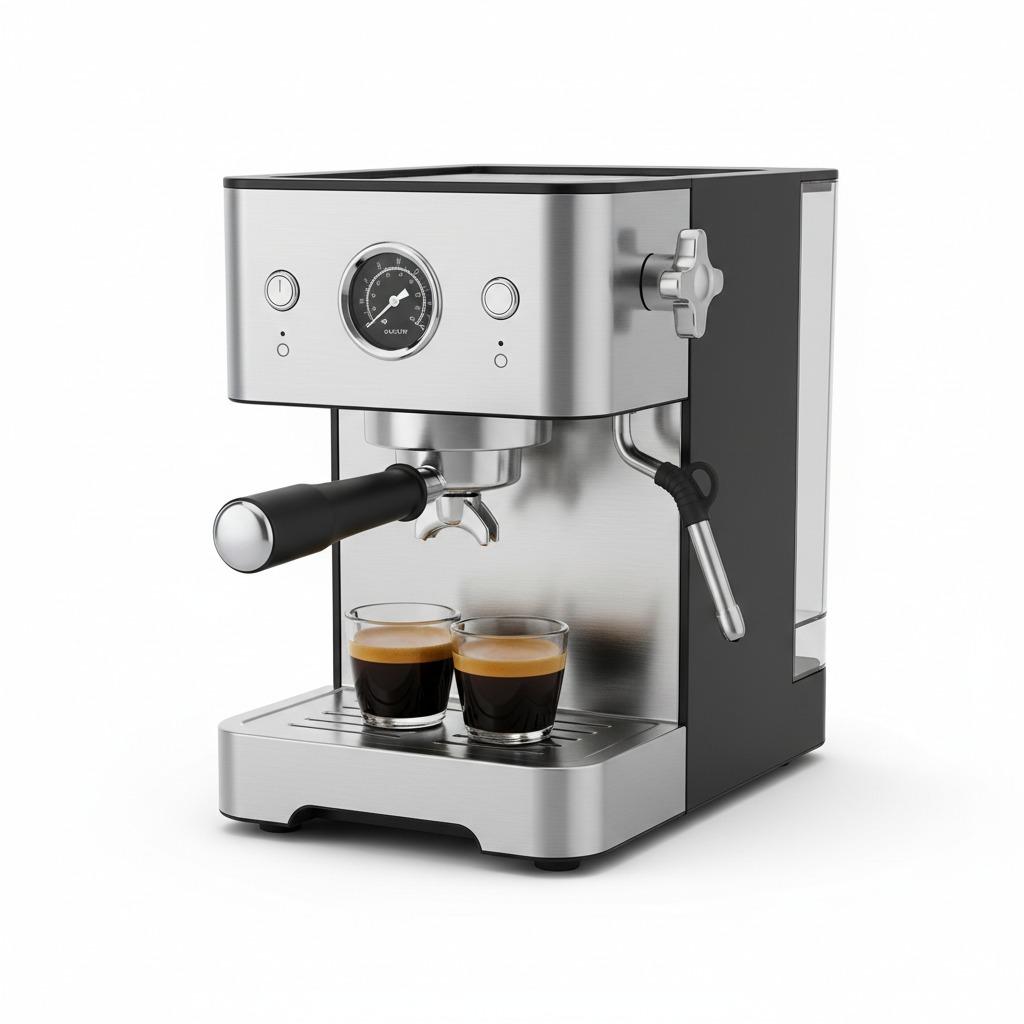
This style of machine is aimed at users who want espresso-based drinks without moving into a larger barista setup. The visible pressure gauge suggests the operator can watch extraction behavior rather than guessing. The portafilter group head points to semi-automatic brewing, so the user is likely grinding separately, dosing, tamping, locking in the portafilter, then starting and stopping the shot.
The side steam wand adds another layer of usefulness. If it performs well, the machine can support cappuccinos, lattes, and other milk drinks, not just straight espresso shots or americanos. That makes it more flexible than many small brewers, but also more demanding. Anyone buying this category should expect a bit of learning. Espresso is not a push-button habit unless the machine has more automation than this one visibly shows.
What the visible design tells you
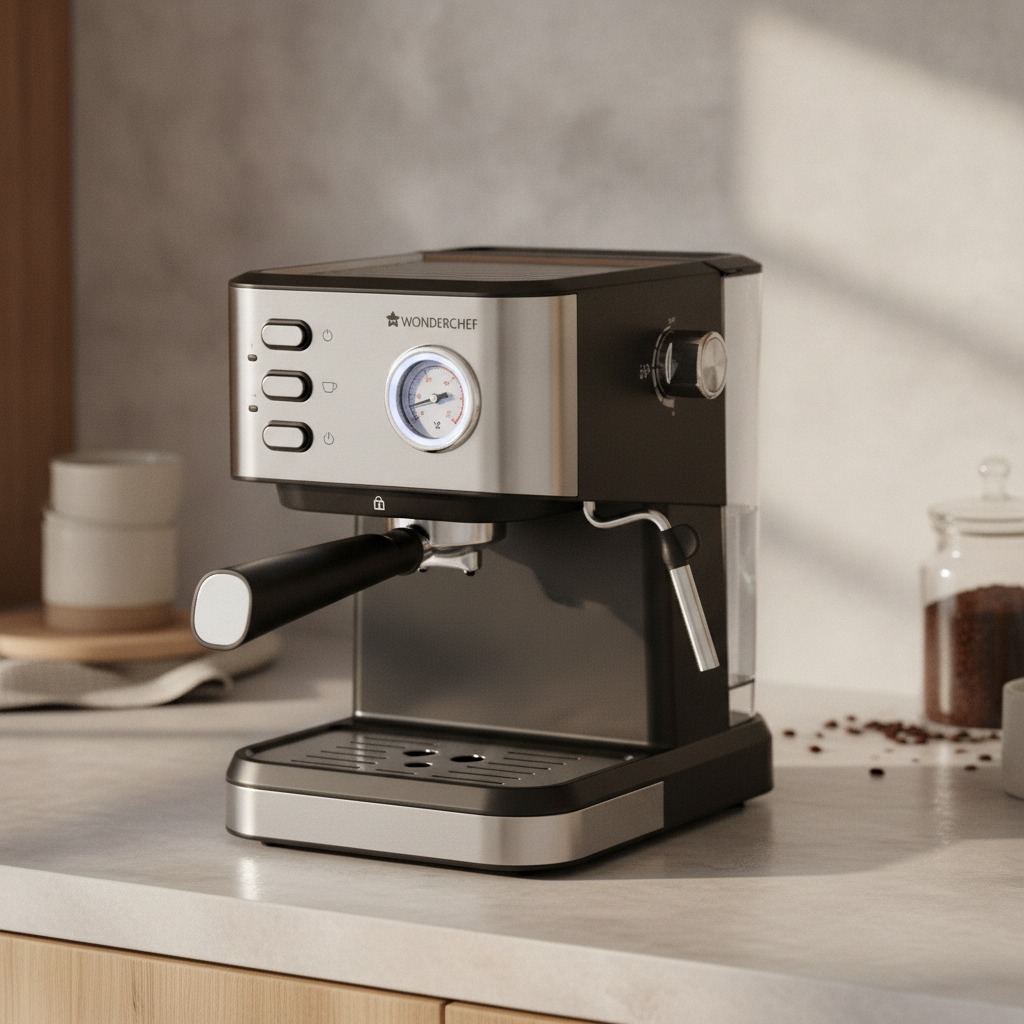
The machine has the familiar language of a compact espresso appliance: brushed stainless-steel front and top, black side housing, a chrome-toned control knob on the right, three front push buttons, and a central analog pressure gauge. That combination usually signals a product meant to look serious without occupying much space.
The compact rectangular body and rounded edges are practical as much as aesthetic. A smaller footprint matters on crowded countertops, especially in homes where the coffee station shares space with a toaster, kettle, or dish rack. The elevated brew head and front-access drip area are sized for espresso cups, which is a helpful sign. It suggests the machine was not designed as a generic beverage appliance, but as a focused espresso platform.
One detail worth noting is the removable-looking water reservoir on the right side. For buyers, that usually means easier filling and cleaning. It also hints at how the machine will be used day to day: not tucked away and forgotten, but handled regularly.
How it likely works in practice
The visible setup points to semi-automatic espresso extraction. In plain terms, that means the machine likely handles pressure and heat internally, while the user controls the coffee dose, tamp, and shot timing. That is the sweet spot for many home users because it offers a genuine espresso routine without the complexity of a fully manual lever machine.
The pressure gauge is more than decoration. A gauge can help the operator notice when a shot is under-extracted or choked, though it is not a magic answer on its own. Grind size, tamping pressure, basket fill, and coffee freshness still do most of the work. Buyers sometimes overrate the gauge and underrate the grinder. That is a common mistake. A good espresso machine cannot rescue stale beans or a mismatched grind.
The steam wand, meanwhile, is a separate decision point. Some buyers only care about espresso, but many end up wanting milk drinks after a few weeks. A wand makes the machine more versatile, yet it also means there is another skill to learn and another part to clean. If the machine will be used by several people in an office or hospitality setting, that tradeoff needs to be understood up front.
Choosing between a coffee machine and an espresso machine
The terms get blurred in retail listings, but the drinking experience is different.
A coffee machine usually means a broader category: drip brewers, pod machines, bean-to-cup units, and other appliances that make coffee with minimal user involvement. An espresso machine is narrower and more hands-on. It uses pressure, a portafilter, and finer control over the extraction process.
If the goal is to serve several long mugs quickly, a simpler coffee maker may be the better fit. If the goal is concentrated espresso shots, milk drinks, or a more cafe-like result, the espresso machine earns its place. For some buyers, the decision is not either/or. They keep a home coffee machine for everyday use and add an espresso machine later for weekend drinks or guests.
Selection criteria buyers should actually care about
Footprint and layout
Counter space is often the first constraint. This machine’s compact desktop shape makes it attractive for smaller kitchens and service areas. Check clearance above the unit for cup handling and enough side access for the reservoir and steam wand.
Control style
Three front buttons and a right-side knob suggest a straightforward interface. That is good for shared use, but only if the labeling and behavior are intuitive. In a workplace, an overcomplicated machine becomes the one people avoid.
Milk-drink support
A steam wand is only useful if it heats and textures milk consistently enough for the drinks you actually serve. The image confirms the wand exists; it does not confirm its performance. That is an important caution. A wand can look promising and still be slow or awkward in daily use.
Maintenance access
Small appliances live or die by cleaning. A removable drip tray, accessible reservoir, and easy-wipe stainless front are all helpful in real use. Espresso machines collect splashes, coffee oils, and milk residue quickly. Any design that makes daily cleaning feel like a chore will be neglected.
Common mistakes when buying this kind of machine
The first mistake is assuming the machine itself replaces technique. It does not. Even a well-built espresso machine depends on grind quality and dose consistency.
The second mistake is overlooking beverage volume. A compact espresso machine is not the right tool for continuous high-volume service. It may be perfectly fine for a family, an office pantry, or a boutique counter, but not for a rush-hour café line.
The third mistake is ignoring the water system. A visible reservoir is convenient, but users still need to think about refilling habits, cleaning intervals, and scale buildup. In many regions, water quality affects both flavor and machine life more than buyers expect.
The fourth mistake is treating the steam wand as a bonus rather than a feature. If milk drinks are central to the buying decision, the wand should be evaluated alongside the brew function, not after it.
What the manufacturing side likely looks like
From the outside, this looks like a small appliance assembled from formed metal panels and molded plastic housing parts. That is common in this class of product because it balances cost, appearance, and serviceability. The brushed stainless surface gives a premium feel where the user sees and touches the machine most often, while the internal chassis and side panels can be built more economically.
The important caution here is that visible metal does not tell the whole story. The internal pump, heating system, and thermal control approach are not visible in the provided information, so it would be unwise to assume a specific boiler type or advanced temperature control system. For sourcing teams, that means asking for the technical documentation rather than relying on the exterior finish.
Practical buyer advice for homes, offices, and small hospitality spaces
For a home kitchen, this style of machine makes sense if the household wants espresso drinks often enough to justify the learning curve. For an office pantry, it is a good fit when a few people are willing to maintain it and share basic operating rules. For a small café, lobby, or hospitality counter, it may work as a secondary unit or for low-volume service, but only if throughput expectations stay realistic.
A buyer should also think about who will clean the machine. That sounds mundane, but it is usually the deciding factor. Espresso residue and milk film do not wait politely. If nobody owns the cleaning routine, the machine’s performance and appearance both decline fast.
FAQ: the questions people ask before buying
Is this a coffee machine or an espresso machine?
It is best described as a countertop espresso machine, though people often fold it into the broader coffee machine category. It is aimed at espresso shots and likely milk-based drinks.
Can it make cappuccinos and lattes?
The visible steam wand suggests yes, provided the wand produces enough steam performance for milk texturing. The exact result will depend on the unseen heating system and the user’s skill.
Does the pressure gauge guarantee better espresso?
No. It helps monitor extraction, but good espresso still depends on grind, dose, tamp, and fresh coffee.
Is it suitable for a small office?
Probably, if the drink volume is modest and someone is responsible for refilling and cleaning. It is more suitable for light to moderate use than for heavy service.
A sensible next step before you buy
Treat this machine as a focused espresso tool, not a universal coffee solution. If your priority is compact size, visible control, and the option to make milk drinks, it has the right external signals. If your priority is push-button convenience or high-volume output, keep looking.
Before purchasing, ask for the missing technical details: heating system type, water tank capacity, exact control functions, and any maintenance requirements that affect day-to-day use. Those answers matter more than the stainless front panel, even if the panel is what catches the eye first.