
Battery selection starts with the job, not the label
A Battery can look simple from the outside and still create expensive mistakes at the sourcing desk. A black case, two top posts, a few numbers on the label—12V, 110Ah, 770A—and yet those figures only make sense when you know what the battery is supposed to do. Is it starting an engine? Running auxiliary loads? Backing up equipment when mains power drops? The answer changes everything.
For engineers and buyers, the real task is not “find a battery.” It is to match stored-energy requirements, starting current, installation constraints, and service expectations without overbuying or under-specifying. That is especially true for a sealed multipurpose lead-acid battery such as the XP31MF shown here. On paper it has the familiar profile of a 12V automotive or deep-cycle style unit, but that broad category still leaves room for variation in fitment, duty cycle, and lifecycle performance.
What the visible specifications actually tell you
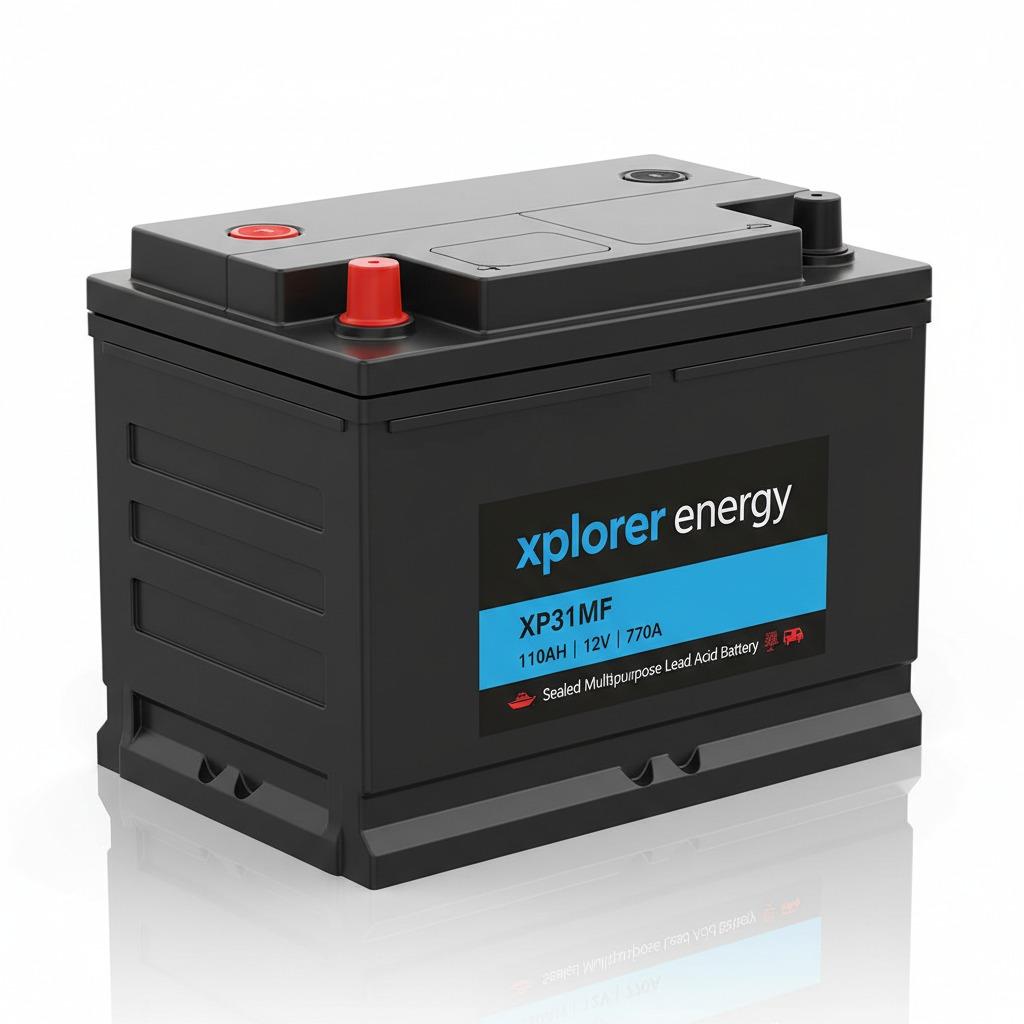
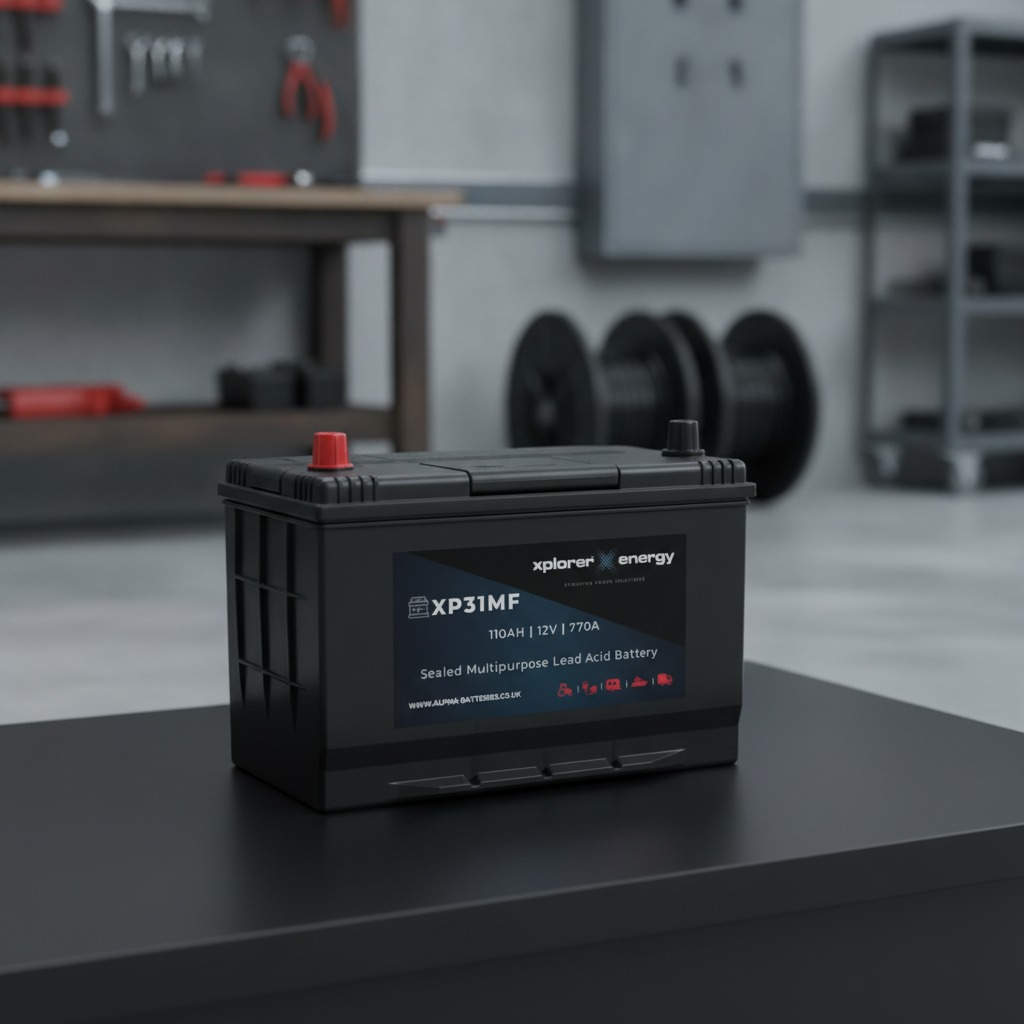
The label gives three useful facts right away: 12V nominal voltage, 110Ah capacity, and 770A current rating. Those are not marketing flourishes; they point to how the battery is intended to be used.
The 12V rating makes it suitable for standard low-voltage electrical systems common in vehicles and many auxiliary power applications. The 110Ah figure indicates a relatively large stored-energy capacity, which matters when the battery is supporting loads for longer periods or when a system needs more reserve between charges. The 770A rating suggests strong starting or high-discharge capability, though buyers should be careful here: the exact test standard behind that number is not visible, so it should not be treated as interchangeable with every other “CCA” or “cranking amps” label on the market.
That caveat matters. Two batteries can both say 770A and still behave differently in cold weather or under repetitive load, depending on how that rating was measured and what internal construction sits behind the case.
Sealed multipurpose lead-acid: why this category still sells
Despite the attention given to newer chemistries, lead-acid batteries remain widely used because they are predictable, rugged, and well understood in supply chains. A sealed multipurpose lead-acid battery sits in a practical middle ground: it is designed for more than one role, often combining starting capability with auxiliary or standby service.
That versatility is useful, but it can also blur expectations. A buyer may see “multipurpose” and assume the battery will perform equally well in every application. It usually won’t. Starting loads, deep cycling, vibration, intermittent charging, and standby float service all stress a battery differently. So the right question is not whether a battery is sealed or lead-acid in the abstract; it is whether the design matches the duty cycle in the equipment.
For procurement teams, this is where the battery category matters more than the brand name printed on the shell.
Quick comparison: what to prioritize when reviewing this type of battery
Use-case fit
If the battery must start an engine, the current rating carries significant weight. If it will mainly support accessories, backup circuits, or leisure loads, capacity and discharge behavior become more important.
Electrical compatibility
Voltage must match the system. That part is obvious, but it is still one of the most common purchase errors, especially when teams are sourcing replacements under time pressure.
Installation and terminal layout
The battery shown has two top terminal posts with red and black protective caps. That sounds minor until a tray, cable set, or clamp design does not match. Physical fit and terminal orientation can delay a project just as quickly as an incorrect voltage can.
Service environment
Temperature swings, vibration, and intermittent use all influence battery life. A product that is fine in a stationary backup role may behave differently in a vehicle or mobile equipment package.
Where a rechargeable battery differs from a lead-acid unit
The phrase rechargeable battery is broad enough to include many chemistries, from nickel-based products to lithium systems. That breadth is helpful for engineering conversation but risky in sourcing if the term is used too casually. A lithium battery, for example, usually offers a different weight profile and discharge behavior than a lead-acid design. It may suit some applications better, but it also comes with different charging requirements and protection considerations.
A lead-acid battery like this XP31MF remains attractive when the application already expects a 12V lead-acid footprint, when replacement compatibility matters, or when the buyer wants a familiar, serviceable format for automotive or auxiliary power duties. In other words, chemistry should follow the system, not the trend.
Practical selection checks before you approve a purchase
The best way to avoid returns is to confirm a few details before the order is placed.
First, verify the application: starting duty, backup duty, or mixed service. “Multipurpose” is not a substitute for load profiling.
Second, confirm the electrical spec against the existing system. 12V is the nominal voltage, but the rest of the circuit still needs to handle the expected draw.
Third, match the physical form. The image suggests a rectangular case with molded side ribs and top posts, but exact dimensions are not given. In battery sourcing, “close enough” often becomes “does not fit.”
Fourth, ask what the current rating actually means. A 770A figure is useful, but the standard behind it affects how directly it compares with competing products.
Fifth, consider the charge source. A sealed lead-acid battery usually expects charging behavior appropriate to its construction. If the system was designed around a different chemistry, don’t assume it will be a drop-in replacement.
Common mistakes buyers make with 12V sealed batteries
One frequent mistake is using capacity alone as the buying rule. A higher Ah number sounds safer, but if the battery is undersized for starting current or physical space, the gain is illusory.
Another is treating all sealed batteries as interchangeable. “Sealed” only tells you that the case is closed against routine user access; it does not tell you whether the battery is optimized for starting, deep cycling, standby service, or some hybrid role.
A third mistake is ignoring the age profile of stock. Batteries are not like machined brackets. They can sit on shelves and still lose practical value over time, especially if storage conditions are poor. Buyers should ask how inventory is handled, even if they do not get a perfect answer.
What this product profile suggests for industrial and vehicle buyers
The XP31MF label points to a fairly robust 12V sealed lead-acid format with 110Ah capacity and a 770A current rating. That makes it relevant to vehicle starting, auxiliary power, and other applications that need a dependable reserve in a familiar form factor. The black molded housing, top posts, and sealed construction all fit the expectations of a mainstream replacement or systems battery, not a niche custom pack.
Still, the buyer should resist reading too much into the surface appearance. Without exact internal chemistry details, dimensions, reserve capacity, and the test standard for the current rating, it is better to treat the product as a defined battery category rather than a universal replacement.
FAQ
Is this Battery suitable for both starting and auxiliary use?
The label suggests a multipurpose lead-acid battery, so it may serve both roles depending on the system. The final answer depends on the load profile and the equipment’s charging setup.
Can I substitute a lithium battery for this lead-acid model?
Not automatically. A lithium battery may offer advantages in some applications, but it usually requires different charging and protection logic. Replacement should be checked case by case.
What does 110Ah mean in practical terms?
It indicates the battery’s nominal capacity, which is useful for estimating how long it can support loads. Actual runtime depends on discharge rate, temperature, and system efficiency.
Why does the 770A figure need caution?
Because the visible label does not identify the exact test standard. Current ratings are only comparable when measured under the same method.
Next step for sourcing teams
If you are evaluating this type of Battery for replacement or new equipment, start with the application profile, then verify voltage, capacity, current rating, terminal layout, and physical fit. If any of those are unclear, ask for the missing data before issuing a purchase order. That small delay is cheaper than a field failure or an inconvenient returns cycle.
For buyers managing mixed fleets or spare parts inventories, a conservative spec review is usually the best kind of insurance.