
Battery buying decisions are rarely about the battery alone
A battery looks simple from the outside: a box, two terminals, a label with numbers. In practice, those numbers decide whether a vehicle starts reliably, whether backup equipment stays online, and whether a sourcing team avoids repeated returns. If you are comparing a rechargeable battery, a lithium battery, or a sealed lead-acid option like the Xplorer Energy XP31MF, the real question is not just what chemistry it uses. It is what the battery must do, how often it will be charged and discharged, and how much risk your application can tolerate when power drops out.
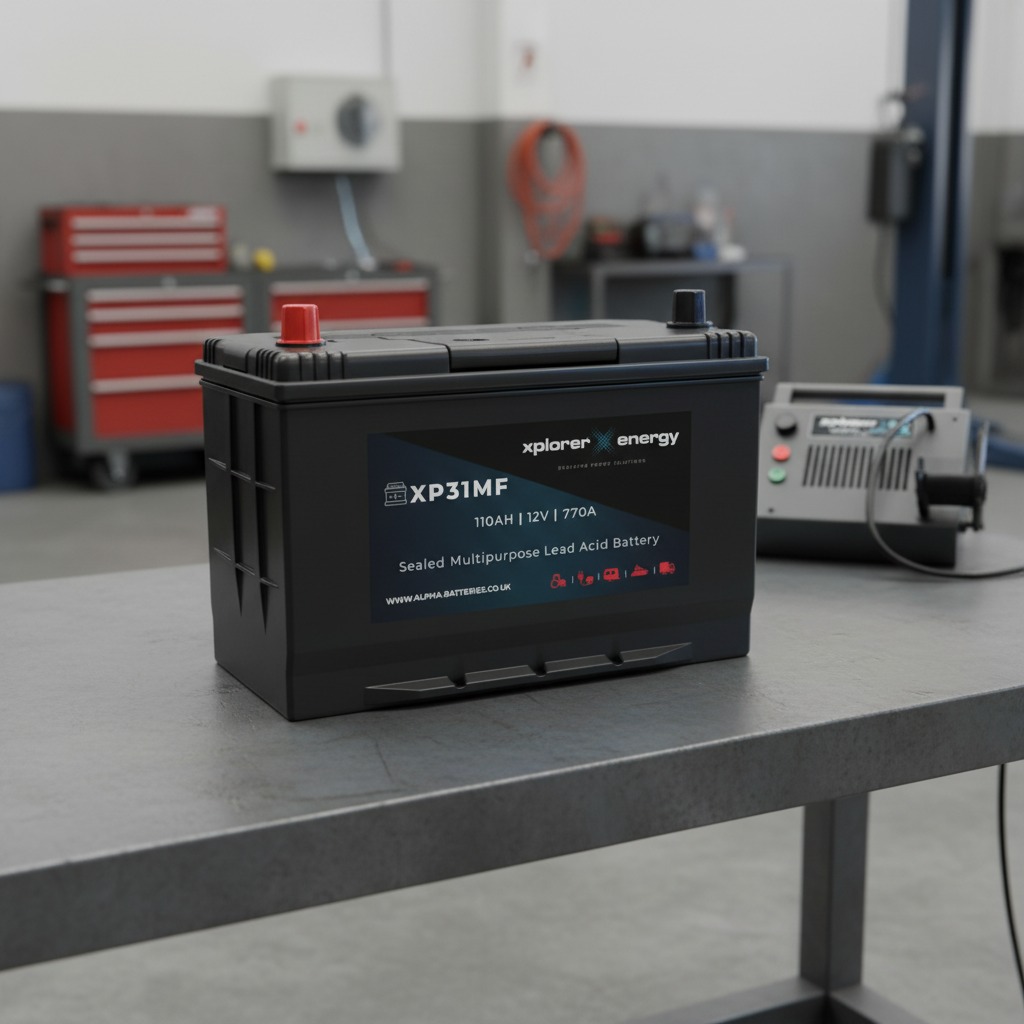
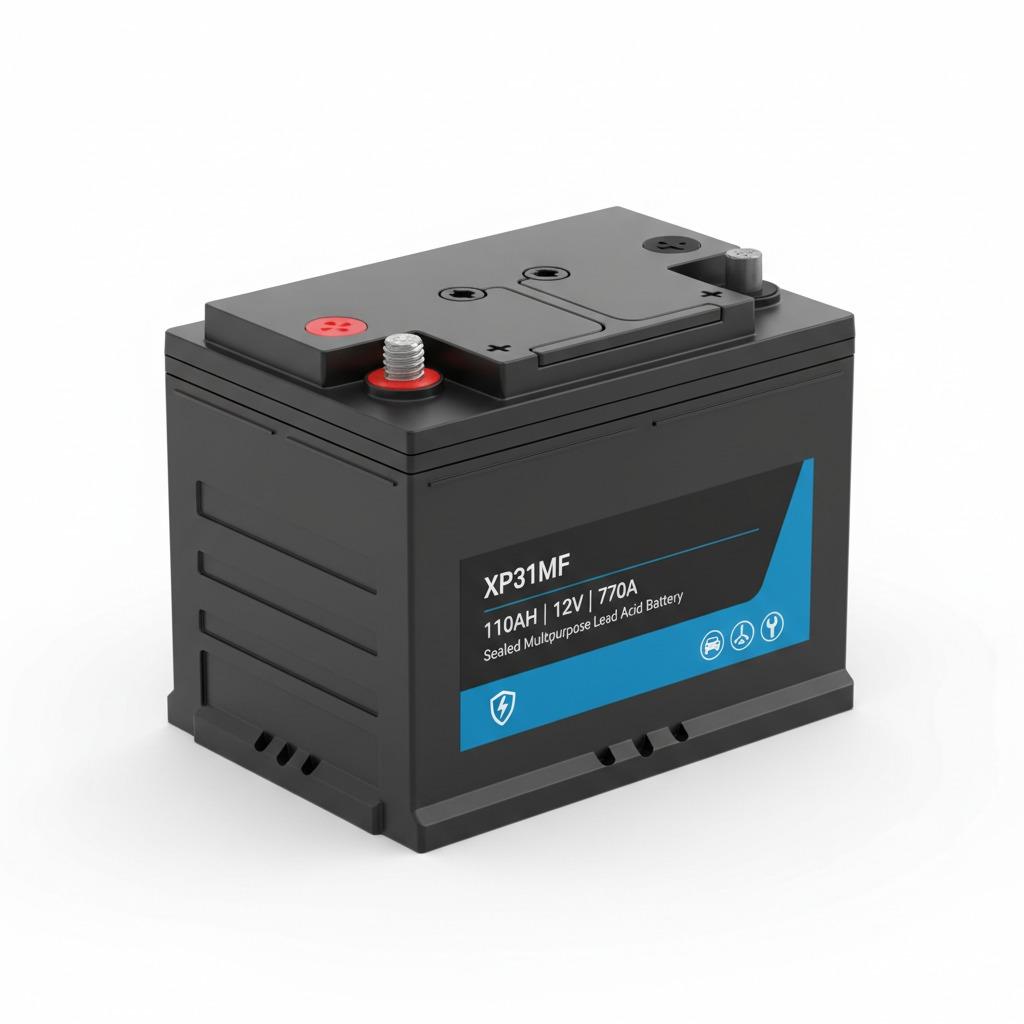
The XP31MF is a sealed multipurpose lead-acid battery marked 12V, 110Ah, and 770A. Those three figures already tell a useful story. It is built for substantial starting power and for auxiliary use where a steady 12V supply matters. That makes it relevant for passenger vehicles, light commercial vehicles, marine or leisure systems, and some backup power duties. It is not the only answer in the market, and it is not the right answer for every job, but it is the kind of product buyers compare when they need a practical, widely understood power source rather than a specialty pack.
What the label tells you, and why it matters
Engineers and sourcing managers tend to focus on the label first because it filters the field quickly. On this model, the 12V nominal voltage confirms compatibility with many common vehicle and equipment electrical systems. The 110Ah capacity suggests a meaningful energy reserve, while the 770A current rating points to strong starting performance. In plain terms, that combination is useful when the battery must deliver a large burst of power and still support auxiliary loads.
One caution here: battery labels are only part of the story. Two products can both be marked 12V and 110Ah and still behave differently in real service depending on internal construction, discharge profile, terminal layout, and case design. The XP31MF is described as sealed, but the visible information does not confirm whether it is AGM, gel, or another sealed lead-acid variant. Buyers should not assume a subtype that has not been verified on the technical sheet.
Lead-acid versus lithium battery: where the choice usually turns
In many procurement conversations, the comparison quickly becomes lead-acid versus lithium battery. That is understandable. Lithium products often offer lower weight and strong energy density, which can be useful in portable or weight-sensitive applications. A rechargeable battery based on lead-acid chemistry, however, still holds a major place in automotive and backup markets because it is familiar, robust in the right use case, and generally straightforward to integrate with established charging systems.
The key is matching chemistry to duty cycle. A sealed lead-acid battery like the XP31MF is typically chosen when the application values dependable 12V power, starting capability, and broad compatibility with conventional systems. A lithium battery may be favored when cycle efficiency, weight reduction, or deeper discharge performance is more important. That said, lithium is not a universal upgrade. In many vehicle and equipment applications, replacing one chemistry with another creates charging, protection, or integration issues that are more expensive than the battery itself.
Where a sealed multipurpose battery fits best
Products in this category are often selected for more than one role. They may start an engine, support accessory loads, or provide backup power in equipment that cannot afford a hard shutdown. The “multipurpose” label is important because it signals flexibility, though buyers still need to confirm whether the intended application is starting-heavy, standby-heavy, or a blend of both.
For passenger vehicles and light commercial vehicles, a battery with 770A shown on the label can be attractive when cold starts or high initial draw are a concern. In marine or leisure systems, sealed construction is often valued because it reduces exposure to routine handling issues associated with vented designs, although that does not remove the need for correct installation and ventilation. For backup power, the decision is usually less about cranking and more about dependable availability. Again, the exact runtime depends on load and system design, not on the label alone.
Quick comparison points buyers actually use
When reviewing battery options, most teams come back to a short list of practical criteria:
Voltage match: 12V systems need a 12V battery unless the system is specifically designed otherwise.
Capacity: 110Ah is useful when the battery must support sustained electrical demand, but that figure should be read in the context of discharge rate.
Starting current: 770A gives a useful indication of starting capability, though test standard and temperature conditions matter.
Construction: sealed lead-acid simplifies handling in some applications, but buyers should still verify service expectations.
Form factor: case size, terminal position, and mounting compatibility can decide the purchase faster than chemistry debates.
That list sounds basic, but it is where many purchasing mistakes begin. Teams often compare headline numbers and forget the physical fit. A battery that is electrically suitable but mechanically awkward turns into an installation problem, and those are the ones that generate expensive callbacks.
What to check before placing a purchase order
1. Confirm the application duty
Is the battery starting an engine, providing auxiliary power, or acting as a backup source? A battery that performs well in one role may underperform in another. Starter-oriented products and deep-cycle-oriented products are not always interchangeable, even when the voltage matches.
2. Verify charging compatibility
Even a sealed rechargeable battery needs the right charging profile. If the charging system is not matched to the battery type, service life can suffer. This is especially important when a team is considering switching from one chemistry to another, such as moving from a conventional lead-acid setup to a lithium battery.
3. Check installation constraints
The visible XP31MF product shows top-mounted terminal posts and a rigid black case. Those are familiar features, but the exact dimensions and terminal standard are not confirmed here. Buyers should always check the fit before specifying a replacement or alternate source.
4. Ask for the missing technical data
If reserve capacity, cycle life, weight, or internal design are relevant to the job, request the datasheet rather than guessing from the label. That is especially important in fleet procurement, where small mismatches become repeated failures across many units.
Common buying mistakes with batteries
The first mistake is assuming all 12V batteries behave the same. They do not. A battery sized for starting service may not be ideal for repeated deep discharge, and a battery built for standby use may not deliver the same cranking behavior as a purpose-built starter unit.
The second mistake is treating a rechargeable battery as if charging chemistry does not matter. It does. This is where switching to a lithium battery can create surprises if the rest of the system was designed for lead-acid behavior.
The third mistake is buying only on headline amp-hour figures. Capacity matters, but the actual working life depends on temperature, depth of discharge, charging quality, vibration, and how often the battery is cycled. That is a less glamorous answer than a neat comparison table, but it is usually the right one.
Practical notes for sourcing and maintenance teams
For sourcing managers, the best procurement file is the one that documents both the electrical specification and the mechanical fit. For engineers, the useful question is whether the battery’s discharge profile matches the load profile. For product teams, the issue is often packaging and user expectations: a sealed battery suggests less routine intervention, but it still needs proper system integration.
If the application is sensitive, ask suppliers to clarify what is confirmed and what is only inferred from the product listing. For the XP31MF, the verifiable points are clear enough: brand Xplorer Energy, model XP31MF, 12V nominal voltage, 110Ah capacity, 770A current rating, and a sealed multipurpose lead-acid format. Everything beyond that should be checked against the actual technical documentation before a spec is frozen.
FAQ
Is a sealed lead-acid battery the same as a lithium battery?
No. They serve some overlapping applications, but they are different chemistries with different charging behavior, weight, and system requirements.
Can this type of battery be used for backup power?
Yes, sealed multipurpose lead-acid batteries are often used in backup or auxiliary roles, but the load profile and required runtime must be checked.
Does 770A mean it will always start a vehicle easily?
Not always. Starting performance depends on temperature, engine condition, cable quality, and whether the battery is fully charged and correctly matched to the system.
What buyers should do next
If you are evaluating the Xplorer Energy XP31MF or comparing it with another rechargeable battery, start with the application, not the chemistry label. Confirm voltage, capacity, current rating, fit, and charging compatibility. Then decide whether a sealed lead-acid design is the right answer, or whether a lithium battery better suits the duty cycle and installation constraints. That sequence sounds simple, but it is usually what separates a dependable purchase from a returns problem.
For a serious sourcing decision, ask for the full datasheet, cross-check the installation dimensions, and make the supplier prove compatibility with your system rather than assuming it from the front label. In battery buying, the details are never decorative.