
Car film: what buyers are really choosing when they buy privacy, shade, and a cleaner look
When people search for car film, they are usually not looking for a chemistry lesson. They want to know what kind of window film will actually work on a vehicle, how it changes the driving experience, and whether a supplier or installer can deliver a finish that looks deliberate rather than cheap. That sounds simple until you get into the details. A roll of tint can darken a cabin, cut glare, and give a car a more finished appearance, but the wrong film can also haze the glass, complicate installation, or create a result that feels too heavy-handed for the market it is meant to serve.
For sourcing teams, detailing shops, and auto accessory distributors, the decision is less about “Do we need tint?” and more about which film structure, shade level, and application style fit the vehicle segment. That is where the real buying work begins.
What car film does on the vehicle
At its simplest, car film is a thin polymer film applied to vehicle glass to change how the cabin handles light. The visible effect is obvious: windows look darker, reflections soften, and the interior feels more private. On a sunny day, that darker tone can make the difference between a cabin that feels exposed and one that feels controlled.
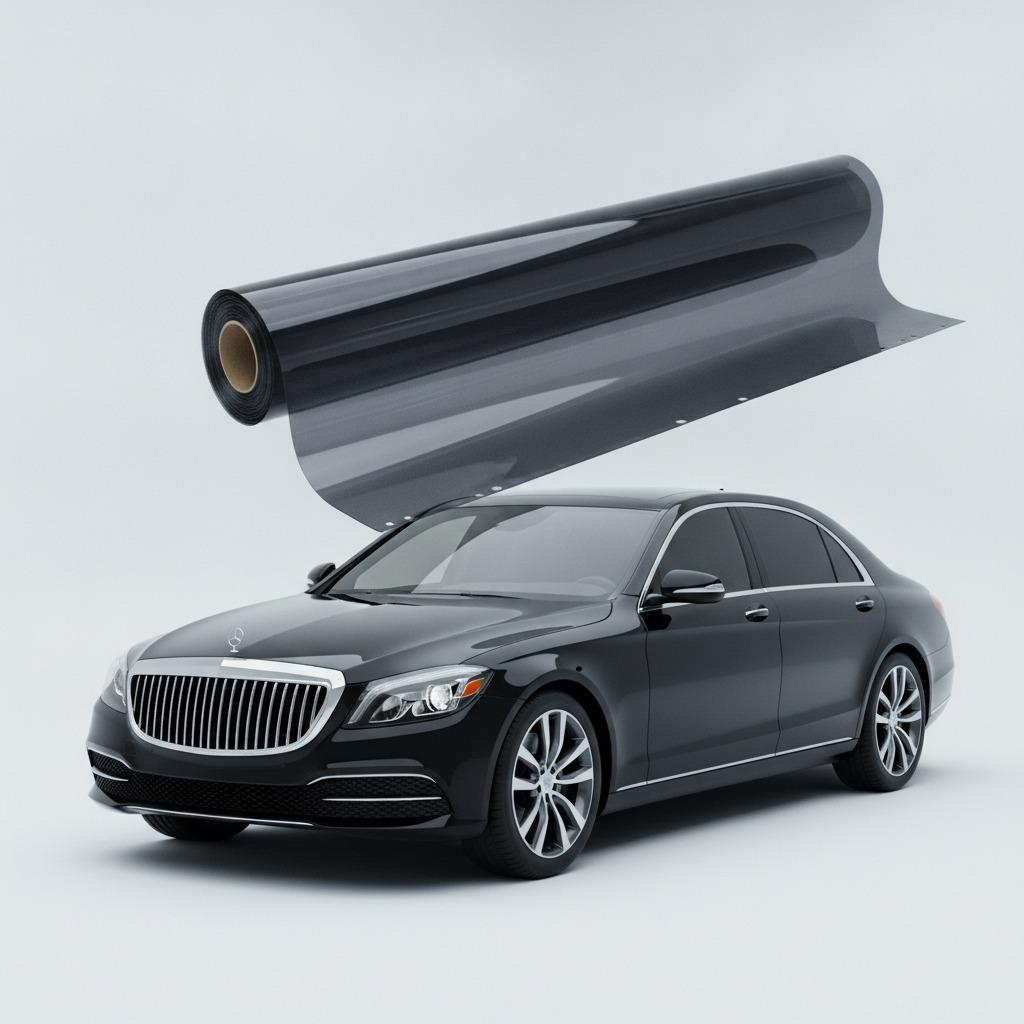
In the image context provided, the film appears as a roll of dark, flexible material with a glossy black or smoke-like face and a lighter translucent layer behind it. That suggests a laminated construction, which is common in many automotive tint products, though the exact structure cannot be confirmed from appearance alone. What matters to the buyer is not the visual impression in the roll, but how that structure behaves once it is cut and applied to side or rear windows.
A properly selected film can support three practical goals:
privacy for passengers and cargo;
glare reduction for the driver;
and a more uniform exterior appearance across the vehicle.
Some buyers also want heat control, but that depends on the film type and is not something you should assume from darkness alone. A darker film is not automatically a better-performing film. That mistake shows up constantly in the market.
Quick reference: what buyers compare first
Before ordering, most buyers compare the same few points, even if they do not always say them out loud.
Shade level
How dark does the glass look once installed? A sedan with very dark rear glass gives a completely different impression than one with a lighter privacy tint.
Film construction
The film may be dyed, metallized, ceramic-type, or built from other layered combinations. The provided material does not confirm which one this is, so the safest approach is to treat the product as an aftermarket automotive tint film unless the supplier supplies verified specifications.
Installation behavior
Installers care about how a film cuts, drapes, and settles on curved glass. A roll that looks good in a warehouse can become a nuisance on a rear quarter window if it is too stiff or unpredictable.
Market fit
A tint that works for a premium detailing shop may not be the right choice for a volume distributor serving price-sensitive buyers. The film has to match the segment, not just the vehicle.
Why the film structure matters more than the color alone
It is tempting to buy based on visible darkness. That is usually the fastest route to disappointment.
A dark appearance can come from different constructions. Some films are primarily dyed, which often makes them accessible and straightforward for mainstream aftermarket use. Others may include metallized layers, which can change how the film interacts with sunlight and interior electronics. Ceramic-type films are often discussed in the trade for their performance profile, though performance claims need to be supported by actual product data, not shop talk.
Because the exact makeup of the film in this case is not verified, a responsible buyer should ask for the following before committing:
material description;
film thickness;
visible light transmission range;
installation orientation, if applicable;
and any handling guidance for the installer.
That is the part many procurement teams skip. They focus on sample appearance and ignore the boring sheet of product data. Then they discover the film behaves differently from the demo piece.
Where car film fits in the aftermarket
Most demand sits in the automotive aftermarket, especially for side and rear windows. That includes passenger vehicles, used-car refresh work, detailing packages, and accessory distribution. The product can be sold as a roll for cutting and application, which is the usual format for installers who work vehicle by vehicle.
The practical use cases are familiar but worth stating plainly:
customers want more privacy in the cabin;
drivers want less glare during daytime and evening driving;
fleet operators may want a cleaner, more uniform look across vehicles;
and retailers may want a product that is easy to package with installation service.
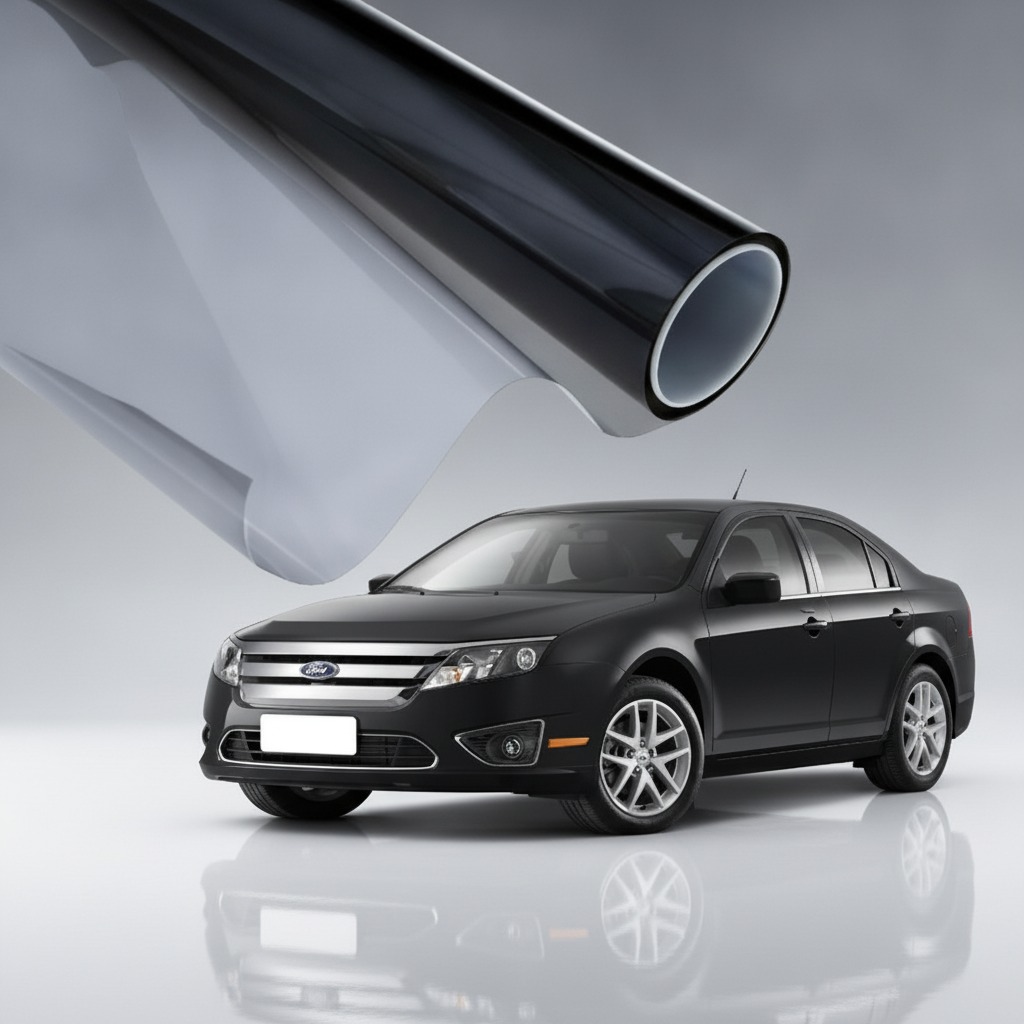
The sedan example matters here because it signals the most common retail and shop use: standard passenger vehicle glazing, not specialty architectural glass or oversized commercial panels. That is a useful clue for buyers trying to judge whether the film is aimed at the mainstream car market.
Selection criteria buyers should actually use
A lot of product pages overcomplicate this. In practice, the best selection checklist is fairly short.
First, confirm the intended application. If the film is for side and rear windows, the handling requirements may differ from products used on windshields or specialty glass. The product information provided here points to automotive window tint or privacy/solar-control film, which is the right starting assumption.
Second, match the visual tone to the customer base. Some markets want a subtle smoke finish. Others want a deep, darker look. There is no universal answer, and regional expectations can differ more than suppliers admit.
Third, ask about compatibility with installer workflows. A film sold in rolls is only useful if it can be cut cleanly and applied in a way that holds a smooth, even look on curved glass. Shops notice poor handling quickly; they may not return to a supplier after one troublesome batch.
Fourth, check the legal and regulatory side locally. Window tint rules vary by market, and film darkness that sells well in one region may be unacceptable in another. That part is on the buyer, not the factory brochure.
Common mistakes in sourcing car film
The first mistake is treating all dark films as interchangeable. They are not. A low-cost dyed film and a more advanced layered product may look similar in a photo and behave very differently on the car.
The second mistake is buying without installation feedback. If a film is for installers, the installers should have a say. They will tell you whether the roll is manageable, whether it conforms properly, and whether the final look is clean or fussy.
The third mistake is asking for performance claims without asking how those claims are supported. The product data provided here does not include UV rejection, heat rejection, scratch resistance, or exact visible light transmission values, so those should not be assumed.
The fourth mistake is ignoring customer expectation. Some buyers want maximum privacy; others want a mild cosmetic upgrade. If you stock only one shade, you may end up satisfying neither group fully.
What a car film factory should be able to support
Searches for car film factory usually come from buyers who need a repeatable supply source rather than a one-off product. In that context, the factory’s value is not just production capacity. It is consistency.
A serious supplier should be able to speak clearly about film categories, roll format, packaging, and application positioning. They should also be prepared to discuss how the film is intended to be converted, stored, and installed. If they cannot explain those basics, the buyer should slow down.
For distributors, another practical point matters: assortment. A market rarely wants only one darkness level. It usually needs a small family of products that can serve different customer preferences, from subtle privacy to more dramatic shading.
A note on PPF versus car film
Some buyers search pff when they actually mean PPF, or they are comparing window tint film with paint protection film. The two are not the same thing, even though both come in flexible roll form and both are used in automotive aftermarket channels.
Car film in this article refers to window tint or privacy/solar-control film for glass. PPF, by contrast, is generally used to protect painted surfaces from chips, abrasion, and road wear. They may sit in the same dealer conversation, but they solve different problems. Mixing them up can lead to the wrong sourcing decision, wrong packaging, and a sales pitch that confuses customers.
Buyer-facing questions to ask before placing an order
If you are evaluating a supplier, these questions are worth asking early:
What type of automotive film is it intended to be?
Is it designed for side windows, rear windows, or broader vehicle use?
How is the roll supplied for cutting and installation?
What shade options are available, and how consistent is appearance across rolls?
What documentation can the supplier provide on material description and handling?
Those questions are practical, not bureaucratic. They help separate a real product line from a vague sample.
FAQ
Is darker car film always better?
Not necessarily. Darker film increases privacy, but the best choice depends on visibility needs, local rules, and the final customer segment.
Can car film be used for heat control?
Sometimes, depending on the film construction. But heat control should never be assumed from appearance alone.
Is the film in the image definitely dyed, metallized, or ceramic?
No. The provided information does not verify the exact construction, so it should be treated cautiously.
Who typically buys this product?
Detailing shops, tint installers, auto accessory distributors, and aftermarket resellers usually have the most direct use for this type of film.
What to do next
If you are sourcing car film for a shop, distributor, or vehicle-focused product line, start with the application and the market requirement, then work backward to the film structure. That sounds obvious, but it saves time and prevents a lot of mismatched inventory.
Ask for sample rolls, product data, and clear guidance on intended use. If you are comparing suppliers, line them up on the same criteria rather than on marketing language. A good tint product should be understandable in the hand, on the glass, and in the finished car—not just in a product title.
And if you are still deciding between shades or film types, bring the installer into the conversation early. They usually spot the problem before procurement does.