
Why car film still matters in a market full of coatings and gadgets
Car film is one of those products that looks simple until a buyer has to choose between visual appeal, privacy, heat control, durability, and installation cost. For engineers, sourcing managers, and product teams, the decision is rarely just about “tint” or “shine.” It is about how a thin flexible polymer layer performs on a moving vehicle, in changing weather, over time, and under real customer use. That is where the wrong specification can become a nuisance: bubbling edges, poor optics, weak durability, or a finish that looks good on day one and tired by month three.
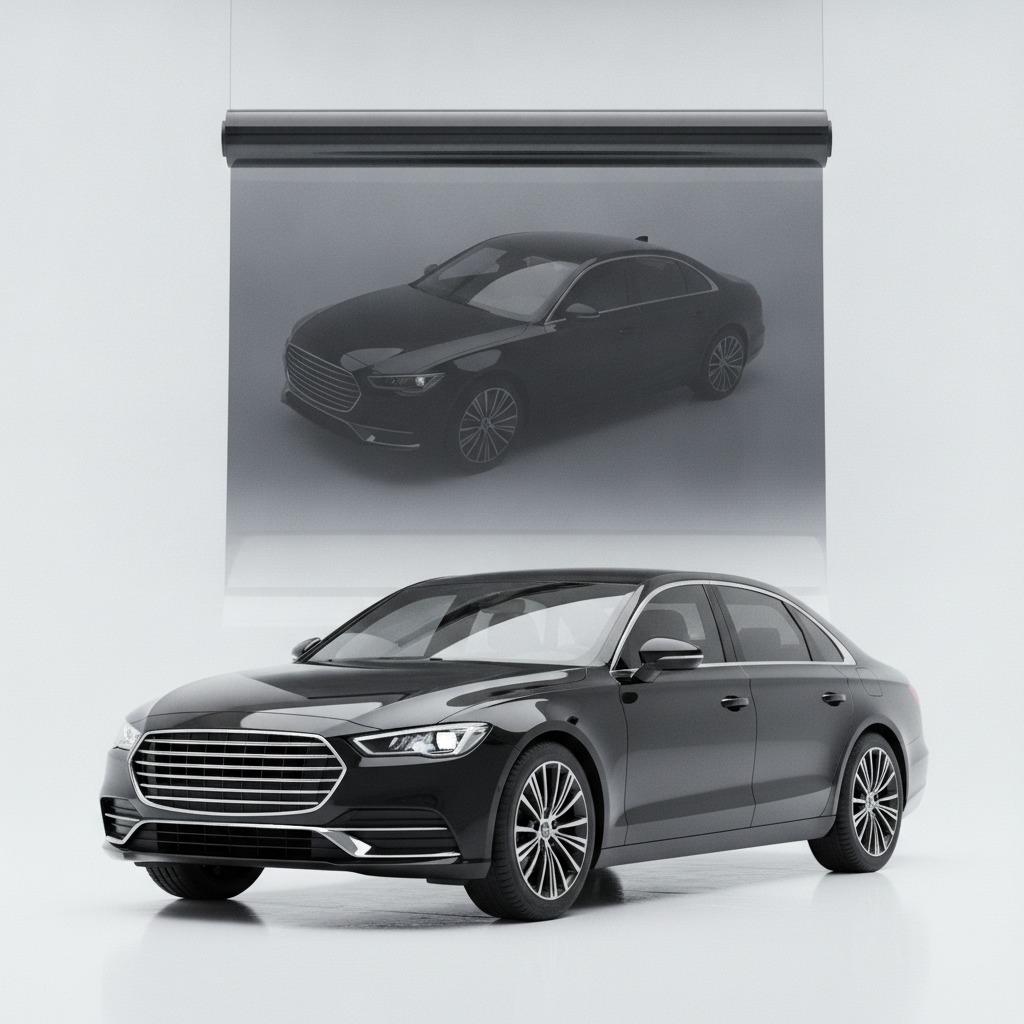
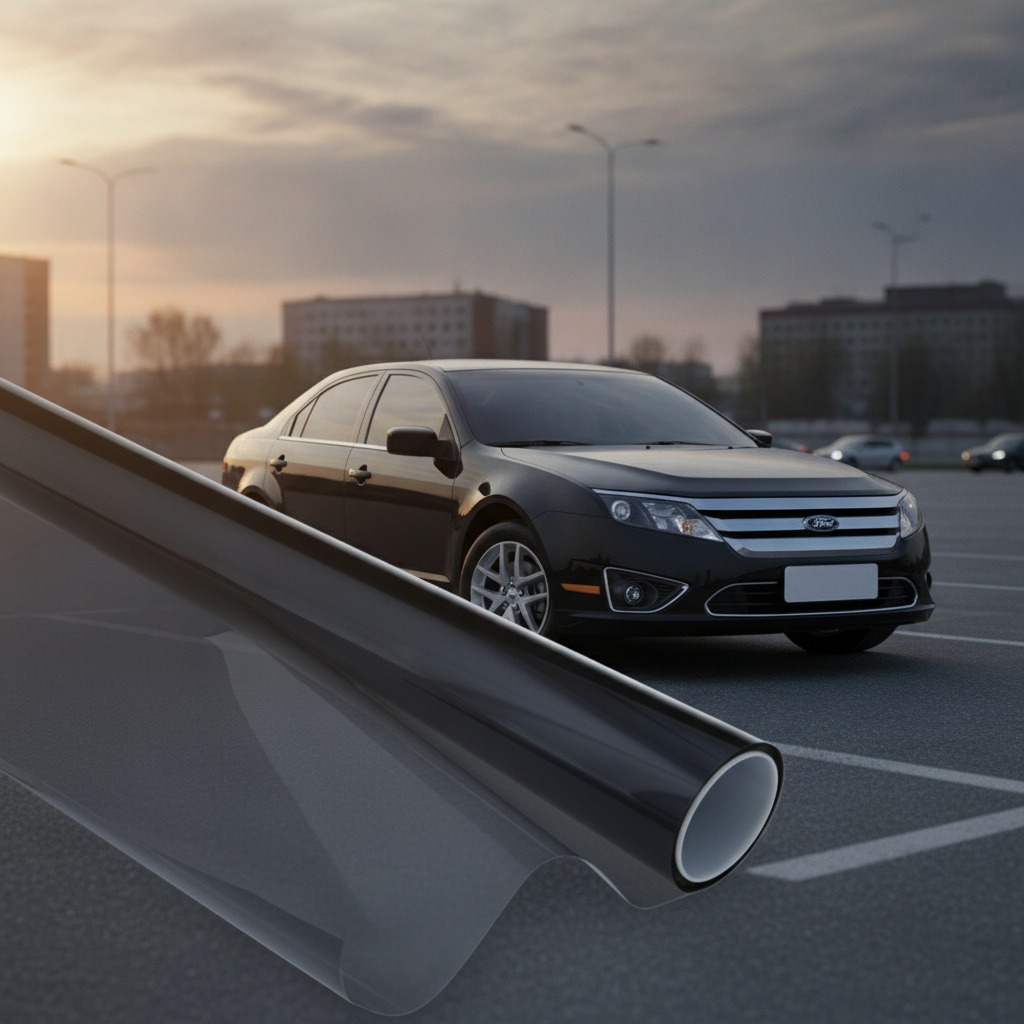
The product shown here appears to be an automotive film in roll form, with a dark tinted side and a clearer backing side. That visual alone points to a common buyer need: a film that can be applied cleanly, cover a large area, and deliver a controlled appearance on vehicle windows or, depending on construction, possibly body panels. The exact build is not visible, so it is best treated cautiously as a window tint film or a protective automotive film category rather than assuming a specific chemistry or performance level.
What buyers usually want from a car film
Most purchasing decisions in this category start with a practical question: what problem is the film supposed to solve? The answer shapes almost everything else. A fleet manager may want glare reduction and privacy. A retail buyer may care more about the look. An OEM or aftermarket brand may be focused on consistency from roll to roll, ease of cutting, and a predictable finish after installation.
In plain terms, the film is expected to do at least one of the following: reduce visible light, soften sunlight, improve cabin privacy, enhance styling, or shield a surface from minor wear. Some buyers may also be comparing car film options for surface protection, but the image here most strongly suggests a tint-style application for glass. If that distinction matters to your program, it should be confirmed before sampling, because window film and paint-protection-style film are not interchangeable in use or in customer expectation.
Quick reference: what to check before buying
Before placing a test order, buyers usually benefit from a short checklist. It keeps procurement discussions grounded and helps avoid vague “good quality” claims that do not survive installation.
First, confirm the intended substrate: glass, painted panels, or both. Second, ask whether the film is primarily decorative, functional, or both. Third, verify roll format and usable width, because large vehicle surfaces depend on consistent sheet size. Fourth, understand whether the product is intended for professional installation or a simpler retail application. Finally, request whatever objective data is available for optical appearance, durability, and any performance claims. If the supplier cannot support a claim, treat it as marketing, not specification.
How this kind of film is typically built
Although the exact construction is not visible, automotive film products like this are commonly made as thin polymer sheets produced through extrusion, coating, or a related web-based process, then slit into rolls. The finish can be glossy or more muted depending on the surface treatment. In this case, the visible surface looks smooth and reflective rather than textured, which is typical of a film designed to present a clean, even visual effect after application.
The image suggests a two-tone visual: a dark tinted face and a clear or gray transparent side. That does not tell us the full layer stack, and it would be a mistake to assume a specific adhesive or liner from appearance alone. For buyers, that uncertainty matters. A film that appears simple can behave very differently depending on whether it is pressure-sensitive, heat-shrinkable, metallized, dyed, or built for a different installation method. One supplier’s “easy install” can mean something very different from another’s.
Window tint film versus protective film
Window tint film is generally chosen for visual control, glare reduction, and privacy. It is judged by how evenly it darkens glass and how it looks from both inside and outside the vehicle. Protective film, by contrast, is judged more by resistance to scuffing, chips, and surface wear. The overlap between the two categories can confuse buyers, especially when product photography uses a car graphic and a rolled sheet without much technical detail.
If your application is cabin comfort and appearance, focus on optical consistency and installation behavior. If your application is surface protection, ask different questions entirely: clarity, thickness, edge behavior, and how the film handles curved panels or frequent washing. The image alone cannot settle that.
Selection criteria that actually affect field performance
For sourcing teams, the useful criteria are not the flashy ones. A dramatic product photo is not a substitute for stable performance. The first factor is visual uniformity. Automotive film has to look even across a broad surface; streaks, blotches, or uneven darkening are immediately obvious to end users.
The second factor is installation behavior. A film that is too stiff can be difficult to lay on curved glass or complex contours. A film that is too soft may wrinkle or distort during handling. The third factor is durability under daily use: sun exposure, temperature swings, cleaning, and normal abrasion. A film sold into the automotive market has to survive a rougher life than many buyers initially assume.
Then there is the commercial side. Roll form is efficient for manufacturing and distribution, but it also means the buyer must manage storage and handling carefully. Rolls can pick up edge damage, dust, or deformation if they are not packed and stored properly. That sounds mundane, but in production settings it is often the difference between a clean install and a frustrated line.
Common mistakes buyers make with car film
One common mistake is treating every dark film as the same product. It is not. Two rolls may look similar in a catalog and behave very differently on the vehicle. Another mistake is overcommitting to a visual sample without testing in real light. A film can look attractive under showroom lighting and feel too dark, too reflective, or too gray once installed outdoors.
A third issue is ignoring installer feedback. If the film will be handled by technicians or retail installers, their experience matters. Films that are technically sound but awkward to cut or position can create waste, rework, and customer complaints. Finally, some buyers forget that customer perception changes with climate. A finish that looks elegant in mild conditions may feel harsh or impractical in a hot, bright market.
What a car film factory should be able to explain
When evaluating a car film factory, ask for clarity, not slogans. A capable supplier should be able to explain the film’s intended use, the visible finish, the basic supply format, and the quality checks used for appearance and consistency. If the product is sold for vehicle glass, the factory should also be able to discuss how it supports stable roll quality and clean conversion into usable sheets.
It is also reasonable to ask how the product is packaged and protected in transit. Films are deceptively sensitive to handling damage. A roll that arrives with edge crush or surface contamination can cause downstream problems that no one wants to own. Buyers often focus on the film itself and overlook packaging discipline, which is a small oversight with a very real cost.
Where pff may come into the conversation
Some buyers use pff when discussing vehicle surface protection, while others use it more loosely in conversations about automotive film. That shorthand can be useful inside a team, but it should not replace a clear specification. If the intended product is protective film, confirm the functional requirement directly. If the intended product is window tint, do not let the term blur the scope. A vague acronym is a poor substitute for a product definition.
That caution is especially relevant in sourcing meetings where multiple departments are involved. Marketing may think in appearance, engineering in material behavior, and procurement in cost and supply stability. A shared term can hide three different assumptions.
Practical buyer advice for trials and sampling
For a first round of samples, keep the test simple and observable. Evaluate how the film looks on the intended vehicle glass, how it handles during cutting and positioning, and whether the final appearance matches the desired customer profile. If the application is decorative, check the consistency of the darkened look across the sheet. If the application is protective, inspect edge behavior and surface clarity.
Do not skip real-world testing just because the roll looks good on arrival. Automotive products live or die in use, not on a spec sheet. A short trial on representative vehicles is usually more revealing than a long discussion of claims.
FAQ: short answers buyers often need
Is this car film only for windows?
Based on the image, window tint use appears to be the most likely application. That said, the visible construction alone does not prove the product is limited to glass.
Can I assume it is adhesive-backed?
No. The adhesive layer is not visible, so that should be confirmed directly with the supplier.
Does a darker film always mean better performance?
Not necessarily. Darkness may improve privacy or reduce glare, but performance depends on the film’s construction and intended function, not just its color.
What should I request from the supplier first?
Ask for the intended application, roll dimensions, installation method, and whatever technical data is available for the specific product being quoted.
Next step for sourcing teams
If you are comparing car film options, start with the end use and work backward. That keeps the conversation honest and saves time on samples that were never going to fit. For a window tint-style product, focus on optical appearance, installation behavior, and roll consistency. For a protective film, shift attention to surface defense and handling characteristics. Either way, the supplier should be able to define the product clearly before you commit to testing.
If your team is reviewing a car film factory, ask for a sample roll and a plain-language explanation of what the film is designed to do. That small step usually reveals more than a polished catalog page ever will.