
Car Film Looks Simple. The Buying Decision Usually Isn’t.
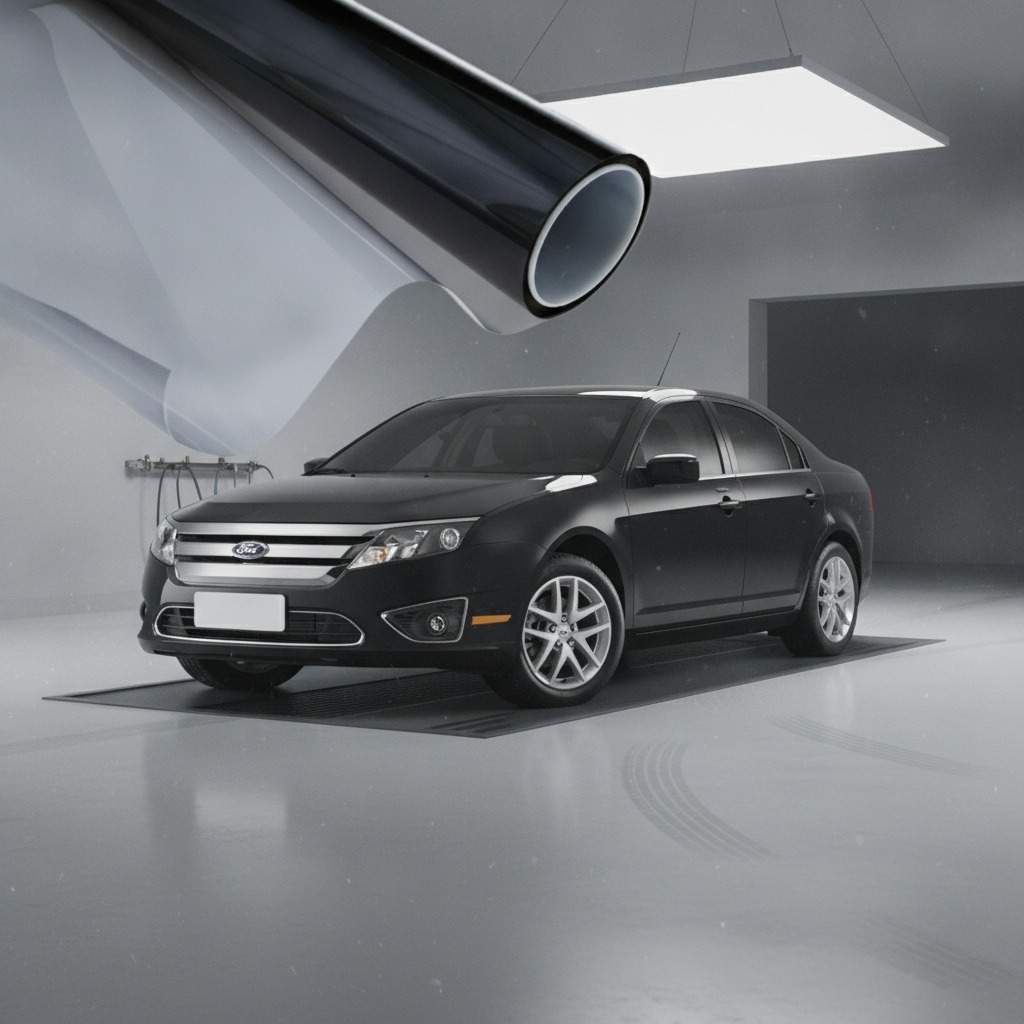
At first glance, car film seems like a straightforward product: a dark roll of material that goes on vehicle glass to add privacy and change the look of a car. But anyone who has sourced tint for a fleet, a shop, or a retail program knows the real decision sits underneath that simple appearance. The right film affects how a vehicle feels to the driver, how it presents on the road, how long an installation takes, and how often a customer comes back with complaints about visibility, bubbling, or an overly reflective finish.
For sourcing managers and product teams, the hard part is not recognizing what the film is for. It is deciding which type of film fits the job, which quality signals matter, and where a low-cost option might save money without creating rework later. A good specification should answer one question plainly: what outcome are you buying, and what trade-offs are you accepting?
What Car Film Actually Does on a Vehicle
In practical terms, automotive window film is applied to side or rear glass to reduce how much light passes through, improve privacy, and give the vehicle a darker, more finished appearance. That alone can change the character of a car. A sedan with factory-clear glass looks open and airy; the same car with a well-matched tint can look more deliberate, more private, and often more premium.
Depending on the construction, the film may also help with glare reduction and cabin comfort. Those benefits are often discussed together, but they are not identical. A film that looks dark may not behave the same way in direct sun as one engineered for better thermal performance. Buyers should be careful about assuming one visual trait automatically delivers all the other benefits.
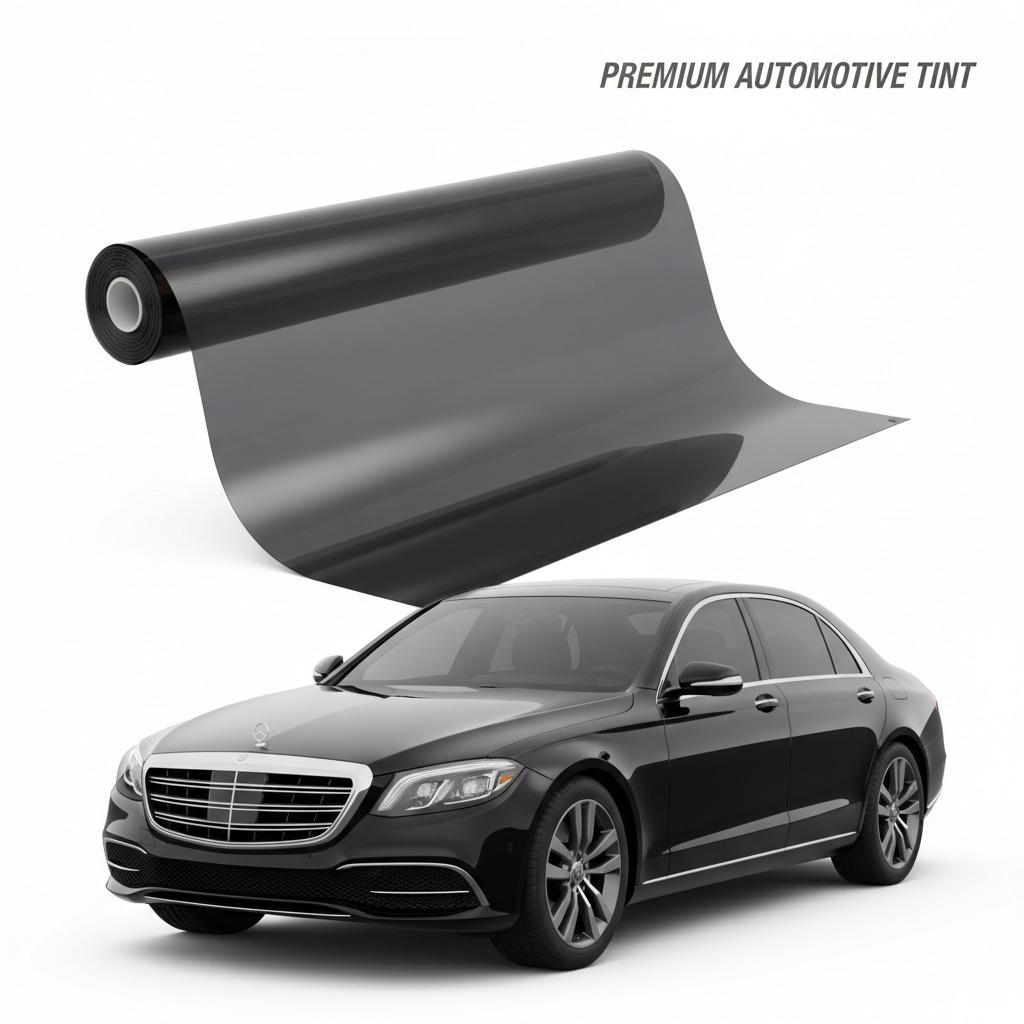
The product shown here is a rolled, dark sheet with a clear backing, which is a familiar form for installers and tint suppliers. That roll format matters. It suggests continuous supply, easy storage, and cutting flexibility for different window sizes. It also means the product is likely intended for shop application rather than one-off decorative use.
Quick Reference: What Buyers Usually Compare
When teams compare car film options, the discussion usually comes down to a few practical checks rather than a long list of abstract features.
Appearance
How dark does it look on glass? Does it create a clean, even tone, or does it show color shift under different lighting? A deep black appearance can be desirable, but some markets prefer a more neutral finish.
Installation behavior
Does the film handle cleanly during cutting and application? Does it lay flat, or does it fight the installer with curling edges and uneven handling? For shops, install behavior can matter as much as the end result.
Consistency
Can one roll match the next? This is where procurement teams get cautious for good reason. A tint that looks acceptable on a sample but varies from batch to batch can create visible mismatch across a fleet or across repeat customer jobs.
Regulatory fit
Different regions have different rules for window tint on different glass positions. Buyers should not treat every dark film as interchangeable. Legal compliance is not something to guess at, and it is usually tied to local requirements rather than a single universal standard.
Film Types and Why They Matter
Car film is often discussed as if it were one product category, but the market actually contains several families of film with different behavior. The image alone does not confirm whether a film is dyed, metallized, ceramic-based, carbon-based, or something else. That distinction matters because two films can look equally dark while performing very differently in the field.
A dyed film may prioritize straightforward shading and visual privacy. A more advanced construction may be selected for better long-term clarity, stronger performance claims, or a different appearance under sunlight. Some buyers prefer a simple, cost-conscious solution for dealer-installed packages or large fleet rollouts. Others want a higher-end option that aligns with premium vehicle branding. The mistake is assuming the darkest film is automatically the best fit.
There is also a difference between the film itself and the way it is sold. Some suppliers focus on roll goods for professional installers. Others package the product for retail or service-bay use. A car film factory, when involved upstream, may offer broader options in roll widths, coating structures, and customization, but the buyer still needs to pin down the exact product structure before making any commercial promise to end users.
What the Product Image Tells Us, and What It Doesn’t
From the visible product description, a few facts are safe to draw. The film is dark. It comes in a continuous roll. It is intended for vehicle glass. It is likely a thin, flexible polymer sheet with a smooth surface and a clear liner or backing visible in the roll. Those are useful clues, but they are not enough to write a specification.
What is not visible is often where the real commercial risk sits. The image does not confirm the exact base material, adhesive type, thickness, visible light transmission, UV performance, scratch resistance, or whether the film is dyed, metallized, ceramic, or carbon-based. It also does not tell you how the film will behave after installation in strong sun, on curved glass, or during repeated cleaning. A buyer should treat all of those as open questions until the supplier documents them properly.
Common Buyer Mistakes with Car Film
The first mistake is shopping only by shade. Darker is not always better. A film that looks right in a showroom can create a problem in real driving conditions, especially at night or in wet weather. Drivers often forgive cosmetic issues less than visibility issues.
The second mistake is failing to separate product performance from installation quality. Even a decent film can look poor if the shop cuts it badly, traps dust, or stretches it too much on application. For that reason, some buyers evaluate not only the film but the installer training and handling instructions that come with it. That part is easy to overlook until a complaint arrives.
The third mistake is buying without checking legal use by window position. A rear-window product may not be appropriate for front side glass in a given market. That sounds obvious, yet mixed-use purchasing is common, especially when teams are trying to simplify inventory.
How a Sourcing Team Should Evaluate Supply
If you are buying car film for resale, fitment, or dealer programs, start with a basic sample set and ask for documentation that describes the film in plain language. You do not need marketing language. You need repeatable information: construction type, recommended application areas, and the conditions under which the supplier expects the film to perform.
Ask how the film is packaged, how rolls are protected in transit, and whether the supplier can support consistent roll-to-roll color. For tint products, packaging matters more than many buyers expect. A roll that arrives with edge damage, compression marks, or contamination can cost more in labor than the film itself.
If you are working through a car film factory or another upstream manufacturer, clarify whether the supplier is offering standard stock or a customizable build. Even a modest change in shade, liner format, or roll width can affect installation workflow. That may sound like a minor detail until a production team discovers that every sheet now requires a different cutting setup.
Where PPF and Car Film Get Confused
Searches often mix up pff with window tint, usually because buyers are moving between paint protection and glass film categories. They are not the same product, and it helps to keep them separate. PPF is generally associated with protecting painted surfaces from chips and abrasion, while car film in this context is about glass shading, privacy, and visual control. The buying criteria overlap in a few places, such as clarity and installation quality, but the end use is different enough that the specification should not be copied blindly from one category to the other.
That distinction matters for procurement. A team that uses the wrong category language can end up comparing products that solve different problems. The result is wasted time and, sometimes, the wrong material in the wrong channel.
Practical Advice for Installers and Retail Buyers
For installers, the best film is the one that behaves predictably under the tools you already use. A few minutes of easier handling can matter more than an impressive brochure claim. For retail buyers, the priority is usually customer satisfaction over technical nuance, which means the product should look uniform, install cleanly, and match the promise made at sale.
One useful habit is to test the film on a common vehicle shape, not just a flat sample panel. Curved glass can expose weaknesses quickly. Another is to compare how the film looks in daylight and under showroom lighting. Some films appear deep and refined indoors, then look harsh or slightly uneven outside. That small mismatch can turn into a return.
And yes, price matters. But in this category, price is often the least reliable signal of value unless it is tied to consistent supply and fewer installation headaches.
FAQ
Is all car film used for privacy?
No. Privacy is one common goal, but buyers also use car film for styling, glare reduction, and general window shading. The balance between those goals depends on the film structure and the local application rules.
Can I tell performance from the color alone?
Not reliably. A dark appearance tells you something about shade, but not enough about heat behavior, durability, or legal suitability.
Should I source directly from a car film factory?
Sometimes yes, especially if you need roll consistency, custom packaging, or a repeatable supply program. But direct sourcing only helps if the supplier can document the product clearly and support the installation use case.
What a Good Next Step Looks Like
If you are evaluating car film for a product line, a shop, or a fleet channel, start with the use case rather than the shade card. Decide where the film will be applied, what look you want the vehicle to have, and what installation conditions the film must survive. Then request samples, compare handling, and verify the supplier’s technical descriptions against your market’s requirements.
That approach sounds basic, but it avoids the most expensive mistakes. With window film, the difference between a workable product and a troublesome one is often hidden in the roll. The outside may look simple. The inside story is where the purchase is won or lost.