
Steel Structure Projects Are Really About Space, Speed, and the Cost of Getting the Frame Wrong
A steel structure is often chosen for one practical reason: the building has to do a lot with very little internal obstruction. Warehouses, workshops, logistics sheds, farm buildings, and production spaces all benefit from the same basic idea, a strong frame that carries the load without filling the floor with columns. That sounds simple until you are the one deciding whether the project should use a pre-engineered steel building system, a custom steel frame, or a hybrid approach. The choice affects clear span, erection speed, later expansion, maintenance, and the way the building behaves over time.
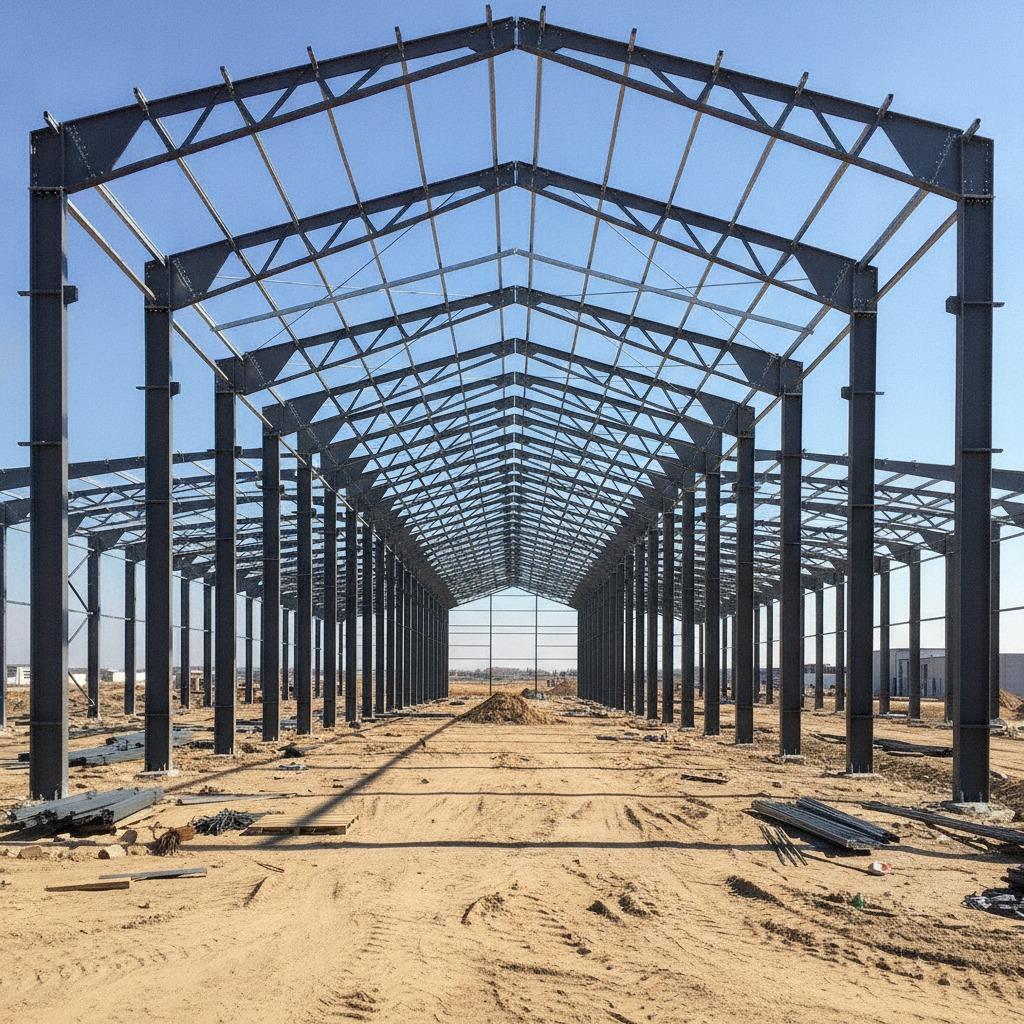
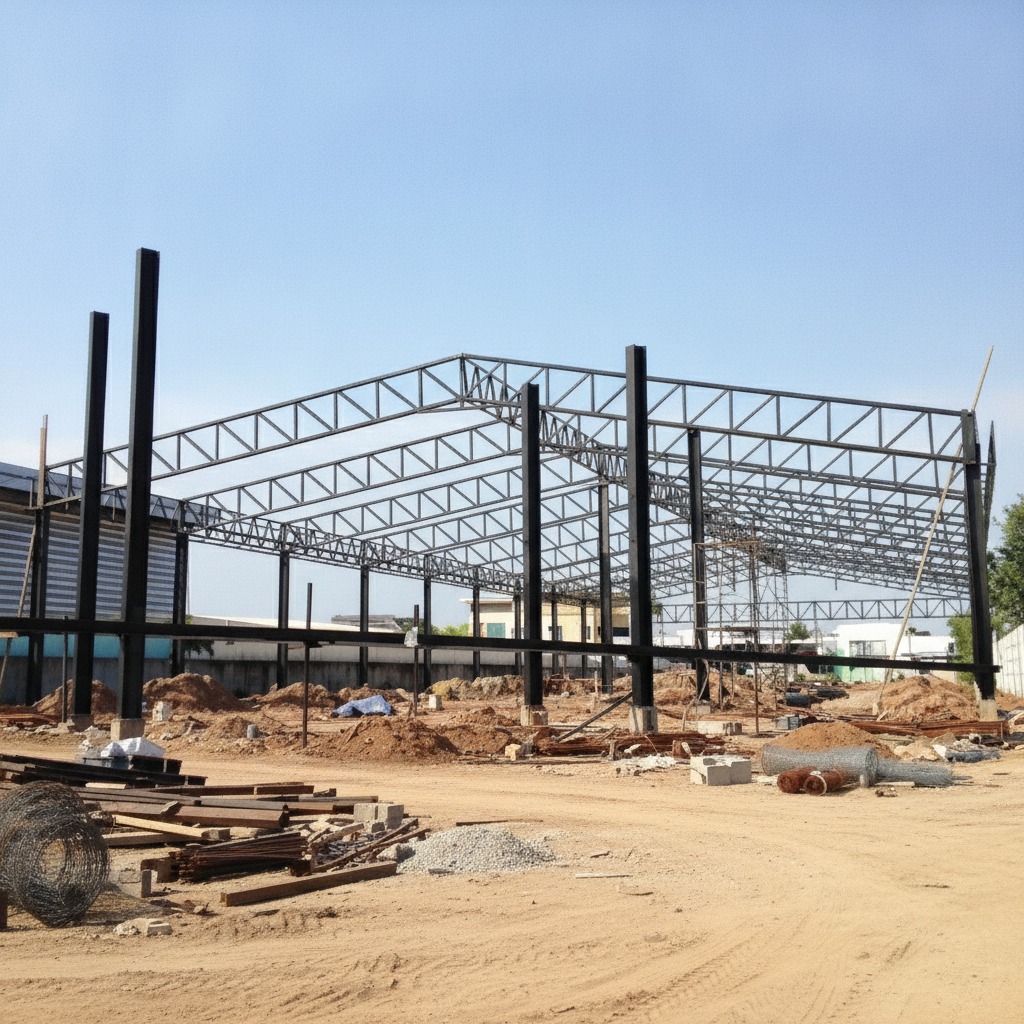
The frame shown in the supplied product information is a good example of the kind of structure buyers evaluate in the field: tall vertical columns, long-span roof trusses, repeated bays, and a pitched roof profile that leaves generous headroom. It is not finished, and that matters. Before cladding and services go in, the frame tells you nearly everything about how the building will function. If the skeleton is right, the rest of the project becomes manageable. If it is wrong, the shell may still go up, but the building will be awkward to use, expensive to modify, or frustrating to maintain.
What a steel building frame is actually solving
At a basic level, a steel building is solving three problems at once: carrying load, creating usable space, and doing it efficiently. Industrial owners rarely ask for steel because they love exposed members. They ask for it because steel can span wider distances than many conventional framing options, while keeping the interior open for forklifts, racking, workstations, or livestock equipment.
That open interior is the real value. A wide-span structure reduces the number of internal supports, which makes movement easier and gives the building a more flexible future. A warehouse may begin as bulk storage and later become a packing area or light manufacturing space. A workshop may add mezzanines, partitions, or service lines. With steel structures, those changes are usually more manageable than with a cramped framing system.
There is a trade-off, of course. Steel is not forgiving of vague design assumptions. If the buyer underestimates roof loading, service penetrations, thermal movement, or future equipment, the frame can end up carrying more than it was truly intended to carry. That is why buyers should look beyond the phrase “steel structure” and ask what the frame is meant to do on day one and what it may be asked to do in year five.
Why the visible frame details matter before cladding starts
The supplied image description points to a rectangular building with multiple bays, repeated truss members, and an open interior. Those details are not cosmetic. They tell the buyer something about the building’s logic.
A repetitive bay layout usually suggests a modular system, which can help with fabrication and erection planning. Tall vertical columns indicate a desire for greater usable height, often important for storage racking, overhead cranes, ventilation, or simply stacking volume. Roof trusses with triangular lattice members are common because they distribute forces efficiently across longer spans. Secondary members such as purlins help support roof sheets and stiffen the assembly.
Buyers should not assume that a visible steel frame alone guarantees suitability. A structure can look robust and still be poorly matched to the site. For example, a building intended for warehouse use may require different snow, wind, or service load assumptions than a simple storage shed. The frame also has to align with the foundations, enclosure system, drainage, and internal operations. A handsome frame that does not suit the workflow can become a very expensive mistake.
Steel structures versus lighter sheds: the practical differences
The term steel building gets used loosely, but there is a real difference between a light utility shed and a true structural frame intended for industrial use.
1. Structural purpose
A light shed may only need modest storage performance. A steel structure for industrial use often has to support wider spans, taller clearances, heavier service loads, and sometimes future mechanical equipment.
2. Frame depth and stiffness
The deeper truss geometry visible in larger steel structures is there for a reason. It helps manage span and deflection. Shallow framing may save material, but it can limit usable space or make the roof feel less stable under service conditions.
3. Expansion potential
Steel structures often lend themselves to extension. That is useful for growing operations, but only if the original bay arrangement and foundation plan leave room for it.
4. Construction sequence
Because steel is fabricated off-site and erected on-site, scheduling becomes a coordination exercise. If foundations are late, deliveries stack up. If fabrication drawings are changed too late, the site can stall. This is where procurement teams earn their keep.
What sourcing teams should ask before approving a steel building
Buyers do not need to become structural engineers, but they do need to ask sharper questions than “How much per ton?” The cheapest frame is rarely the cheapest building.
First, clarify the intended use. A logistics shed, production hall, agricultural store, and workshop all place different demands on the structure. Even if the visible steel structure looks similar, the design priorities may not be.
Second, ask what system is being offered. The supplied information suggests either a pre-engineered metal building or a custom steel frame, but the exact type is uncertain. That distinction matters. Pre-engineered systems are often favored for repeatability and speed. Custom frames can better fit unusual spans, process equipment, or site constraints.
Third, review fabrication and erection scope. Is the supplier providing only the frame, or also the secondary framing, base plates, anchor coordination, and site erection support? Gaps in scope are a common source of delay.
Fourth, look at corrosion protection in practical terms. The product information mentions dark painted or primed vertical columns and possibly galvanized or painted roof and side framing, but the exact coating is not confirmed. That caution is important. Buyers should match finish to environment, especially in humid, coastal, agricultural, or chemical-exposed settings.
Common mistakes when buying steel structures
One recurring mistake is treating all large-span frames as interchangeable. They are not. A building intended for dry storage can tolerate a different internal layout from one housing manufacturing equipment, conveyors, or frequent forklift traffic.
Another mistake is overfocusing on visible size rather than fabrication discipline. Straight columns, consistent weld quality, clean bolt interfaces, and sensible member arrangement matter more than dramatic appearance. A frame that looks substantial but is awkward to erect can cost time on site.
A third issue is underestimating roof volume. The tall pitched profile visible in the structure description provides generous internal space, which is useful for heat dissipation and material handling. But more volume can also mean more surface area to insulate, maintain, or ventilate. That is not a problem, just a reminder that space is never free.
Finally, buyers sometimes ignore future adaptation. If the building may later need insulation, solar, crane rails, or enclosed offices, those needs should be raised early. Retrofitting around a completed frame is possible, but it is usually more expensive than designing for the option from the start.
How to judge whether a steel structure is the right fit
A good steel structure should feel boring in the best way: it should do its job quietly. The frame should give the operation clear floor space, sensible height, and a layout that makes circulation easy. It should also leave room for services, lighting, fire protection, and any future partitions.
For engineers and sourcing managers, the decision often comes down to this: does the building need maximum openness, repeatable bays, and a fast erection sequence? If yes, steel is usually a strong candidate. If the project is small, highly irregular, or expected to change shape every few months, the design review becomes more important than the material label.
A decent rule of thumb is to compare not only first cost but also operating fit. A warehouse with cramped bays, awkward column spacing, or limited height may cost less upfront and more every day afterward. That hidden cost is easy to miss during procurement because it does not appear on the quotation sheet.
Buyer-facing questions worth putting on the table
Before signing off on a steel building frame, ask for enough detail to avoid guesswork:
What is the intended use of the steel structures, and what assumptions were used for the design?
What parts of the package are included in fabrication and erection?
How will the roof and wall enclosure connect to the frame?
What finish or coating is specified for the environment?
Are there provisions for expansion, services, or future equipment loads?
Those questions are not administrative clutter. They are the difference between buying a frame and buying a building that works.
FAQ
Is a steel structure always the best choice for a warehouse?
Not always, but it is often one of the most practical choices when large open space, rapid construction, and future flexibility matter.
What makes one steel building better than another?
Member sizing, bay layout, connection strategy, coating, and how well the frame matches the actual use case. The cheapest quoted frame is not automatically the best value.
Can these structures be adapted later?
Often yes, but adaptation is easier when the original frame leaves room for it. Future-proofing is cheaper on paper than after the roof is on.
What to do next
If you are comparing steel structure options for a warehouse, workshop, farm building, or production shed, start with the frame logic rather than the cladding finish. Ask how the building spans, how it is braced, how the bays repeat, and how the structure supports your real operating layout. That is where the value lives.
When the frame is well planned, the rest of the project tends to fall into place. When it is not, everyone notices it later, usually after the equipment arrives and the floor is already busy.