
Why a steel structure still wins when the building needs open space
A steel structure is often the quiet answer behind warehouses, workshops, farm sheds, and logistics halls that need a big, uninterrupted interior. The appeal is easy to understand once you stand inside one: long roof spans, few interior obstructions, and a frame that looks orderly even before the wall cladding goes on. For engineers and sourcing teams, the real decision is not whether steel can carry the building. It is whether the chosen steel structures will suit the span, loading, assembly method, and future use of the facility without creating expensive compromises later.
That matters because a steel building is rarely just a shell. It affects racking layout, truck movement, crane allowance, maintenance access, and even how quickly the project can move from foundations to enclosed space. A frame that looks simple from the outside may still demand careful coordination on column spacing, truss depth, connection details, and secondary framing. Buy too lightly, and the building becomes difficult to adapt. Buy too heavily, and you pay for steel you never really needed.
What you can tell from a typical steel building frame
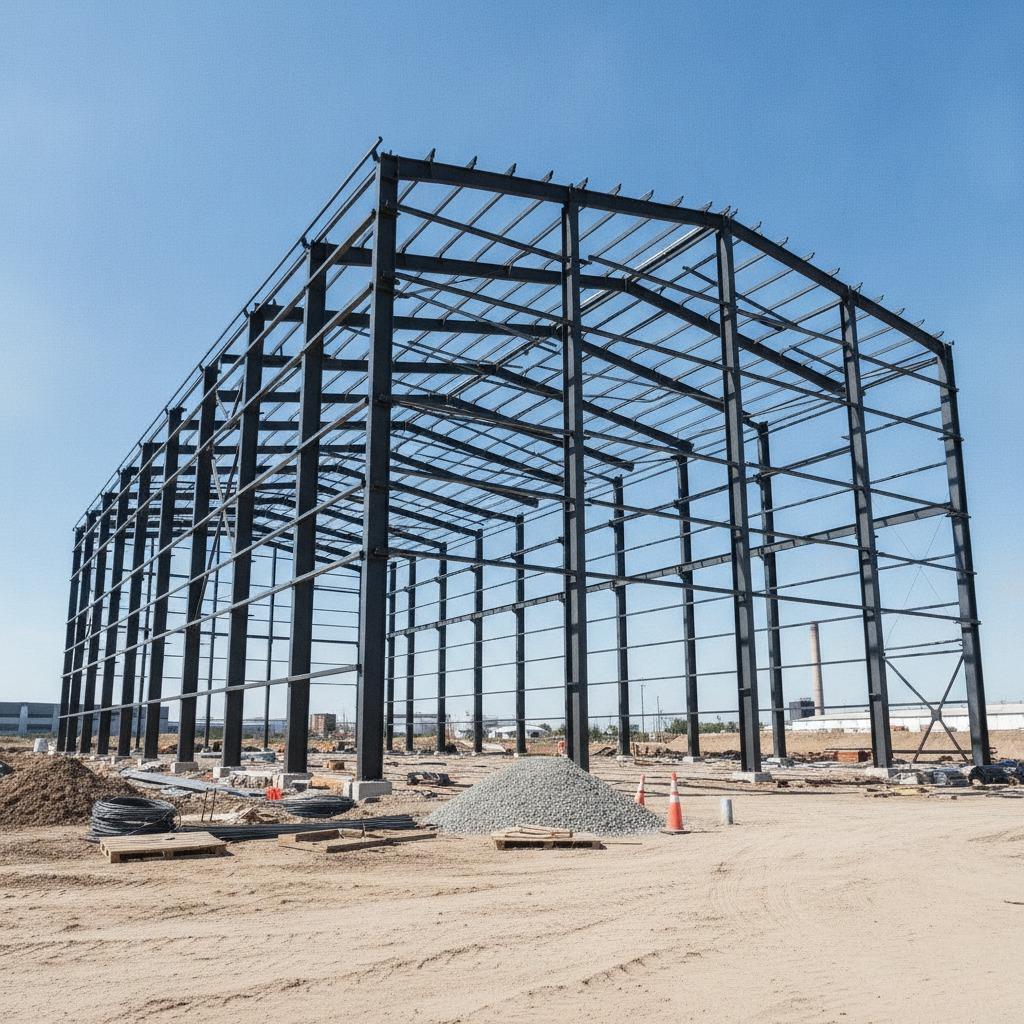
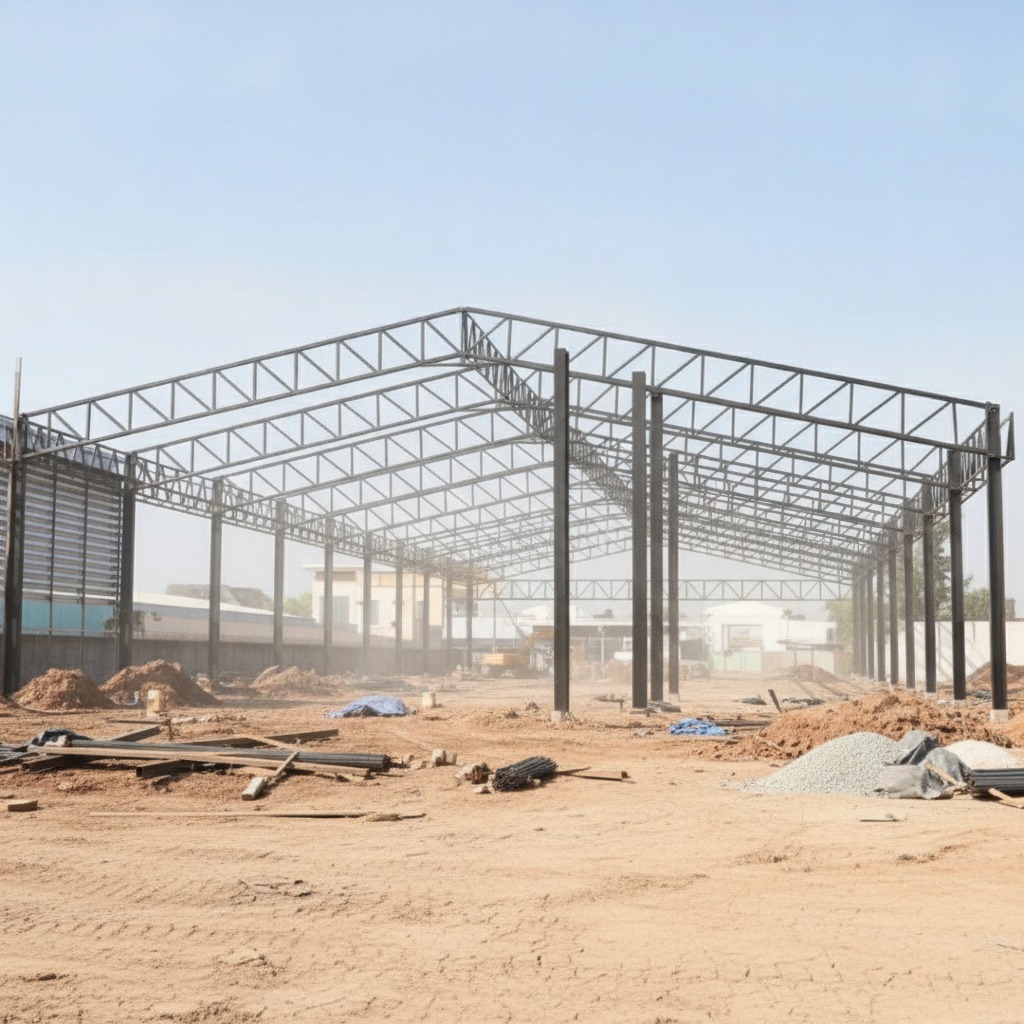
A visible steel building frame for an industrial hall usually tells a practical story before any drawings are opened. Tall perimeter columns carry repeated roof trusses or lattice girders across a wide clear span. Secondary roof members bridge between the main frames. The overall picture is one of modular repetition: bay after bay, each one built to transfer roof and wall loads down to the foundations.
That kind of geometry is common in warehouses, workshops, storage halls, and agricultural buildings because it gives users a wide floor plate with few internal columns. In day-to-day terms, that means easier forklift movement, cleaner storage aisles, and more flexible machine placement. It also leaves room for later changes, which is one reason many buyers lean toward steel building solutions even when a less expensive structure might appear adequate at first glance.
From a manufacturing standpoint, these frames are usually fabricated as structural steelwork, with members shop-prepared and then assembled on site. Some projects use a fully bolted system; others rely on a mix of shop welding and site bolting. The exact connection style is not always obvious from a finished frame, but the point is the same: the building depends on disciplined fabrication and sequence-controlled erection.
Steel structure versus other building frames: the practical trade-off
If the decision were only about low initial material cost, the answer might not always be steel. But industrial buyers rarely get to stop there. They need to compare speed, span, adaptability, and serviceability.
A steel structure usually offers:
High clear spans without a forest of interior supports
Predictable fabrication and repeatable bay layouts
Better suitability for expansion or reconfiguration than many rigid small-span systems
Fast erection when the foundation and steel supply are coordinated properly
That said, steel structures also bring responsibilities. Corrosion protection must be considered early, especially if the building will sit in a humid, coastal, or chemically active environment. Fire protection may also become a design and budget issue depending on code requirements and occupancy. These are not decorative extras. They influence lifecycle cost in a very real way.
Why the frame geometry matters more than buyers sometimes expect
A large-span industrial frame is not just a bigger version of a small shed. Once spans increase, truss depth, column spacing, bracing layout, and load paths all become more sensitive. A tall frame with repeated triangular roof trusses can look robust, but the real value lies in how efficiently it distributes weight while leaving the floor open.
This is where many sourcing conversations go wrong. Buyers ask first about sheet color, then about price, and only later about actual geometry. Yet the geometry shapes everything that follows: roof drainage, installation access, internal clearance, and whether future equipment can be added without conflict. A steel building with a generous clear span may look simple in photos, but the engineering behind that openness is usually the part that determines whether the building stays useful for decades.
Key features to examine before you approve a frame design
Start with the function of the space. A warehouse with pallet racking has different needs from a fabrication shop or an agricultural storage hall. Then check the following:
Span and bay spacing relative to your internal layout
Roof clearance and any allowance for suspended services
Column positions at doors, loading zones, and circulation routes
Secondary framing spacing for roof sheeting and service attachments
Coating or finish expectations for the exposure level
None of these items sounds dramatic on its own. Together, they decide whether the building is easy to operate or awkward from the first month onward.
Common buyer mistakes when ordering steel structures
The most common mistake is treating all steel structures as interchangeable. They are not. Two buildings may look similar in a yard or on a staging area, yet one may be suited to a light storage use while the other is much better for a heavier industrial loading condition.
Another mistake is underestimating the cost of late changes. Moving a door opening, changing roof slope, or adding a mezzanine after the frame is already fabricated can ripple through the whole project. In steel construction, small changes often touch multiple members and connection points. That is why a good early review with the designer and fabrication team is worth far more than a rushed approval.
A third issue is forgetting site realities. The frame may be modular, but the site is never perfectly forgiving. Crane access, foundation tolerance, weather windows, and delivery sequencing all affect erection. A steel building that looks straightforward in a drawing may become frustrating if these practical details are ignored.
How to evaluate a steel building supplier or fabricator
Sourcing managers usually want a supplier who can do more than deliver metal. They need consistent fabrication, clear documentation, and a sensible response when the project changes a little, as projects often do.
Ask how the frame is fabricated and checked before shipment. Ask what is included in the supply scope: main columns, roof trusses, secondary framing members, perimeter beams, braces, connection hardware, surface treatment, and any erection support. If that scope is vague, the project will probably become vague in other ways too.
For engineers, it is also reasonable to ask for clarity on connection assumptions, bracing strategy, and whether the system is intended for a custom-designed building or a more standardized steel building layout. Even if some details are not visible in the first package, they should be explainable before procurement advances too far.
Practical advice for teams buying for warehouses, workshops, or farm use
If the building will hold racking, verify the internal clearances against your pallet heights and lift equipment. If it will house fabrication or maintenance work, think about overhead services, extraction, and future lifting points. If it is for agricultural storage, consider whether the structure needs extra tolerance for open-sided use, dust, moisture, or seasonal loading patterns.
One useful habit is to review the frame from the inside out, not only from the outside in. Buyers often focus on the exterior profile because it is what the project renders show. But the internal circulation path, the usable wall line, and the floor-to-eave relationship usually matter more once operations begin.
A small caution here: a frame that appears heavy-duty is not automatically the best choice. Overspecification can make the building more expensive, but it can also slow procurement and erection. The better approach is to match the structural logic to the actual business use, not to a vague idea of “future-proofing” that may never be tested.
FAQ: common questions about steel structures
Are steel structures only for large warehouses?
No. They are widely used in warehouses, factories, workshops, agricultural sheds, and other enclosed or semi-enclosed buildings where open floor area is useful.
Why are repeated truss bays so common?
Because repetition simplifies fabrication, erection, and load transfer. It also helps create predictable space inside the building.
Can a steel building be expanded later?
Often, yes, but that depends on the original structural layout and foundation planning. Expansion is easier when it is considered from the start.
What should I watch for in the frame finish?
Look for evidence of appropriate coating or painting for the environment. Surface protection matters, especially if the building will face moisture or corrosive exposure.
Choosing the right next step
If your project needs a wide, open interior, a steel structure is usually worth serious attention. The decision should rest on span, use case, erection practicality, and lifecycle concerns, not just on the simplest upfront quote. A well-designed frame gives you room to work, room to store, and room to adapt later. That is why steel structures continue to dominate so many industrial and light-commercial building projects.
For buyers comparing options, the next step is straightforward: define the building function, confirm the clear-span and internal clearance needs, and review the proposed structural layout before approving fabrication. That one discipline saves more trouble than most rush decisions ever reveal.