
What buyers really need from an LED display
When people search for an led display, they are usually not looking for abstract technology. They are trying to solve a very practical problem: how to put moving text, color graphics, or live information where customers, visitors, or operators will actually notice it. In a storefront, that might mean replacing a static sign that fades into the background. In a factory, it may mean making machine status visible at a glance. In a public venue, it often comes down to wayfinding and crowd flow. The device itself can look simple from the front, but the purchasing decision is rarely simple.
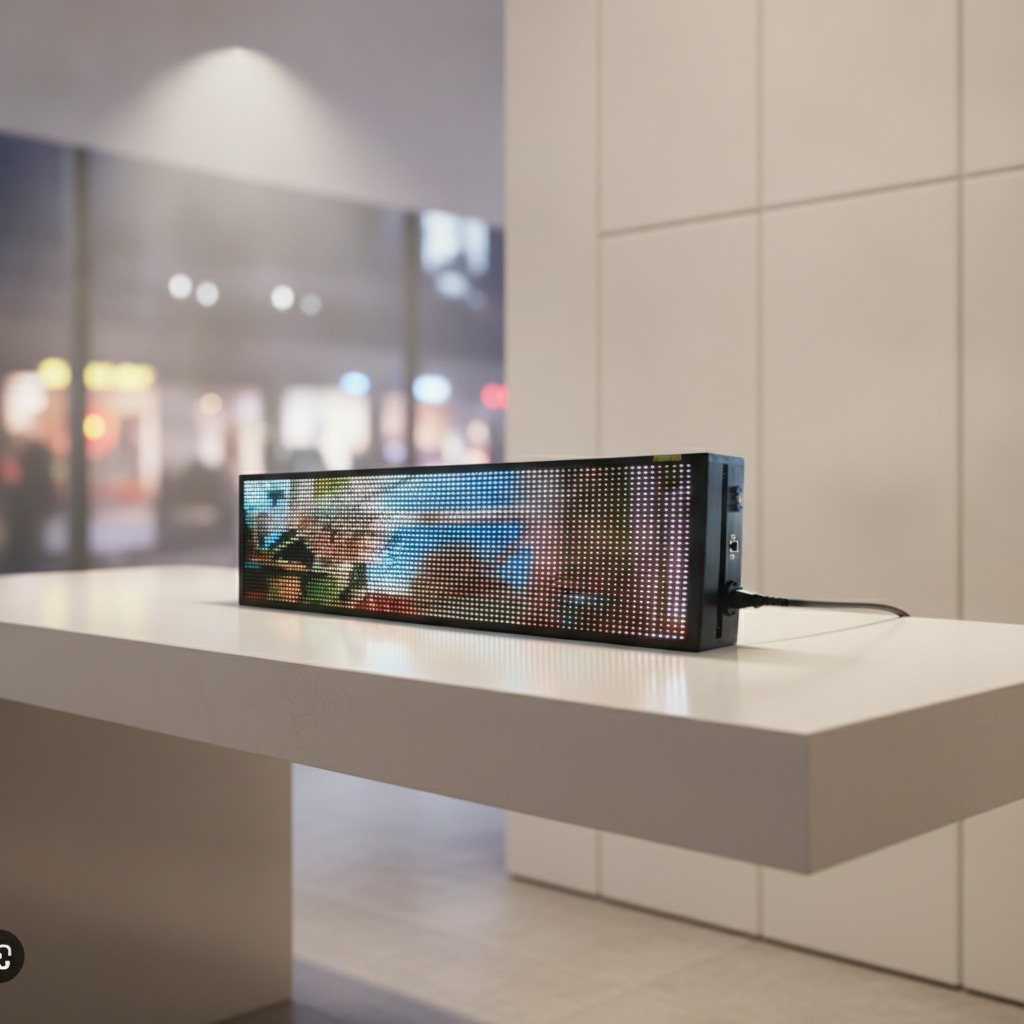
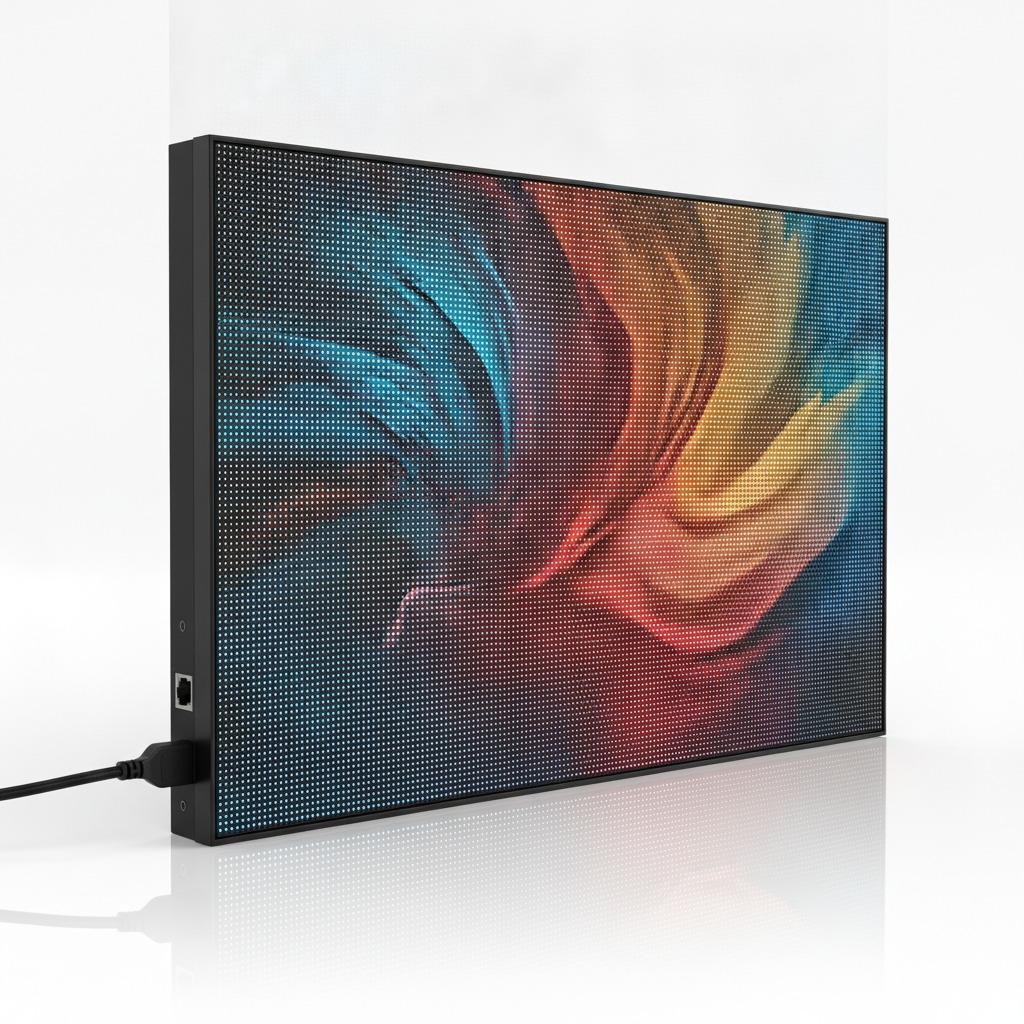
A rectangular LED display panel, like the cabinet-style unit described here, is built to present dynamic visual content on a dense pixel matrix. The visible construction matters. A black rigid housing, a slim rectangular form, and a full front face of LED pixels behind a dark mask all suggest a product meant to sit in commercial settings where both performance and appearance count. That combination is common in signage, advertising, and information display work, where the screen has to be readable, durable enough for regular use, and straightforward to connect into a larger system.
This article is meant to help engineers, sourcing managers, and product teams decide what kind of LED display fits a given use case, what to check before ordering, and where buyers often get tripped up by vague specifications or overconfident sales claims.
Quick takeaways before you compare products
Not every LED display is built for the same job. A panel used for a menu board in a restaurant may be very different from a public information board in a transport hub or a status display in an industrial line. The visible cabinet construction in this case points toward a modular, electronic display assembly rather than a one-piece consumer screen. That is important because modular systems are often easier to integrate into a larger installation, but they also shift more responsibility to the buyer or integrator: controller choice, mounting, cabling, maintenance access, and content management all matter.
If you are comparing options, keep these questions in view:
Is the display for indoor or outdoor exposure?
Will it show text, graphics, or full-motion video?
How close will viewers stand to it?
Does the installation need single-panel use or a larger video wall arrangement?
How much access is needed for wiring, power, and service?
Those questions sound basic, but they shape almost every downstream decision, including the acceptable cabinet size, mask design, and how much engineering support you need from the supplier.
What a rectangular LED display cabinet is made to do
The core function of this product category is straightforward: display color graphics and text on a pixel matrix. The front face is not decorative glass in the usual sense; it is a tightly packed field of LED points, protected and visually unified by a dark mask. That mask helps the image read as a single surface rather than a scatter of individual emitters. For buyers, that means the display can deliver strong visual impact even when the installation environment is busy or bright.
In commercial use, the value of an LED display often lies in immediacy. Static signs can be ignored. Printed posters can become outdated. But a display panel can change in seconds. A retailer can promote a lunch special, a venue can update a queue message, and an operations team can publish a line status alert without replacing hardware. That flexibility is why this category appears in storefront advertising, menu boards, event signage, industrial status boards, and public information systems.
One small caution: buyers sometimes overfocus on visual drama and underfocus on operation. A display that looks impressive in a sales photo may still be awkward to mount, difficult to feed with content, or too sensitive for the actual environment. The front face is only part of the story.
How the construction affects real-world use
The visible black rigid housing suggests a cabinet built for assembly, protection, and mounting. In manufacturing terms, this usually means a combination of LED module assembly, PCB electronics, wiring, and metal enclosure fabrication. The exact process and pixel pitch are not provided, so it would be unwise to guess at the fine details. Still, the overall structure tells you something useful: this is not a loose board or a consumer TV panel. It is an engineered display cabinet intended to be installed, powered, and integrated into a larger visual system.
Why the side port matters
A visible side I/O or power connection area is a practical detail, not a minor one. It hints at how the unit may be connected in a field installation. For procurement teams, that means two things. First, service access matters; if a unit is buried in a frame or mounted too tightly against a wall, maintenance becomes painful. Second, cable routing has to be planned early. A clean-looking installation can become messy fast if power and data paths are not considered during the layout stage.
Mounting or bracket areas also matter because they affect both installation speed and structural confidence. In a busy commercial environment, no one wants a screen that drifts out of alignment or needs repeated adjustment after vibration, temperature changes, or routine handling.
LED display ekran, LED display fiyat, and what buyers should actually compare
Searches often mix English and local market terms, so it is common to see buyers ask for LED display ekran options alongside LED display fiyat. The challenge is that price comparisons are often incomplete. Two units that appear similar can differ in cabinet structure, service access, control compatibility, brightness behavior, or installation method. If the quote only shows a number without usage context, it is not enough to make a solid decision.
Instead of comparing only the sticker price, buyers should compare the cost of getting the display to work reliably in their own setting. That includes mounting hardware, controller integration, cabling, support for the content format you need, and any enclosure or protective measures required by the installation environment. A lower upfront price can become expensive if the unit needs repeated rework or extra parts after delivery.
Selection criteria that matter more than marketing language
There are a few practical criteria that separate a useful LED display from one that creates friction after purchase.
1. Viewing distance and content type
If the display is meant for close viewing, text clarity and pixel arrangement become more important than sheer size. If it is meant for a farther audience, larger visual elements and stronger contrast may matter more. Since the exact pixel pitch is unknown here, the safest approach is to align the content plan with the intended viewing distance before selecting the final unit.
2. Indoor or outdoor environment
Do not assume a display cabinet is ready for weather exposure just because it has a sturdy housing. Water resistance, dust protection, and temperature behavior are separate questions, and they need verified documentation. If the application is outdoors or in a harsh industrial area, ask for the specific environmental suitability rather than relying on general product language.
3. Service and replacement access
LED displays are electronic systems, and electronics eventually need service. Cabinet-style construction is often helpful because it can make module replacement or wiring access more manageable, but only if the enclosure layout supports it. A panel that is hard to open or difficult to disconnect can slow down maintenance in the field.
4. Integration with your controller and content workflow
Even a well-built display can become a bottleneck if it does not fit the content system you already use. Before ordering, confirm how the display will accept data, who will manage content, and how updates will be handled. This is especially important for chains, campuses, and industrial sites where multiple displays may need synchronized messaging.
Common mistakes buyers make
One common mistake is treating all LED displays as interchangeable. They are not. A retail sign, a menu board, a public notice board, and a production-status panel may all use similar visible technology, but the operating priorities are different. Readability, serviceability, brightness behavior, and mounting style may shift dramatically from one application to another.
Another mistake is buying around the photos. A clean front view tells you almost nothing about the rear connector layout, cabinet depth, or how the unit fits into an installation frame. The image clues here — a side connection area, a compact rectangular body, and a modular cabinet form — are useful, but they are not a complete technical specification.
There is also a tendency to overrequest features that sound impressive but do not improve the actual job. A buyer may ask for the brightest unit available when the real need is stable readability indoors. Or they may focus on pixel density while ignoring wiring access. A good sourcing process keeps the display tied to the use case, not to a feature checklist copied from a catalog.
Where this product category fits best
This kind of LED display panel is a natural fit for places where visual communication needs to be updated often and seen quickly. Retail storefronts use it for promotions. Restaurants and cafes use it for menu boards. Event organizers use it for schedules and directional messages. Industrial teams use it for line status, safety reminders, and operational alerts. Public spaces use it for notices, guidance, and real-time updates.
The cabinet-style form also makes sense where modular installation is preferred. If a buyer expects to assemble multiple panels into a larger system, the consistency of a rectangular enclosure and side connection access becomes more valuable than a single all-in-one product. That said, the buyer should verify compatibility with the planned system architecture instead of assuming every panel will behave the same way.
Practical buying advice for sourcing teams
Ask for the information that affects installation and daily use, not just the headline product name. At minimum, a sourcing team should confirm intended application, mounting method, wiring access, controller compatibility, environment suitability, and service approach. If any of those points are unclear, the project can get bogged down later.
It also helps to request photos or drawings showing the rear and side connections, not just the front face. The visible port area in this category is a reminder that the “back of house” details often decide whether the installation is clean and maintainable or awkward and improvised.
For engineers and product teams, the next step is usually to define the viewing situation and content behavior first, then narrow the display class from there. That sequence avoids a lot of wasted quoting and makes the final selection more defensible.
FAQ
Is an LED display the same as a digital sign?
Not exactly. A digital sign is the application; an LED display is one common hardware type used to deliver that application. Some digital signs use other screen technologies, but LED remains popular because it is bright, flexible, and suitable for dynamic content.
Can this type of display be used indoors and outdoors?
Possibly, but not by assumption. The visible structure alone does not confirm environmental suitability. Buyers should verify the specific installation rating and use conditions with the supplier.
Why does cabinet construction matter?
Because it affects installation, service, and scalability. A cabinet-style LED display is typically easier to mount and integrate into larger systems, but only if the wiring and access design support the real installation plan.
What should I ask before requesting a quote?
State the use case, viewing distance, content type, mounting location, and whether the panel is for a single install or part of a larger arrangement. That gives suppliers enough context to quote something relevant instead of guessing.
Next step for buyers
If you are evaluating an LED display for signage, advertising, or information use, start by matching the hardware to the environment and the message, not the other way around. A well-chosen rectangular LED display panel can make a space feel more active, more legible, and easier to manage. A poorly matched one can become a maintenance item with a bright front face.
For the cleanest buying process, prepare a short spec brief covering application, installation location, content style, and connection requirements. Then ask suppliers to respond to that brief rather than to a vague product name. That small step usually separates a workable display project from one that looks simple until the first install day.