
Why buyers keep coming back to the LED display
An led display is rarely bought because it looks modern, at least not only for that reason. Most sourcing decisions start with a practical problem: a message that needs to change fast, stay readable from a distance, and work harder than a printed sign ever could. For retailers, event teams, transport operators, and industrial sites, that usually means one thing—moving from static graphics to a programmable surface that can carry text, animation, and sometimes video without reprinting a board every time the message changes.
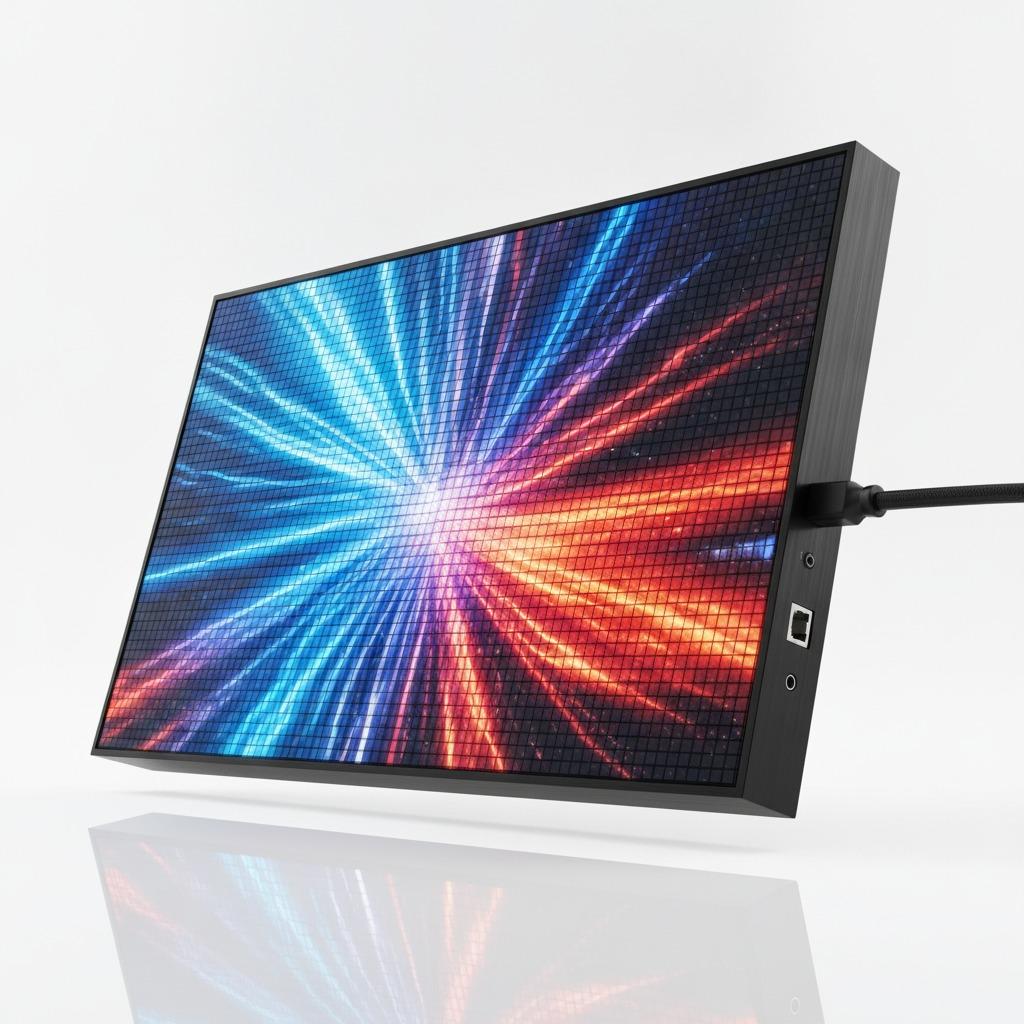
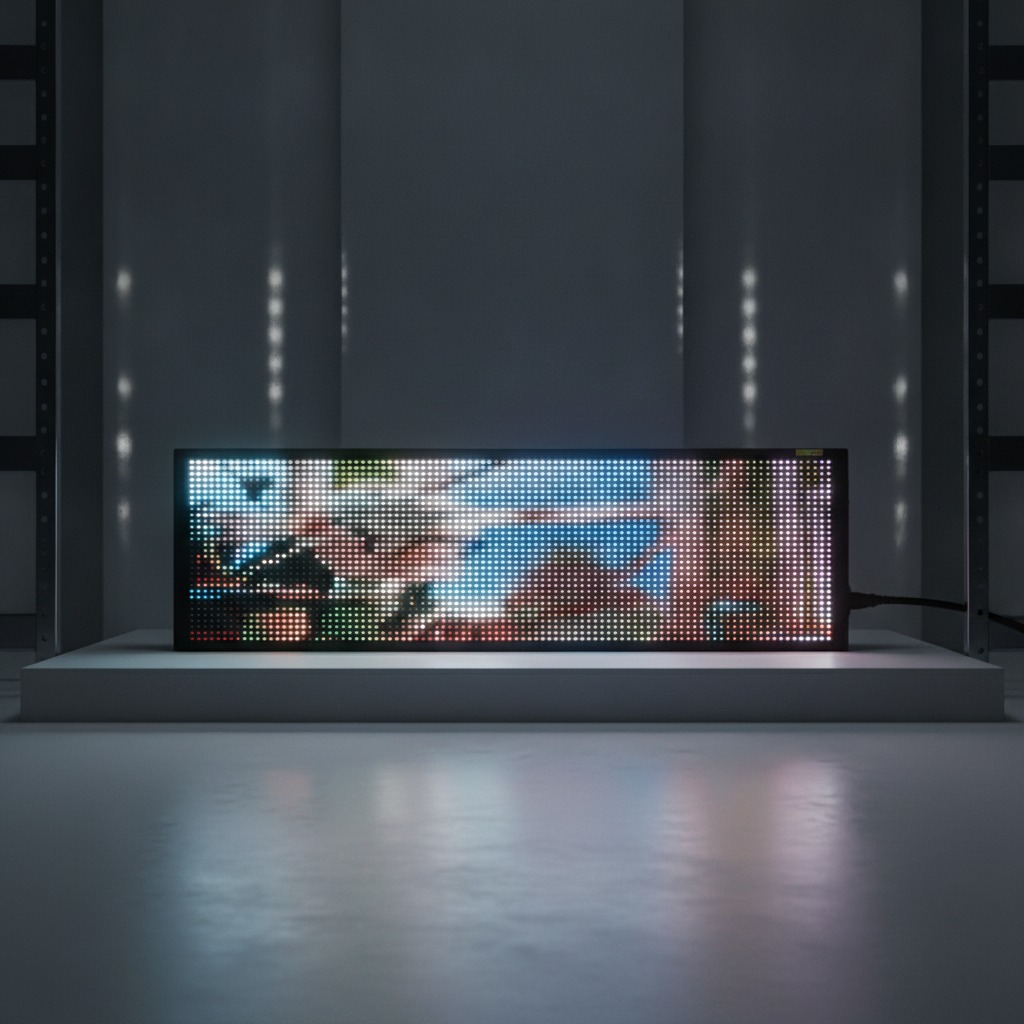
The product category here is a rectangular LED display panel or LED sign module with a slim black housing, a dense front-facing pixel grid, and a side connection area for power or data. That already tells a buyer quite a bit. It is built for visual communication, not decoration. The shape suggests a long horizontal format, which is often used for headline messaging, scrolling notices, promotional strips, or information banners. It is the kind of unit that becomes part of a storefront window, an exhibition stand, a reception area, or an internal notice system and then quietly takes over the job of keeping people informed.
What this type of display is meant to solve
Printed signage has a fixed life. It works well when the message is stable, but it becomes a burden when campaigns, prices, schedules, or safety notices change often. A LED display reduces that friction. Instead of replacing graphics, the operator changes the content. That simple shift matters in environments where time, visibility, and responsiveness carry real value.
There is also the attention factor. A lit display has a presence that printed boards cannot match, especially in busy spaces with competing visual noise. The illuminated pixel grid is not subtle, and that is the point. Used well, it helps a buyer make a message more noticeable without adding physical clutter. Used badly, it can become visual noise itself. That is why the purchase decision should never be reduced to “bright enough” or “cheap enough.” The real question is how the display fits the communication job.
Quick reference: where buyers typically use LED sign modules
For sourcing teams, the first filter is usually application. A long rectangular LED display tends to fit several common use cases:
– Retail storefront messaging and promotions
– Indoor advertising boards
– Event announcements and directional cues
– Public information displays
– Industrial notices or status messaging
– Transport or facility communication boards
These environments all share one requirement: the display must be legible, dependable, and easy to integrate into a broader signage plan. The exact installation can vary widely, but the buying logic stays similar. If the content changes often, the display earns its place. If the content barely changes, a simpler sign may still be more economical.
What can be observed from the product form
The visible construction points to an assembled electronic display module rather than a bare component. The front face is dominated by closely spaced LED points arranged in a grid, which suggests a design focused on text and graphic presentation. The casing is rigid and box-like, with a slim profile that should make it easier to mount or place within a larger frame or cabinet system. On the side, the connector area and cable input indicate that the unit is meant to receive both power and control signals through an external interface.
That may sound obvious, but in procurement it matters. A display with exposed connection points, for instance, may demand more careful cable management or enclosure planning. A unit with a dense pixel array may be better for text-heavy content than for ultra-fine visual detail, though the actual resolution and pitch are not confirmed here. Buyers should avoid reading too much into appearance alone. Still, the visible design tells us this is not a casual decorative light panel; it is a functional signage component built for repeated use.
Selection criteria that actually affect the buying decision
Because the exact specification set is not provided, a sensible buyer should work from the application first and the hardware second. For any led display purchase, the most useful decision points tend to be the following:
1. Viewing distance
The same display can feel sharp in a reception area and unreadable in a large lobby if the pixel density is not appropriate. Buyers often focus on size and overlook how far away the audience will stand. That is a mistake. The right display is one that reads cleanly at the intended distance, not the one with the most aggressive specification sheet.
2. Content type
Scrolling text, short notices, logos, and simple graphics are different jobs from video-rich advertising. A display that performs well for bold messages may not be the right choice for image-heavy campaigns. This is where the display’s pixel layout and control system matter, even if those details are not visible in a product photo.
3. Environment
Indoor or outdoor suitability is not something to guess about. If weather exposure, sunlight, dust, or temperature swings are part of the use case, the buyer should confirm the actual environmental rating rather than assume the enclosure is enough. A black rigid housing may offer protection and structure, but it does not automatically mean the unit is built for harsh exposure.
4. Integration and service access
The side interface area suggests that cabling and control access are part of the installation plan. That sounds minor until a technician has to reach the connector in a tight cabinet or replace a module after installation. Ease of service can save more time over the life of the system than a slightly lower unit price.
LED display ekran, LED display fiyat, and the language buyers use
Search behavior tells its own story. Terms like LED display ekran often surface when buyers are looking for a screen-like signage solution rather than a traditional panel. It is a practical phrase, common in many markets, and it usually points to an expectation of programmable visual output. Meanwhile, LED display fiyat searches usually come from buyers who are already comparing alternatives and need to understand why one unit costs more than another.
That price comparison can be misleading if it stops at the sticker. The lower-priced option may be acceptable for short-term indoor messaging, while a more robust unit may justify itself through better legibility, easier integration, or reduced maintenance. Since the exact pricing is not supplied here, the better approach is to compare the cost against the installation purpose, the content cycle, and the service burden. A display that needs constant repair is never really cheap.
Common mistakes buyers make
One common mistake is specifying by size alone. A long horizontal format may suit a headline strip beautifully, but if the content needs multiple lines or complex graphics, the layout may become cramped. Another mistake is underestimating power and cable planning. The visible connector area hints that installation details matter, and they often become the source of delay on project day.
Buyers also tend to overestimate how much content a display should carry at once. A busy board full of small text may technically be possible, but readability often suffers. Simpler messages, shorter cycles, and stronger contrast usually work better in real use. The display is a communication tool, not a storage container for every possible announcement.
There is also a procurement habit that deserves caution: assuming all LED modules are interchangeable. They are not. Mounting, control compatibility, brightness needs, and environmental suitability can all vary. If a team is buying replacement units for an existing system, compatibility checks should be treated as mandatory, not optional.
What to ask before placing an order
Because the exact technical specification is not confirmed, a buyer should ask direct questions before committing:
– Is the display intended for indoor or outdoor use?
– What content format will it mainly show: text, graphics, or video?
– How will it be mounted or integrated into a cabinet or frame?
– What connector or control interface is required?
– Is the unit intended for a single display or part of a larger modular system?
– What service access is needed after installation?
These are not bureaucratic questions. They are the questions that prevent expensive mismatches. A display can look right in a catalog image and still be the wrong technical fit for the site.
Practical buyer advice for sourcing teams and engineers
If the display is being sourced for a commercial environment, focus first on communication outcome. What should the audience notice, and how far away will they be? If the answer is a short headline at moderate distance, the present product form may be a sensible fit. If the answer is detailed image content or harsh outdoor exposure, more specification detail is needed before approval.
Engineers will usually care about integration, serviceability, and interface compatibility. Sourcing managers often care about supply continuity and how many hidden costs sit behind the unit price. Product teams, meanwhile, care about whether the display supports the brand or the customer experience without becoming a maintenance headache. All three groups benefit from the same discipline: match the display to the message, the location, and the operating cycle.
FAQ
Is this LED display suitable for advertising?
Based on the visible form, yes, it appears well suited to advertising and promotional messaging, especially where text or simple graphics need to be shown clearly. Exact performance depends on the final specifications.
Can I assume it is indoor or outdoor?
No. That should be confirmed directly. The housing alone does not prove weather resistance or outdoor suitability.
What should I compare besides price?
Compare application fit, viewing distance, content type, installation requirements, and maintenance access. Price matters, but it should not be the only filter in an LED display purchase.
Why does the side connector area matter?
It affects installation, cable routing, and servicing. In real projects, those details can determine whether the display is easy to deploy or awkward to maintain.
Next step for buyers
If you are evaluating a led display for signage, advertising, or operational messaging, start by documenting the actual use case before comparing models. Gather the viewing distance, content format, mounting method, and environmental conditions, then request the exact technical specification from the supplier. That keeps the conversation grounded in the real job the display must do, not just the appearance of the unit in a product photo.
When the requirements are clear, the right display becomes much easier to spot—and the wrong one becomes easy to reject before it turns into a costly installation problem.