
Why a bottle-shaped décor piece still matters in product and sourcing decisions
A bottle is not always just a container. In home décor, gifting, and tabletop merchandising, a bottle-shaped ceramic piece can serve as a shelf accent, a small bud vase, or simply a visual anchor in a room that needs a little structure. That distinction matters to buyers. Are you sourcing a functional item, a decorative object, or something that can do both without complaint? The answer changes how you evaluate materials, finishes, and quality expectations.
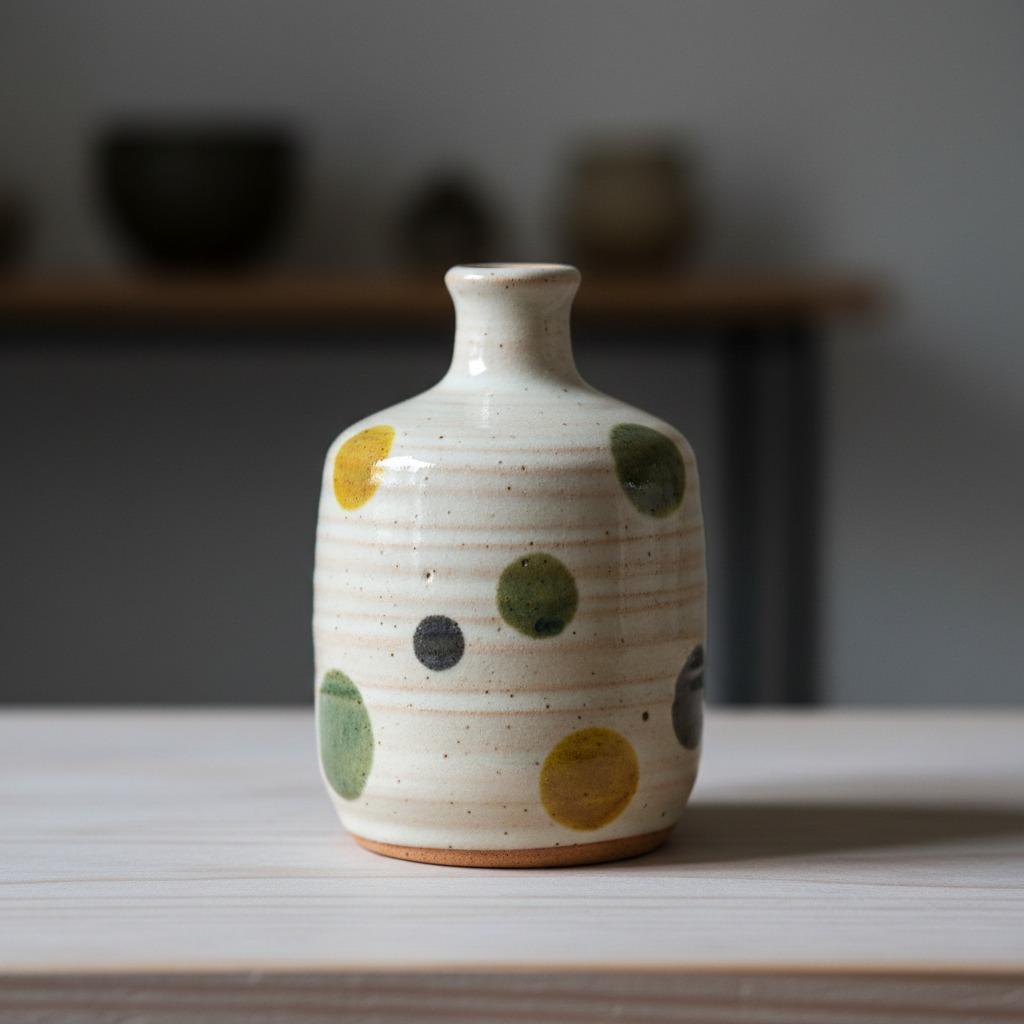
In the case of a small decorative ceramic bottle with a narrow neck and rounded body, the appeal is immediate: compact scale, a sealed bottle-like form, and a glazed surface that catches light without looking loud. The off-white base and dotted motifs in yellow, black, and muted gray-green give it a hand-finished feel, even if the exact forming method is uncertain. For engineers, sourcing teams, and product people, this kind of object sits at the intersection of craft and repeatability, which is where most of the interesting questions begin.
What this type of ceramic bottle is good for
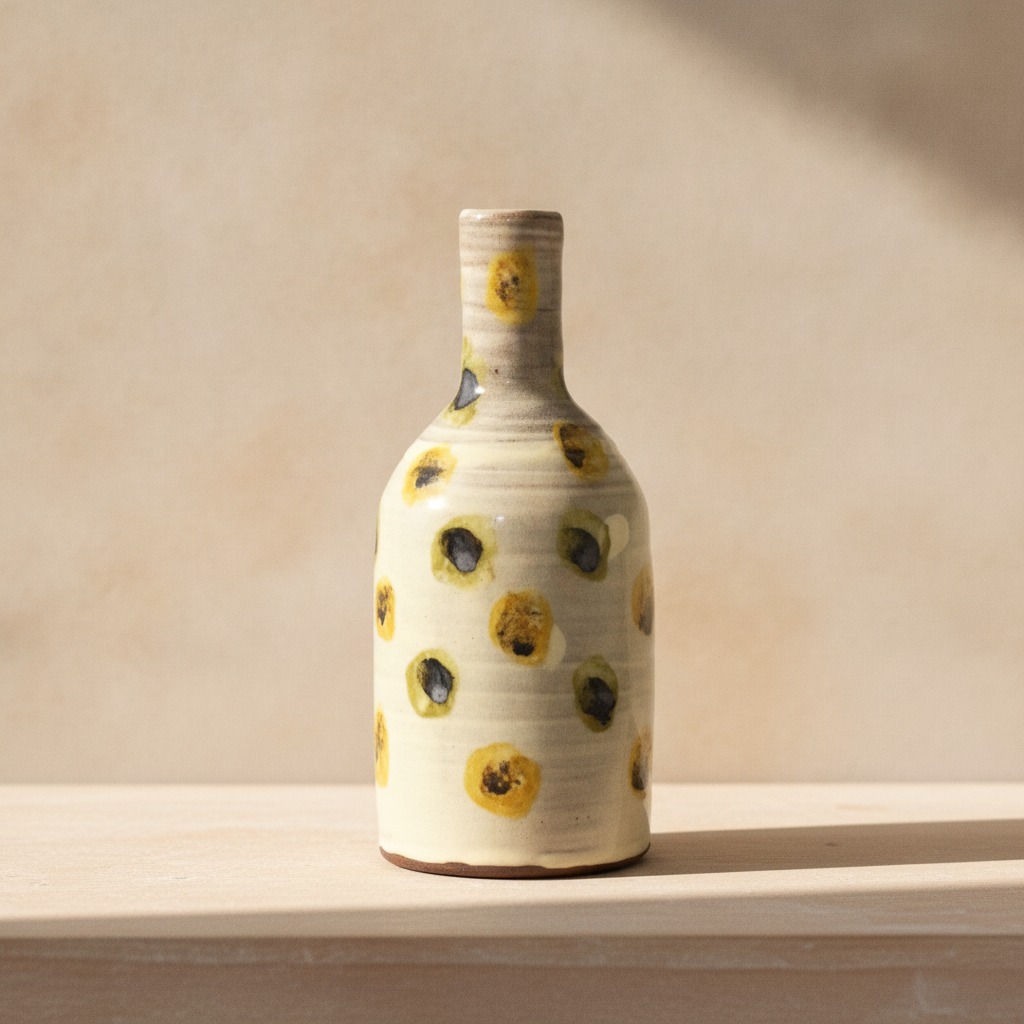
At a glance, this is not a storage vessel in the conventional sense. Its proportions and surface treatment point more toward display than utility. The bottle-like silhouette gives it a familiar visual language, but the compact size and decorative pattern suggest it belongs on a console, bookshelf, side table, or retail shelf rather than in a kitchen cabinet. That may sound obvious, but buyers still get tripped up by objects that resemble functional ware while behaving more like artware.
For small floral arrangements, the narrow neck is helpful. A few stems can stand upright and look deliberate rather than crowded. For home décor, the rounded body and flat base give the piece a stable, grounded presence. If you are buying for giftware, the neutral palette is a practical advantage because it does not force a room into one style. It can sit in a modern apartment, a rustic interior, or an artisan-themed collection without shouting over everything else.
Quick reference: how to think about bottle-shaped décor
Form: narrow neck, rounded shoulder, flat base
Material impression: glazed ceramic or stoneware appearance
Finish: glossy surface with hand-applied-looking dot motifs
Likely use: shelf accent, small bud vase, display object, giftware
Buyer caution: do not assume watertightness or true vase performance without testing
Material and surface details that influence buying decisions
Ceramic and stoneware-style pieces are popular for a reason: they offer visual weight, decent stability, and a surface that can be finished in many directions. This bottle appears glazed, with a sheen that gives the off-white body a cleaner and more finished look. Glaze matters here. A matte surface would soften the spotted pattern; a glossy one tends to sharpen the color contrast and make the small decorative marks feel more intentional.
The spotted motif is worth noticing from a sourcing perspective. It looks hand-applied or at least hand-inspired, which means slight variation may be part of the product’s charm. That kind of variation is often desirable in artisan pottery collections and boutique home goods. It is not, however, the same as tolerance control. If your program requires highly consistent decoration placement, confirm whether the pattern is screen-printed, transferred, painted, or applied by another process. The visual effect may be similar from a distance, but the production implications are not.
One practical aside: glossy ceramic can show fingerprints and dust faster than buyers expect. That is not a defect, just the reality of high-sheen surfaces on neutral colors. For showroom display or retail photography, it means maintenance matters more than with a rough-textured item.
How to separate decorative bottles from true functional bottles
This is where sourcing gets a little less romantic. A bottle-shaped object may look ready for flowers or liquid use, but appearances can mislead. The product description available here does not confirm interior watertightness, so it should not be assumed. If a customer intends to use the piece as a water bottle or even as a vase for fresh stems, testing is essential. A sealed decorative form can still be beautiful, but the buyer must know exactly what problem it solves.
When evaluating a ceramic bottle like this, ask a few direct questions:
Does the opening allow easy insertion of stems or cleaning tools?
Is the interior glazed or sealed in a way that supports water retention?
How stable is the flat base on a crowded shelf or uneven surface?
Will the finish withstand normal dusting, light moisture, or frequent handling?
Those questions sound basic, but they prevent avoidable product claims from slipping into the catalog. A decorative object should be marketed as such unless tested and verified for another use.
Selection criteria for sourcing teams
For buyers, the first decision is not whether the piece is attractive. It is whether the design matches the end market. A small decorative ceramic bottle with neutral colors and a compact silhouette usually fits moderate-risk, broad-appeal merchandising. It is easier to place than a bold sculptural object, and less visually committed than a highly themed seasonal item.
The second decision is finish consistency. Glaze sheen, dot placement, and body shape all affect how premium the piece feels. If this item is meant for a gift shop or home décor assortment, a visible inconsistency in the base, neck, or pattern spacing can read as charming; in a more controlled retail line, it may read as uneven. There is no universal answer. The right standard depends on price positioning and customer expectation.
The third decision is packaging. Ceramic ware, even small pieces, deserves enough protection to survive transit and warehouse handling. Flat bases help display, but edges, necks, and shoulders are still vulnerable. Buyers sometimes focus on the object and forget the carton. That is how breakage rates become an internal problem instead of a product problem.
Common mistakes when buying bottle-shaped ceramic pieces
One common mistake is assuming all bottle-shaped décor can function like a vase. It cannot. The silhouette is suggestive, but the construction may be purely decorative. Another mistake is treating the glossy finish as proof of durability. Glaze is not the same thing as impact resistance. A pretty bottle can still chip if stacked badly or shipped without adequate protection.
There is also a tendency to overlook scale. The piece described here is compact, which is useful for small spaces and layered displays, but it may disappear in a large room or on a deep mantel. Buyers should consider where the product will live in the customer’s home. Shelf accent pieces need different proportions than centerpieces.
Finally, do not over-assume craft origin. The hand-thrown look may be real or simply well-executed molding and glazing. If your marketing story depends on handmade production, verify it. Otherwise, keep the language safe and accurate.
How this kind of bottle compares with a water bottle or a glass bottle
The phrase bottle can point in several directions, and that can cause real confusion in product planning. A water bottle is usually judged by portability, closure, and reuse. A glass bottle is often assessed for clarity, closure compatibility, and food or beverage applications. This ceramic piece plays a different role entirely. It is not about carrying liquid, and it is not about seeing contents inside. Its value is visual, tactile, and spatial.
That difference affects how you sell it, photograph it, and merchandise it. A water bottle belongs in performance language. A glass bottle may live in packaging, beverage, or labware discussions. This ceramic bottle belongs in décor language: texture, pattern, shelf presence, and mood. Mixing those categories creates bad expectations and, eventually, complaints.
Practical buyer advice for retail, gifting, and collections
If you are buying for retail, think in terms of adjacency. This bottle works well near neutral ceramics, dried florals, handmade trays, or other quiet décor pieces. It can also serve as a color bridge between warm and cool displays because the pattern includes yellow, black, and muted gray-green tones. That flexibility is useful in planograms and seasonal resets.
If you are buying for gifting, packaging and presentation may matter as much as the product itself. A small object with a glossy surface and artisanal look tends to do well when it feels wrapped as a keepsake, not just shipped as inventory.
If you are buying for a collection, especially artisan pottery, assess whether the piece contributes a distinct silhouette. The narrow neck and rounded body are familiar forms, but the spotted decoration gives it enough character to hold its own among more subdued items.
FAQ buyers usually ask
Is it a real bottle?
Visually, yes in form language; functionally, it appears to be decorative rather than a conventional container. The available information does not confirm storage use.
Can it be used as a vase?
Possibly for small stems, but watertightness has not been verified. It should be tested before being sold or used that way.
Is the finish handmade?
The piece has a hand-crafted appearance, but exact production method is not confirmed. Avoid assuming handmade origin unless you have supplier verification.
What market does it fit best?
Home décor, shelf styling, giftware, and small artisan collections are the most natural fits.
What to ask before you place an order
Before buying any decorative bottle like this, ask for clear product photos from multiple angles, confirmation of size, surface finish details, and packaging information. If your use case involves flowers or liquids, request a simple function test rather than relying on appearance. If decoration consistency matters, ask how the spots are applied and what level of variation is normal. Those are not fussy questions; they are the difference between a smooth program and a disappointing return cycle.
A compact ceramic bottle can be an easy sell when it is positioned correctly. It offers the familiar shape of a bottle, the stability of ceramic, and the visual softness that comes from glaze and hand-influenced patterning. Just do not ask it to be something it is not.
Next step for sourcing and merchandising teams
If you are evaluating bottle-shaped décor for a catalog, showroom, or private-label line, start with the end use. Decide whether the piece is decorative only, vase-adjacent, or expected to handle water and fresh stems. From there, confirm finish, packaging, and decoration method before you place volume orders. That small bit of discipline usually saves more time than it costs.
For teams comparing similar home décor items, the smartest move is to sample early and test honestly. A bottle that looks simple on paper can behave very differently in hand, under light, and on a shelf. That is usually where the real buying decision gets made.