
A coffee service piece that does more than hold a drink
When buyers search for a cup coffee solution, they are usually not shopping for a simple vessel. They are trying to solve a service problem: how to make a drink feel stable in the hand, look consistent on the table, and survive daily use without turning generic after a month. A matching coffee cup, saucer, and spoon set does all three jobs at once. In a café, hotel, or showroom, that matters more than people admit. Presentation changes the way a drink is judged before the first sip.
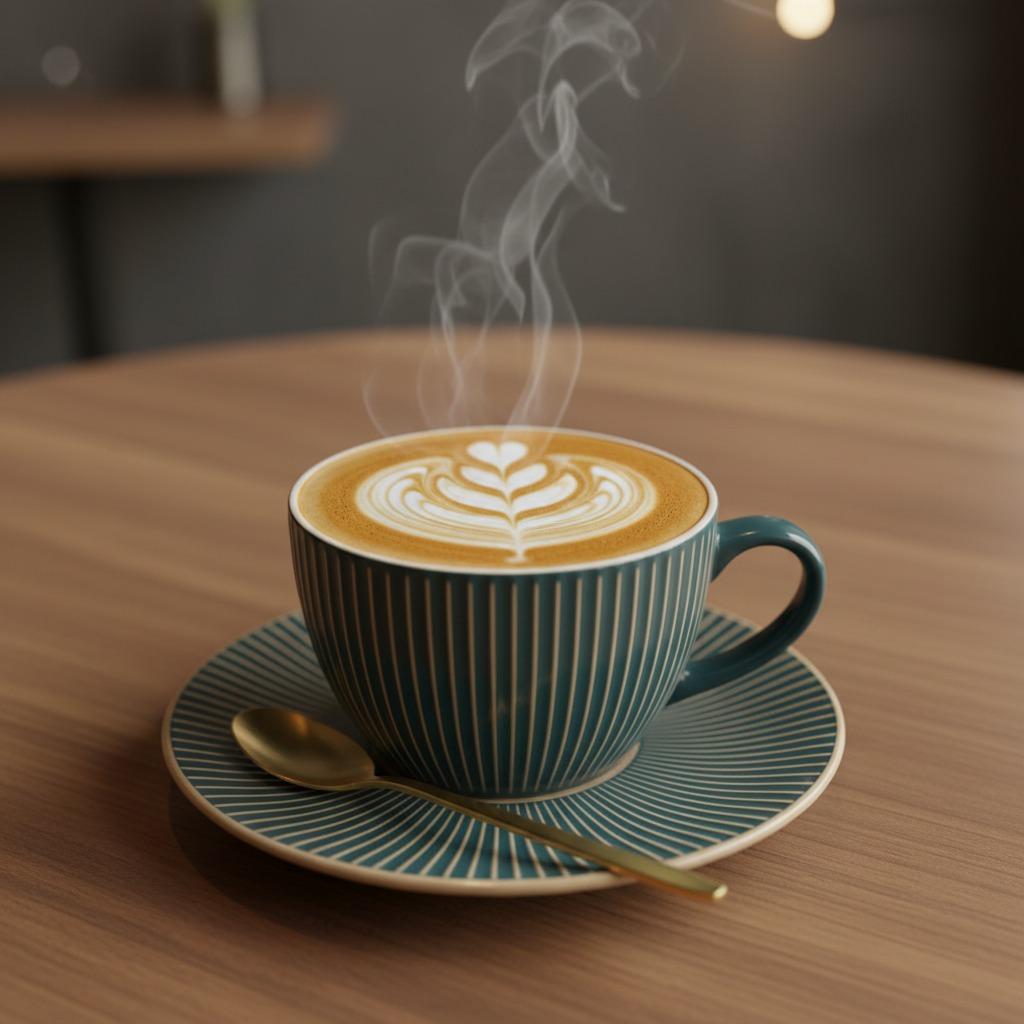
The set described here has the familiar language of café service: a glazed ceramic or stoneware cup, a matching saucer, and a spoon placed neatly beside it. The ribbed exterior gives the piece some texture, which is not only decorative. In practical use, fluting can improve grip and makes the cup read more like a deliberate tableware item than a plain container. For sourcing teams, that small shift in appearance is often the difference between “serviceable” and “giftable.”

What this type of coffee cup is meant to do
This style is best understood as a presentation-focused coffee service piece. It is suitable for coffee, latte, cappuccino, tea, or hot chocolate, but the wide cup shape and café-style look point especially toward milk-based drinks. The matching saucer supports the cup and provides a landing place for a spoon, which keeps the table setting tidy. That sounds modest, but tableware design is full of these small decisions. They affect speed of service, perceived quality, and how much confidence a guest feels when lifting the cup.
For operators, the appeal is straightforward. A coordinated coffee cup set can make one beverage look premium without requiring extra labor from the bar team. For product teams selling into retail or hospitality, it also creates a cleaner merchandising story: one set, one visual identity, one clear use case. That is easier to present than a stack of mismatched drinkware that depends on the buyer’s imagination.
Quick buyer takeaways
If you are evaluating this kind of ceramic coffee cup for café or hospitality use, keep three questions in front of you.
First, does the form suit the drink? A wider cup is often better for latte art and layered drinks, while a narrower profile may feel more formal. Second, does the finish fit the setting? The glossy teal-green surface with a warm accent band gives a more styled look than a neutral white cup, which can be an advantage or a drawback depending on the brand. Third, will the set hold up operationally? The image suggests a handled cup and a sized saucer, but details such as capacity, weight, and thermal behavior are not confirmed and should be checked before buying in volume.
Material and appearance: why the details matter
The visible material appears to be glazed ceramic or stoneware, which is a familiar route for drinkware because it balances aesthetics and durability reasonably well. The glossy finish gives the surface a clean light reflection and makes the color look deeper. Teal-green is not an accidental choice. In foodservice, green and blue-green tones tend to feel calm, slightly contemporary, and more expressive than standard white. The beige or brown accent near the base adds warmth and keeps the piece from looking too cold under café lighting.
The ribbed or fluted exterior deserves a note of its own. Decorative texture is often dismissed as styling, but in tableware it can change the whole handling experience. It creates visual shadow lines, breaks up a large smooth surface, and can make the cup easier to pick up. That said, textured finishes also collect more visual noise if they are badly glazed or poorly cleaned, so buyers should look closely at the consistency of the flutes and the quality of the glaze coverage.
How ceramic coffee cups are typically made
The exact process here cannot be confirmed from the image, but a set like this is commonly made through ceramic forming and glazing, often by slip-casting or molding. That is the normal manufacturing path for repeated shapes with consistent wall geometry and an integrated handle. After forming, the pieces are dried, fired, glazed, and fired again. If a spoon is included as part of the set, it may be supplied separately rather than manufactured with the cup itself.
From a buyer’s point of view, the key issue is consistency. In tableware, small differences show up quickly when pieces are stacked on a shelf or lined up on a banqueting tray. A saucer that is slightly off-center or a handle that sits at an awkward angle is enough to make the set feel cheaper than it should. It is one reason hospitality buyers tend to request samples before placing larger orders, even when the design looks straightforward.
Where this style fits best
Café and restaurant tableware
This is the most obvious use case. The cup and saucer combination supports direct service and gives baristas a clean way to finish a drink. For cafés that care about social-media-friendly presentation, the fluted cup and saturated glaze can help the beverage stand out.
Hotel beverage service
Hotels usually need tableware that looks composed at breakfast, room service, and lounge service without forcing the staff to do extra styling work. A coordinated coffee cup set fits that need well, especially when the saucer provides a stable footprint.
Home coffee presentation and gifting
At home, this kind of coffee cup feels more ceremonial than a plain mug. That makes it suitable for gifting sets or retail merchandising, where the buyer is purchasing atmosphere as much as utility. The included spoon, whether bundled or only shown for styling, helps the set read as complete.
Selection criteria buyers should not skip
One of the common mistakes in sourcing drinkware is focusing only on the look. The look matters, of course, but the operating environment matters more. Ask whether the ceramic coffee cup will be used for fast-turn café drinks or slower dining-room service. Those are not the same job. A piece that looks elegant on a shelf may be awkward to rinse, stack, or carry in quantity.
It is also worth checking the saucer’s geometry. A saucer should do more than match the cup visually. It should cradle the base securely and leave enough room for the spoon without making the setting feel crowded. The concentric ridges visible here add character, but they should not interfere with practical cleaning.
Another practical caution: do not assume that a stylish glazed cup is automatically microwave-safe, dishwasher-safe, or suitable for every beverage temperature. Those claims need confirmation from the supplier. In sourcing, pleasant assumptions are expensive.
Common mistakes when buying coffee cups for service
Buyers often over-order visual uniformity and under-order functional proof. They may love the finish and forget to ask how the glaze will age under repeated washing. Or they approve a cup because it photographs beautifully, only to discover that the handle opening is uncomfortable for guests with larger hands.
Another frequent issue is mismatched expectations around set contents. The image shows a spoon on the saucer, but whether the spoon is included in the actual product should be verified. That distinction matters for packaging, cost, and customer complaints. In hospitality purchasing, “as shown” is not a specification.
FAQ
Is this better for coffee or tea?
It works for both, but the shape and presentation lean toward coffee service, especially latte and cappuccino. Tea service is certainly possible if the volume and style fit the menu.
Why choose a ceramic coffee cup instead of a basic mug?
A ceramic coffee cup with saucer gives a more refined table presence. It supports café-style serving and can make a drink feel more deliberate, which is useful in hospitality and gifting.
What should I confirm before placing an order?
Check capacity, dimensions, finish consistency, set contents, and any care or safety requirements supplied by the vendor. Those details shape how the product performs in the real world far more than the product photo does.
A practical next step for sourcing teams
If you are comparing a cup coffee option for café, hotel, retail, or gifting use, start with the use case, not the color. Decide whether you need a presentation piece, an everyday service item, or both. Then request the details that the image cannot provide: exact size, material confirmation, set contents, and care guidance. The right coffee cup should feel good in the hand, look coherent on the table, and still make sense after hundreds of wash cycles. That is the standard worth buying to.