
Why a coffee machine choice matters more than it looks
A coffee machine is one of those countertop purchases that can quietly change the rhythm of a kitchen, office pantry, or small hospitality space. The right unit does more than make espresso; it sets expectations for speed, drink quality, cleanup, and how much fuss people are willing to tolerate before the first cup of the day. For buyers comparing a compact espresso machine against a broader home coffee machine category, the real question is not just “Will it brew?” but “Will it fit the way people actually drink coffee here?”
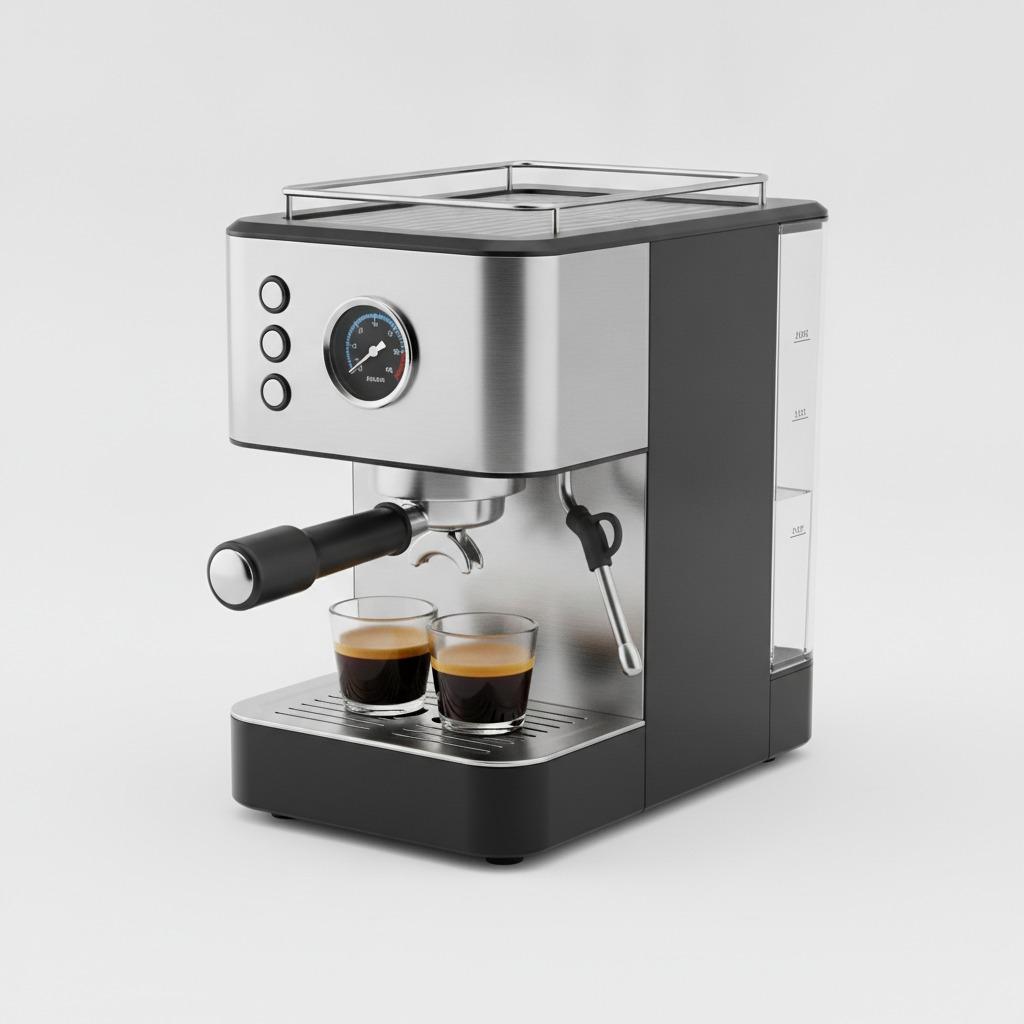
That matters because espresso-based drinks are unforgiving in a practical way. If extraction is weak, the shot tastes thin. If steaming is clumsy, milk drinks become a chore. If the machine is too large or too delicate for the space, it becomes a permanent reminder of a bad procurement decision. A countertop model with a visible pressure gauge, side steam wand, removable drip tray, and cup-warming grid suggests a machine built for hands-on drink making rather than push-button convenience. That can be exactly what a buyer wants, as long as expectations match the equipment.
What this style of espresso machine is trying to do
The product profile here points to a compact, pump-driven espresso machine intended for home or small office use. It appears designed to brew espresso into small cups and to steam or froth milk through a side wand. That combination covers the drinks most people ask for when they say they want a better coffee machine: straight espresso, cappuccino, latte, and other milk-based coffee drinks.
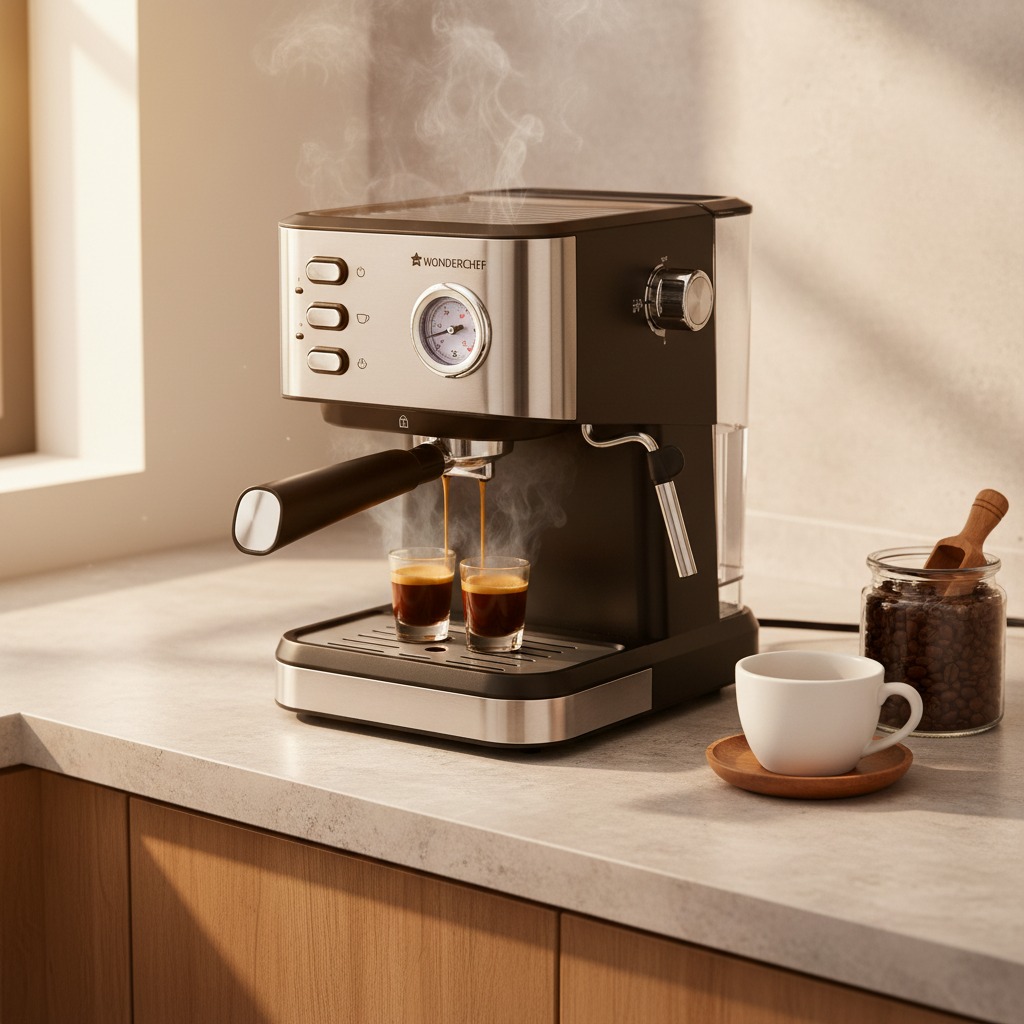
Visually, the machine has brushed stainless steel panels paired with black plastic housing and trim. That mix is common for a reason. Stainless surfaces give a more durable, utilitarian look and are easier to keep presentable in daily use, while plastic sections reduce weight and help keep the footprint manageable. The front layout also tells you a lot: a portafilter handle, a central pressure gauge, three front control buttons, a right-side steam knob, and a visible steam wand. This is not a machine trying to hide the process. It wants the user to participate.
The top cup-warming grid is another small but useful detail. It is not glamorous, but it hints at how the machine is intended to be used: cups can sit on top and pick up a little warmth, which helps preserve temperature when serving espresso shots. In a busy kitchen or break room, that kind of feature often matters more than a flashy app or a long list of modes.
Quick buyer takeaways before you compare models
If you are choosing between an espresso machine and a more general home coffee machine, start with how much control you want over the drink.
A machine like this is best when the buyer wants:
• Hands-on espresso brewing rather than automated pod use
• A visible pressure gauge for monitoring extraction
• The ability to steam milk for cappuccino and latte drinks
• A compact footprint for a counter or break area
• A machine that looks at home in a kitchen, office, or small hospitality setting
That same profile can be a poor fit if users want one-touch convenience, large-volume brewing, or zero learning curve. A pump espresso machine rewards attention. The grind, dose, tamp, and timing all affect the result. Buyers sometimes overlook that and assume a coffee machine can correct bad inputs. It usually cannot.
How the visible components shape everyday use
The pressure gauge is one of the more useful visible elements. In plain language, it gives the user a sense of how the extraction is behaving. That does not make the machine fully self-explanatory, but it does provide feedback. For engineers and product teams, that feedback loop is important because it reduces guesswork and helps users recognize when the shot is running too fast, too slow, or simply out of balance.
The portafilter handle indicates a traditional espresso workflow. Coffee grounds are loaded into a filter basket, tamped, locked in place, and then extracted under pump pressure. It is a familiar process in cafés, though on a smaller scale here. The right-side steam knob and wand allow milk to be heated and textured. That is the difference between plain espresso and a drink menu that can cover cappuccino and latte styles.
The removable-looking drip tray and slotted drainage area are practical details that often decide whether a machine feels tidy or annoying. Espresso work creates splashes, drips, and occasional overflows. A tray that can be lifted out or cleaned easily saves time and reduces stale residue. In small office use, that matters because nobody wants a machine that demands a deep clean every single day just to stay acceptable.
The detached water tank on the right side is another useful sign. A reservoir that can be removed or refilled with relative ease is a small operational advantage, especially when the machine sits in a tight spot under cabinets. A fixed tank can be awkward. A visible tank also helps users avoid the classic mistake of assuming the machine is broken when it is simply out of water.
Espresso machine versus broader home coffee machine: what decision are you really making?
The term home coffee machine covers a lot of ground, from drip brewers to capsule systems to compact espresso units. The decision is not just about drink style; it is about workflow.
A drip machine wins on simplicity and batch brewing. A capsule machine wins on speed and low effort. A countertop espresso machine like this wins when the buyer values crema, milk steaming, and the ritual of making espresso-based drinks. That does not make it “better” in every setting. It makes it more specific.
For sourcing teams or product managers, specificity is actually the point. If the user group is a small office where a few employees want cappuccinos in the morning, this style of machine may be a strong fit. If the user group needs ten cups at once, it is the wrong tool. A machine built around a portafilter and steam wand is about craft and consistency, not volume.
Selection criteria that matter in real use
When evaluating a coffee machine in this category, focus on the features that affect daily handling rather than the ones that look good in a product photo.
1. Extraction feedback
A pressure gauge is not a luxury add-on. It helps users learn whether the machine is operating in a reasonable range during extraction. Even if the average user never becomes a home barista, the gauge still offers a visual cue that is better than blind brewing.
2. Milk steaming behavior
The steam wand should be easy to reach, easy to wipe, and positioned so the pitcher can sit comfortably under it. In a busy kitchen, a wand that is awkward to clean becomes a hygiene issue fast.
3. Cleanup design
The drip tray, water reservoir, and front access points should be easy to remove or empty. Small machines can become unpleasant surprisingly quickly if grounds and splashes collect in hard-to-reach areas.
4. Counter footprint
This unit appears compact, which is a meaningful advantage for home or office use. In many real spaces, the difference between “fits” and “doesn’t fit” is a few centimeters and one badly placed cabinet handle.
5. User skill level
A manual espresso workflow is rewarding, but it assumes some willingness to learn. If the end user will not measure, tamp, and purge steam regularly, the machine may never show its best side.
Common mistakes buyers make with compact espresso machines
One common mistake is expecting a machine like this to behave like a fully automatic espresso appliance. It will not. The presence of a portafilter means the user is part of the process.
Another mistake is underestimating milk steaming. People often buy for espresso and later realize they want café-style drinks. If the steam wand is used frequently, its ergonomics and cleaning routine matter as much as brew quality.
A third mistake is ignoring where the machine will live. A brushed stainless finish looks strong, but countertop clearance, tank access, and the ability to open or refill the reservoir all affect day-to-day satisfaction. Small office buyers learn this quickly. So do home users with shallow counters.
Practical buying advice for sourcing and product teams
If you are comparing machines for resale, specification sheets alone will not tell the whole story. Ask how the user interacts with the controls, how visible the extraction feedback is, and how often the machine will be cleaned. For this category, usability is part of product quality.
It is also worth thinking about drink expectations by location. A home kitchen may value appearance and compactness. A break room may care more about durability and ease of cleaning. A hospitality lounge may want a machine that looks premium without requiring trained staff. The same coffee machine can succeed or fail depending on which of those settings it enters.
One small but useful caution: buyers sometimes fixate on the stainless steel look and assume it means all-metal construction. That is not always the case. Here, the visible mix of stainless panels and black plastic housing suggests a balanced design, but not a monolithic metal build. That is normal. It just means decisions should be based on function, not finish alone.
FAQs buyers usually ask
Is this a good home coffee machine?
It can be, especially if the household likes espresso and milk drinks and is comfortable with a manual brewing process. If the household only wants plain drip coffee, it is probably more machine than needed.
Can it make cappuccino and latte drinks?
Based on the visible steam wand and espresso setup, yes, it is intended for milk-based drinks. The exact drink quality will depend on technique, milk choice, and grind preparation.
Does the pressure gauge guarantee good espresso?
No. It helps the user monitor extraction, but it does not replace correct grind size, dosing, tamping, and timing.
Is it suitable for an office?
For a small office, yes, provided users are willing to follow a basic routine and keep up with cleaning. For a high-traffic office, it may feel too small and too hands-on.
What to do next if you are evaluating this category
Use the machine’s visible features as a checklist against your real use case. If your team wants espresso shots, milk frothing, and a compact footprint, this style of coffee machine deserves a closer look. If your users want push-button convenience, keep moving.
The most sensible next step is to compare the machine against the habits of the people who will actually stand in front of it. That is where espresso equipment succeeds or fails: not in the brochure, but on the counter, cup after cup.