
What buyers usually mean when they search for a Coffee machine
A Coffee machine can mean almost anything in a sourcing meeting: a compact home appliance, a café workhorse, or a countertop unit for an office pantry. In practice, most buyers are trying to answer a narrower question: what kind of machine gives the best balance of drink quality, ease of use, footprint, and upkeep for the setting they actually have? That is why a product like a countertop espresso machine deserves a close look. It sits in the middle ground. It is more hands-on than a pod unit, but far smaller and easier to place than a commercial bar setup.
For engineers and product teams, the decision is not only about taste. It is also about water handling, cleaning access, controls, serviceability, and how much training users need before the machine produces a decent cup. A machine that looks good on a counter can still create friction if the drip tray is awkward, the reservoir is hard to refill, or the steam wand is cramped against the side wall. Those small details matter more than marketing language.
What this countertop espresso machine tells you at a glance
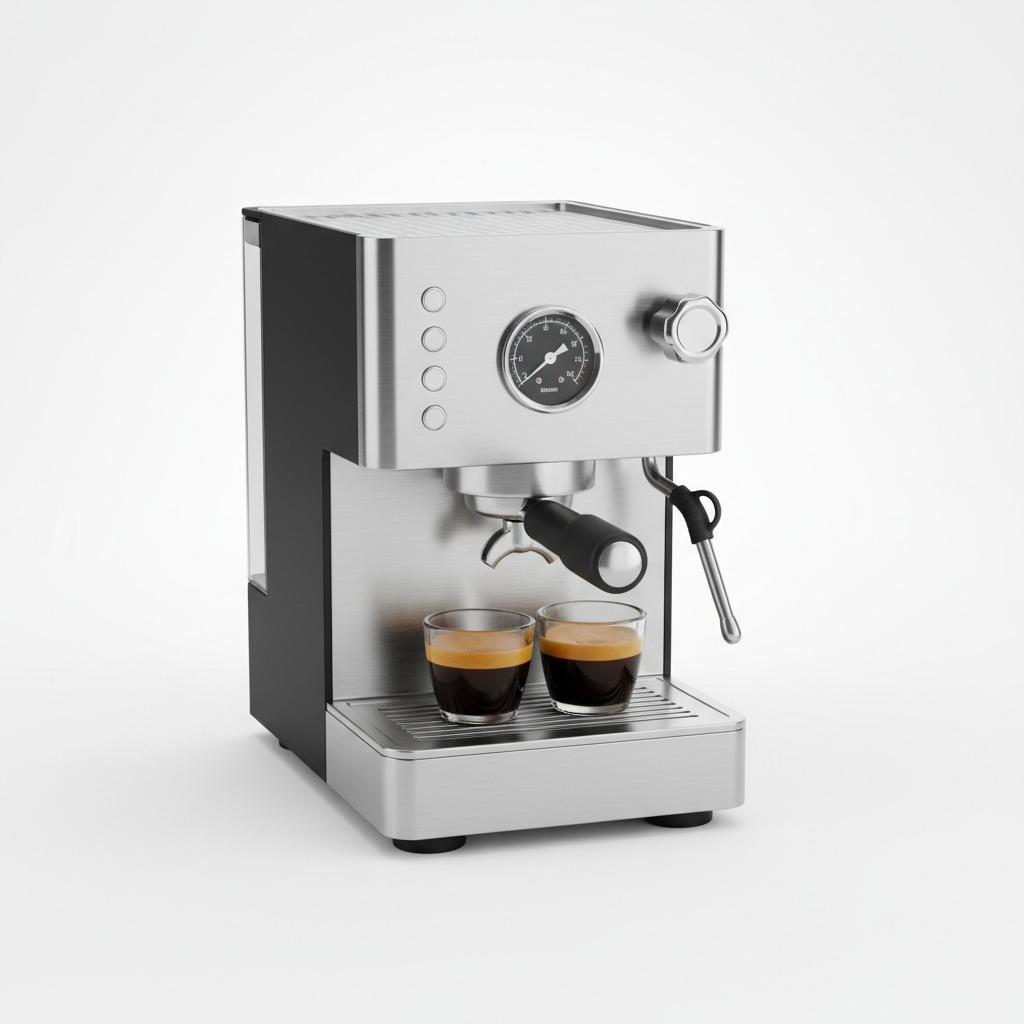
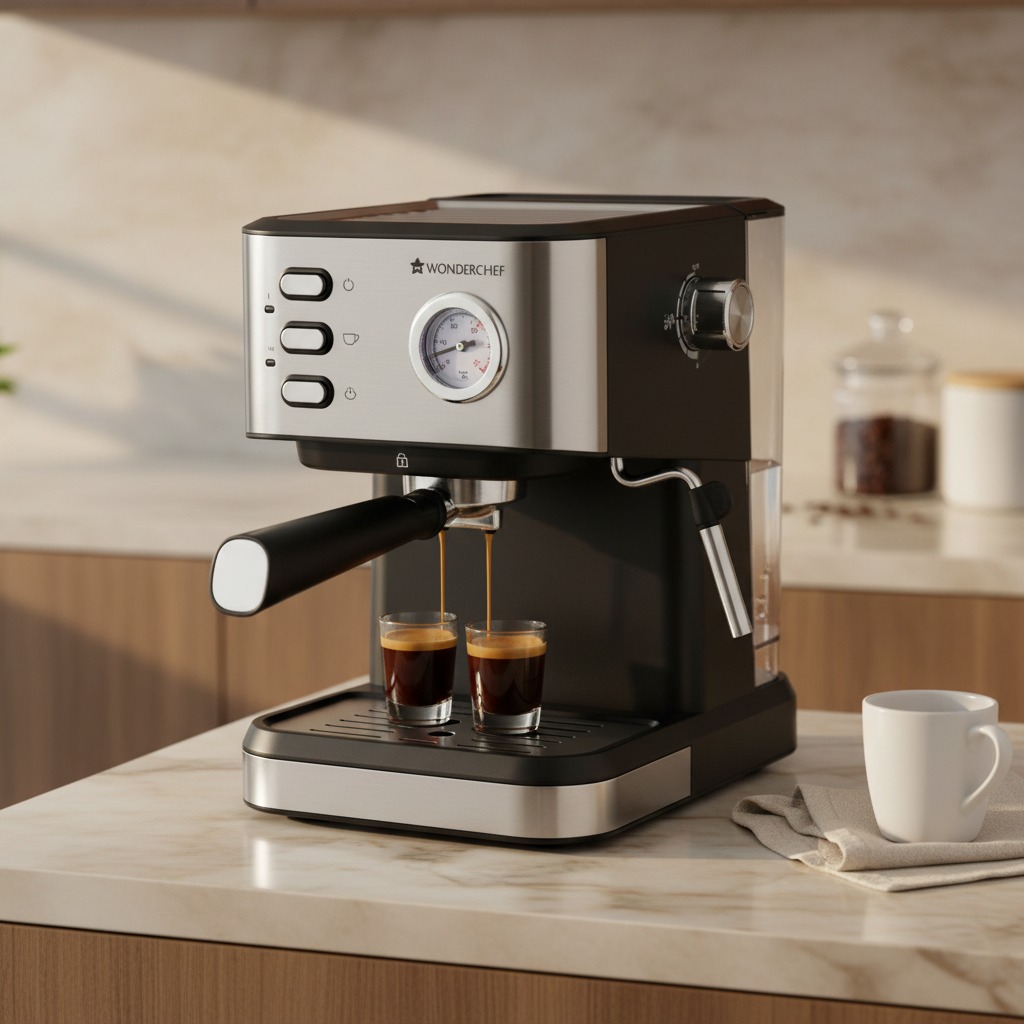
The visible construction points to a semi-automatic or pump-driven espresso machine service category, though the exact internal system is not specified. The front panel appears to combine brushed stainless-steel styling with black plastic housing and accents. That combination is common in appliances that want to signal durability without making the body too heavy or expensive to assemble.
Several practical features stand out immediately. There is a portafilter group head, dual-shot outlet spouts, a central pressure gauge, a steam wand for milk frothing, a top warming tray, and a removable drip tray. A transparent water reservoir sits on the right side, which is useful because staff or home users can see the fill level without opening anything. The machine also appears compact enough for a kitchen counter, small office beverage station, or light hospitality use.
In other words, this is the kind of Coffee machine meant to do a few important things well rather than attempt every café function under the sun. That is usually the right design choice for domestic and light-duty settings.
Quick comparison: what matters most in this product category
For home kitchens
Home buyers usually care about speed, cleanup, and whether the machine makes a drink that feels worth the counter space. A home coffee machine in this category should be judged by how much fuss it asks for each morning. If the workflow is too fiddly, it tends to become a decorative object after the first enthusiastic week.
For small offices
Office users are less patient with learning curves. They want repeatable espresso, straightforward refilling, and a steam wand that can handle the occasional cappuccino without drama. A built-in gauge helps here, because it gives at least some visual feedback while brewing. That can reduce guesswork for casual users.
For light hospitality
Small cafés, waiting areas, and guest-facing spaces need a machine that looks presentable and can handle a modest rhythm of use. In those settings, the dual-shot extraction is a practical advantage. Serving two demitasse cups at once saves time and keeps service moving, even if the machine is not built for heavy commercial throughput.
Why the visible features matter in real use
The details on this espresso machine are not decorative. The dual-spout outlet is a real productivity feature because it allows two smaller servings from one extraction. That is useful for households, shared kitchens, and reception areas. The pressure gauge is another practical touch. It does not guarantee perfect espresso by itself, but it gives the operator feedback that can help with grind, tamp, and shot timing.
The steam wand expands the drink menu beyond straight espresso. Milk texturing is often where a machine either becomes versatile or remains narrow. If the wand is easy to position and clean, the machine can cover lattes, cappuccinos, and similar drinks without needing a separate appliance. The warming tray on top is a smaller detail, but it can be useful in a real kitchen where cups are cold and the first shot loses heat too quickly.
Then there is the transparent side reservoir. It sounds minor until someone runs a busy morning shift and discovers the tank is empty midway through service. Visibility saves trouble. It also helps supervisors check whether users are actually refilling the machine instead of leaving the next person to find out the hard way.
Selection criteria buyers should not skip
If you are comparing a Coffee machine for procurement, do not stop at appearance and basic feature lists. Start with use case. Ask whether the machine is meant for ground coffee only, whether it must support milk drinks, and how many servings per day it is likely to handle. The product details here do not confirm pod compatibility, wattage, boiler design, tank capacity, or temperature control method, so those would need confirmation before a purchase decision.
Next, look at the cleaning path. Can the drip tray come out without tipping? Is the water tank removable and easy to rinse? Are the spouts and group head accessible for wiping? Machines with beautiful finishes can still be poor operators if coffee residue collects in awkward seams.
Also consider the human side. Semi-automatic espresso gear rewards some skill. If the intended users are not comfortable with grind adjustment or tamping, the machine may need a slightly more guided operating model than a fully manual setup. That is not a flaw; it is simply a matching problem between equipment and user behavior.
Common mistakes when sourcing this type of espresso machine
One common mistake is buying for aesthetics first and function second. Stainless-steel trim looks reassuring, but it does not tell you how stable the shot temperature is or how easy the wand is to purge after steaming. Another mistake is assuming that a compact footprint means commercial durability. Small machines can be perfectly capable in light use, but compactness alone does not make them suitable for high-volume service.
Buyers also sometimes overlook the water reservoir. A side-mounted transparent tank is convenient, but only if it is easy to remove and refill in the actual installation space. Put the machine under a low cabinet or beside a wall, and that “convenient” reservoir can become awkward fast. This is the sort of practical issue that gets missed in product photos.
Finally, do not assume the machine supports every beverage style just because it has a steam wand. Milk frothing performance depends on the wand geometry, user technique, and internal heating design, none of which are fully visible here. Ask for operating documentation and service information before committing.
What this machine is best suited for
Based on the visible configuration, this Coffee machine is best suited for users who want a countertop espresso platform with a bit more capability than entry-level drip or pod devices. It should make sense for home espresso enthusiasts, small offices with mixed drink preferences, and guest areas where presentation matters. The brushed metal front, gauge, and twin-shot outlet give it a more serious presence than many consumer appliances.
It is less obviously suited for high-volume commercial deployment, mainly because the visible information does not confirm the internal architecture, thermal capacity, or service rating. That is not a criticism. It is simply a caution against overspecifying a machine based on looks and feature count alone.
Practical buyer advice before you place an order
Ask the supplier for the missing technical details: pump type, power rating, tank capacity, temperature control approach, and whether it works with ground coffee only or also with capsules or pods. If your team is comparing several espresso machine options, those answers matter more than a polished product shot.
Also ask how the machine is cleaned and maintained. A removable drip tray is good, but you still want to know what happens around the group head, steam wand, and water path over time. If spare parts or user maintenance procedures are available, review them early. A machine that is simple to operate but difficult to service can become a nuisance after the first minor fault.
If the machine is going into an office or hospitality space, think about who will actually use it. A clear gauge and dual-shot extraction are helpful, but they do not replace basic training. A short instruction card near the machine can prevent a surprising amount of waste and frustration.
FAQ
Is this more of a home coffee machine or a commercial unit?
From the visible design, it looks closer to a home or light-duty countertop espresso machine than a full commercial platform. It may suit small offices or hospitality corners, but the internal specifications would need confirmation before any higher-volume use is assumed.
Does the machine support milk drinks?
Yes, visually it includes a steam wand, so milk frothing is part of the intended use. That makes it suitable for drinks beyond straight espresso.
Can it make two drinks at once?
The dual-spout outlet suggests two small espresso servings can be pulled in one extraction, which is useful for shared use and faster service.
What should buyers verify before choosing it?
Check the internal heating system, pump details, power requirements, water tank capacity, cleaning access, and whether it uses ground coffee only. Those details will determine whether the machine fits your actual setting.
The decision that matters most
If you are sourcing a Coffee machine like this one, the real question is not whether it looks premium. It is whether it fits the rhythm of the space where it will live. For some teams, the answer will be yes: compact size, visible controls, dual-shot brewing, and milk frothing in a single countertop package. For others, especially those with heavier service demands, it may be a stepping-stone rather than the final answer.
Before placing an order, line up the visible features against the missing technical facts. That is usually where the best purchasing decisions are made. If the supplier can confirm the internal specifications and support details, the next step is a practical one: compare it against your daily beverage volume, your cleaning expectations, and the amount of training your users can realistically absorb.