
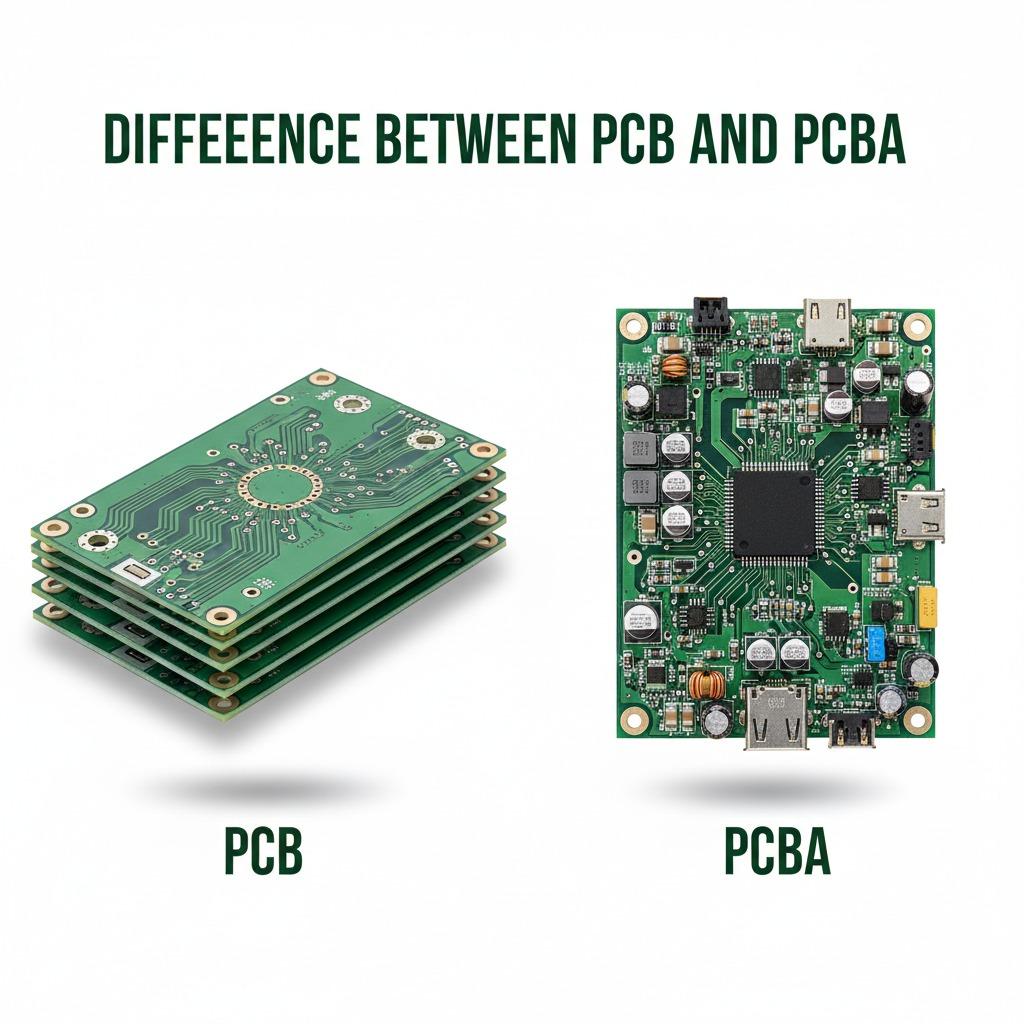
PCBA: what buyers are really comparing when they look at a bare board and an assembled board
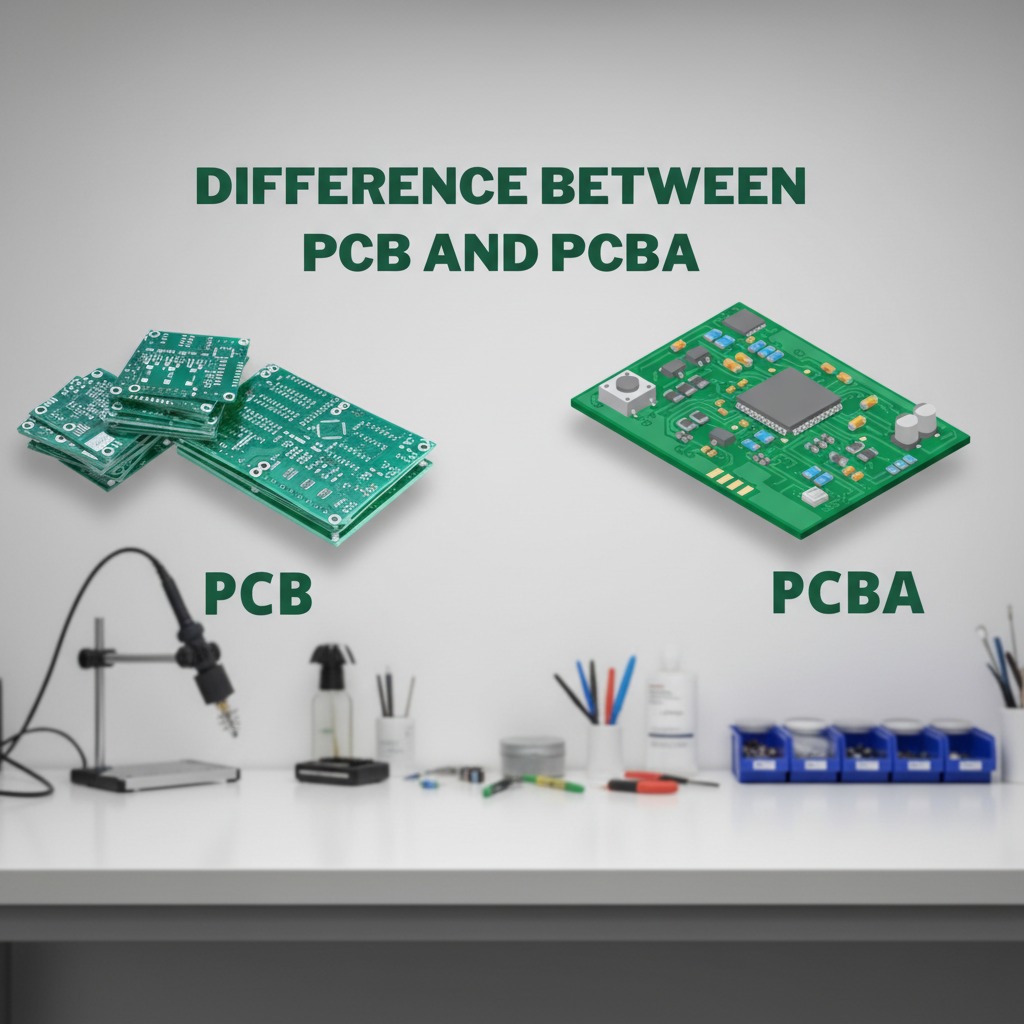
When engineers and sourcing teams talk about pcba, they are usually not just talking about a finished board. They are weighing two very different purchase points: the bare printed circuit board and the populated assembly that follows. The distinction sounds simple on paper, but it changes how you budget, how you inspect quality, how you plan your supply chain, and even how you think about design risk.
A bare PCB is the structural and electrical foundation. A PCBA is that same board after components have been placed and soldered, turning copper traces and drilled vias into a working circuit platform. If you are selecting a manufacturing partner, the choice is rarely “board or no board.” It is more often: who can fabricate accurately, assemble cleanly, and keep the handoff between those two stages under control?
That is the practical decision this article is meant to help with. If you are sourcing control boards, industrial modules, embedded electronics, or prototype assemblies, the details matter more than the acronym.
PCB versus PCBA: the quick read
The image data points to a familiar scene in electronics manufacturing: a green solder-mask board on one side with no mounted components, and a similar board on the other side populated with ICs, passives, connectors, and a tactile switch or button-like part. In plain terms, one is the substrate; the other is the usable assembly.
A bare PCB gives you:
– mechanical support for the circuit
– copper pathways for electrical routing
– plated holes or vias for interconnection
– a stable base for later assembly
A PCBA adds:
– integrated components
– solder joints
– functional circuitry ready for device integration
– a more complete checkpoint for electrical and functional testing
For buyers, this distinction affects quoting, documentation, inspection, and inventory strategy. It also affects what goes wrong when something goes wrong. A fabrication defect lives in one part of the process; an assembly defect can come from component placement, soldering, handling, or even a mismatch between BOM and board revision.
Why the difference matters in sourcing
Many purchasing mistakes start with treating PCB fabrication and PCBA manufacturing as interchangeable. They are not. A good bare board can still become an unreliable product if assembly discipline is weak. Likewise, a capable assembler cannot fully rescue a poorly specified board layout.
If you are sourcing for production, the key question is usually not “can they build boards?” but “can they build consistent boards at the stage I need?”
That matters for three reasons.
First, the assembly stage introduces more variables. Parts arrive in reels, trays, or loose packaging; placement accuracy matters; solder paste behavior matters; and thermal profiles matter. Second, the assembly stage is where design intent becomes physical reality. A pad that looks fine in CAD can become awkward to solder if the footprint is off. Third, the cost structure changes. Bare board pricing and assembly pricing are driven by different inputs, so comparing quotes without separating them often creates false confidence.
A buyer may save a little on fabrication and lose much more later in rework, yield loss, or delayed launch. That is not an elegant lesson, but it is a common one.
What a typical PCBA process looks like
The exact process depends on board complexity, component mix, and volume, and the supplied information does not confirm every method used here. Still, the general flow is familiar across much of electronics manufacturing.
1. PCB fabrication
The board starts as a laminate, often FR-4 in many commercial designs, though the material for this specific example is not explicitly confirmed. Copper is patterned into traces, pads, and plated holes. A green solder mask is applied to help protect the copper and control solder flow during assembly.
The bare board in the image appears rectangular, with visible pads and through-holes or vias. That is typical of many control and interface boards where routing density matters but the shape remains straightforward for panelization and assembly.
2. Solder paste and placement
For surface-mount assembly, solder paste is usually printed onto pads before components are placed. Pick-and-place systems position ICs, resistors, capacitors, and connectors. The board in the image suggests a mix of component densities, with small passives and a few larger devices, which is common in everyday PCBA manufacturing.
3. Reflow and secondary soldering
After placement, the board is heated so the solder forms joints. Through-hole parts, if any, may be soldered later by wave, selective soldering, or manual methods depending on the build strategy. The exact process here is not visible, so it would be a mistake to pretend otherwise.
4. Inspection and test
Assembly quality is usually checked with visual inspection, automated optical inspection, and sometimes electrical test or functional testing. For buyers, this step is where a manufacturing partner proves discipline. A neat-looking board is useful, but it is not the same as a board that consistently passes test.
How to read board construction without overclaiming
The image shows green boards, likely a common solder-mask finish, with a clean rectangular outline. That alone does not tell you layer count, copper weight, surface finish, or electrical rating. Those details must come from drawings, specs, or supplier documentation.
This is worth emphasizing because sourcing teams often get seduced by visual similarity. Two boards can look nearly identical and behave very differently in service. One might be for a simple consumer product; another could be for an industrial controller with stricter thermal or reliability demands.
A practical buyer will ask for the following before committing:
– board stack-up and material confirmation
– component list and approved alternates
– assembly method by component type
– inspection and test coverage
– revision control for both PCB and BOM
None of that is glamorous. All of it saves money later.
Selection criteria for PCB and PCBA suppliers
If you are evaluating vendors, split the review into fabrication capability and assembly capability. Some shops are stronger on one than the other, and that is not automatically a problem. The issue is whether the supplier’s real strengths match your product.
Look closely at these areas:
– Process discipline: Are drawings, BOMs, and revisions controlled cleanly?
– Component handling: Can the supplier manage the part mix you use, especially if there are fine-pitch or sensitive parts?
– Design communication: Will they flag footprint concerns, polarity issues, or placement conflicts before build?
– Consistency: Can they repeat the result from sample to pilot to production?
– Traceability: Can boards and components be linked to build records when something needs review?
For low-volume prototype work, flexibility matters. For production, consistency matters more. That is an obvious statement, but many teams still buy as though both priorities are equal.
Common mistakes buyers make with PCBA制造
There are a few recurring missteps that show up across industries.
One is under-specifying the board and expecting the assembly house to guess the intent. Another is sending an incomplete BOM and assuming the missing information can be filled in later. A third is overlooking mechanical constraints such as connector height, switch location, or enclosure clearance until the last minute.
There is also the old mistake of focusing only on component placement density. A crowded board can be perfectly manageable if the process is mature. A sparse board can still be troublesome if the footprints are poor or the assembly sequence is awkward.
In PCBA制造, the board that looks simple on the bench is not always the simple one to manufacture consistently.
Buyer-facing advice for prototype and production stages
If you are in prototype mode, prioritize clarity over speed. Make sure the supplier understands that the goal is learning, not just shipment. Prototypes should expose issues early, even if that means a slightly slower review cycle.
If you are moving toward production, prioritize repeatability. Ask how the supplier manages revision changes, part substitutions, and incoming inspection. A production-ready PCBA is not just assembled; it is controlled.
A good internal habit is to separate three documents before purchase:
– PCB fabrication requirements
– assembly requirements
– testing or acceptance requirements
That separation makes quoting cleaner and helps prevent one team from assuming another team already captured a detail.
FAQ
Is a PCBA the same as a PCB?
No. A PCB is the bare circuit board. A PCBA is the assembled board with components soldered in place.
Can the same supplier handle both fabrication and assembly?
Often yes, and that can simplify coordination. But capability should be verified stage by stage rather than assumed from a single brochure or product photo.
What products commonly use PCBA?
Control boards, consumer electronics, industrial controllers, embedded systems, and power or interface modules are all common use cases.
What should I check first when reviewing a sample?
Start with component placement, solder quality, polarity, connector alignment, and whether the board matches the approved revision.
What to ask before you place the next order
If you are comparing vendors for the next build, ask for more than a price. Ask for the manufacturing split: what they fabricate, what they assemble, how they inspect, and what they need from you to prevent avoidable rework. That sounds mundane, but it is the difference between a clean launch and a pile of email threads about “unexpected” issues.
For anyone sourcing pcba today, the best next step is to review your current drawings and BOM as if a stranger were building from them. If the intent is obvious, the process gets easier. If it is not, the board will eventually tell you so.