
Photovoltaic panels are not just a purchase; they are a layout decision
Photovoltaic panels look straightforward from a distance: flat framed modules, a regular grid of cells, and a surface that seems to do one job only—turn sunlight into electricity. In practice, buying solar photovoltaic panels is less about picking a shiny rectangle and more about choosing how your site will behave for the next decade or longer. Roof loading, wiring paths, shading, mounting hardware, maintenance access, and future expansion all start with the module choice.
That is why engineers, sourcing managers, and project teams usually need more than a product sheet. They need to know what kind of panel fits the application, what can be verified before purchase, and where the common mistakes hide. A PV panel may be standardized in appearance, but the consequences of a poor match can be expensive: low yield, awkward installation, mismatch with inverters, or a system that is harder to service than anyone expected.
This article is meant to help you make that decision with fewer assumptions. It focuses on the practical differences that matter when selecting panels for rooftops, ground-mounted arrays, off-grid systems, or industrial backup projects.
What buyers are really evaluating
When people compare photovoltaic panels, they often start with power output or efficiency. Those matter, but they are not the whole story. A panel is part electrical component, part structural object. It has to survive shipping, mounting, weather exposure, and years of thermal cycling while staying electrically consistent enough to earn its keep.
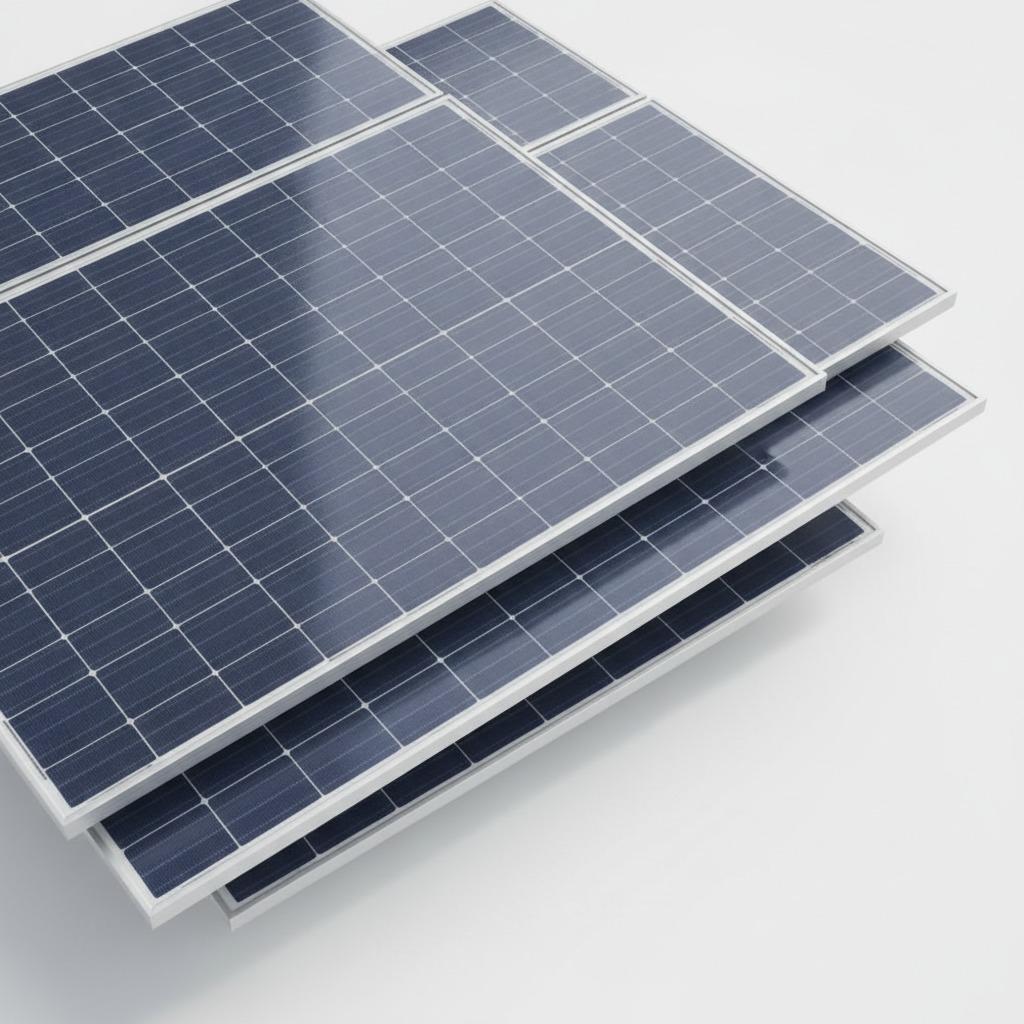
Visually, most modern panels share a common architecture: a rectangular frame, a protective front layer, and a regular matrix of crystalline-silicon cells. The blue-gray cell pattern is familiar because it is practical, not decorative. Beneath the surface are conductive paths and layered materials designed to capture light, move current, and protect the active cell structure from the elements. The buyer, however, usually sees only a few clues: the frame, the cell layout, and the consistency of the module family.
That is enough to start a conversation, but not enough to approve a procurement order.
Quick reference: what should be checked before you commit
If you are comparing PV panels for a project, the most useful questions are often the least glamorous ones:
Does the module size fit the available roof or racking pattern? Is the panel form factor compatible with the mounting method? Can the project tolerate the weight and handling requirements? Will the electrical design accept the module’s voltage and current behavior? Is there enough spare area for walkways, setbacks, or service access?
Those questions sound basic, but they prevent the most common late-stage surprises. A panel can be technically sound and still be a poor fit if it forces awkward cable runs or creates layout losses because the dimensions do not align with the site.
How photovoltaic panels are typically built
Most solar modules in this category use crystalline-silicon cells arranged in a regular matrix. The cells sit under a protective front layer and are supported by a rigid backing and perimeter frame. That framed construction matters. It gives the panel the stiffness needed for transport and mounting, and it helps the installer create a reliable mechanical interface with rails, clamps, or other support hardware.
For buyers, the main point is not the romantic idea of “solar technology,” but the plain fact that the module is an engineered assembly. Glass, cells, interconnects, encapsulant, back layer, and frame all have to work together. A weakness in one layer can affect the entire module family. This is one reason why sourcing teams usually ask for documentation rather than relying on appearance alone.
It is also why standardized appearance does not equal standardized performance. Two panels can look nearly identical from the front and still differ in cell technology, mechanical details, electrical characteristics, and field behavior.
Where photovoltaic panels are used
Solar photovoltaic panels are used across a wide range of projects, and the application should influence the purchase decision.
Residential rooftops
Here, space is often limited and roof geometry is unforgiving. Panel dimensions, weight, and orientation become more important than they seem on a datasheet. A compact, well-matched module can simplify layout and reduce installation compromises.
Commercial rooftops
For larger roofs, the buyer usually cares about uniformity, installation speed, and serviceability. Modules that stack and mount cleanly can save labor and reduce the risk of field improvisation, which is almost always more expensive than it looks on paper.
Ground-mounted arrays
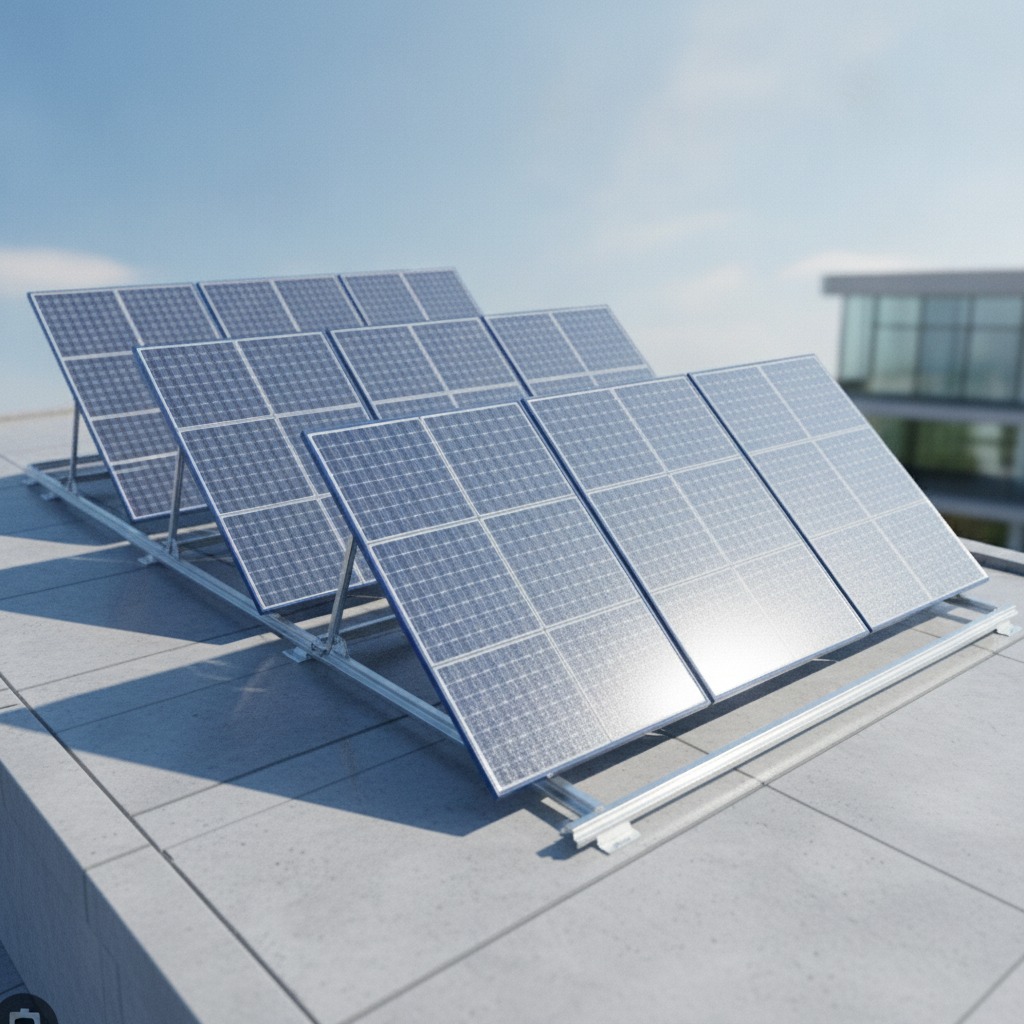
In utility or industrial ground mounts, panel format affects row spacing, land use, and maintenance access. The module becomes part of a broader site-engineering problem, not just an electrical purchase.
Off-grid and backup power systems
Off-grid projects tend to be less forgiving. The panel choice has to work with batteries, charge controllers, and seasonal sunlight variation. In these systems, consistency and predictable behavior matter a great deal because there is less room to make up for a weak design elsewhere.
Selection criteria that actually change project outcomes
There are a few criteria that tend to dominate the final decision, even when they are not the loudest talking points in a quote comparison.
First is electrical compatibility. A module may be attractive in theory but awkward in a string design if its operating range does not fit the inverter or system architecture. Second is mechanical fit. The panel has to align with the rack, roof, or ground structure without wasteful trimming of the plan. Third is reliability evidence. Buyers should ask for whatever documentation is available on design, testing, and quality control, rather than assuming a familiar look means familiar performance.
Fourth is supply consistency. For larger projects, a mixed shipment or subtle product variation can create headaches in installation and maintenance. This is especially important when the project depends on a repeatable BOM and a clean commissioning process.
Finally, there is the boring but necessary matter of serviceability. If a module is damaged, can it be replaced without reworking half the array? If a crew needs access under or around it, is there room to move? These details are easy to ignore during procurement and hard to forgive during maintenance.
Common mistakes buyers make with solar photovoltaic panels
The first mistake is assuming all PV panels are interchangeable. They are not. Even when the front face looks similar, differences in cell technology, frame construction, and electrical behavior can affect the final system.
The second mistake is buying only to the headline number. A high-power module is not automatically the right module if it complicates transport, increases installation labor, or creates mismatch in the electrical design.
The third mistake is forgetting the site context. A panel that works well on a large open roof may be a poor choice for a constrained industrial site where access and cable management are tight.
The fourth is underestimating handling and logistics. Framed modules are durable in use, but they still need careful packing, lifting, and storage. Damage before installation is an expensive form of waste, and it tends to show up at the worst possible time.
What the visible construction tells you—and what it does not
From the product description alone, we can say the modules have a flat rectangular form, overlapping panel presentation, a blue-gray cell array, and a rigid framed edge. That is enough to infer a standard solar module format suitable for mounting in an array.
What it does not tell us is just as important. We do not know the exact wattage, efficiency, cell type, glass thickness, frame alloy, junction box design, connector type, or certification status. Those are not details to guess at. They need to be confirmed from the manufacturer’s documentation or the actual product specification sheet.
That caution matters because solar projects are often approved on assumptions that later become procurement problems. A panel that looks fine in a catalog image may still fail a project’s technical gate if the unverified details do not line up with the system design.
Practical advice for sourcing teams
If you are buying photovoltaic panels for a project, ask for a clean, current specification package and compare it against the actual system needs. Do not rely on one-line product descriptions. For engineering review, the module data should be checked against inverter compatibility, mounting layout, environmental exposure, and the overall energy target of the site.
For sourcing, consistency is just as important as specification. A stable product family is easier to qualify, easier to install, and easier to support later. If the panels will be used in repeated projects, consider whether the same form factor can be adopted across multiple sites. Standardization often pays back in reduced training and fewer surprises in the field.
For project teams, remember that solar modules are only one part of the system. Racking, wiring, labor, monitoring, and maintenance access can influence project value as much as the panel itself. The best panel is often the one that disappears into the design without causing friction.
FAQ: short answers buyers usually need
Are all photovoltaic panels suitable for rooftop use?
No. The panel must fit the roof layout, mounting system, and electrical design. Some modules are far easier to integrate than others.
Can visual appearance confirm performance?
Not reliably. The visible cell pattern and frame can suggest a standard module design, but they do not confirm wattage, efficiency, or long-term behavior.
Why do framed panels matter?
The frame supports mounting, handling, and structural stability. It is a practical part of the module, not just a finishing touch.
What is the safest buying approach?
Match the module to the site, confirm the electrical and mechanical requirements, and verify the specification sheet before purchase.
Next step: treat the panel as part of the system, not a standalone item
If your project depends on solar photovoltaic panels, the best next step is to review the module specification against the real site conditions: roof area, ground layout, inverter architecture, storage strategy, and maintenance plan. That is where value is either protected or lost.
For engineers and sourcing managers, the useful question is rarely “Is this a solar panel?” It is “Will this panel help the system work cleanly, safely, and repeatably?” That is a better buying standard, and it usually leads to fewer regrets once the installation is in the field.