
Why a window cleaning robot matters more than it first appears
A window cleaning robot is not just a novelty for people who dislike wiping glass by hand. For many buyers, it is a practical answer to a stubborn maintenance problem: tall panes, awkward corners, recurring streaks, and the steady labor cost of keeping glass presentable. In apartments, offices, storefronts, and homes with lots of glazing, the question is rarely whether windows should be cleaned. It is how to do it without spending half a day, a bucket of water, and too much effort on a task that still leaves haze at the wrong angle.
That is where a robotic approach changes the discussion. Instead of treating glass cleaning as a manual chore, the buyer starts comparing consistency, water use, reach, and risk. A robot for window cleaning can be especially attractive where ladders are inconvenient or where the glass is simply too large to handle comfortably with cloth and spray. Even if the device does not eliminate every manual touch-up, it can reduce the worst of the work.
What this type of device is designed to do
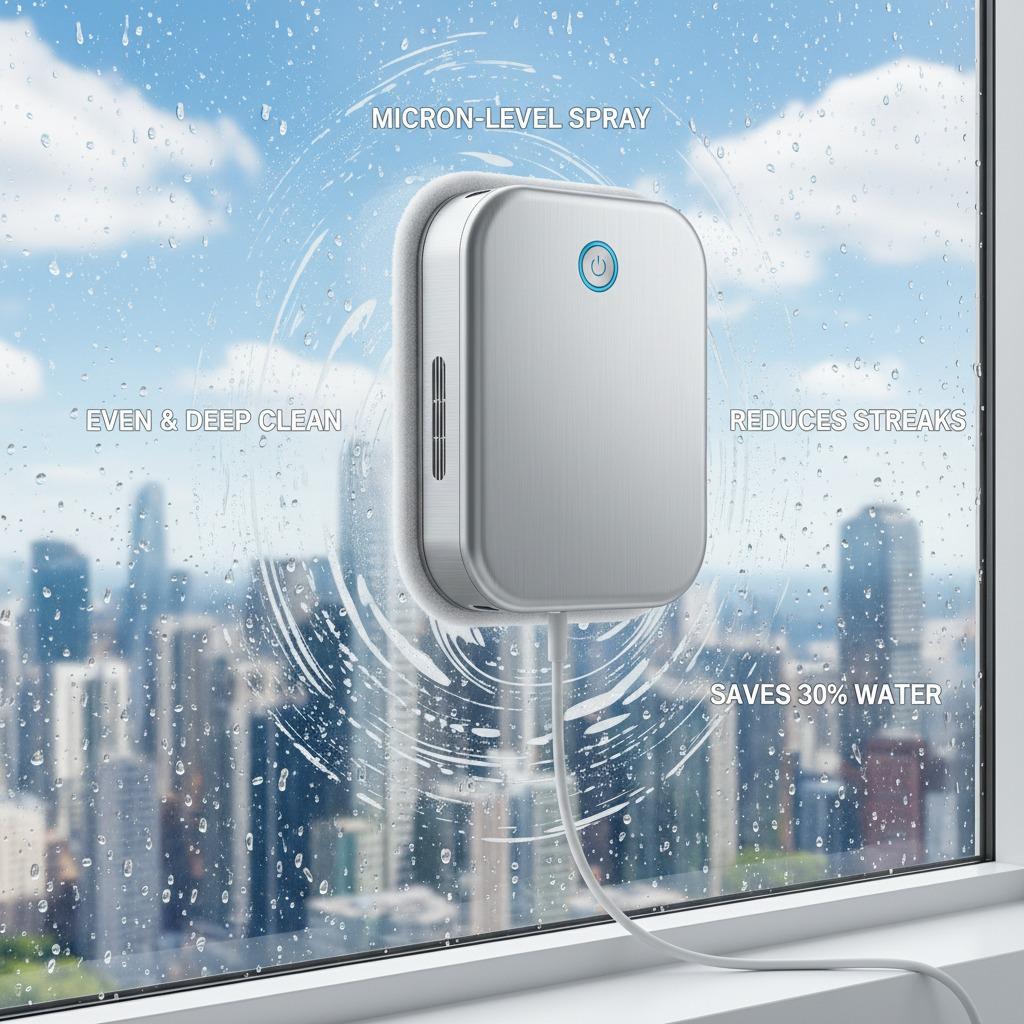
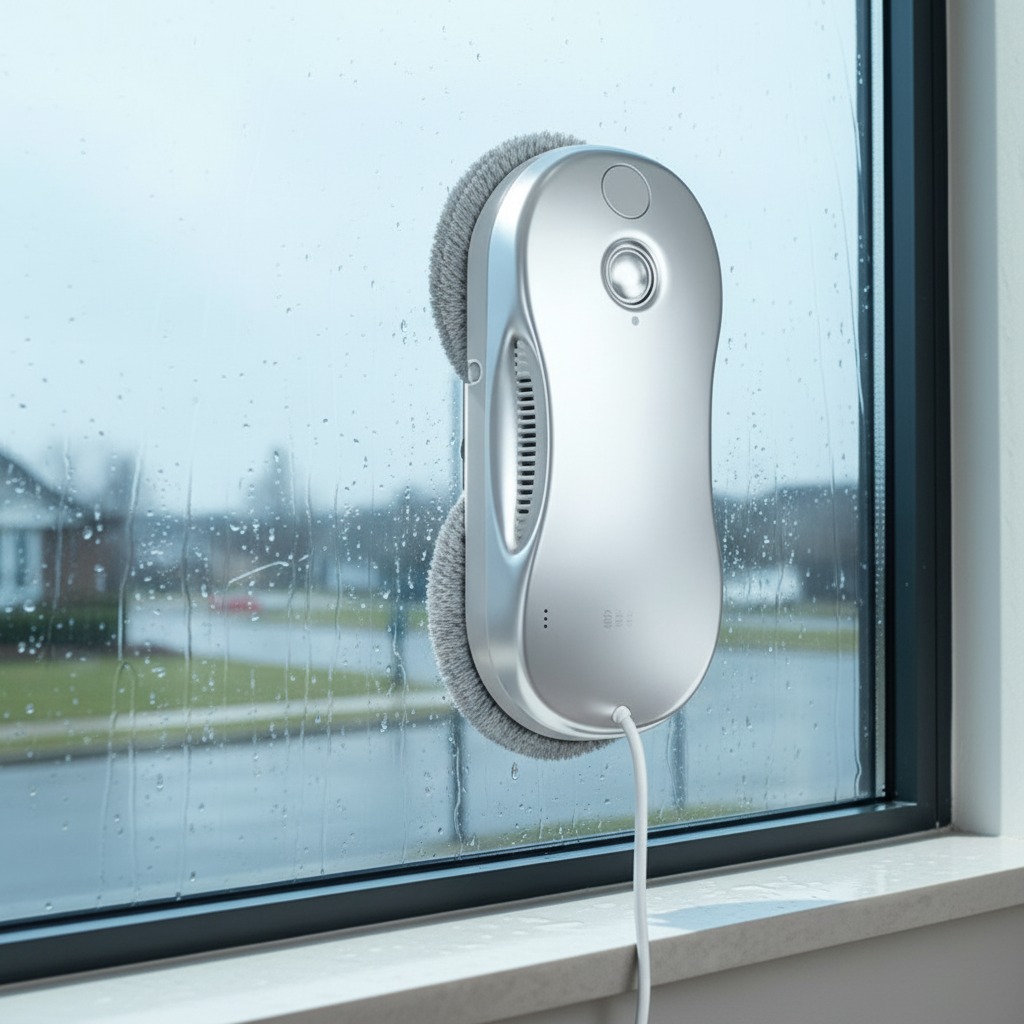
The visible product category here is a powered window-cleaning device, or robotic window washer, intended for interior or exterior glass surfaces. The design shown is compact and vertical, with a smooth white or light-gray plastic housing, a front control area, a side vent or grille, and a perimeter cleaning pad that stays in contact with the pane. The unit is also shown with a power cord, which suggests a wired appliance rather than a fully cordless tool.
Claim text visible in the image points to “micron-level spray,” “even & deep clean,” “reduces streaks,” and “saves 30% water.” Those are marketing claims, so they should be read carefully unless independently verified. Still, they reflect the sort of performance buyers are actually looking for: finer spray distribution, less residue, and less water waste than a hand mop or spray bottle routine.
The basic promise is straightforward. The machine applies moisture in a controlled way, wipes the surface with a cleaning pad, and helps leave the glass clearer with less repeated buffing. For a reader choosing equipment, the real decision is whether that promise fits the site conditions and the cleaning standard expected by users or tenants.
Quick buying view: where a window cleaning robot fits well
Some products in this category are clearly better suited to certain jobs than others. The best fit is often not “all windows everywhere,” but rather predictable glass surfaces where repeat cleaning is needed and access is awkward.
A automatic window cleaner can make sense for:
• Apartments with large sliding glass doors or high interior windows
• Offices with regular glass partitions or exterior-facing panes
• Storefronts where the front glass needs to look clean every day
• Buildings where manual cleaning would require extra reach equipment or more labor time
It is less likely to be the right answer if the site has many irregular shapes, heavy mineral buildup, or windows that need deep restoration rather than routine maintenance. That distinction matters. A robot is a maintenance tool first, not a cure for neglected glass.
What to look at before buying
Cleaning pattern and streak control
The visible product claims emphasize even spray and reduced streaking. For buyers, that suggests the key question is not simply whether the device moves across glass, but whether it deposits moisture evenly enough to avoid drying marks. Streak control usually depends on how the spray is distributed, how the pad contacts the glass, and whether the user can keep the surface from being overloaded with liquid.
A practical warning: more spray is not always better. On some windows, too much fluid only spreads grime around and leaves a film that shows up in daylight. A controlled spray system is useful only if the wipe path and pad contact are doing their part.
Housing, build, and serviceability
The visible housing appears to be molded plastic with rounded edges, a common choice in consumer appliances and maintenance equipment because it is light, easy to assemble, and less likely to snag on nearby trim. That does not tell us everything about durability, of course. But in this category, the outside shell matters because the unit has to sit against glass, travel under load, and survive repeated handling.
If a buyer is comparing products, it is worth asking how easy the external pad is to replace, how the cord is managed during operation, and whether the controls are simple enough for non-specialist staff. A clever mechanism can still be frustrating if everyday use requires too many steps.
Power and access constraints
The visible cord is a useful clue. A corded layout can be acceptable, even preferable, when the goal is consistent runtime and steady performance. But it also means the user must pay attention to routing and safety. For high windows or surfaces near walkways, cord management is not a side issue; it is part of the job.
If the worksite includes many hard-to-reach panes, buyers should confirm how the unit is positioned, how it stays attached, and what happens if power is interrupted. Those details are not decorative. They are the difference between a useful maintenance device and a source of hesitation.
How the cleaning approach is likely to work
Based on the visible design, the unit appears to combine a powered spray function with a wiping surface around the perimeter. That combination is common in modern robotic glass-cleaning equipment because it aims to loosen dust and light grime before the pad removes it. The “micron-level spray” wording suggests a fine mist rather than a heavy wetting pattern.
In practical terms, the idea is to keep the glass damp enough for soil removal but not so wet that it leaves runoff lines. The “even & deep clean” claim points toward more uniform coverage across the pane, which is exactly what buyers want to see on large sheets of glass where streaks become obvious at certain angles. On sunlit storefronts and office glazing, these small cosmetic differences matter more than many people expect.
Common buyer mistakes with this category
The first mistake is assuming every window-cleaning robot will solve every glass problem. It will not. Heavy contamination, textured glass, sticker residue, and mineral scale often need a different treatment before any robotic pass can help.
The second mistake is buying on the basis of the marketing language alone. “Saves 30% water” sounds useful, but the real question is how the device performs on the buyer’s actual glass type and cleaning frequency. A small lab-style claim may not match a dusty storefront window or a kitchen-facing pane exposed to grease.
The third mistake is ignoring the operational side. Even a well-designed automatic window cleaner needs a sensible workflow: prep the area, check attachment and power, manage the cord, and inspect the result. It is still a tool, not a miracle.
Buyer advice for engineers, facilities teams, and sourcing managers
If you are evaluating a window cleaning robot for procurement, start by defining the use case in plain language. Is the goal daily cosmetic upkeep, scheduled facilities maintenance, or help with access-limited glazing? That answer should drive the selection more than the product’s headline claims.
For engineering or facilities buyers, the most useful questions tend to be practical: How is the spray delivered? What are the wearing surfaces? Is the exterior pad easy to inspect? Does the unit need frequent operator intervention? Can it be used safely near frames, seals, and adjacent finishes without leaving marks?
For sourcing teams, consistency across units is also important. A machine that looks impressive in one setup may behave differently once deployed on multiple sites with different glass sizes, grime levels, and staff habits. That is why a pilot trial on real glass is often more revealing than any brochure photo.
What the product image tells us about the design language
The rounded rectangular body and clean white finish suggest a consumer-friendly or light-commercial appliance rather than a heavy industrial system. That visual language matters because it usually signals an emphasis on ease of handling, simple controls, and modern domestic appeal. It may also mean the unit is intended for use by people who are not specialist cleaners.
The side vent or grille hints at internal airflow or motor cooling, though the exact mechanism is not visible and should not be assumed. The circular front control area implies basic user interaction, possibly for power or mode selection. These are small cues, but in product selection they often tell buyers a lot about intended use: simple, visible, and meant to be operated on the spot.
FAQ
Is a window cleaning robot better than manual cleaning?
It can be, especially where glass is large, repetitive, or hard to reach. Manual cleaning still has value for spot work and heavy buildup.
Does a robot for window cleaning eliminate streaks?
Not automatically. Streak reduction depends on the spray pattern, pad contact, surface condition, and how the user runs the device.
Can it be used on exterior glass?
That depends on the specific model and site conditions. Because the visible product appears corded and compact, buyers should confirm attachment and safety behavior before using it on exterior panes.
Is the water-saving claim enough to justify purchase?
Not by itself. Water savings matter, but the bigger question is whether the device cleans to the standard the site needs without adding complexity.
What to do next
If you are shortlisting a window cleaning robot for a home, office, or building-maintenance setup, compare it against your actual glass, not just the brochure language. Ask how it handles tall panes, how the spray is applied, and what kind of finish it leaves after one pass. A device that reduces streaks and makes routine cleaning easier can be a solid buy. One that only looks smart on paper is just another item in the storage room.
For teams evaluating an automatic window cleaner, the best next step is a simple pilot test on representative glass with the people who will actually use it. That is usually where the real strengths and limitations show up, and it saves everyone from making a purchasing decision based on a polished demo and a few promising words on a screen.