
Photovoltaic Panels for Turning Sunlight into Usable Power
Photovoltaic panels are the core hardware behind many modern solar power systems, converting sunlight into direct current electricity that can be used on-site, stored in batteries, or fed into an inverter for grid-connected operation. For buyers, the main problem they solve is straightforward: you need a dependable way to capture solar energy in a standardized, installable format that can support rooftops, remote power locations, and distributed generation projects without relying on fuel delivery or noisy mechanical equipment.
In practical terms, a photovoltaic module gives engineers and project owners a repeatable building block. Instead of designing power capture from raw semiconductor parts, they can specify a framed panel with a defined geometry, then integrate it into arrays, strings, and complete solar systems. That modularity is one of the reasons solar photovoltaic panels are used across residential rooftops, commercial buildings, utility-scale fields, and backup installations.
Product Overview
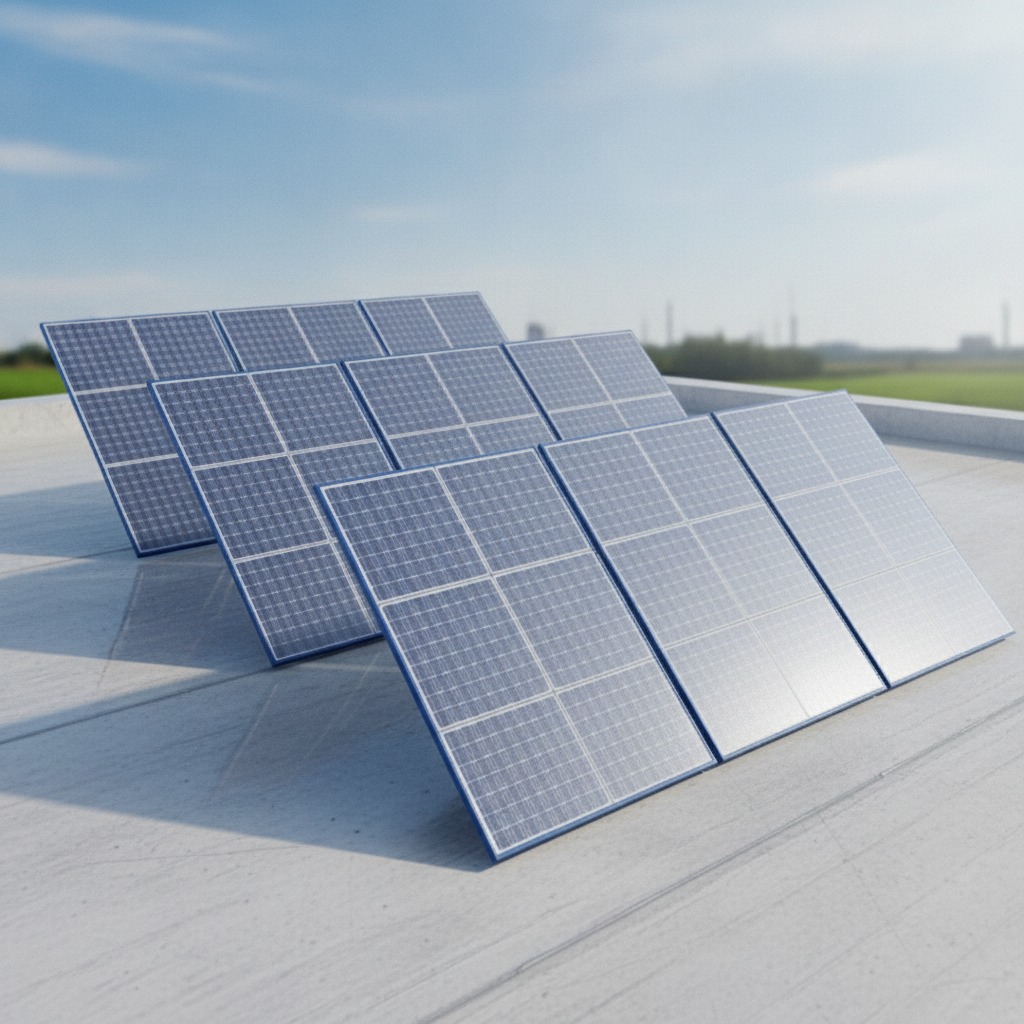
The visible product category here is a standard solar module: a flat rectangular panel with a rigid frame, a patterned cell surface, and interconnect lines linking multiple photovoltaic cells into one electrical unit. The dark blue to gray appearance suggests a semiconductor cell array under glass, though the exact cell technology is not identifiable from the image alone. The panels appear designed for outdoor energy collection and repeated installation in aligned rows or racks.
Because the construction is framed and planar, these PV panels are suited to conventional mounting systems. They can be paired with inverters, charge controllers, batteries, combiner boxes, and monitoring equipment depending on the electrical architecture of the project. For procurement teams, the important point is not only the module itself but how easily it fits into a complete solar bill of materials.
Key Specifications and Visible Characteristics
Standardized module format
The panels appear to follow a common rectangular module shape, which simplifies layout planning, racking compatibility, and shipping logistics. Standard geometry matters when arrays need consistent spacing, matched string design, and predictable installation sequences.
Cell matrix and interconnection layout
Multiple solar cells are arranged in a matrix across each panel. Fine grid lines and visible interconnects suggest a conventional module assembly approach, where cells are electrically connected in series and/or parallel paths to produce usable voltage and current. While the exact electrical rating is not provided, the structure indicates a finished photovoltaic product rather than a loose cell sheet.
Rigid framed construction
The metallic-looking edges indicate a framed module design. A frame adds stiffness, helps the panel hold its shape during handling, and supports installation in mounting hardware. It also gives the module a cleaner perimeter for alignment in larger arrays.
Multiple visual variants
Several panels show slightly different cell shading or surface appearance. That may reflect different module variants, production batches, or cell formats, but the image does not reveal wattage, efficiency, or technology class. Buyers should treat those differences carefully and confirm the electrical datasheet before ordering.
Materials and Finish Options
From the visible evidence, these solar photovoltaic panels use a rigid laminated structure typical of finished solar modules. The front surface appears smooth and glass-like, while the edges are framed in a metallic finish. The cell surface is dark blue to gray with a grid texture, which is common for semiconductor photovoltaic arrays.
Exact material details such as glass type, frame alloy, backsheet composition, encapsulant, and cell chemistry are not visible here, so they should be confirmed through product documentation. In solar projects, those material choices influence mechanical handling, thermal behavior, and long-term exposure performance. When comparing options, buyers usually look at the full module stack-up rather than the cell image alone.
Manufacturing and Assembly Process
Photovoltaic panels are built through a module assembly process that turns individual semiconductor cells into a weather-ready electrical product. In general industry practice, cells are inspected, sorted, interconnected into strings, laminated into a protective stack, trimmed, framed, and electrically tested before shipment. The visible interconnect lines and framed edges are consistent with that type of assembly.
For buyers, understanding the process helps when evaluating consistency and reliability. A solar module is not just a collection of cells; it is an integrated assembly where lamination quality, solder connections, framing accuracy, and final test screening all affect how the panel behaves once installed in a field or on a roof.
Application Scenarios
Rooftop solar installations
Photovoltaic panels are widely used on residential and commercial rooftops where available surface area must be converted into generation capacity. The rigid rectangular shape is ideal for mounting on tilted structures and aligning with roof geometry.
Commercial and industrial power generation
Factories, warehouses, office complexes, and logistics facilities often use PV panels to offset daytime electricity consumption. Arrays can be designed to match load profiles, reduce peak demand exposure, or support sustainability targets.
Solar farms and distributed energy systems
Because these modules are standardized, they can be deployed in larger ground-mounted installations. Utility or community-scale systems depend on repeatable panel dimensions and stable interconnection planning to build long strings and consistent block layouts.
Backup, remote, and off-grid power
In remote communication sites, field equipment, rural power supply, and emergency backup setups, solar photovoltaic panels can charge batteries and support autonomous operation. When fuel logistics are difficult, solar becomes a practical long-duration energy source.
Quality Control Considerations
Since the image does not show test labels, certifications, or measured output, it would be incorrect to claim specific performance values. Still, a buyer should ask for standard module verification documents before placing an order. Common quality checkpoints in this category include visual inspection, dimensional consistency, electrical output testing, insulation-related checks, and framing alignment.
For a purchasing team, the most useful approach is to compare actual datasheets, packing details, and installation requirements. In solar projects, small variations in module quality can affect array matching, maintenance frequency, and long-term system stability. If panels will be deployed outdoors in harsh environments, buyers should also confirm suitability for local conditions through documented product specifications.
Customization and Procurement Guidance
Customization for photovoltaic panels often starts with the system architecture. Buyers may need different sizes, electrical ratings, connector types, frame colors, or packing configurations depending on whether the project is rooftop, ground-mounted, or off-grid. Because the current product image does not reveal those hidden specifications, requests should be built around the intended use case rather than visual appearance alone.
When sourcing solar photovoltaic panels, it helps to define a few decision factors early: required output range, available installation area, mounting method, inverter compatibility, environmental exposure, and shipment volume. If the panels will be part of a matched string, electrical uniformity becomes especially important. If they are for a distributed project, logistics and replacement availability may matter more than a marginal difference in module format.
Also confirm the exact cell technology before comparing prices or planning yield estimates. The same general-looking module may use different semiconductor structures, which can affect project design choices. Since the image alone does not confirm whether the panels are mono- or polycrystalline, that detail should be verified in the technical sheet.
Why Buyers Choose This Type of Module
What makes photovoltaic panels practical is their combination of simplicity and scalability. They arrive as a finished electrical unit, are easy to arrange into arrays, and can be matched to a wide range of energy systems. For procurement, that reduces integration risk. For installers, it shortens assembly time. For operators, it creates a clear path from sunlight to usable electricity.
These panels are especially attractive when the project needs a familiar installation format rather than a custom solar component. The standardized module shape, framed construction, and matrix of photovoltaic cells give engineers a recognizable foundation for design, simulation, and field deployment.
Buyer Questions to Resolve Before Ordering
Before finalizing a purchase, confirm the panel’s wattage, efficiency, dimensions, open-circuit voltage, short-circuit current, connector style, and compatible mounting method. Ask for the datasheet and packing list. If the project is sensitive to environmental exposure, request the exact construction details for glass, frame, and encapsulant materials. If the installation is code-driven, verify the required documentation for your market.
These steps avoid common sourcing mistakes. A panel that looks suitable in photos may still differ in electrical behavior, frame profile, or installation requirements. The safest buying process is to pair visual inspection with written technical data.
Request Technical Details for Your Project
If you are evaluating photovoltaic panels for a rooftop array, solar farm, remote-power system, or commercial energy project, share your target application and required electrical range so the correct module specification can be matched to your design. The more clearly the operating environment and installation format are defined, the easier it is to select the right solar module configuration.
Send your requirements, and the panel specification can be reviewed against your project needs before procurement moves forward.






评价
Clear filters目前还没有评价