
Photovoltaic Panels for Turning Sunlight into Usable Power
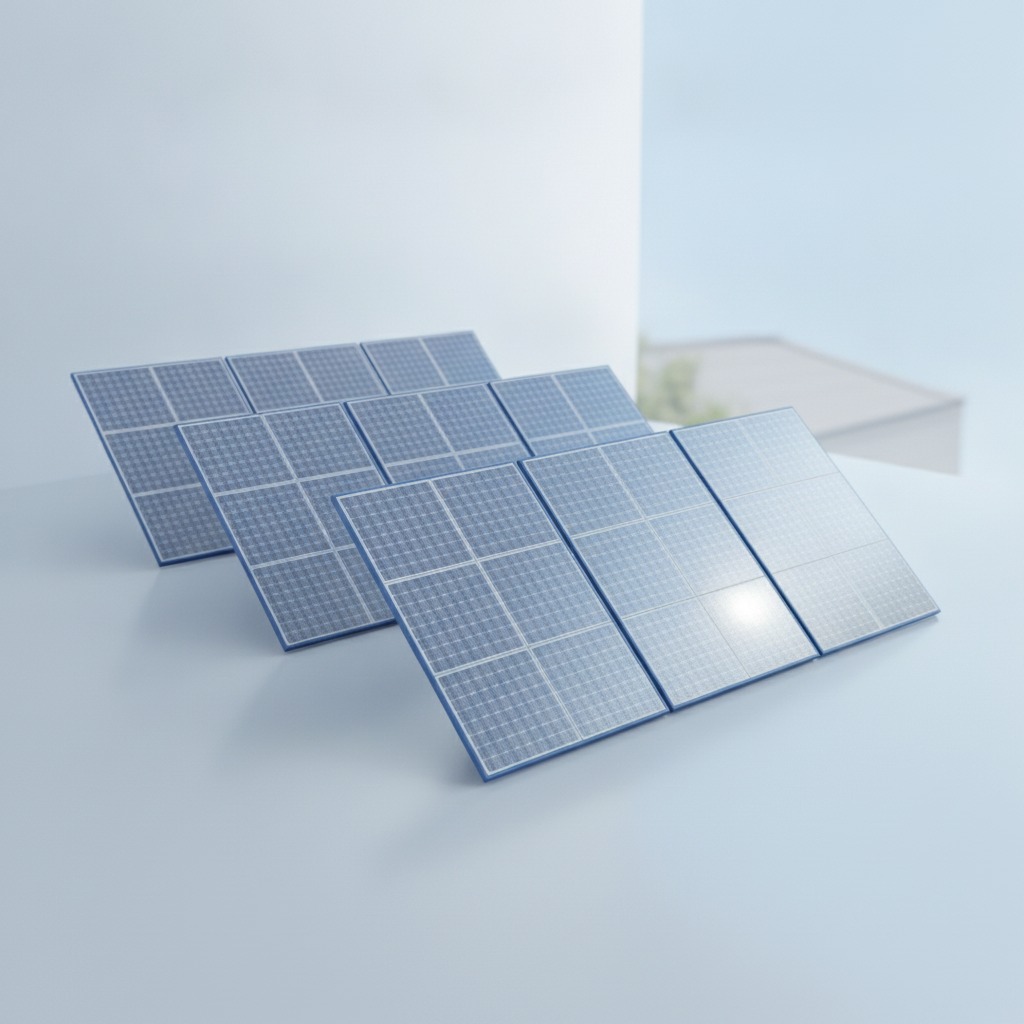
Photovoltaic panels solve a straightforward but important problem: they let a building, facility, or remote site generate electricity from sunlight instead of relying entirely on purchased grid power or fuel-driven generators. In practice, solar photovoltaic panels help buyers reduce energy dependence, support backup supply planning, and build cleaner power systems for rooftops, commercial yards, farms, and larger solar installations. The product shown is a standard flat photovoltaic module with a dense grid of silicon cells, a glass-like front surface, and a framed construction designed for solar energy capture and module installation.
Product Overview
The visible product category is a set of solar modules assembled into rectangular panels. Each panel contains many small square cells arranged in neat rows and columns, which is typical of crystalline silicon PV panels. The surface appears dark blue to gray-blue, with a reflective finish that suggests a protective glass face. Some panels show a thin perimeter frame, likely aluminum, which is commonly used to support handling, mounting, and long-term outdoor use.
Because the image does not reveal electrical ratings, exact dimensions, cell type, or certification data, this page focuses on the visible construction and the common engineering role of photovoltaic panels in solar power systems. Buyers comparing solar modules often need a practical reference: what the panel is, where it fits, and what details should be confirmed before purchase. This overview is intended to support that decision process.
What Photovoltaic Panels Do
At a functional level, photovoltaic panels convert sunlight into direct current electricity through semiconductor cells. That electricity can then be used in several ways: fed into a grid-tied inverter for building supply, stored in batteries for backup power, or routed into standalone systems for remote loads. The same basic module format can serve very different projects, but system design depends on the panel’s electrical characteristics, mounting method, and environmental exposure.
For buyers, the main value is stable solar power generation from a compact, stackable module format. Panels are installed in arrays, and those arrays can be sized to match a roof, parking structure, industrial site, or solar field. In many projects, the panel is not chosen only for output potential, but also for compatibility with inverters, racking, wiring routes, and site layout.
Visible Construction and Design Features
Cell layout
The cells are arranged in a regular grid pattern, which is a familiar layout for silicon-based solar modules. This orderly pattern is useful for recognizing panel consistency during inspection and helps indicate standard photovoltaic module assembly.
Surface finish
The front face appears smooth and glossy, with a dark blue-gray tone. That reflective, glass-like appearance is typical of PV modules built for outdoor exposure, where the front layer must admit light while protecting the cell circuit beneath it.
Frame and edges
A thin perimeter frame is visible on some panels. In solar products, a frame supports handling during transport, improves installation practicality, and helps secure the module in mounting systems. The exact frame alloy or grade is not visible, so that detail should be confirmed during sourcing.
Panel format
The rectangular shape and stackable presentation make the modules suitable for warehouse handling, project staging, and array installation. The stacked arrangement shown is common in manufacturing, distribution, and pre-installation logistics.
Key Specifications and Capability Points to Confirm
When evaluating PV panels, buyers usually request a set of core specifications before committing to a project. The image does not show these values, but they remain important purchase criteria:
• Rated power output, usually stated in watts
• Electrical efficiency and module performance class
• Open-circuit voltage and short-circuit current
• Cell technology, such as monocrystalline or polycrystalline silicon
• Physical dimensions and weight
• Frame material and glass construction
• Connector and junction box configuration
• Temperature behavior and outdoor durability data
These points determine whether the panel fits a residential roof, a commercial roof with limited space, or a larger ground-mounted solar array. A visually similar module can behave very differently once installed, so technical documentation matters as much as appearance.
Materials and Finish Options
Based on the visible structure, the modules likely use a crystalline silicon cell core with a glass-covered front side and a framed outer edge. That is a common and proven architecture in solar manufacturing. The exact cell chemistry is not identifiable from the image alone, so it is best to avoid assuming monocrystalline or polycrystalline without product data.
Common finish considerations for photovoltaic panels include front glass type, anti-reflective treatment, frame color, and backsheet appearance. Buyers may also ask for black-frame styling for architectural projects or more traditional silver-frame modules for utility and industrial use. Finish choice often affects visual integration, not just appearance.
Manufacturing and Assembly Process
Photovoltaic panels are typically built through a sequence of precision steps. Silicon cells are first sorted and interconnected into strings. Those strings are then laid into the module structure, laminated with protective layers, and sealed to form a weather-resistant panel. After lamination, the module is framed, wired, and prepared for electrical testing and packaging.
This process matters because long-term performance depends on consistent assembly quality. Alignment, soldering, lamination uniformity, and edge sealing all influence how well a module survives thermal cycling, wind loading, moisture exposure, and everyday handling. A panel can look uniform on the surface and still differ significantly in internal build quality, which is why sourcing from a disciplined manufacturing line is important.
Application Scenarios
Photovoltaic panels are used across a broad range of energy projects. On rooftops, they support self-generation for homes, offices, warehouses, and factories. On commercial and industrial sites, they can offset daytime electricity use and reduce pressure on operating budgets. In solar farms, modules are installed in large arrays to supply power at utility scale. They are also widely used in off-grid and backup power systems where reliable electricity is needed in remote or unstable grid conditions.
The visible module format is also suitable for solar pumps, communication stations, agricultural equipment, and temporary power systems. In each case, the buyer must balance available surface area, expected sunlight, electrical load profile, and maintenance access.
Quality Control Considerations
Since the image does not provide test data or certifications, buyers should ask for documented quality checks before placing an order. Useful verification points include appearance inspection, electrical flash testing, insulation checks, and visual confirmation of cell alignment and frame integrity. For outdoor modules, packaging and transport protection are also important because edge damage, microcracks, or connector issues can occur before installation.
Quality control for solar photovoltaic panels is not only about output numbers. It also covers consistency from panel to panel, stable framing, clear labeling, secure wiring, and reliable surface condition. If the project is large, buyers may also request batch traceability and sample inspection procedures.
Customization Guidance
Customization depends on the project type. A buyer specifying modules for a rooftop array may need dimensions that fit available roof sections, while a ground-mounted solar project may prioritize power density and simplified installation. Other customization points can include frame color, packaging method, label format, connector type, and array-level compatibility requirements.
When discussing solar photovoltaic panels with a supplier, it helps to define the target application first. Is the panel for grid-tied use, battery charging, or a mixed system? Is there a limited footprint, a high-wind environment, or a heavy transportation requirement? These answers guide the right panel format more reliably than appearance alone.
Buyer Decision Factors
Choosing PV panels is usually a balance between electrical performance, physical size, durability, and system compatibility. Buyers should compare the following before ordering:
• Available installation area and module dimensions
• Expected energy demand and target array size
• Inverter and battery compatibility
• Structural limits for roof or ground mounting
• Environmental exposure such as heat, dust, and moisture
• Documentation quality and production consistency
For many projects, the most expensive mistake is not buying the wrong panel style, but buying modules that do not match the rest of the system. A practical review of specifications prevents rework later.
Why This Module Format Is Widely Used
The visible design reflects why PV panels remain central to solar power systems: the format is compact, modular, and scalable. One panel is useful on its own for small applications, while dozens or thousands can be combined for larger installations. The straightforward rectangular shape also simplifies packing, transport, and rack alignment. For buyers planning an energy project, that modularity makes procurement and system expansion easier to manage.
Request the Right Information Before Ordering
Before purchase, confirm the electrical rating, dimensions, cell technology, mounting compatibility, and documentation available for the exact module you need. If your project requires solar photovoltaic panels for a rooftop, commercial facility, off-grid site, or solar farm, a clear technical brief will help you receive the correct product without guesswork.
If you are evaluating PV panels for an upcoming build, contact the supplier with your target application, installation environment, and preferred system configuration. A well-matched module saves time during design, installation, and long-term operation.

评价
Clear filters目前还没有评价