
Why a Display Rack Still Matters in a Space-Pressed, Omnichannel World
A display rack is one of those pieces of equipment that looks simple until you try to use the wrong one. In retail, in a small office, in a workshop, or even in a home-staging project, the rack is doing two jobs at once: holding products or materials and making them easier to see, reach, and sort. That second job is the one buyers sometimes underestimate. A shelf system that is too closed, too shallow, or too visually heavy can make a space feel cluttered and reduce the value of what is being shown.
For sourcing managers and product teams, the decision is rarely just “do we need shelving?” It is more specific: do we need a store display stand that can serve as a merchandising surface, a utility organizer, or a compact furniture piece that does both? The answer affects material selection, finish, freight profile, assembly complexity, and the way customers will judge the entire room or aisle. That is why the right merchandise display rack tends to pay for itself quietly. It improves presentation without demanding attention.
Quick takeaways before you spec one
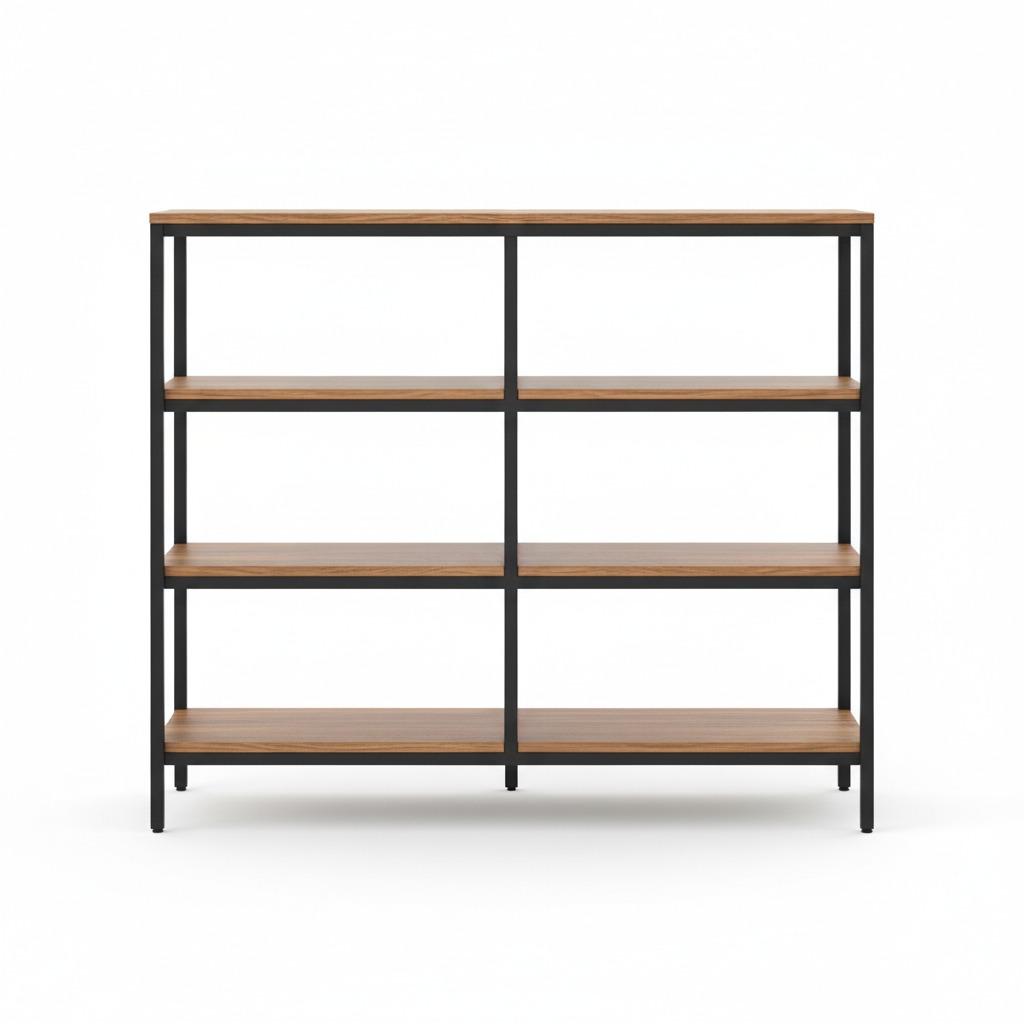
The open-frame shelf unit described here has a straightforward structure: four vertical legs, horizontal supports, and four shelf levels including the top surface. The frame is matte black, while the shelves have a wood-look brown finish. That black-and-wood contrast is a familiar visual language in both retail and interior settings because it reads as practical rather than precious. It can disappear into a back-of-house function area, or it can stand in front-of-house and still look intentional.
What matters most is not the styling alone, but the format. An open rack gives access from more than one side, which is useful when you are stocking small products, moving inventory, or changing a display often. If a buyer needs closed storage, this is not the right answer. If the goal is visibility and fast handling, it is a strong candidate.
What this type of display rack is good at
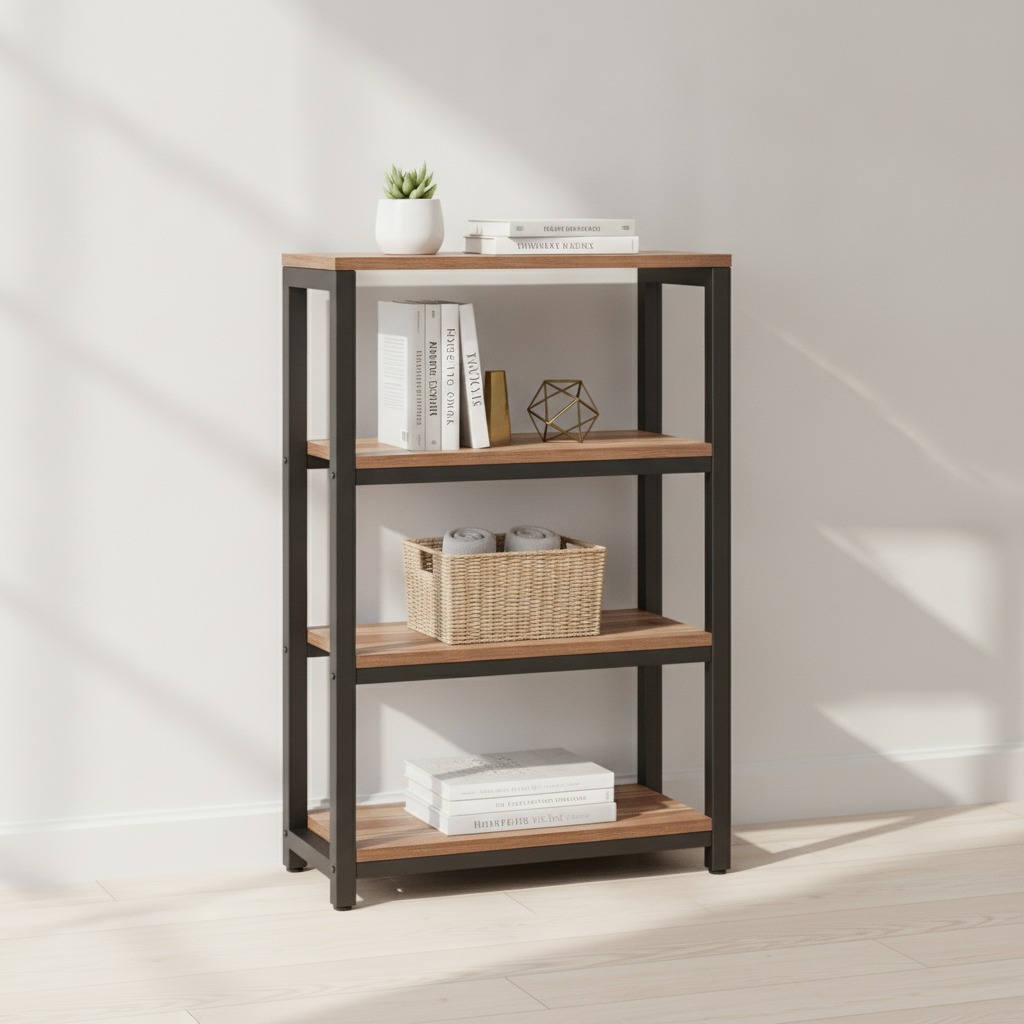
Open shelving is the practical middle ground between a full cabinet and a bare floor stack. A display rack of this kind can organize books, decor, tools, plants, small appliances, or retail stock without making the room feel boxed in. In a store, that openness helps customers scan the assortment quickly. In an office or entryway, it keeps everyday items available without creating visual noise.
The compact vertical footprint is also worth noting. A rack that builds upward instead of outward is often easier to place along a wall or in a tight zone where aisle space matters. This is especially relevant for retail teams balancing product density against customer circulation. The wrong shelf depth can choke a path. The right one can make a narrow corner commercially useful.
Typical settings where it earns its keep
For home and office use, the appeal is simple: easy organization and a cleaner line of sight. For workshops and utility areas, the open frame makes grabbing parts and tools less awkward. In retail, the same structure becomes a merchandising display rack that can carry folded goods, boxed items, or decorative accents. The versatility is real, though buyers should be honest about the tradeoff: an open unit shows everything, including any mess.
Material and construction clues buyers should look for
From the available product information, this unit appears to use a mixed-material construction, likely a steel or powder-coated metal frame paired with engineered wood or laminate shelf panels. That combination is common for good reasons. Metal provides stiffness and a clean linear frame; wood-look panels add warmth and help the piece feel less industrial. It is a sensible pairing for general-purpose display and storage.
Still, a caution is warranted. “Looks like wood” and “is durable like wood” are not the same thing, and buyers should not assume the finish type, core material, or edge treatment without confirmation. In procurement, that matters because shelf performance, scratch resistance, and cleaning behavior all depend on the actual construction. If the rack will be used for heavier goods, damp environments, or frequent movement, those details are not cosmetic. They are the difference between a decent-looking fixture and one that starts to fail at the corners.
How to decide whether this style fits your application
There are a few practical questions that separate a useful rack from a decorative inconvenience. First, what will sit on the shelves most days? A display rack holding boxed merchandise needs different support expectations than one carrying framed samples or a few potted plants. Second, how often will the assortment change? If it changes daily, open access matters more than deep storage. Third, who will use it? Staff members moving stock want simple access; end users browsing products want visibility and a tidy presentation.
One common mistake is choosing display furniture by appearance alone. The black frame and wood-grain panels suggest a versatile, modern look, but buyers should still think through practical details such as the likely traffic around the unit, the need for wall placement, and whether the contents are best displayed from one side or several. A rack that looks good in a photo can disappoint if it is too narrow for the product mix or too open for a controlled presentation.
Comparison point: display rack vs. cabinet vs. table
A cabinet is better when dust control, concealment, or security matter. A table is better when the merchandise must be spread out and handled easily. A display rack sits between those two. It lifts products into view, uses vertical space, and keeps the footprint modest. That makes it a practical choice for brands that want the space to feel curated but still workable.
For a buyer, the key question is what behavior the fixture should encourage. If you want people to browse downward through tiers, a rack works. If you want them to compare many objects at once, a table may be stronger. If you want to hide the back stock and keep the front polished, a cabinet wins. The display rack is the sensible option when access and presentation are equally important.
Merchandising advice that often gets missed
Retail teams sometimes overfill open shelves because they assume more product always means more sales. In practice, too much density can flatten the presentation and make the fixture look like storage rather than merchandising. On a merchandise display rack, negative space is not wasted space; it is visual breathing room. That matters whether the rack is in a boutique, a hardware store, or a showroom corner.
Another small but important point: use the top surface deliberately. Since the unit has four shelf levels including the top, that upper plane should not be treated as an afterthought. It can anchor a hero item, a plant, a sign, or a color-blocked grouping. But it should not become a random dumping ground. Once the top turns chaotic, the whole fixture reads as unmanaged.
Buyer checklist before placing an order
Even without confirmed dimensions or load figures, there are a few things a sourcing team should clarify with the supplier before committing. Ask about material grades, shelf core construction, frame finish, and assembly method. Confirm whether the shelf panels are engineered wood, laminate, veneer, or another surface treatment. If the rack is going into a retail environment, ask how the finish handles fingerprints and cleaning chemicals. If it will be moved often, ask how the frame is packaged for transit and whether the corners are protected.
It is also worth checking whether the design is intended for wall placement, freestanding use, or both. The product description suggests it can work in either context, but that should not be assumed without confirmation. A compact open rack may seem stable enough in a photo and still need placement discipline in the real world, especially if the load distribution is uneven.
Common mistakes that create avoidable headaches
The first mistake is choosing a rack that is visually right but operationally wrong. The second is ignoring the content mix. Heavy tools, tall bottles, and delicate decor each demand different shelf habits. The third is neglecting the back-of-house reality: if staff cannot refill the rack quickly, the display will not stay attractive for long.
There is also a subtle merchandising error that shows up in hybrid spaces. Some buyers use a display rack as if it were both a storage unit and a showroom pedestal. It can do both, but not equally well at the same time. Pick a primary job. That simple decision tends to improve product flow and visual order more than any styling trick.
FAQ
Is this kind of display rack only for retail?
No. The open-frame format fits retail, but it also works in offices, entryways, workshops, and homes where visibility and quick access matter.
What makes an open rack better than a closed unit?
It gives faster access and a lighter visual feel. That is useful when the contents change often or when the space needs to look less bulky.
Can it function as a store display stand and storage shelf at the same time?
Yes, though the balance matters. If the shelves are overloaded, the display side weakens. If the contents are curated, the same unit can serve both roles effectively.
What should buyers confirm before ordering?
Material details, finish type, assembly approach, and intended placement should all be confirmed. Those factors influence usability more than many buyers expect.
A practical next step for buyers
If you are evaluating a display rack for a retail rollout, office refresh, or mixed-use storage plan, start with the role, not the look. Decide whether you need presentation, access, storage, or some combination of the three. Then match that requirement to the rack’s open-frame structure, shelf count, and material mix. The black metal and wood-look surface on this type of unit make it broadly usable, but the best purchase is still the one that fits the actual merchandise and the actual space.
For sourcing teams, the safest approach is to request the missing technical details before purchase and treat the visual design as only one part of the decision. A good merchandise display rack should make the space easier to use every day. If it does that, it is doing real work, not just occupying floor area.