
Why Adult Diapers Are a Practical Sourcing Decision, Not Just a Care Item
Adult Diapers are often discussed as a household care product, but for buyers, caregivers, and product teams, they are really a reliability problem. The question is not whether an adult diaper can absorb moisture in a general sense; it is whether the product can be worn comfortably, contain leakage, support dignity, and fit the user’s routine without creating extra work for the caregiver. That is why selecting an adult diaper should be treated like a product decision, not an afterthought.
In home care, elder care, travel kits, and medical supply channels, the right adult diaper can reduce laundry, protect bedding, and make nighttime care less disruptive. The wrong one can lead to leaks, skin discomfort, frequent changes, and returns. For sourcing managers, the challenge is to compare construction details and user needs without overrelying on packaging claims. This guide walks through the practical factors that matter most when evaluating an adult diaper or broader incontinence products category.
What the Product Structure Tells You Before You Look at Marketing Copy
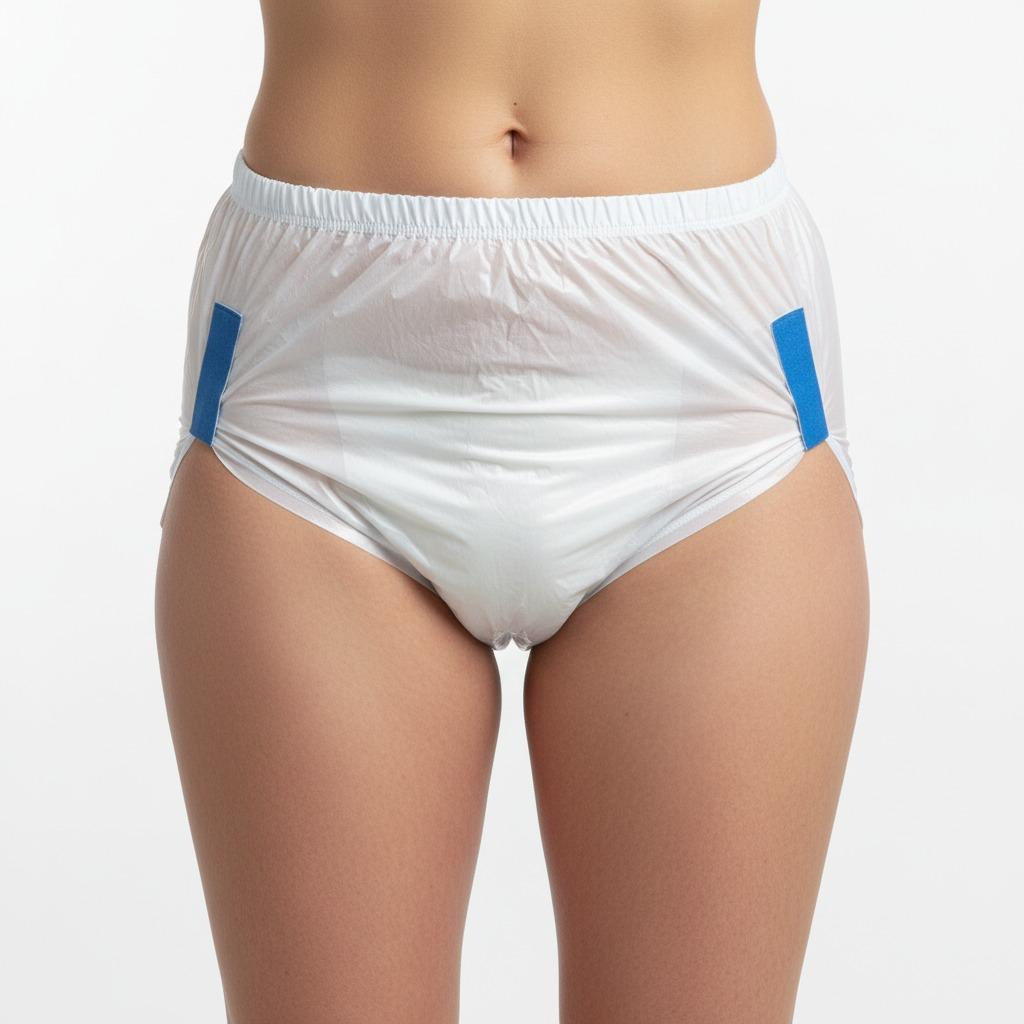
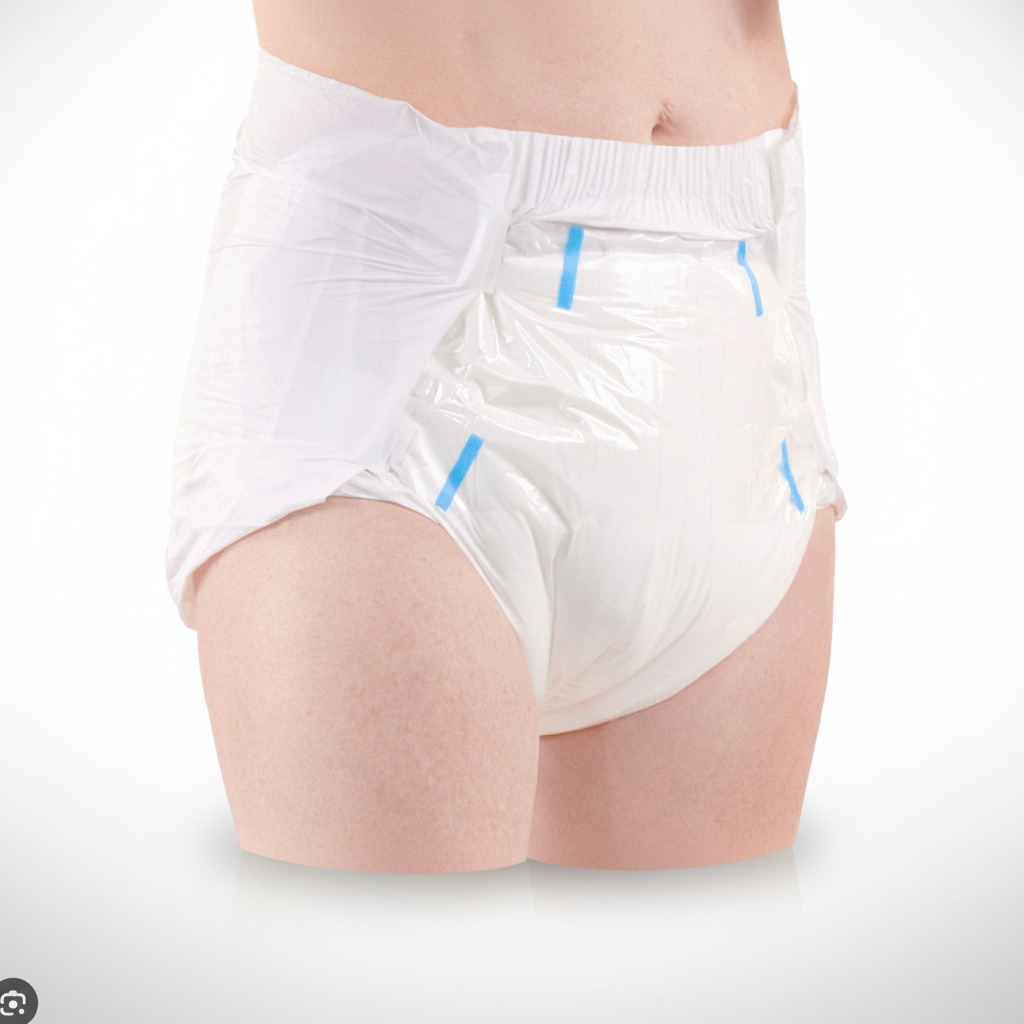
From a manufacturing viewpoint, the visible structure of an adult diaper already says a lot. The product described here appears to be a disposable brief with an elasticized waist and leg openings, a contoured absorbent body, and a translucent outer film or plastic-like cover. The white nonwoven-looking surface and blue indicator markings on the front panel suggest a layered hygiene product built for body conformity and disposable use.
That matters because the visible design points to how the product is likely meant to function. Elasticized edges help the brief sit closer to the body. A contoured center panel usually supports fluid handling in the area where it is most needed. A waterproof-looking outer layer is there to help contain leakage and protect clothing or bedding. None of this tells you the full performance story, but it gives a buyer a basic framework for asking better questions.
Quick check: what to look for at first glance
If you are inspecting samples or product photos, pay attention to the waistband shape, leg gathers, the thickness of the center panel, and whether the body looks cut to follow human contours rather than just being a flat pad. With adult diaper products, shape is not cosmetic. It affects fit, movement, and whether the product stays in place during sleep or when the wearer stands and sits repeatedly.
How Adult Diapers Are Typically Built
While exact material composition is not visible in every sample, most disposable adult diaper products follow a layered construction. The outer layer is commonly a nonwoven face or cover, chosen for softness and appearance. Beneath that sits an absorbent core, which is the main fluid-handling element. An inner or outer waterproof film helps prevent leakage. Elastic components around the waist and legs improve containment and fit.
This layered format is standard across many incontinence products because it balances comfort, fluid management, and disposability. The tradeoff is that each layer must work with the others. A strong core without good leg gathers still leaks. Soft nonwoven material without structural support can feel comfortable but fail in use. That is why buyers should avoid judging a sample by surface feel alone.
Step-by-Step Guide to Choosing the Right Adult Diaper
There is no single best adult diaper for every user. A practical selection process starts with the wearer’s needs and ends with the supply chain reality. That sounds obvious, but it is where many purchasing mistakes begin.
Step 1: Define the use case clearly
Is the product for overnight protection, daytime mobility, post-surgery recovery, elder care, or travel? Overnight use usually puts more weight on containment and all-night comfort. Daytime use may prioritize ease of changing and lower bulk. In caregiving settings, speed of application can matter as much as fit.
Step 2: Match the format to the user
Adult diapers are not all used the same way. Some users need a pull-on style because they can stand and dress themselves. Others may require a tabbed brief format for assisted changing. If the sample looks tabless or pull-on, that narrows the intended use to users who can manage it independently or with limited help. That is an important detail for hospitals, care facilities, and distributors.
Step 3: Inspect fit features
Elasticized waist and leg openings are more than convenience features. They help the product conform to the body and reduce gaps, especially during movement. A buyer should look at the stretch consistency, the softness of the gathers, and whether the brief seems designed to maintain contact without feeling overly tight. A product that sits too loosely can leak; one that clamps down too hard can be uncomfortable and harder to wear for extended periods.
Step 4: Review the absorbent zone design
The visible full coverage front and center panel suggest that the absorbent area is concentrated where the product expects fluid loading to occur. That is common in adult diaper design. When evaluating samples, look at whether the core appears balanced across the central body or overly thin at the edges. Uneven structure can affect performance even if the product looks substantial in packaging.
Step 5: Check how the product is meant to be disposed of and handled
Because these are disposable hygiene products, the handling experience matters. If the outer film is too noisy, too stiff, or too brittle, users may dislike wearing it. If the product is too delicate, caregivers may struggle during changes. In a warehouse or care setting, these small usability issues can become big operational complaints.
Selection Criteria Buyers Should Not Skip
When buying Adult Diapers for retail, institutional, or private-label use, it helps to think beyond absorbency claims. Here are the criteria that usually matter most in the field.
Fit and body conformity
The product should follow the body without creating obvious gaps at the legs or back. A contoured shape is a useful sign, but real fit depends on how the brief behaves in motion. If possible, evaluate samples on a range of body types, not just one model or one employee.
Surface feel and wear comfort
Softness on the outside matters because users may wear the product for hours. A rough surface can create resistance during movement and lower acceptance. That said, a very soft surface is not automatically better if the internal structure becomes weak. Comfort and structure have to be balanced.
Containment design
Leg gathers, waist elasticity, and the coverage area all contribute to leakage protection. Buyers should be cautious about products that emphasize one feature while leaving the others vague. In practice, leak control is a system, not a single material choice.
Package and cueing details
Blue indicator strips or markings can help with orientation and inspection in caregiving workflows. They do not guarantee performance, but they may improve speed and reduce mistakes when products are stored, opened, and handled frequently.
Common Mistakes in Sourcing Adult Diaper Products
One common mistake is assuming that all incontinence products are interchangeable. They are not. A brief suitable for overnight support may feel too bulky for daytime use. A lighter product may be easier to wear but not dependable enough for long shifts or travel. Always buy to the use case, not just to a category label.
Another mistake is relying too heavily on photos. A clean, white diaper with neat blue markings may look professional, but appearance cannot confirm core structure, film quality, or leg seal behavior. If you are sourcing at scale, request samples and test them in realistic conditions. Simulated use is better than guessing, even if the test is informal.
A third issue is ignoring the user’s ability to don the product. A pull-on style may be appropriate for independent adults, but it can be awkward for caregivers changing someone who is less mobile. The easiest product to stock is not always the easiest product to use.
Practical Advice for Care Teams and Buyers
If you are managing a care setting, keep a short internal checklist for any adult diaper sample. Does the fit hold during sitting, standing, and sleeping? Does the product stay comfortable after extended wear? Is it easy to identify front and back quickly? Can staff change it without struggling with the material?
For sourcing teams, ask suppliers for clear product definitions. Even when exact material composition is not disclosed in a visual reference, you can still ask about layer structure, intended user group, and whether the design is meant for pull-on or assisted use. Be wary of broad performance language that is not tied to a construction detail.
For retailers, it is also worth thinking about customer education. Many returns happen because buyers select the wrong format or size assumption for their needs. Even simple category guidance on the product page can reduce confusion. In this product area, clarity often sells better than adjectives.
How This Product Category Fits into Broader Incontinence Products
Adult diapers are part of a wider incontinence products market that includes pads, liners, underpads, and specialized briefs. The right choice depends on severity, mobility, and care setting. Adult diapers offer full-body coverage and are often chosen when containment and ease of disposal are priorities. Other products may suit lighter needs or different mobility patterns.
That broader view helps avoid over-specifying one solution for all users. A facility may need several product types rather than one universal option. A buyer who understands this usually ends up with fewer complaints and better inventory turnover.
FAQ: What Buyers Usually Ask
Are Adult Diapers only for elderly users?
No. They are used across many situations, including post-surgery recovery, disability care, travel, and temporary incontinence management. Elder care is common, but it is not the only use case.
Can I judge quality by the outer look alone?
Not reliably. The visible film, white surface, and contour can suggest a certain construction, but actual performance depends on internal layers, fit, and how the product behaves in use.
What matters most in a sample review?
Fit, comfort, containment design, and ease of use. If those four are weak, the product will likely create problems even if the packaging looks polished.
A sensible next step for sourcing teams
If you are evaluating Adult Diapers for procurement, retail, or private-label development, start with samples and a basic use-case matrix. Test the product in real conditions, compare fit and handling across users, and ask for construction details that match the intended application. The goal is not to find the most impressive-looking brief. It is to find the one that performs predictably for the people who will actually wear it.
For teams building a shortlist, that often means comparing pull-on convenience, elastic comfort, visible coverage, and user handling before talking about volume orders. A careful first review saves a lot of awkward feedback later.