

How to Evaluate a Nursing Pillow for Product Development and Private-Label Sourcing
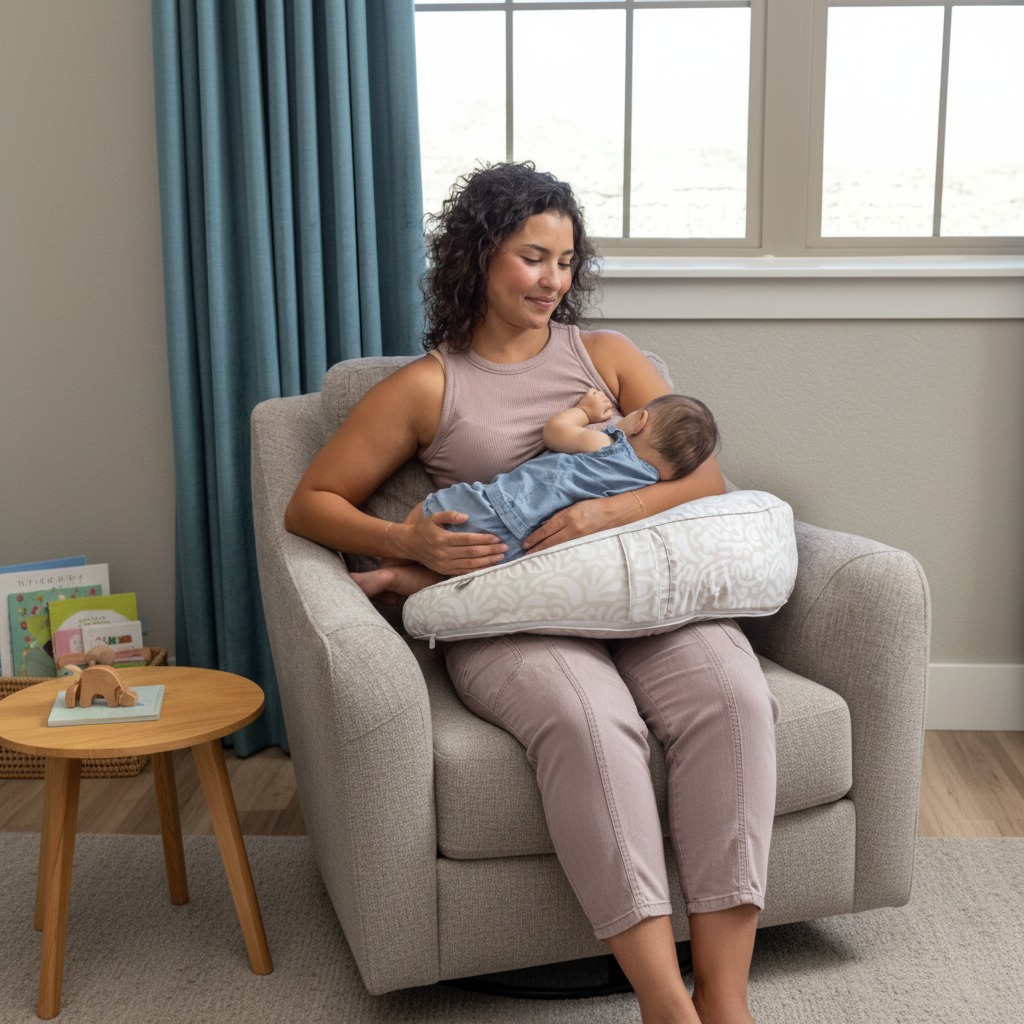
A nursing pillow is a deceptively simple soft-goods product. In use, it becomes the working surface between a caregiver and an infant, so shape, firmness, cover construction, cleaning access, and overall stability matter more than a decorative print alone. For sourcing managers and product teams, the practical question is not simply whether a cushion looks comfortable. It is whether the design can be manufactured consistently, specified clearly, maintained easily, and positioned responsibly for feeding support.
This article examines the visible design features of a contoured nursing support pillow and explains what buyers should verify before moving into sampling or private-label production. The goal is to help teams decide whether a cut-and-sew soft-goods construction is suitable for their product line, what information remains unconfirmed, and which questions should be answered before approving a production specification.
Quick reference: what the visible design suggests
| Design area | Visible or likely feature | What the buyer should verify |
|---|---|---|
| Overall form | Large elongated cushion with a curved, raised profile and rounded or tapered ends | Finished dimensions, curvature, usable support area, and fit across different chairs or laps |
| Outer cover | Patterned textile with stitched panels and perimeter piping | Fiber content, abrasion performance, colorfastness, seam strength, and care instructions |
| Closure | Visible zipper along the lower edge | Whether the cover is intended to be removed, zipper safety, wash performance, and replacement-cover availability |
| Internal cushion | Soft insert, with fill material not visible | Fill type, firmness, recovery, odor, compression behavior, and consistency between units |
| Market use | Home feeding, nursery, maternity, registry, and private-label programs | Target user, intended positioning language, packaging, regulatory expectations, and channel requirements |
Why geometry matters in a feeding support cushion
The broad, slightly raised shape shown here is intended to bring an infant closer to the caregiver while distributing contact across the lap. A contoured profile can be more useful than a flat rectangular cushion because it creates a defined support zone rather than leaving the user to arrange loose bedding or folded blankets. The tapered ends also give the product a softer visual transition and may make it easier to position against the body.
That does not mean one shape will suit every user. A pillow designed for a compact chair may feel different on a deep sofa or bed. The design team should assess the product in several realistic settings, including upright seating and less structured home environments. Pay attention to whether the cushion stays in place, whether the user must hold it continuously, and whether the raised portion remains supportive after repeated compression.
Prototype reviews should include more than a visual check. Measure the support area, inspect how the cover behaves around the curve, and observe whether seams or piping create pressure points. A few minutes of hands-on review often reveals issues that are invisible in a product photograph.
Cover construction and the role of cut-and-sew manufacturing
The visible product appears to use a sewn textile cover made from shaped panels. The outer surface has a woven- or knit-looking appearance, a light beige-and-white abstract pattern, stitched paneling, and perimeter piping. This points to a conventional cut-and-sew manufacturing route rather than a molded one-piece shell.
For a soft product, the cover pattern is part of the functional design. Curved panels must be cut accurately enough to produce a smooth profile without excessive wrinkling. Piping adds definition around the edge and can give the product a more finished, upholstery-style appearance, but it also adds operations: cord preparation, fabric wrapping, alignment, sewing, and end finishing. If the piping is not controlled consistently, the edge may look uneven or cause fit problems when the cover is installed over the insert.
The patterned fabric raises another practical issue. Pattern placement can vary between units unless the cutting plan includes clear alignment requirements. Buyers should decide whether the print must match across panels or whether normal placement variation is acceptable. For a private-label product, this should be documented before bulk cutting, not negotiated after production begins.
Zipper access and cover maintenance
A zipper is visible along the lower edge of the cover. It may support removal of the outer cover, but the image alone does not confirm that the cover is machine washable or that the zipper is designed for frequent laundering. Those points require confirmation from the manufacturer and, ideally, wash testing using the proposed fabric and zipper combination.
Ask whether the zipper pull can be positioned away from the user’s normal contact area, whether the zipper tape remains concealed, and whether the cover can be removed without stretching or damaging the seams. A cover that is technically removable but difficult to reinstall may create complaints and returns. Replacement covers may also be worth considering if the product is intended for long-term nursery use or gift programs.
Choosing the internal fill
The fill is not visible, so it should not be assumed to be fiber, foam, or any other particular material. Each option changes the product’s behavior. Fiber fills can produce a soft, familiar cushion but may require attention to clumping and recovery. Foam-based inserts can offer a more defined shape, although firmness, edge behavior, and compression set need careful evaluation. Blended or layered constructions are also possible, but the specification should identify the actual materials and how they are assembled.
For a nursing support pillow, consistency is especially important. Two samples may look identical while feeling noticeably different if fill weight or compression is not controlled. A buyer should request a written fill specification, a target firmness description, and a method for checking insert dimensions before the cover is closed. Exact performance values should come from the supplier’s approved specification or test plan rather than from visual assumptions.
Odor, dust, fiber migration, and recovery after packing are practical concerns. If the product will be compressed for shipment, inspect samples after unpacking and after a defined rest period. The team should also decide whether the insert is removable, whether it can be cleaned, and how the product will be protected during storage. These details affect packaging and customer instructions.
Selection criteria for product teams and sourcing managers
1. Define the use environment
Clarify whether the product is intended primarily for breastfeeding, bottle feeding, or general infant positioning during supervised use. The intended setting may be a sofa, chair, bed, nursery glider, or travel environment. Each setting changes the importance of footprint, firmness, portability, and resistance to shifting.
2. Separate confirmed features from marketing assumptions
The visible zipper can be described as a zipper closure, but washability should not be promised until it is verified. Similarly, a raised contour may support positioning, but it should not be described as a clinically tested ergonomic solution unless relevant evidence exists. Avoid unsupported claims involving medical benefits, allergy protection, waterproofing, flame resistance, or safety certifications.
3. Review the complete textile package
Request the proposed fabric composition, weight, color options, print method, seam construction, and care-label information. If the pattern is central to the product’s shelf appeal, ask for a strike-off or production-representative swatch. Check color under retail lighting as well as natural light; pale neutral prints can change considerably between the two.
4. Inspect the insert and cover together
A good cover cannot compensate for an inconsistent insert, and a well-shaped insert can look poor if the cover is undersized or badly patterned. Review the assembled product for wrinkles, empty corners, piping alignment, zipper operation, and surface recovery after compression. It is useful to inspect both an untouched sample and one that has been handled repeatedly.
Common mistakes when buying a nursing pillow
One frequent mistake is specifying only a photograph and a general product name. A photograph communicates appearance, but not dimensions, firmness, fill weight, seam allowance, zipper type, or care performance. Another mistake is treating the cover as a cosmetic accessory. In practice, it affects touch, durability, cleaning, print consistency, and the perceived quality of the entire product.
Buyers also sometimes approve an attractive prototype without checking packaging compression. A cushion may leave the factory in good condition but arrive flattened, creased, or slow to recover if the packing method is unsuitable. The proposed packed configuration should be reviewed before final approval.
Finally, do not let a visible removable-looking cover become an unverified selling point. Confirm whether the insert can actually be removed, whether the zipper is durable enough for repeated use, and what care method the finished assembly supports.
Practical advice for private-label development
Start with a technical brief that covers the finished silhouette, target dimensions, fabric appearance, piping, zipper location, insert construction, label placement, packaging, and intended use language. Mark every item as confirmed, requested, or still open. This simple distinction prevents assumptions from becoming production requirements.
For sampling, request at least one appearance sample and one construction-focused sample if the design is still being refined. Compare the cover fit, contour, seam quality, and filling behavior. If the product will be sold through different channels, review packaging copy separately for retail, e-commerce, and gift or registry use. The wording should explain the product’s support function without overstating safety or medical performance.
Frequently asked questions
Is the visible cover definitely removable and washable?
The zipper suggests possible cover access, but removability and washability are not confirmed by appearance alone. The supplier should provide care instructions and, where appropriate, verify the cover through testing with the proposed fabric and zipper.
What is the fill material?
The internal fill cannot be identified from the visible product information. It may be fiber, foam, or another cushioning material. Ask for the material description, fill weight or construction details, and a sample that represents production.
Can the same design be used for breastfeeding and bottle feeding?
It may be suitable for both applications, depending on the intended positioning and the final geometry. Product copy should reflect the uses that have been reviewed and approved rather than assuming that every caregiver or feeding position will work equally well.
What should be confirmed before placing a production order?
Confirm dimensions, fabric composition, fill type, firmness target, zipper construction, seam and piping details, care instructions, packaging method, labeling, and any market-specific compliance requirements. Also clarify which claims the supplier can substantiate.
Next step: turn the visual concept into a controlled specification
This contoured soft cushion has a clear product direction: a broad lap-support surface, raised geometry, patterned textile cover, sewn piping, and a lower-edge zipper. The next decision is whether those visible features match the needs of your target channel and whether the underlying construction can be specified consistently.
Before requesting a final quotation or approving a private-label sample, prepare a short technical checklist and ask the manufacturer to fill every open field. A disciplined review of the cover, insert, closure, packaging, and product language will do more for launch reliability than adding another decorative detail.