
Photovoltaic Panels: What Buyers Need to Know Before They Specify a Module
Photovoltaic panels sit at the center of most solar projects, but they are rarely bought as a standalone item. Engineers, sourcing teams, and project planners usually have to decide how the modules will behave on a roof, in a field array, or inside an off-grid system before they can compare prices or lock in a supplier. That is where the real work begins. A panel may look simple from a distance — a flat rectangular module with a dark blue or blue-gray cell pattern under glass — yet the details behind that surface determine how easily the system is installed, how it ages, and how forgiving it is when site conditions are less than ideal.
If you are evaluating solar photovoltaic panels for a new build or a replacement program, the central question is not just “which panel converts sunlight into electricity?” It is “which module format will fit the structure, the electrical design, and the operating environment without creating avoidable risk?” That is a more practical question, and it usually saves time later.
What These Panels Are Doing, and Why the Form Matters
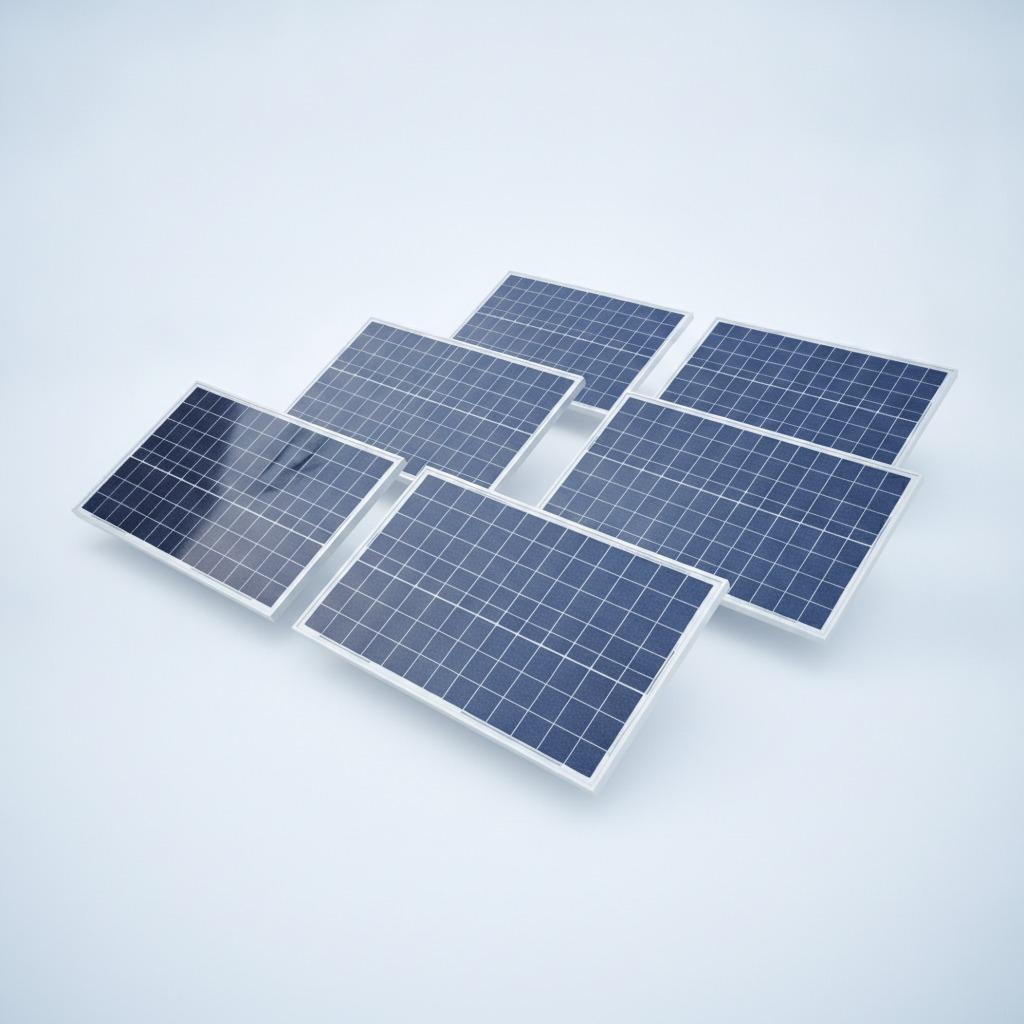
At a basic level, photovoltaic panels convert sunlight into electrical power. The typical crystalline silicon module does this through multiple smaller cells arranged in a matrix behind a glass-like front surface. The cells are connected in a controlled electrical path, then protected by a frame around the perimeter. That frame is not only there for appearance; it helps the module stay rigid during handling and installation, especially when panels are carried across a roof or bolted into an array.
The visible structure tells you quite a bit. A uniform rectangular form suggests modularity, which is useful for array design. The repeating grid pattern across the cell surface points to standard crystalline silicon construction rather than a more exotic design. In day-to-day sourcing, that matters because standard formats are easier to mount, easier to replace, and usually easier to integrate with common inverters and balance-of-system hardware.
There is a practical caution here: two modules can look broadly similar and still behave differently in the field. Surface appearance alone does not tell you power rating, efficiency, cell count, dimensions, or certification status. Those are all separate buying checks.
Quick Reference: Where Photovoltaic Panels Are Used
For most buyers, application is the first filter.
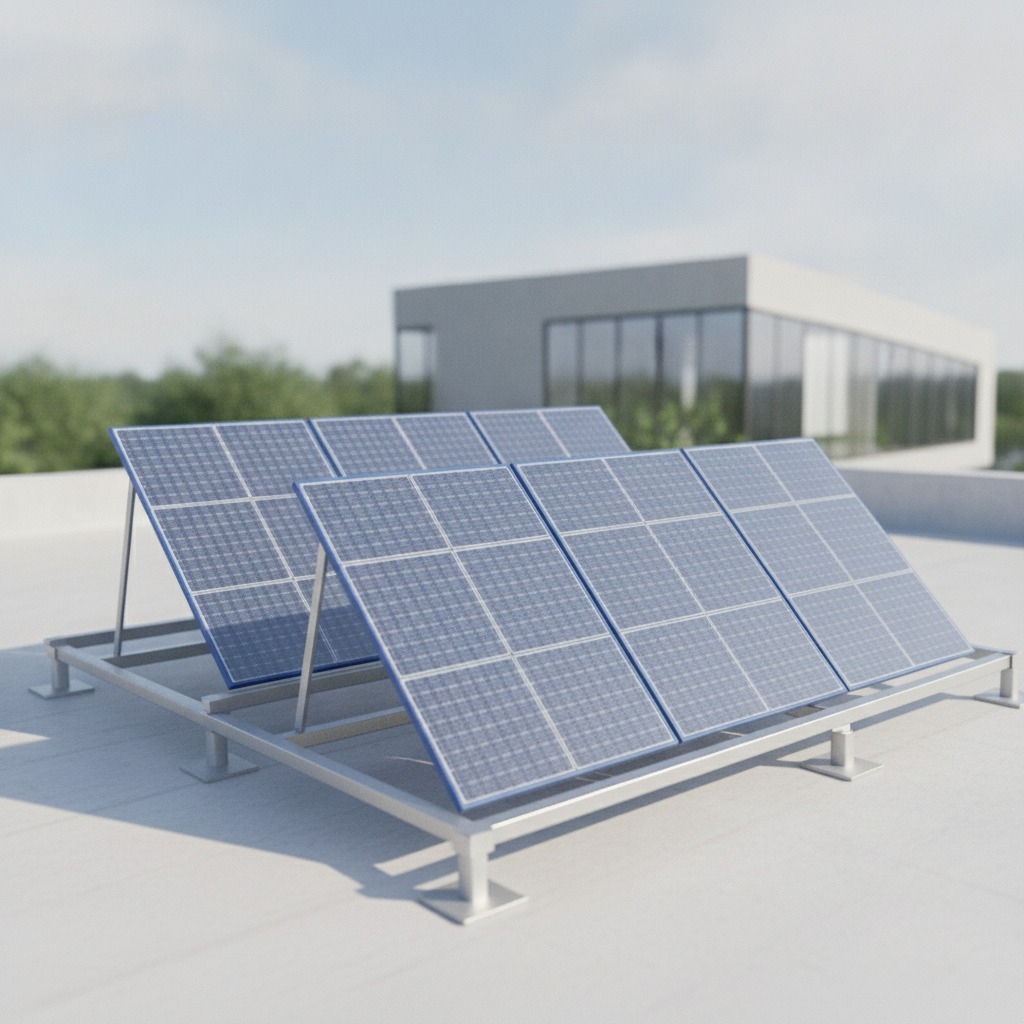
Rooftop systems need modules that work cleanly with roof geometry, available weight capacity, and local installation practices. Ground-mounted arrays give you more freedom on layout, but they also demand more from structural design, cabling, and maintenance access. Off-grid power systems add another layer of pressure because the panel choice must support batteries, charge controllers, and variable load behavior. Industrial and utility-scale projects usually care most about repeatability: can the module be deployed in large numbers, aligned consistently, and maintained without unexpected variation?
That is why PV panels are rarely judged on output alone. A higher wattage unit can still be the wrong choice if it complicates shipping, mounting, or service work.
Crystalline Silicon Modules: The Common Workhorse
The product description here points to standard crystalline silicon photovoltaic module construction, which remains the most familiar category in commercial solar procurement. The blue-gray to dark blue cell surfaces, the grid pattern, and the framed rectangular shape all fit that family.
Buyers often ask whether a panel is monocrystalline or polycrystalline. From the visible texture alone, that cannot be confirmed with certainty, and it should not be guessed. In practice, both sit within the larger crystalline silicon universe and are selected based on project economics, available space, and performance targets. What matters more at sourcing stage is how the module behaves in the conditions that matter to you: heat, shading, mounting constraints, and long-term replacement planning.
A roof with limited area often pushes buyers toward higher-output modules, while a ground array with ample space may prioritize procurement simplicity and mechanical compatibility. Those are different decisions, and the “best” panel is not the same in both cases.
Selection Criteria That Actually Affect the Job
When teams compare photovoltaic panels, they often begin with electrical specification sheets. That is sensible, but incomplete. The panel has to survive shipment, installation, and decades of exposure as part of a system.
Mechanical fit
Rectangular module geometry is standard, but dimensions still matter. A module that looks manageable on paper can become awkward on a crowded roof or a site with unusual racking spacing. Before purchase, confirm the mounting pattern, access for clamps or fasteners, and whether the frame profile works with the intended hardware.
Electrical compatibility
The module must fit the inverter string design and the overall system voltage plan. That sounds obvious, yet mismatches still appear when teams source panels before the electrical layout is fully settled. It is a small mistake with expensive consequences.
Site environment
Humidity, dust, salt exposure, wind loading, and temperature swings all influence module selection. If the installation is in a harsh environment, the buyer should ask for evidence that the product line is intended for that kind of service. Do not assume a panel suited to a suburban rooftop will behave identically on a coastal or industrial site.
Service and replacement logic
For fleet owners and project operators, repeatability matters. If a site may need future replacements, it is wise to standardize on a module family that can be sourced consistently. A one-off panel choice can create headaches years later when the original stock is gone.
Common Buying Mistakes
One of the most frequent mistakes is focusing too hard on visible appearance. Darker cells do not automatically mean better performance, and a neat frame does not prove durability.
Another mistake is treating all PV panels as interchangeable. They are not. Even within the same general solar module category, there can be important differences in output range, size, frame geometry, and system compatibility. Teams sometimes learn this only after racking has already been ordered.
A third mistake is failing to match the panel choice to the business case. A rooftop customer with limited space has different priorities than a utility project buying in volume. If the project team is not clear on the use case, procurement can easily optimize the wrong metric.
Practical Advice for Engineers and Sourcing Teams
Start with the physical layout. Then move to the electrical design. Only after that should you compare suppliers in detail. That sequence may seem slow, but it usually prevents awkward compromises later.
Ask for the exact module dimensions, frame details, cell configuration, and installation requirements. If the panel will be used in a fixed array, check whether the geometry supports consistent spacing and maintenance access. For off-grid applications, verify that the selected modules fit the battery and charging architecture rather than forcing the rest of the system to adapt around them.
If the supply chain is tight, consistency is worth more than a small theoretical performance gain. In solar procurement, a panel that is easy to replace and easy to match can be more valuable than a slightly more aggressive spec sheet.
FAQ: Short Answers to the Questions Buyers Keep Asking
Are photovoltaic panels and solar modules the same thing?
In practice, the terms are often used interchangeably in procurement and project discussions, though “module” is usually the more technical term.
Can you tell monocrystalline from polycrystalline by sight alone?
Not reliably in every case. The visible cell texture can suggest the general crystalline silicon family, but it should not be used as proof.
What matters more, output or fit?
Both matter, but fit comes first. A module that cannot be mounted cleanly or integrated into the electrical design is not a good buy, no matter how attractive the wattage looks.
Are all photovoltaic panels suitable for rooftop and ground-mounted use?
No. The environment, mounting system, and maintenance strategy should guide the decision.
What a Good Next Step Looks Like
If you are shortlisting photovoltaic panels for a project, build your comparison around three questions: does the module fit the site, does it fit the electrical design, and can it be sourced and maintained without friction? That framework is boring in the best possible way. It keeps the team from chasing cosmetic differences and brings the conversation back to installation reality.
For buyers still at the early stage, the safest move is to request a full technical specification and verify the mounting, system compatibility, and intended application before committing to volume. If you already have a project brief, use it to narrow the panel family first; then compare supplier options against the same design assumptions. That is the cleanest route to a solar procurement decision that holds up after delivery, not just on paper.