Why lithium battery enclosures deserve more attention than they usually get
A lithium battery system is only as practical as the hardware around it. In procurement meetings, the chemistry tends to get the headline treatment, while the enclosure, cable exit points, handle design, and service access are treated as afterthoughts. That is a mistake. For engineers and sourcing teams, the battery package is not just cells and electronics; it is the lithium battery assembly, the protective housing, the wiring interface, and the service strategy all working together.
If the enclosure is awkward to lift, difficult to wire, or poorly suited to the environment, the whole system becomes harder to install and maintain. In industrial settings, that can mean extra labor, longer downtime, and a greater chance of damage during handling. In practical terms, the box matters because it affects thermal management, cable routing, mechanical safety, and the cost of field service. Those are the decisions buyers actually have to live with.
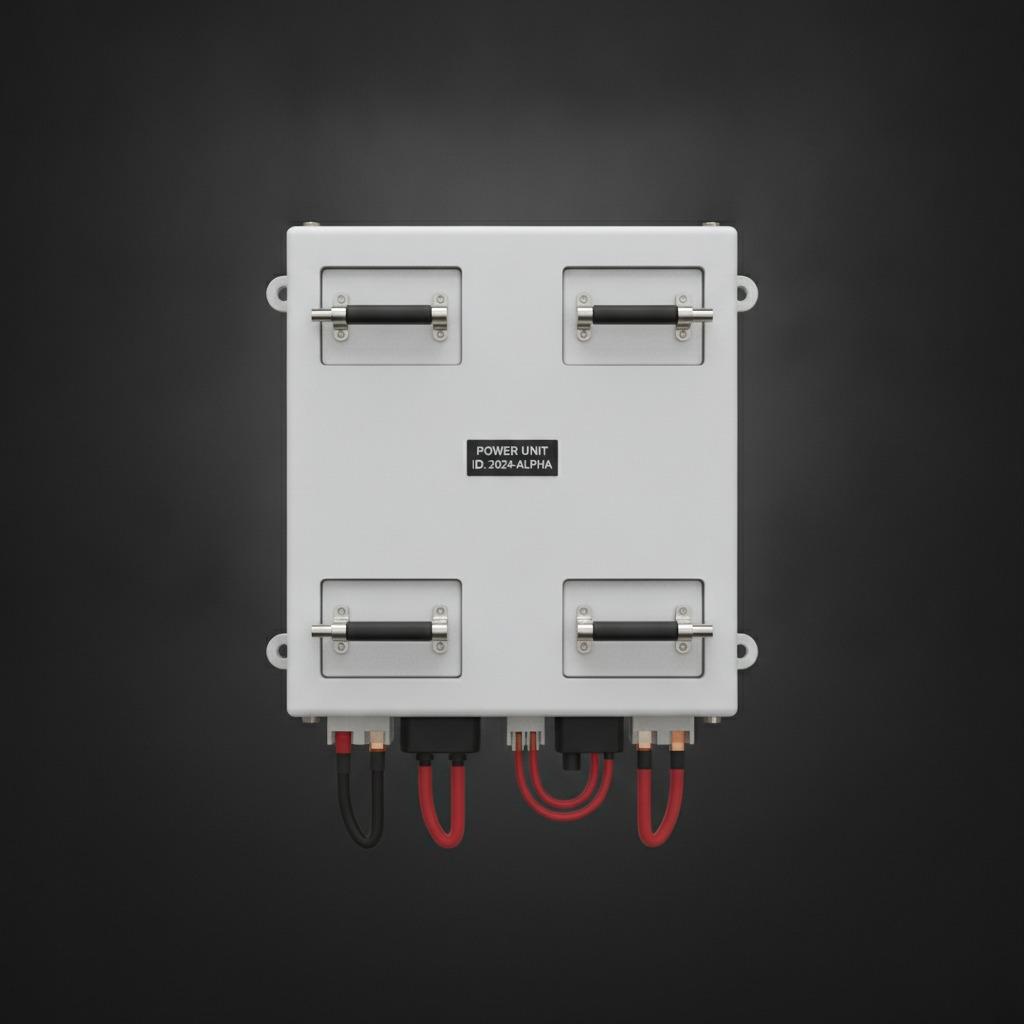
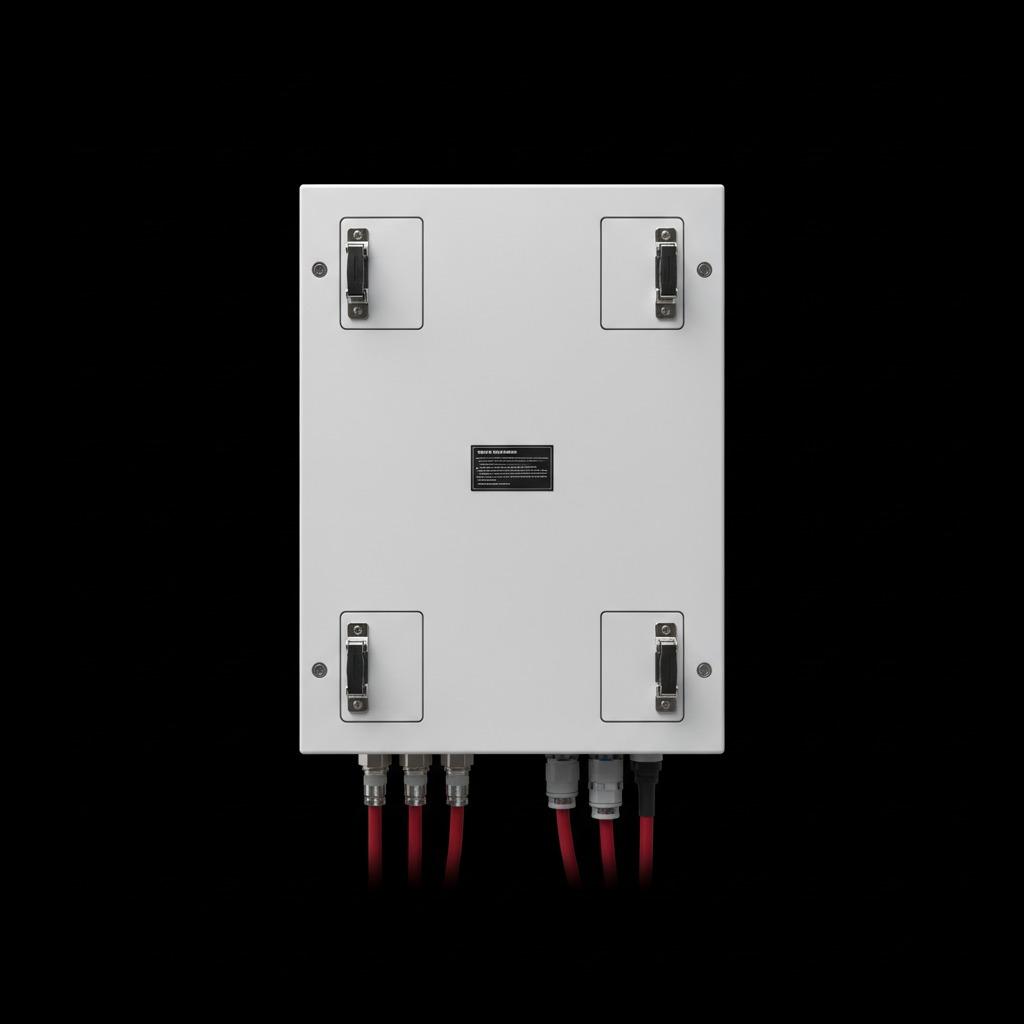
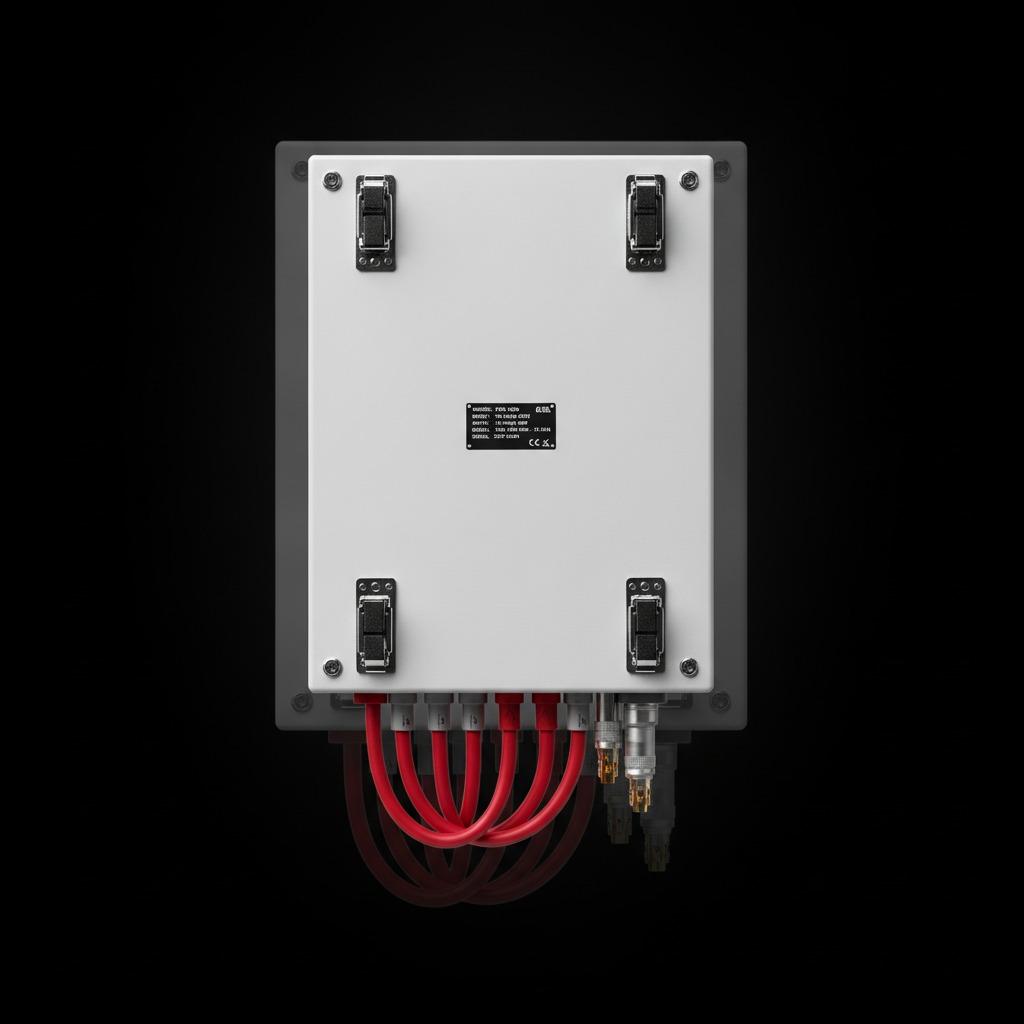
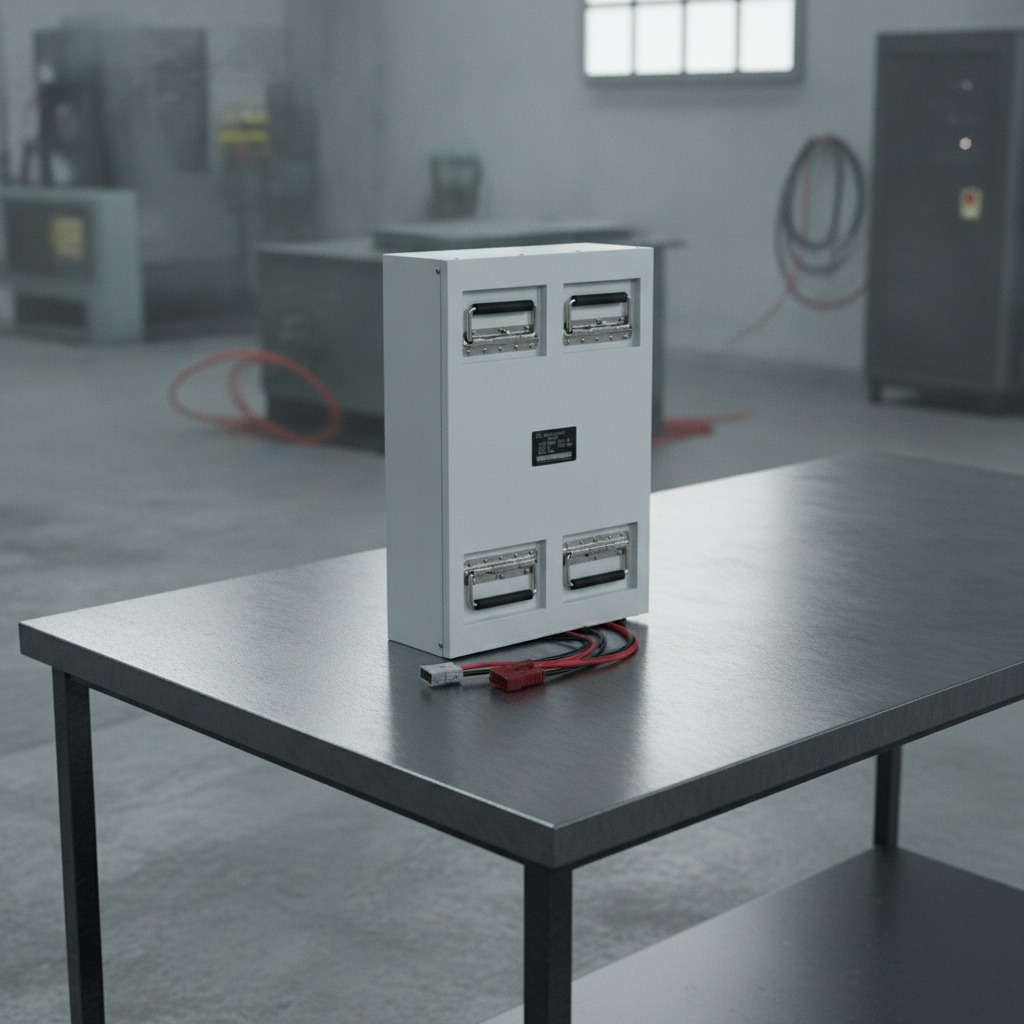
The enclosure shown here is a good example of why the physical package deserves attention. It appears to be a rectangular metal cabinet with four recessed carry handles and multiple bottom cable exits. That kind of layout suggests a unit designed for industrial use, possibly for power distribution, energy storage, or control electronics where the assembly may need to be installed, removed, or serviced without a forklift every time. You do not have to know the exact internal circuit to see the design intent.
What buyers usually need to decide first
Before comparing suppliers, the real question is not “What is the battery?” but “How will the battery be used, handled, and protected?” That decision shapes the enclosure, the wiring, and even the maintenance plan.
For a lithium-ion battery or broader lithium battery assembly, buyers usually need to settle a few basics early:
Whether the unit is stationary or portable
Whether technicians will remove it routinely
Whether cables must exit from the side, bottom, or rear
Whether the enclosure must tolerate shop-floor handling, vibration, or frequent transport
Whether the battery package is a complete system or part of a larger cabinet
Those are not small details. They drive fabrication choices and affect the cost structure more than many teams expect. A tidy-looking box can still be a poor fit if the cable glands are awkward or the handle placement makes the unit unsafe to move when loaded.
What the visible enclosure tells us
This product appears to be a white painted or powder-coated metal cabinet. The front face is flat and clean, with four recessed handle pockets arranged in a 2×2 layout. Each handle appears to use a metal body with black grip inserts. Along the bottom edge, there are visible cable exits or connectors with thick red insulated power cables.
That combination points to a few likely design priorities:
The enclosure is meant to be moved or removed by hand, at least occasionally.
The internal assembly probably needs secure, protected wiring exits.
The body is likely made through sheet-metal fabrication rather than molded plastic.
The unit is probably intended for industrial electrical service, not consumer handling.
The recessed handles are especially interesting. They reduce snag points and help keep the front profile compact, which is useful if the cabinet sits near other equipment. They also suggest that the assembly may be heavier than a small electronics box, because recessed hardware is often chosen where repeated lifting needs some mechanical discipline. It is a sensible detail, but only if the handles are mounted into a structure that can take the load. That is one of those things a buyer should confirm with the supplier rather than assume from the photo.
Likely manufacturing route: sheet metal, cutouts, and panel assembly
From the visible structure, this looks like a product made through standard sheet-metal fabrication and electrical panel assembly. That usually means cutting and forming the enclosure panels, adding openings for handles and cable exits, applying the finish, and then assembling the electrical components inside.
For buyers, the important point is not the process label but the consequences of that process. Sheet-metal enclosures are practical because they can be customized relatively efficiently. Handle pockets, cable gland holes, mounting studs, vents, and access doors can be added to fit the application. The trade-off is that every cutout and every mounting point must be controlled carefully. Small mismatches become expensive when wiring harnesses arrive after the cabinet has already been finished.
A white powder-coated finish, if that is indeed what was used, also suggests a design that values corrosion resistance and a cleaner industrial appearance. That does not tell us the exact environmental rating, and it should not be read that way. But it does imply the supplier was thinking beyond bare metal and toward a finished system suitable for integration into equipment lines, test rigs, or factory installations.
Comparison: what to look for in a lithium battery cabinet versus a general control box
A lithium battery enclosure and a generic control cabinet may look similar at first glance, but the buyer’s checklist is different.
A control box often prioritizes cable management, access to terminals, and ease of panel layout. A lithium battery system needs those things too, but it also raises other questions: how the cells are separated from power electronics, how heat is managed, how service access is controlled, and whether the enclosure supports safe transport or replacement.
If the product is a lithium battery pack inside a metal enclosure, a sourcing team should ask about:
Internal structural support for battery modules
Clear separation of power and signal wiring
Provision for service disconnects or inspection access
Cable strain relief at the exit points
Handle load capacity and mounting reinforcement
Compatibility with the intended installation environment
That last point is easy to overlook. Many sourcing failures happen when a cabinet is selected because it looks right and fits the bill on paper, but it is not ideal for the site conditions. A power cabinet for a controlled indoor lab is not the same thing as a unit that will be moved around a plant or mounted near a machine line.
Selection criteria that matter more than the brochure
When evaluating a lithium battery system or battery-adjacent enclosure, experienced buyers tend to focus on a few concrete issues.
1. Handling and service access
The four recessed handles on this enclosure are a useful clue. They indicate the unit was designed with some level of manual handling in mind. That is valuable for maintenance teams, but only if the cabinet’s mass and balance are compatible with the handling method. If not, the handles become cosmetic rather than functional.
2. Cable routing
The bottom cable exits suggest a deliberate wiring route. Bottom exits can be neat and efficient, but they need proper strain relief and enough clearance below the cabinet. If not, cables can be pinched during installation or stressed during movement.
3. Finish and enclosure robustness
A painted metal body is a sensible default for many industrial applications. Still, the buyer should verify what the enclosure needs to resist: abrasion, moisture, cleaning chemicals, vibration, or repeated handling. Do not assume a finish alone tells the whole story.
4. Internal integration
Because the internal electronics are not visible here, it is important not to guess the architecture. The cabinet could be a battery box, an inverter enclosure, or a custom power-control assembly. What matters is whether the internal layout supports thermal behavior, maintainability, and safe wiring practices.
Common mistakes when sourcing lithium battery assemblies
One recurring mistake is treating the cabinet as a commodity. It is not. Even when two boxes look similar, the way they are formed, drilled, finished, and wired can change the whole program outcome.
Another mistake is failing to align the enclosure design with downstream maintenance. If technicians need to remove the unit from a machine frame, the handle geometry and cable break points matter from day one. If those choices are left until late in the project, the team often ends up compromising on serviceability.
A third problem is over-specifying the visible shell while under-specifying the functional interface. Buyers sometimes spend time discussing color, panel layout, and branding, while the real risk sits in the cable glands, grounding scheme, and mechanical mounting points. That is where field failures usually begin.
Practical buyer advice for sourcing teams and engineers
If you are evaluating a supplier for a lithium battery enclosure or integrated electrical box, ask for drawings that show the handle reinforcement, cable exit geometry, and mounting arrangement. If the supplier only shows a finished exterior photo, that is not enough for a serious industrial purchase.
It also helps to request clarification on what is included in the assembly scope. Is the vendor supplying only the metal cabinet, or also wiring harnesses, internal mounting plates, and electrical assembly? Those are very different deliverables, and mixing them up causes delays.
For custom projects, make sure the enclosure design is matched to the handling concept. If the unit will be moved by hand, the center of gravity and handle spacing deserve real attention. A heavy lithium-ion battery module in a cabinet with poorly placed grips is a safety problem, not just an ergonomic annoyance.
FAQ
Is this product definitely a lithium battery enclosure?
Not necessarily. The visible features suggest it could house battery components or related power electronics, but the internal function is not visible. It may also be a control cabinet or another industrial electrical enclosure.
Why are the recessed handles important?
They improve grip while keeping the outer profile compact. In industrial equipment, that can help with handling, stacking, and avoiding snag damage.
What should buyers confirm before ordering a similar unit?
Confirm dimensions, internal layout, cable exit details, material thickness, mounting method, finish requirements, and whether the enclosure is intended for battery, control, or power distribution use.
What is the main risk if the enclosure is chosen too quickly?
The risk is not just cosmetic mismatch. It is installation trouble, poor service access, unsafe handling, and wiring that does not suit the application.
What to do next
If you are planning a lithium battery project, start with the enclosure and the service path, not just the cells. The housing, handles, cable exits, and internal assembly scope will shape the real-world performance of the system more than many teams expect.
For sourcing, the next step is usually a technical review of the enclosure drawing and wiring plan. For engineering, it is a fit check against handling, thermal, and maintenance requirements. And for product teams, it is the point where a promising battery concept becomes something that can actually be built, shipped, and serviced without avoidable trouble.