
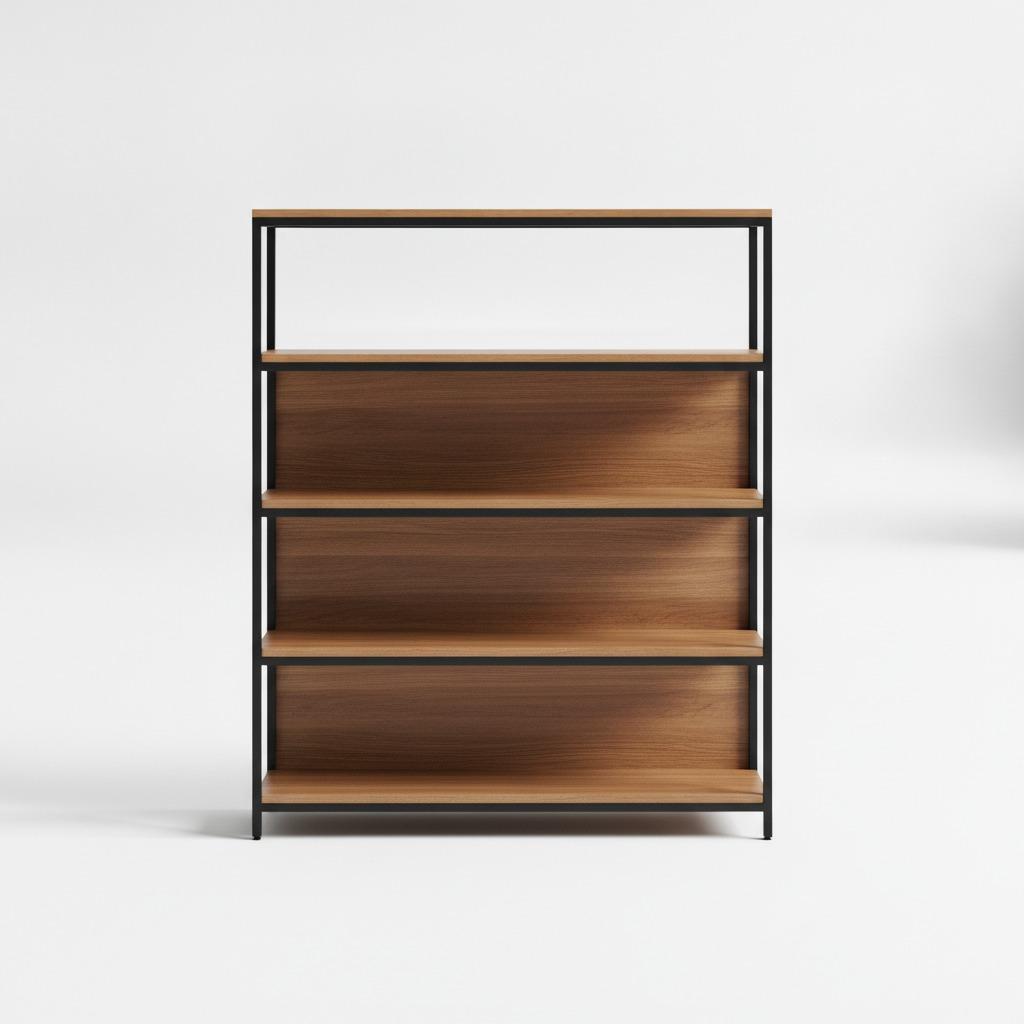
Why a display rack still matters when shelf space is cheap
A well-chosen Display rack does more than hold items off the floor. In retail, office, and light commercial settings, it shapes how people see products, how quickly they find them, and how efficiently a room works. That is why buyers keep coming back to this simple fixture even when wall shelving, cabinets, and modular storage systems are available.
The right rack can solve a very practical problem: turning a tight footprint into usable presentation space without making the room feel crowded. For sourcing managers and product teams, the decision is rarely just about looks. It is about access, visibility, stability, and whether the piece fits the way the space is used day after day. A good display solution has to earn its floor area.
The style described here—a freestanding shelving unit with a black metal frame and wood-look shelves—sits in that useful middle ground between furniture and merchandising equipment. It has the cleaner appearance of home storage, but the open layout and vertical format make it suitable for light retail presentation as well.
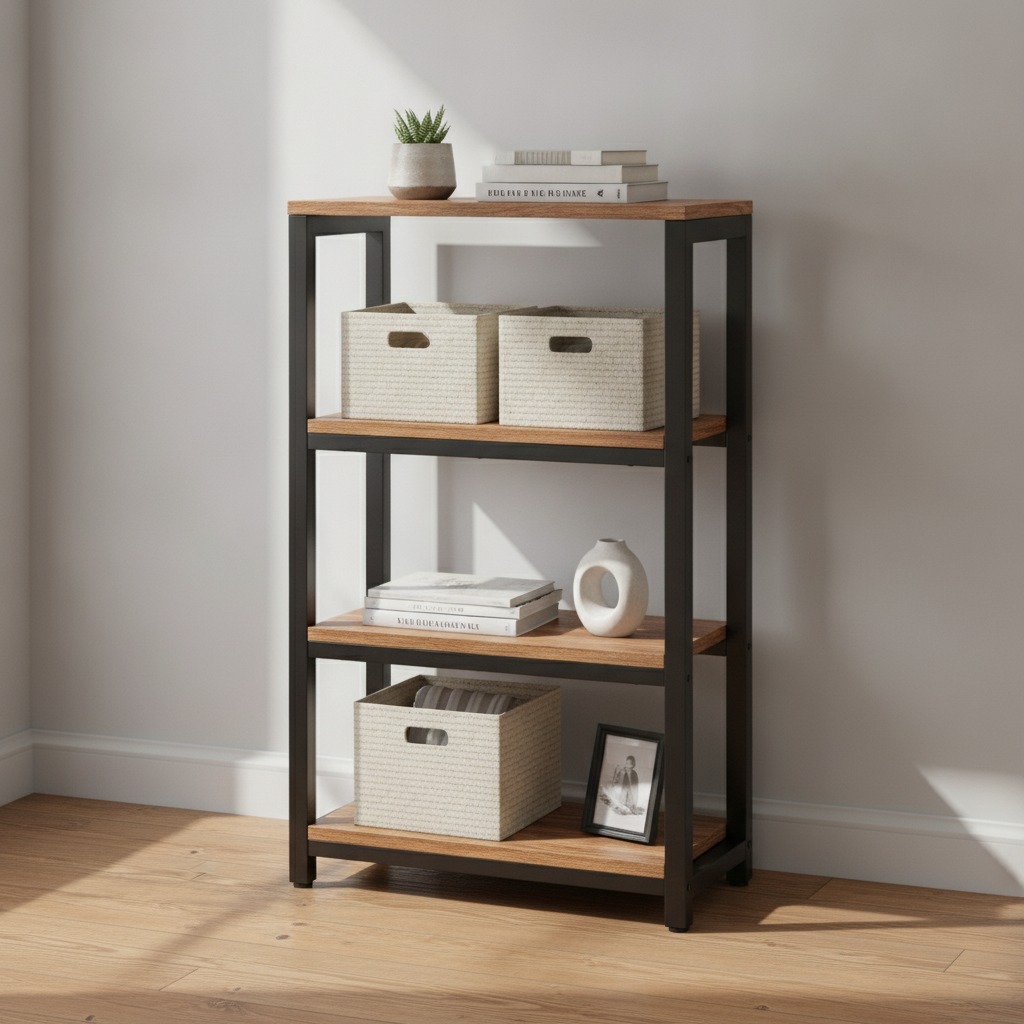
What this type of rack is best at
At a glance, the unit is straightforward: a tall, narrow frame with four usable shelf levels, open sides, and an open back. That layout matters. Open access makes it easy to place books, decor, office supplies, pantry goods, or small retail items without blocking the view. In a shop, it also helps merchandise stay visible from more than one angle. In a home office or back room, it keeps daily-use items reachable instead of buried behind doors.
The wood-grain shelves bring warmth, while the black frame adds contrast and a more industrial tone. That combination has become common for a reason. It works across settings that do not want a purely utilitarian look. A store display stand with this kind of finish can sit in a boutique, a reception area, or a break room without feeling out of place. It is not trying to disappear; it is trying to look organized and intentional.
Quick buyer takeaways
If you are comparing a merchandise display rack against a cabinet, cart, or wall-mounted system, the main trade-off is openness versus containment. Open shelves are easier to restock and easier for customers or staff to scan. They are also less forgiving if your products look messy. That means the rack rewards disciplined presentation.
For buyers, the key questions are simple: Is the footprint small enough for the available aisle or corner? Are the shelves spaced in a way that suits your product mix? Does the finish align with the rest of the interior? A rack like this can be a strong fit when you want vertical storage without a heavy visual block.
Why the structure is practical, not just decorative
The rectangular frame and four-leg design give the unit a stable visual base, and the fixed shelves help the rack feel orderly. Because the shelves are evenly spaced, the unit is better suited to items of moderate height than to oversized cartons or bulky equipment. That is an important distinction. A tall narrow rack can look capable, but buyers should still match the shelf height to the actual product assortment.
The open back is another useful detail. It makes the unit lighter in appearance and less demanding in tight rooms, especially where a solid cabinet would feel too enclosed. For retail teams, that openness can improve product visibility from across an aisle. For office or home use, it reduces the “furniture wall” effect that some storage pieces create.
There is also a practical manufacturing angle. A unit in this category is often built from a combination of metal framing and engineered wood or laminated shelving. That hybrid construction is common because it balances appearance, cost, and everyday utility. The exact fastening method is not visible here, so it is better to treat the build as a likely furniture fabrication rather than assume any specific joinery or load rating.
How to choose a display rack for commercial or mixed-use spaces
1. Start with the merchandise, not the frame
Buyers sometimes pick a rack because the style looks right, then discover the shelves are poorly matched to what they want to show. A store display stand for folded apparel, boxed accessories, books, or plants will have very different needs from one used for bottles, sample packs, or electronics accessories. Height, spacing, and shelf depth all matter, even when the unit itself looks simple.
2. Judge the footprint honestly
A tall, narrow display rack is useful in corners, along narrow walls, or beside counters where floor area is limited. That said, the vertical form can work against you if the room already feels dense. In a cluttered environment, adding another tall object can make circulation awkward. Measure the intended placement, then leave room for hands, carts, and cleaning access. This sounds basic, but it is one of the most common misses.
3. Think about visual load
Open shelving looks better when the contents are edited. The merchandise display rack becomes part of the display, not just a support. Neutral packaging, repeated shapes, and a controlled color palette will look stronger than a random assortment of objects. If the products are visually noisy, the rack will not fix that; it will expose it.
4. Check the finish against the environment
The black metal and brown wood-grain combination is versatile, but it still sends a message. It reads as modern, slightly industrial, and practical. That is an advantage in many settings, though it may not suit environments that want a softer or more luxury-driven feel. Buyers should treat finish as part of the merchandising strategy, not just decoration.
Where this format tends to work well
In light commercial use, this style of display rack is often useful near checkout counters, along perimeter walls, in showrooms, and in pop-up displays where setup needs to be fast and the equipment must look presentable from day one. In offices, it can hold files, printers, reference books, or supplies without taking on the bulk of closed storage. In homes, it often lands in living rooms, bedrooms, kitchens, garages, or workspaces because the open form fits many uses without a lot of visual negotiation.
That flexibility is one reason this type of shelving keeps showing up in procurement discussions. One fixture can support multiple use cases over its life, which is helpful when layouts change. A product team may think of it as display furniture, while facilities staff see it as general-purpose storage. Both are right.
Common mistakes buyers make
The first mistake is assuming all open racks are interchangeable. They are not. A rack with four shelf levels may be useful, but if the fixed spacing is wrong, the unit becomes awkward fast. The second mistake is overloading the visual field. Open shelving needs restraint. If every level is packed, the whole piece starts to look temporary rather than deliberate.
Another frequent problem is ignoring the environment. A merchandise display rack placed near a busy aisle must cope with bumps, quick restocking, and frequent handling. A rack used in a quiet office has a different duty cycle. That distinction matters when selecting materials, finishes, and reinforcement, even if the product looks identical from a distance.
Finally, buyers sometimes overlook whether a freestanding piece should be used as-is or secured in place. This article cannot infer wall anchoring requirements, and that is exactly the point: those details need to be verified before purchase or installation. Do not assume.
A sensible buying position
If your goal is to present and organize without adding visual weight, this type of display rack is a strong candidate. The design is simple, but not simplistic. The open back, open sides, and four-shelf format give you usable storage and display capacity without closing off the room. For many teams, that is the better trade than a bulkier cabinet or a highly specialized fixture.
For sourcing, the practical decision is to match shelf geometry, finish, and placement to the intended use. For product teams, the question is whether the rack helps the merchandise look easier to shop. For operations, the question is whether it makes day-to-day handling faster. If it does all three, it is doing its job.
FAQ
Is a display rack only for retail?
No. A rack in this style can work in retail, but it is just as useful for offices, homes, studios, and light storage areas. The open design is what makes it adaptable.
Is open shelving a drawback?
Sometimes. Open shelving asks for better organization, because everything stays visible. But that same visibility is also the reason it works so well for display and fast access.
What should I verify before buying?
Check dimensions, shelf spacing, weight capacity, assembly details, and whether the unit needs anchoring for your environment. Those are the questions that determine whether the rack is practical, not just attractive.
Next step for buyers
If you are evaluating a store display stand or open shelving unit for a shop, office, or mixed-use space, start by mapping the items it must hold and the space it must fit. Then compare the visual effect against your room or brand style. That small exercise usually reveals whether a rack like this is a smart buy or merely a nice-looking one. In procurement, that difference matters more than people admit.