
Window Cleaning Robot for Faster, Safer Glass Care
A window cleaning robot helps solve one of the most repetitive maintenance jobs in a home or facility: keeping large glass surfaces clear without constant ladder work, paper towels, or uneven wiping. For buyers who need cleaner windows with less effort, this type of device is designed to cling to glass, move across the surface, and support more consistent coverage than a hand-held cloth alone. The visible product style here suggests an electric glass-cleaning device with a microfiber contact pad, a spray function, and a corded power supply, all of which point to practical use on interior and exterior panes where streak control matters.
Product Overview
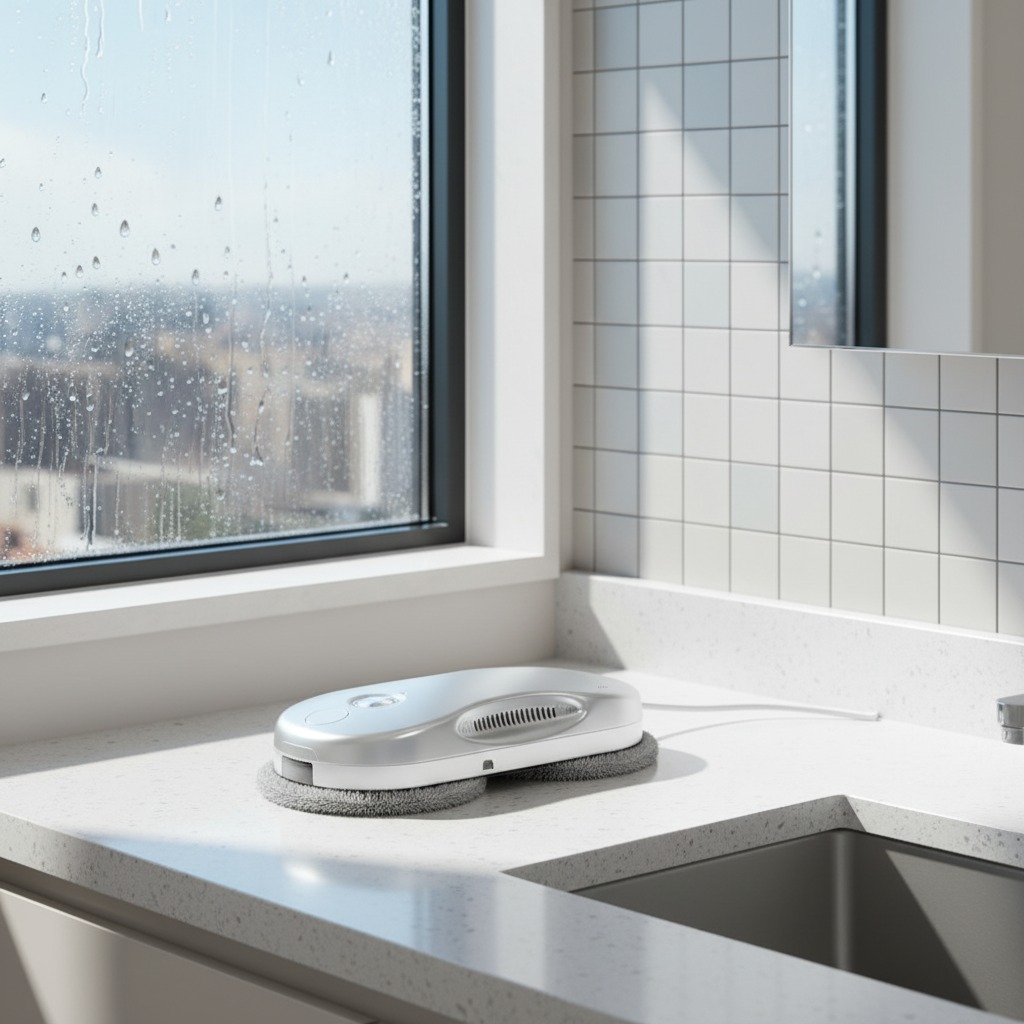
This window cleaning robot is built around a compact rounded housing with a smooth molded shell, a visible control area, and a cleaning face that contacts the glass through a soft microfiber or textured pad. The overall form is simple and functional: a white and metallic silver body, a central nozzle or light-like opening, side venting, and a power cord for continuous operation. On the visible surface, the product messaging highlights “Micron-Level Spray,” “Even & Deep Clean,” “Reduces Streaks,” and “Saves 30% Water.” Those statements should be treated as marketing claims shown on the product image rather than verified test data, but they do suggest a cleaning approach focused on fine mist distribution and lower water use.
As a robot for window cleaning, the device is meant for large panes where reaching every corner by hand is inconvenient. It is also useful where repeated wipe marks, dust film, and water spots create a dull appearance. Instead of using only pressure from a cloth, the machine appears to combine spray, pad contact, and guided motion to improve coverage across glass.
Key Features and Practical Capabilities
Fine spray for more even wetting
The visible “Micron-Level Spray” message suggests a very fine mist rather than a heavy stream. In daily use, that matters because over-wetting a window can leave drips and make streaks harder to control. A lighter spray pattern can help spread cleaning fluid more evenly across the work area.
Soft contact pad for glass-friendly wiping
The perimeter cleaning surface looks like microfiber or a similar soft textile. That kind of pad is commonly used in glass care because it can lift dust and light residue without the scratch risk associated with hard tools. For buyers, the important point is not just cleaning power, but predictable contact on smooth glass.
Designed to reduce streaks
Streaking is one of the main reasons people redo a window after wiping it once. The image text explicitly mentions reduced streaks, which aligns with the combination of fine spray and fabric contact. A smoother wipe path, combined with better moisture control, can help leave a more uniform finish on large panes.
Water-saving operation
The product image also notes “Saves 30% Water.” Since the source image does not provide test methods, that number should not be treated as a confirmed benchmark. Still, it indicates the intended design direction: use less liquid while maintaining enough moisture for cleaning, which can be attractive for frequent maintenance routines.
Materials and Finish Options
The visible construction suggests a consumer electrical appliance with an injection-molded plastic housing. The body appears smooth and durable, with a metallic silver finish on part of the shell for a clean, technical look. This kind of surface is often selected for its balance of appearance, weight, and manufacturability.
The cleaning face appears to use a soft microfiber-like fabric or textured pad bonded around the working edge. In a product like this, the pad material is a major part of the user experience because it determines how the robot engages the glass and how easily debris is lifted from the surface. While the exact fiber blend is not visible, a removable or replaceable pad design would be a logical option for maintenance, depending on the final product configuration.
Manufacturing and Assembly Notes
Based on the visible structure, the product likely falls into a standard small-appliance manufacturing flow: injection molding for the shell, assembly of motor or pump components, integration of controls and wiring, and attachment of the cleaning pad. The exact internal mechanism is not visible, so it would be inaccurate to describe the drive system, suction system, or battery architecture in detail. What can be said is that products in this category usually depend on careful sealing, stable electrical assembly, and secure pad bonding because they operate close to moisture and glass surfaces.
For buyers comparing sourcing options, visible build quality often matters just as much as feature claims. Clean housing seams, reliable cord entry, and consistent pad edges are signs that the appliance was designed for repeated handling rather than one-off demonstration use.
Typical Application Scenarios
The most obvious use case is residential window maintenance, especially for tall or broad panes that are difficult to wipe edge to edge by hand. It also fits light commercial environments such as offices, storefronts, showrooms, and entry lobbies where glass needs to look clear without turning window care into a full-time chore.
Another practical scenario is seasonal cleaning. Dust, rain marks, and fine residue can build up quickly on windows, glass doors, and other smooth glazing surfaces. A window cleaning robot helps reduce the time spent repeating the same pass over the same panel, especially when the goal is to refresh many panes in one session.
Quality Control Considerations
When evaluating an automatic window cleaner, buyers should look beyond broad promotional phrases and focus on basic quality signals. These include consistent nozzle alignment, secure power connections, stable pad attachment, and a housing that feels rigid rather than thin or brittle. If the product is used on vertical glass, dependable surface contact is essential. Small inconsistencies in pad mounting or shell fit can show up later as uneven wiping or missed corners.
Since the visible image does not provide certification data, voltage, or formal testing results, those details should be confirmed directly with the supplier before purchase. For procurement teams, it is also wise to ask about replacement pads, maintenance intervals, and any recommended operating steps for different glass thicknesses or surface conditions.
Customization Guidance for Buyers and OEM Projects
If this product is being considered for private label or OEM development, the most useful customization points are typically housing color, logo placement, cord length, pad material, accessory bundle, and packaging. Some buyers may also request a different finish for a more premium appearance or a simpler industrial look depending on the target market.
Functionally, buyers should clarify whether they need a fully automatic pathing system or a guided cleaning device, because the image alone does not verify autonomy level. It is equally important to confirm fluid compatibility, cleaning pad replacement options, and the intended glass types. A clear specification sheet avoids mismatches between what the buyer expects and what the product is actually designed to do.
What to Compare Before Buying
When selecting a window cleaning robot, start with the job itself. Is the main need quick spot cleaning, routine maintenance for many panes, or a tool for hard-to-reach glass? Next, check how the cleaning head contacts the surface, how liquid is delivered, and whether the device is comfortable to handle for the size of the windows you clean. Buyers should also consider power supply type, cord management, pad replacement cost, and whether the product is better suited for light dust or heavier residue.
For anyone comparing a robot for window cleaning with traditional hand wiping, the biggest advantage is usually consistency. Even without dramatic claims, a well-built device can make window maintenance feel more orderly, less tiring, and easier to repeat on a schedule.
How to Request the Right Version
If you are sourcing this product for retail, distribution, or branded projects, prepare your requirements around the details that matter most: target glass size, desired spray pattern, power format, pad material, packaging language, and any regional electrical needs. Share sample images, intended use scenarios, and whether the product will be sold for home users or light commercial buyers. That information helps the supplier align the final specification with your market.
Contact for Product Details and Sourcing Support
If you need a window cleaning robot for catalog listing, wholesale sourcing, or private label development, send your target use case and preferred configuration. With the right specifications in hand, the product can be matched to the cleaning environment, the buyer profile, and the level of convenience you want to offer.

评价
Clear filters目前还没有评价