
Steel Structure for Large-Span Industrial Buildings
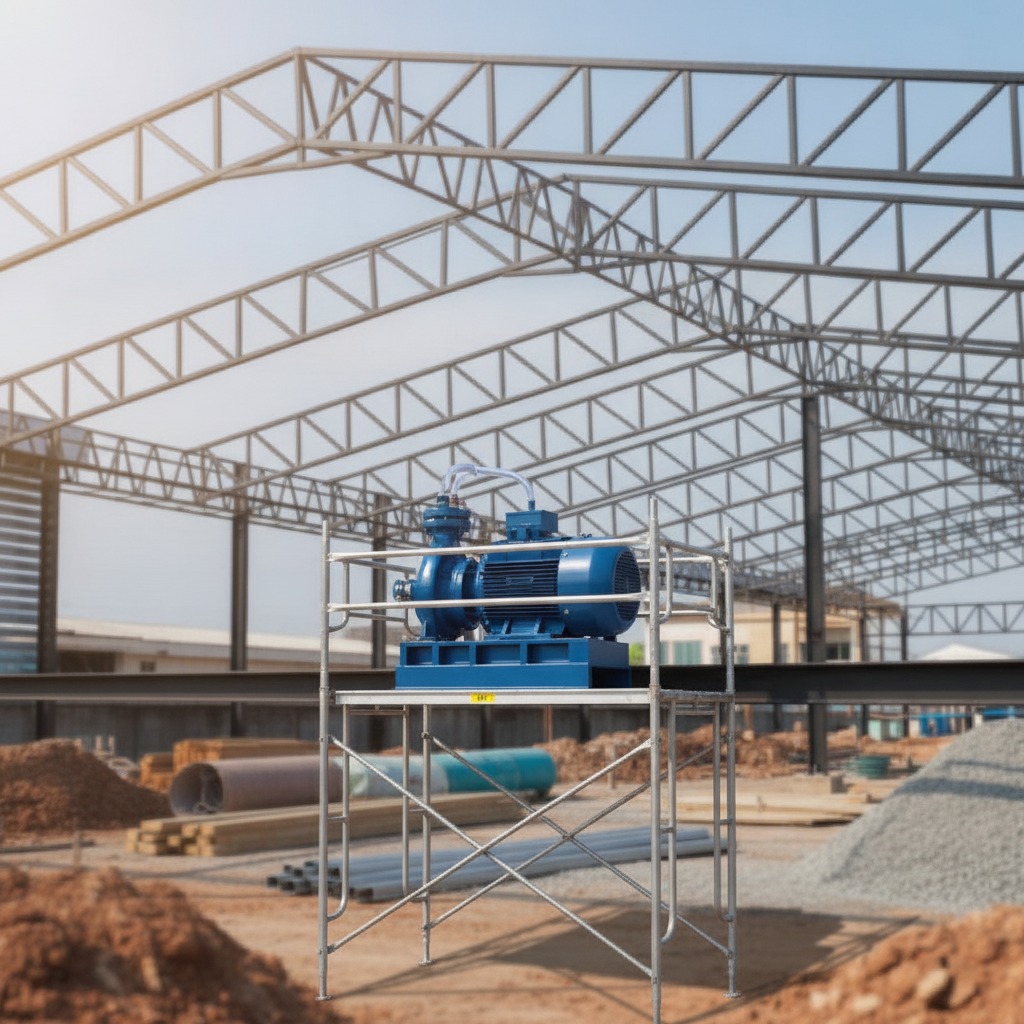
A steel structure is often the practical answer when a buyer needs a building that can cover a wide area without crowded interior columns. For warehouses, workshops, logistics centers, and agricultural storage, the main problem is usually the same: you need strong load-bearing capacity, fast assembly, and enough open space to arrange equipment, inventory, or vehicles efficiently. The exposed frame shown here reflects that purpose clearly. It is a large-span structural skeleton designed to support roof cladding, future wall enclosure, and day-to-day industrial use.
Because the frame is built from repeated bays, vertical columns, and roof truss members, it is suited to projects where speed, flexibility, and expansion potential matter. Buyers looking at steel structures usually want a balance between structural reliability and construction efficiency. This type of frame is made for exactly that type of requirement.
Product Overview
This product category covers prefabricated steel building frames used as the primary load-bearing system for industrial and commercial buildings. The visible frame includes tall steel columns, pitched roof trusses, and diagonal bracing members. These components work together to create a clear-span interior with fewer obstructions than many traditional building systems.
The open-sided condition in the image suggests the project is either in erection stage or prepared for later enclosure. That is common in steel building construction, where the main skeleton is completed first and wall panels, roof sheets, insulation layers, doors, and windows are added afterward. For buyers, this staged process offers room to plan the building around actual operational needs rather than forcing every function into a fixed layout from the start.
Key Features and Structural Capabilities
Large clear-span layout
The most obvious advantage is space. A steel building frame can create broad, uninterrupted interiors suitable for pallet storage, production lines, repair bays, or machinery movement. With fewer interior supports, it becomes easier to organize forklifts, racks, and equipment paths.
Repeated modular bays
The visible frame appears to use a modular rhythm, with repeated structural bays. That kind of geometry is helpful for standardizing fabrication and speeding up site erection. It also makes future extension easier, since new bays can often be added in a planned direction if the project is designed that way.
High roof volume
The tall columns and pitched roof create a generous internal volume. This matters for buildings that need overhead clearance, better air circulation, or suspended services such as lighting, ventilation ducts, and lifting systems. In storage and manufacturing settings, vertical space is often as valuable as floor area.
Open frame for flexible enclosure
Since the structure is not yet enclosed, it can be adapted with different roofing and wall systems later. Buyers can choose insulated panels, single-skin cladding, or other envelope solutions depending on climate, budget, and energy needs. The frame acts as the fixed backbone while the outer layers can be tailored to the project.
Materials and Finish Options
The image shows dark-painted or coated steel members, likely used to help protect the surface during handling and service. The exact coating type cannot be confirmed from the photo, so it should be treated as a visible finish rather than a verified specification. In structural steel projects, common finish choices often depend on the building environment, indoor or outdoor exposure, and maintenance expectations.
Typical finish decisions may include:
• Primer or shop-applied protective coating for general construction use
• More robust anti-corrosion coating for humid, coastal, or aggressive environments
• Site-applied touch-up coating after erection at joints and cut edges
• Galvanized or higher-protection options where long-term exposure is a concern
Material grade, coating system, and fire protection requirements should always be defined through project engineering rather than assumed from appearance alone. For a buyer, the finish choice affects not only corrosion resistance but also maintenance intervals and the total life-cycle cost of the building.
Manufacturing and Erection Process
Steel structures of this type are usually produced through a prefabricated fabrication workflow. Members are cut, welded and/or assembled, drilled, coated, then shipped to site for erection. Exact connection details are not visible here, so it is not appropriate to claim a specific fastening method. In practice, these frames often combine factory-controlled fabrication with on-site bolting and alignment.
The process generally follows a clear sequence:
1. Structural design and load planning based on use case, span, and site conditions
2. Fabrication of columns, trusses, purlins, and bracing members in the workshop
3. Surface preparation and protective finishing
4. Transport of labeled components to the site
5. Erection of columns, installation of roof members, and bracing alignment
6. Addition of roof and wall cladding, openings, gutters, and accessories
This workflow is one reason steel structures are favored for time-sensitive projects. The site becomes a controlled assembly area rather than a slow, fully wet construction environment.
Application Scenarios
This kind of steel building frame is suitable for a wide range of facilities where open space and structural strength are both important. Common application scenarios include:
• Warehouses and distribution centers
• Manufacturing workshops and assembly halls
• Logistics and freight handling buildings
• Agricultural storage for grain, equipment, or feed
• Vehicle maintenance shelters and service bays
• Machinery enclosures and equipment houses
• Light industrial buildings with future expansion needs
In each case, the same basic logic applies: the frame creates a strong shell that can be adapted to the workflow inside. For a warehouse, the value is unobstructed storage lanes. For a workshop, it is room for equipment and movement. For agriculture, it is durability and scale.
Quality Control Considerations
When evaluating steel structures, buyers should look beyond the visual appearance and ask how the frame is controlled through fabrication and installation. Since the exact standards and test results are not provided here, the safest approach is to focus on the quality checks that should be discussed with the supplier.
Important control points include member dimensions, weld consistency where applicable, hole alignment, coating coverage, bracing accuracy, and the fit of connections during erection. Structural members should be marked clearly so installation follows the engineering sequence without confusion. A well-managed project also checks plumbness, levelness, and the proper tensioning or fixing of bracing elements during assembly.
For buyers planning a steel building, quality is not just about material thickness. It is also about how well the frame matches the design drawings, how cleanly components fit together, and how reliably the finished skeleton maintains shape under service conditions.
Customization Guidance
One advantage of steel structures is their adaptability. A buyer can tailor the frame to the building use instead of forcing the use case into a generic shell. Common customization points include span width, bay spacing, eave height, roof pitch, opening locations, crane or service support provisions, cladding type, and internal partition planning.
When specifying a steel structure, it helps to define the real operating requirements early. For example, a warehouse may need more clear height for stacking, while a workshop may need larger doors and service access. A steel building for agricultural storage may prioritize airflow and corrosion resistance, while a logistics facility may prioritize truck entry, circulation, and loading zones. These decisions affect the framing arrangement and the final envelope.
Buyers should also confirm whether they need room for future extension. Because the frame is modular, it can often be planned with expansion in mind, but that must be addressed at the design stage. Retrofitting expansion later is always more complicated than preparing for it from the beginning.
Buyer Decision Factors
Choosing between different steel structures usually comes down to a few practical questions. What internal span is required? How tall should the building be? Will the structure be enclosed immediately, or used as a staged project? What type of environment will the steel face, and how much maintenance is acceptable over time?
It is also worth considering the logistics of fabrication and site erection. A well-designed frame can reduce installation time, but only if the project information is clear and the drawings are coordinated. Buyers should prepare the intended use, location conditions, loading expectations, and enclosure preferences before requesting a quotation or technical proposal.
If you are comparing steel structures for a factory, warehouse, or storage building, the best option is usually the one that matches the actual operation, not the largest or most heavily built frame on paper. The right design is the one that gives enough strength, enough space, and enough flexibility without unnecessary complexity.
Request a Project-Ready Solution
If you are planning a new steel building, share your span, height, function, and enclosure needs with your supplier at the earliest stage. That information helps turn a basic structural frame into a building that works smoothly from day one. A well-planned steel structure can support efficient storage, cleaner workflows, and easier future expansion.
Contact us with your project drawings or basic building requirements to discuss a suitable frame layout, material options, and fabrication approach for your next industrial or commercial project.








评价
Clear filters目前还没有评价