
Plastic Flower Pot for Practical, Clean Plant Display
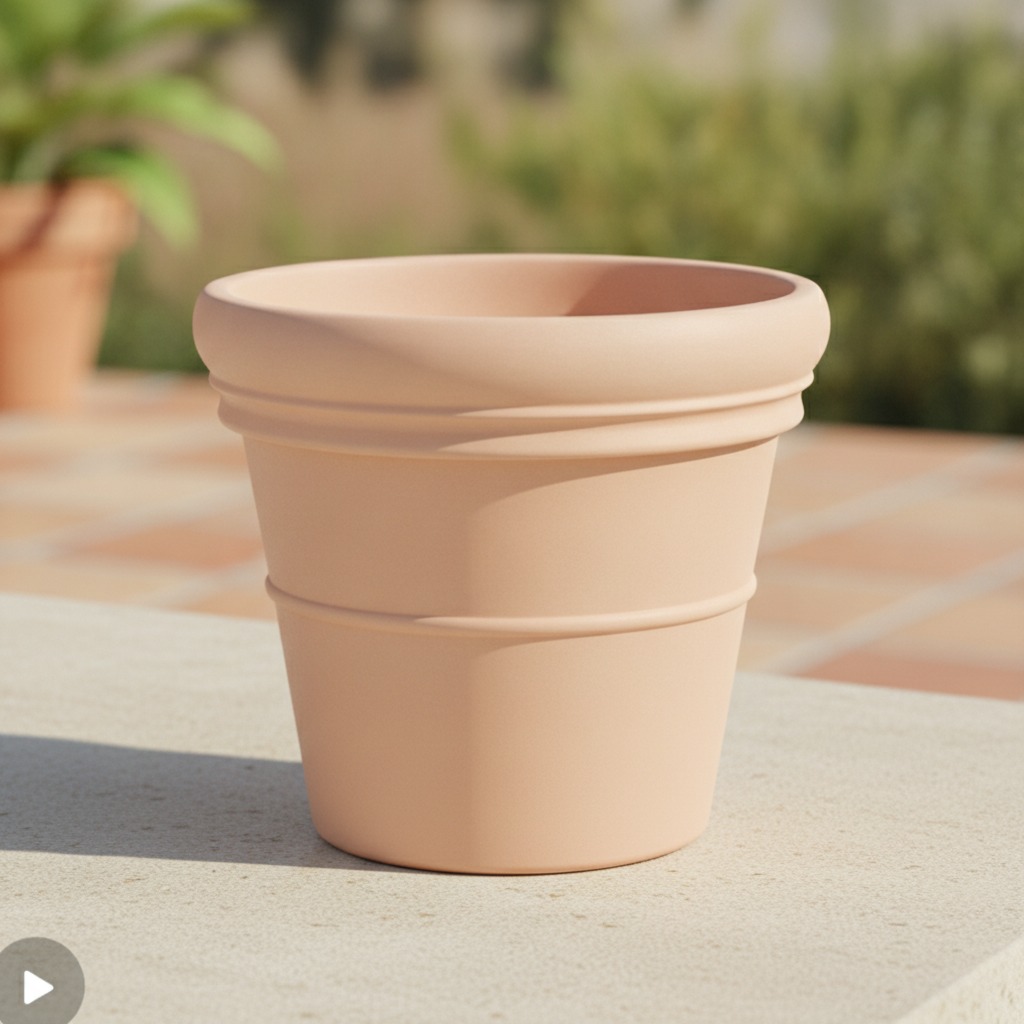
A Plastic Flower Pot is a simple answer to a common planting problem: growers and retailers need a container that is light, easy to move, quick to stock, and suitable for everyday plant display. Compared with heavy ceramic or breakable decorative pots, a molded plastic planter can reduce handling effort while still giving a neat presentation for soil, seedlings, herbs, or small ornamentals. The product shown has a wide opening, a tapered body, and a stable base shape, which makes it suitable for nursery work, home gardening, and retail shelf display.
Product Overview
This flower pot has the look of a round planter with a broad rolled rim and subtle horizontal banding around the upper body. The visible finish is matte and terracotta-like, with a beige-pink tone that reads as warm and natural without the weight of clay. Because the surface is smooth and uniform, it appears designed for repeat use in plant display rather than for decorative fragility.
The shape is practical. The top opening is wide enough for planting and soil filling, while the tapered sidewall helps the pot sit neatly on benches, shelves, or grouped retail displays. The form also suggests easier nesting or packing than bulky ceramic containers, which is an important buying point for garden centers, distributors, and growers handling volume stock.
What Buyers Typically Need from This Type of Pot
When customers search for plastic pots for plants, they are usually trying to solve several everyday issues at once: reduce breakage, lower shipping weight, simplify handling, and keep plant presentation tidy. A molded planter like this one addresses those needs better than many brittle alternatives. It is especially useful where plants are moved often, such as in nursery staging, balcony refresh projects, or seasonal merchandising.
Another reason buyers choose a flower pot plastic design is consistency. Plastic molding supports repeatable shape and appearance across larger orders, which helps businesses present a uniform product line. For the end user, that means a row of matching containers on a windowsill, patio, or retail wall display.
Visible Specifications and Functional Characteristics
Shape and structure
The pot is round with a cylindrical-to-tapered silhouette. This geometry supports both planting and stacking-related handling. The broader rim offers a secure edge for lifting, while the narrower base improves stability on flat surfaces.
Opening and planting space
The wide top opening makes it easier to add potting mix, transplant young plants, and arrange small decorative plantings. This is useful for hobby gardeners and commercial stock preparation alike.
Finish and surface feel
The surface appears matte rather than glossy. That matters because a matte finish tends to look closer to natural terracotta, which many buyers prefer for home and garden presentation. It also avoids the high-reflection appearance sometimes seen in polished plastics.
Base and lower body
The lower section appears narrower and more compact, which can help the pot sit firmly. A small notch or opening is visible near the bottom edge in the image, but drainage cannot be confirmed from the available view. Buyers should verify drainage requirements before choosing this pot for specific crops or environments.
Materials and Finish Options
From the visible evidence, the planter appears to be molded plastic or resin. The exact polymer type is not confirmed, so it is best to treat material selection as an open specification item during sourcing. In actual purchasing programs, buyers may request different plastic grades depending on intended use, appearance, and cost target.
Common finish directions for this style of planter may include matte, satin, or color-through molded surfaces. The visible version has a warm clay-like color, which works well for traditional garden merchandising and indoor decor. If a project needs a more branded look, color matching and surface texture adjustments may be possible depending on the mold and production setup.
Manufacturing Process Considerations
The pot likely comes from a plastic molding process, possibly injection molding or a similar forming method. That is consistent with the smooth wall texture, controlled geometry, and repeatable decorative banding. However, the exact process cannot be confirmed from the image alone.
For buyers, the manufacturing route matters because it affects consistency, appearance, and production efficiency. Molding is generally well suited to high-volume container production, especially when a business needs identical parts across multiple batches. It can also support economical tooling once the design is finalized.
Application Scenarios
This type of planter can serve several real-world uses:
Home gardening: herbs, flowers, small foliage plants, and countertop decor
Nursery displays: starter plants, seasonal stock, and bench presentation
Patio or balcony planters: lightweight containers that are easier to move than clay alternatives
Retail garden center stock: uniform shelf presentation and simple restocking
Decorative container planting: pairing with indoor or outdoor arrangements where appearance matters
Because the form is clean and neutral, it can blend into both practical and decorative settings. That flexibility is one reason many buyers prefer plastic over more specialized materials.
Quality Control and Buyer Checks
Even when a planter looks straightforward, buyers should verify a few practical points before placing an order. First, confirm whether drainage is included and how it is positioned. Second, check wall rigidity so the pot will hold shape when filled with moist soil. Third, evaluate surface consistency, since visible marks or uneven molding can affect retail presentation.
It is also wise to confirm color uniformity across batches. For a product with a terracotta-like finish, small shade differences may be noticeable when multiple pots are displayed together. If the pot will be used outdoors, ask the supplier about any stated resistance properties rather than assuming them. The available image does not prove UV resistance, frost resistance, or long-term weather performance.
Customization Guidance
Buyers sourcing a Plastic Flower Pot for a brand or retail program often need adjustments beyond the standard shape. Useful customization topics include size, rim design, base style, color, logo placement, surface texture, and drainage pattern. If the planter is for nursery use, stacking efficiency and pallet count may also be important. If it is for consumer retail, the visual profile and shelf appeal may matter more.
When discussing customization, it helps to define the plant category first. A pot for herbs has different depth needs than one for flowering ornamentals or decorative foliage. Buyers should also decide whether the priority is cost, appearance, or durability. Clear requirements at the quoting stage reduce rework and help the final product fit the intended market.
How to Evaluate This Product for Your Program
If you are comparing containers, ask a few direct questions before committing. Does the pot need to support indoor or outdoor use? Will it be sold individually or in bulk packs? Is lightweight handling more important than a premium ceramic look? Do you need a product that nests well for shipping? These questions are often more important than minor styling differences.
For wholesale buyers, the main value of a well-designed plastic planter is consistency with manageable logistics. For end users, it is convenience: easy planting, easy moving, and a clean decorative result. That combination is why many businesses keep plastic planters in their core catalog.
Why This Type of Flower Pot Remains a Strong Choice
In plant retail and home gardening, the best container is not always the heaviest or most ornate. Often it is the one that performs reliably, presents well, and stays practical across transport, stocking, and everyday use. This plastic planter’s visible features support that approach: broad opening, tapered body, stable footprint, and a finish that suits natural decor themes.
If your sourcing goal is a dependable planter format for garden centers, nursery packaging, or general plant display, this style is worth serious consideration. It offers the familiar look buyers expect while keeping handling simple for distributors and end customers.
Request a Quote or Product Match
If you need a Plastic Flower Pot for retail, nursery, or home-garden supply, prepare your target size, color preference, drainage requirement, and order volume before contacting a supplier. That will make it easier to match the right mold, finish, and production plan. For projects comparing plastic pots for plants across several models, ask for sample images, dimensional confirmation, and packing details so you can choose with confidence.
评价
Clear filters目前还没有评价