
Nursing Pillow Product Overview
A Nursing pillow is designed to solve a practical feeding problem: keeping an infant supported at a more comfortable, stable height while reducing the strain placed on the caregiver’s arms, elbows, shoulders, and abdomen. Its broad, padded body rests across the lap and follows a curved profile around the torso, creating a defined support surface for breastfeeding or bottle-feeding. The product can be used at home and may also suit maternity, baby-care, postpartum-care, hospital, or clinic supply programs when the required hygiene and safety specifications have been confirmed.
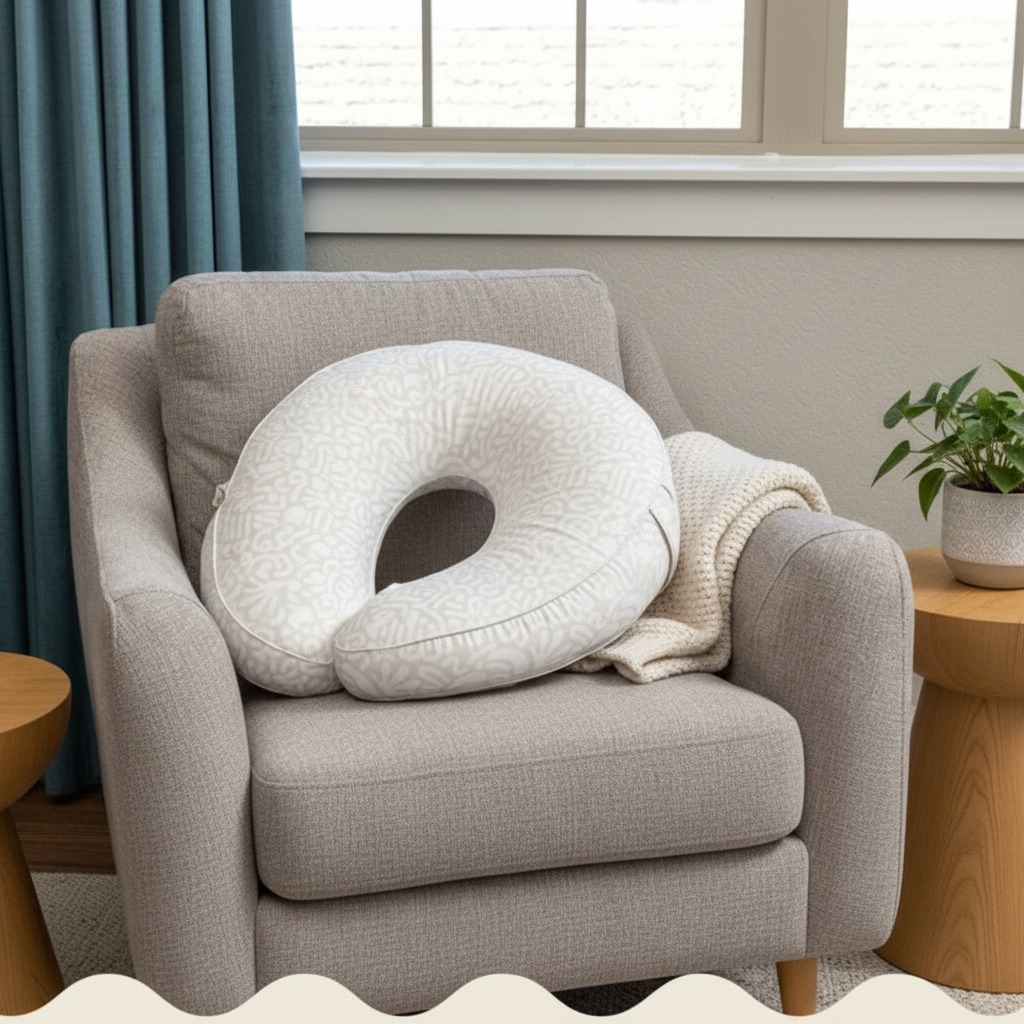
The visible design consists of an elongated cushion with a contoured shape, a raised central support area, and tapered or rounded ends. This geometry is intended to bring the baby closer to the caregiver without requiring the caregiver to hold the full feeding position with the arms alone. Actual ergonomic performance, infant age range, weight limit, and recommended positioning method are not supplied, so these points should be verified before commercial release.
Construction and Visible Design Features
The cushion has a textile outer cover with a soft woven or knit appearance. Its light-colored surface includes a subtle all-over pattern, while the matte finish gives the product a calm, fabric-based appearance rather than a glossy technical look. Stitched panel lines divide and shape the padded body, and visible edge piping provides a defined perimeter. Piping can also help create a cleaner transition between the top and side panels, although its exact construction and durability should be confirmed through production samples.
A zipper or zipper pull is visible near the lower edge. This feature suggests that the outer cover may be removable or serviceable, but the image alone cannot confirm whether the cover is fully removable, washable, replaceable, or intended only for manufacturing access. The zipper type, tape, slider, seam reinforcement, and laundering instructions should therefore be specified separately in the technical documentation.
Key Specifications and Capabilities
Support geometry
The broad, curved body is suitable for placement across a caregiver’s lap or around the front of the torso. A raised central section may help create a higher resting platform, while the rounded ends can provide a softer transition against the body. The product is visibly designed for support during feeding rather than as a flat general-purpose cushion. Buyers should request confirmed dimensions, finished height, circumference or curvature, cushion weight, firmness range, and packed size before selecting packaging or retail fixtures.
Serviceable textile construction
The stitched assembly appears to include cut fabric panels, edge piping, and a zipper detail. These features are compatible with a cut-and-sew manufacturing process and can support a repeatable product shape when patterns, seam allowances, and filling procedures are controlled. The internal filling cannot be identified from the supplied information. Foam, polyester fiber, or another cushion filling may be possible in general industry practice, but no specific filling should be assumed for this product.
Use boundaries
This product should be presented as supervised feeding support. It should not be described as an infant sleep product, a medical device, or a substitute for caregiver supervision unless separate testing and regulatory documentation support those claims. The supplied information does not establish orthopedic benefits, hypoallergenic properties, antimicrobial treatment, chemical finishes, safety certifications, or a suitable infant weight or age range.
Materials and Finish Options
The visible outer layer is textile, with a soft woven or knit appearance and a patterned matte finish. Exact fiber composition, fabric weight, coating, color standard, and abrasion performance are not available. For a production program, the buyer can define the preferred fiber content, hand feel, surface pattern, color palette, print method, and label requirements. A supplier should provide fabric samples and confirm whether the selected material is appropriate for repeated contact with skin and routine care.
Finish decisions include the appearance and width of the piping, stitch color, zipper visibility, seam placement, and panel layout. A concealed or color-matched zipper may create a quieter retail appearance, while a contrasting zipper can make the service feature easier to identify. These are design options rather than confirmed features of the supplied product. Any claim about machine washing, tumble drying, shrinkage control, colorfastness, or stain resistance must be supported by agreed care instructions and relevant testing.
Manufacturing Process
A likely production route begins with fabric inspection and pattern cutting. The top, side, end, piping, and zipper panels are then prepared according to the approved pattern. Operators can stitch the main panels, install the piping, and insert the zipper before completing the cover assembly. The internal cushion is filled through the designated opening, shaped to match the curved body, and checked for even distribution. Because the filling material and internal construction are unknown, the exact sequence should be finalized after prototype review.
Manufacturing control is especially important around curved seams and the raised central area. Uneven filling may create pressure points, asymmetry, or a support surface that does not match the approved sample. Zipper alignment, seam strength, piping continuity, loose-thread removal, and surface cleanliness are practical checkpoints for this type of cut-and-sew product.
Application Scenarios
At home, the cushion can support breastfeeding or bottle-feeding on a chair, sofa, or bed when used under direct caregiver supervision. Its shape may also provide a more defined resting area for the caregiver’s arms and elbows during feeding. The abdominal contour and broad lap coverage are visible design considerations, but individual comfort will vary with body shape, seating position, infant position, and cushion firmness.
For business buyers, likely channels include maternity and baby-care retailers, newborn-support programs, postpartum-care services, and institutional purchasing for hospitals or clinics. Institutional use requires additional review of cleaning procedures, material compatibility, infection-control requirements, packaging, labeling, and replacement-cover availability. None of those requirements should be treated as satisfied without written specifications and supporting documentation.
Quality Control Considerations
Incoming inspection can cover fabric shade, print consistency, surface defects, zipper components, and piping material. During sewing, quality personnel can check seam allowance, stitch density, panel alignment, zipper operation, and edge finish. At final inspection, the cushion should be reviewed for symmetry, filling distribution, shape recovery, loose threads, stains, odor, and visible damage. The finished product should be compared with an approved reference sample rather than judged only by appearance.
Buyers should also establish the tests that matter for their market. Potential subjects include cover care performance, colorfastness, seam durability, zipper cycling, filling retention, packaging compression, and labeling accuracy. The supplied product data does not include test results, certifications, tolerances, load ratings, or wash instructions, so these items remain open specification points.
Customization Guidance
Before requesting a production quotation, prepare a product brief covering the target market, intended feeding use, finished dimensions, preferred firmness, textile composition, filling type, cover construction, color, pattern, branding, packaging, and care label. Confirm whether the zipper must provide complete cover removal or only limited access. It is also useful to define acceptable visual variation in print placement, piping alignment, seam appearance, and cushion shape.
Prototype approval should include an evaluation of the cushion on the intended chair, sofa, or bed environment. Review whether the curved profile stays in position, whether the central support height is suitable, and whether the caregiver can access the infant without excessive arm elevation. These practical checks should be documented as product requirements rather than replaced with unsupported ergonomic claims.
Buyer Decision Factors
When comparing suppliers, focus on more than the printed fabric. Ask how the pattern is controlled, how filling uniformity is maintained, how curved seams are inspected, and whether replacement covers can be produced consistently. Confirm the actual fiber and filling materials, finished measurements, product weight, packaging dimensions, care instructions, labeling language, and available documentation.
A clear specification also protects the purchasing decision. The image confirms a padded, contoured textile cushion with stitched panels, piping, and a visible zipper detail, but it does not confirm internal materials, washability, certifications, infant limits, or performance data. Those points should be resolved through samples, technical files, and agreed inspection criteria.
Request Product Information
For a tailored supply discussion, provide the target quantity, sales channel, preferred cover fabric, filling requirement, dimensions, branding needs, packaging format, and destination-market compliance expectations. Request a sample and a written specification before approval. This approach allows the nursing pillow to be assessed for comfort, construction, appearance, serviceability, and intended feeding use without relying on assumptions that are not visible or documented.
评价
Clear filters目前还没有评价