
Motorcycle brake pads for dependable stopping and routine maintenance
Motorcycle brake pads are the wear parts that let a rider turn brake lever pressure into controlled stopping force. On a disc brake system, the pads clamp against the rotor and create the friction needed to slow the wheel. When the original pads are worn, glazed, uneven, or noisy, braking feel can become inconsistent and the stopping distance may increase. These motorcycle brake pads are designed as replacement friction parts for maintenance, repair, and fleet service where a matched pad pair is needed for a caliper-equipped two-wheeler or similar small vehicle.
Product overview
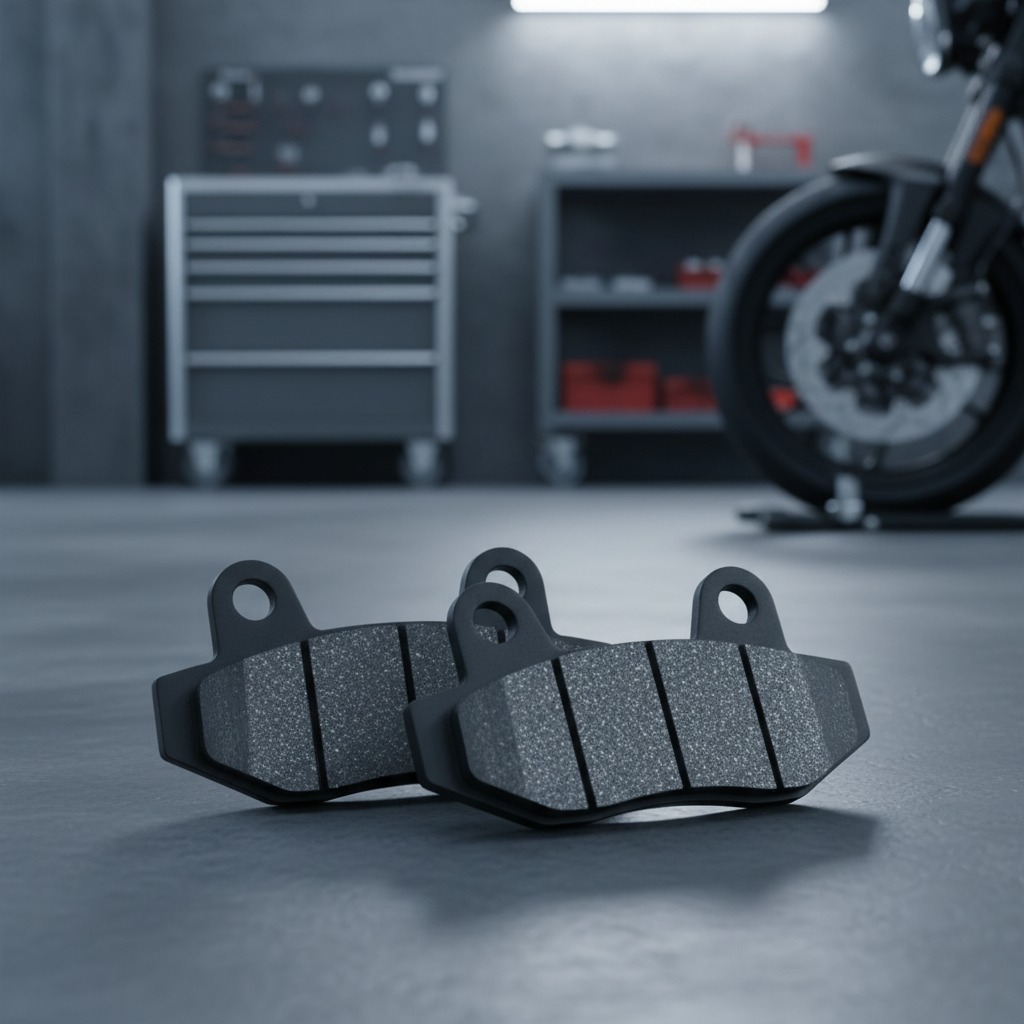
This product is a pair of disc brake pads with a molded black backing plate and a textured gray friction lining on the contact face. The pad shape is curved, with chamfered ends and a single mounting ear with a circular hole on each pad. Two grooves divide the friction surface, which is a common visual feature used in pad design to manage contact pattern and help maintain a stable surface during wear. Because the image only shows the visible structure, the exact friction compound, vehicle fitment, and certified performance rating should be confirmed before purchase.
For buyers, the main value is straightforward: the part restores braking response with a fresh friction interface. That matters on daily commuters, scooters, delivery bikes, utility ATVs, and other compact vehicles that rely on disc brake hardware for frequent stop-and-go use. If a brake system is already in service, replacing worn pads at the right time helps protect rotor condition and keeps the caliper working within a normal operating range.
Key visible specifications and structural features
Pad form
The pads have a curved outer profile that follows the rotor contact path inside a caliper. This shape helps the pad sit neatly in the brake assembly and supports even pressure distribution across the friction face.
Mounting geometry
Each pad shows one mounting ear with a circular hole, giving a total of two visible holes across the pair. That geometry is important for installation because the mounting point must align correctly with the caliper hardware or carrier design. The visible ear shape suggests the pads are intended for a specific caliper pattern, although exact compatibility cannot be identified from the image alone.
Friction face details
The gray friction lining has a segmented appearance with two grooves. These grooves break up the contact surface and can help the pad maintain a more controlled wear pattern. The angled ends also indicate attention to edge shape, which is often used to improve seating in the caliper and reduce abrupt contact at the beginning of braking.
Materials and finish options
From the image, the backing plate appears black and molded or coated, while the contact layer is a textured gray friction material bonded to the metal support. In production, brake pads of this type typically use a stamped or formed metal backing plate with a bonded friction compound. The exact blend may vary by application, and it is not safe to assume ceramic, organic, or semi-metallic content without supplier confirmation.
Finish options for this category often depend on the chosen compound and the intended vehicle use. Buyers usually evaluate whether they want a general-purpose replacement pad, a more wear-focused option for commuting, or a formulation better matched to heavier load cycles. Since the image does not identify the compound, the best practice is to request the material description, fitment chart, and any available test data from the supplier before ordering in volume.
Manufacturing process overview
Disc brake pads like these are commonly produced through a sequence that includes backing plate forming, surface preparation, friction material bonding, curing, and finishing. The metal plate is shaped to fit the caliper interface, then the friction compound is attached under controlled conditions so the bond remains secure under braking heat and repeated pressure cycles. After curing, the pad may be ground or trimmed to final profile, and grooves or chamfers are incorporated as part of the design.
For B2B buyers, the process matters because pad consistency affects installation and service life. Uneven bonding, poor edge finish, or inconsistent thickness can create noise, uneven wear, or premature replacement. That is why many maintenance teams prefer a supplier that can provide stable production control and repeatable part geometry across batches.
Application scenarios
Routine replacement
These pads suit normal maintenance intervals when the original pads have reached the wear limit or no longer deliver stable bite. They are appropriate for workshops handling seasonal checks, inspection-based service, and scheduled part replacement.
Fleet and rental service
Operators managing shared motorcycles, scooters, or light-duty utility vehicles need parts that can be swapped efficiently. A paired pad set simplifies service stock and supports quick turnaround in busy garages.
Repair after braking issues
When a brake system shows signs of contamination, scoring, or pad glazing, replacing the pads is often part of restoring the assembly to proper condition. These disc brake pads for motorcycles are relevant where the caliper and rotor are intact but the friction element is no longer serviceable.
Quality control considerations
Because braking components directly affect rider safety, quality checks should focus on fit, bond integrity, and surface consistency. Common inspection points include backing plate alignment, hole position, edge symmetry, friction face bonding, groove definition, and overall visual finish. For bulk purchasing, it is also reasonable to ask for batch traceability and dimensional checks, especially if the pads will be installed into multiple service locations.
Buyers should avoid choosing replacement motorcycle brake pads based on appearance alone. The image can confirm the general construction, but it cannot verify compound behavior, fade resistance, or compatibility with a specific rotor profile. A good procurement process compares the old pad shape, mounting points, and caliper design against the supplied drawing or sample.
Customization and purchasing guidance
When ordering replacement brake pads for business use, customization may involve pad shape, backing plate configuration, friction compound choice, surface finish, packaging, and labeling. The exact options depend on the manufacturer. If you manage a parts program, it helps to define the vehicle list, annual volume, target service interval, and preferred branding requirements before requesting a quotation.
To reduce ordering errors, verify these points first: the caliper mounting pattern, pad outline, rotor diameter range, and whether the set is meant for one axle position or a specific left/right installation. If the vehicle model is unknown, sending a sample or a clear dimension sheet is usually the safest route. For products sourced from photos, confirm any uncertainty in pad thickness, ear spacing, and groove layout before releasing a production order.
What buyers should compare before choosing
Not all brake replacements serve the same duty cycle. Some buyers need quiet operation for city scooters, while others need dependable friction under frequent stop-and-go use. When comparing motorbike brake pads, look at the pad shape, the fit of the mounting hole, the condition of the rotor, and the expected service environment. Dusty roads, delivery use, wet commuting, and repeated downhill braking all place different demands on the pad surface.
It is also worth considering how the pad will be stocked and installed. Workshop teams often prefer a consistent part that can be identified quickly at the counter, while larger buyers may need standardized packaging, barcode labeling, and repeatable supply. For mixed fleets, keeping a clear reference image and part-matching procedure can save time and reduce wrong-part returns.
Why this pad format works for maintenance teams
The visible pair format is practical for service work because it matches the usual caliper requirement for a left-and-right pad set. The grooved friction face, chamfered edges, and simple mounting-ear design all point to a replacement part built for installation efficiency and predictable seating in the brake assembly. In a maintenance setting, that kind of straightforward geometry can be easier to inventory and explain than a less standardized part.
Request fitment confirmation and sourcing support
If you are sourcing motorcycle brake pads for repair stock, workshop resale, or fleet maintenance, the next step is fitment confirmation. Share your old pad sample, dimensions, caliper model, or vehicle list, and request a comparison against the supplied pad shape. Clear matching at the beginning prevents downtime later. For bulk orders, ask for a production specification sheet, packaging details, and any available quality documentation before final approval.
Send your inquiry with the required fitment data, and we can help you evaluate whether this pad style matches your service needs.





评价
Clear filters目前还没有评价