
Decorative Bottle Overview
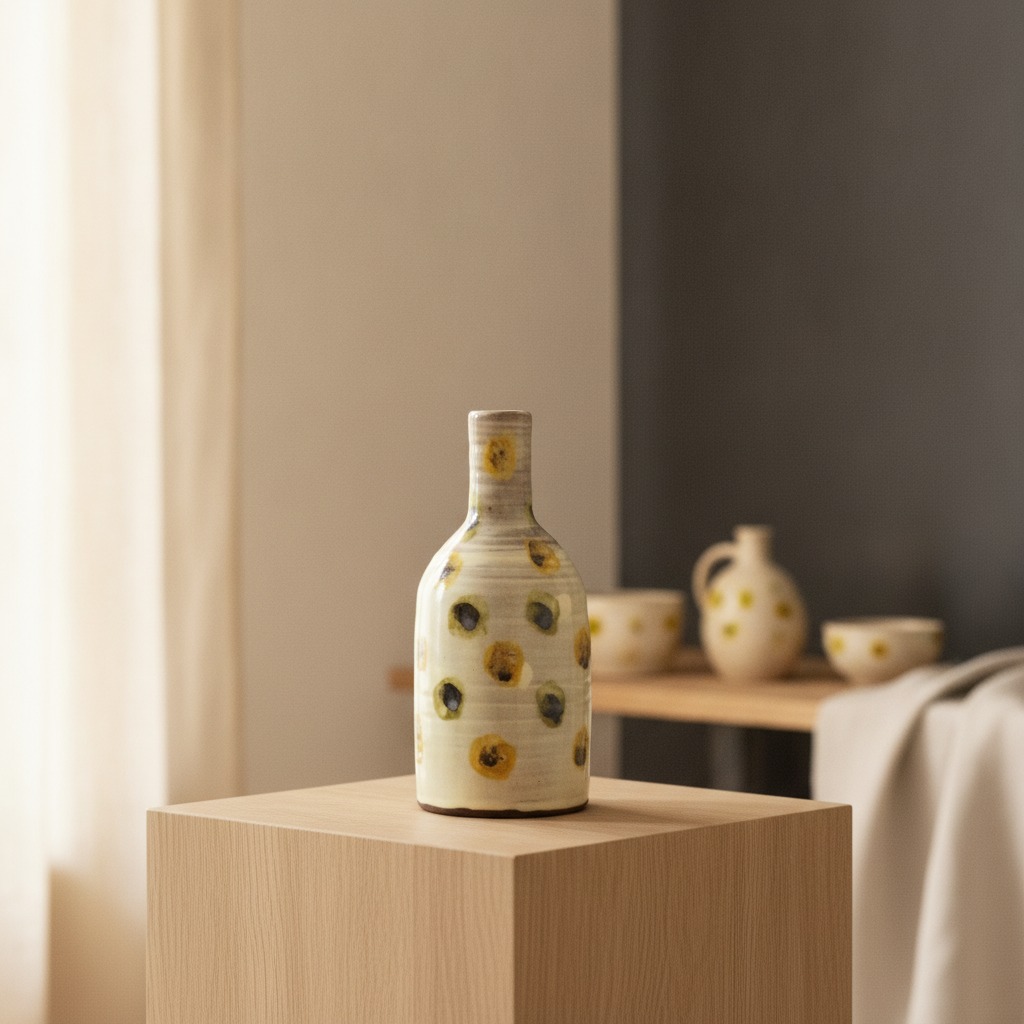
This bottle is best understood as a small ceramic decorative vessel with a bottle-like silhouette, made to solve a common interior styling problem: how to add a handcrafted focal point to a shelf, console, or tabletop without bringing in bulky décor. Its narrow neck, rounded shoulder, and compact body give it the visual rhythm of a traditional bottle, while the hand-applied spotted surface turns it into a piece that feels collected rather than mass-produced. For buyers looking for an accent object that can soften a room with ceramic texture and simple color contrast, this form offers a calm, tactile presence.
Product Appearance and Functional Character
The visible structure suggests a small decorative ceramic or stoneware vessel with a cylindrical body, short neck, and flat base. The off-white or cream ground is paired with yellow and dark gray to black dot motifs, creating a surface that feels lively without becoming busy. The glazing appears glossy or semi-gloss, which helps the shape catch light and makes the handwork easier to notice from different angles. Subtle horizontal forming lines are also visible, hinting at wheel-thrown or hand-finished construction. Because the exact interior condition is not confirmed, it should be treated primarily as a decorative object unless the maker specifies otherwise.
Key Specifications and Visible Capabilities
Shape and Structure
The vessel has a stable flat base, a rounded shoulder, and a narrow neck that gives it an upright, bottle-like profile. This is useful for display because the form stands confidently on tabletops and narrow ledges. The compact proportion also makes it easier to group with books, candles, small trays, or framed art.
Surface and Decoration
The spotted motif appears hand-applied, which gives each piece a slightly organic character. The irregular distribution of dots adds visual movement and helps the bottle feel handmade. Rather than relying on heavy ornament, the decoration works through contrast: warm light body color against darker accents and a few brighter yellow marks.
Scale and Intended Use
Exact dimensions are not provided, so the safest reading is that this is a small tabletop piece. It may function as a small floral display if the opening is usable, but that should not be assumed without confirmation. Its most dependable use is as a decorative accent, collectible ceramic art object, or shelf styling element.
Materials and Finish Options
Based on the visible surface, the body appears to be ceramic or stoneware with a light glaze, slip, or matte-to-satin coating. That kind of surface usually gives a room a softer look than polished metal or glass, while still feeling durable enough for everyday handling. The finish here seems intentionally handmade, with slight variations that strengthen the craft identity of the piece.
For buyers planning a broader collection, similar ceramic bottles are often produced in variations such as matte, satin, semi-gloss, speckled glaze, or painted slip decoration. A glass bottle would show clarity and transparency, but this ceramic version instead emphasizes opacity, texture, and hand-formed character. If a matching water bottle style is needed for functional drinking use, that would be a separate product category and should not be confused with this decorative vessel.
Manufacturing Process and Craft Character
The visible throwing lines and hand-applied spotting point toward a pottery workflow that may include forming, trimming, drying, surface decoration, glazing, and kiln firing. The exact process is not confirmed, so it is best described as likely studio ceramic production rather than industrial bottle manufacturing. That distinction matters to buyers who value small irregularities as proof of handwork.
In practical terms, this kind of ceramic bottle is often shaped one piece at a time. The artist or maker can control the shoulder curve, neck proportion, and base stability with more nuance than a standard molded object. Decorative dots may be painted, splashed, slipped, or glazed before firing, depending on the studio method. The result is a vessel that carries the marks of process in its final surface.
Application Scenarios
This bottle works well in interior settings where a single object needs to anchor a small area without overwhelming it. Common placements include bookshelves, bedside tables, dining room consoles, reception counters, and window sills. In styling work, a piece like this can add warmth to minimalist spaces, contrast to neutral palettes, or a handmade note to contemporary interiors.
It can also be used in gift merchandising, home décor collections, boutique displays, and curated shelf arrangements. Because the form is compact and the decoration is visually clear, it photographs well for online listings and lifestyle imagery. If the opening is functional and watertight, it may support a few stems or dried botanicals; however, that should be verified before use with water.
Quality Control Considerations
For a handcrafted ceramic bottle, buyers and merchandisers usually look at several practical points. The base should sit flat so the piece does not wobble on a shelf. The neck and opening should feel cleanly finished if the vessel is meant for holding stems. Surface glazing should be even enough to avoid distracting runs, while still allowing intentional handmade variation. The decorative marks should be consistent with the intended aesthetic rather than appearing accidental.
If the product is offered for retail, it is also useful to confirm whether the interior is sealed, whether it can hold water, and whether the finish is suitable for the intended environment. Since none of those claims are visible here, they should be verified by the supplier before publication or purchase.
Customization Guidance for Buyers
For buyers sourcing ceramic décor, this product category can often be adapted in several ways. The body shape can be adjusted to create a more slender or more rounded profile. The neck can be shortened or widened depending on whether the vessel is meant to be purely sculptural or also used for flowers. Colorways can shift from cream and dark spotting to earth tones, coastal blues, black-and-white contrast, or seasonal palettes.
Decoration can also be customized through hand painting, speckled glaze, brushed bands, incised marks, or more restrained monochrome finishes. If the goal is retail assortment planning, a family of related forms can be developed using the same silhouette with different surface treatments. That allows a buyer to build a cohesive shelf story while keeping each piece distinct.
Buyer Decision Factors
When evaluating a decorative bottle like this, it helps to think beyond appearance alone. First, consider where it will be used: a narrow shelf asks for a stable, compact object, while a larger console can support a taller companion piece. Second, decide whether the vessel is meant to stand alone or pair with other ceramics, because the spotted finish will either act as a focal point or a supporting accent depending on the arrangement.
Third, confirm the functional requirement. If the item is only for display, the decision can focus on form, glaze, and craft character. If it must hold flowers or water, then sealing, interior glaze quality, and opening size become important. Finally, think about visual compatibility. The cream base and spotted decoration work especially well with wood, linen, stone, rattan, and other natural materials.
Why This Bottle Appeals in Interior Collections
This piece has the kind of modest presence that invites a second look. It does not rely on scale or shine; instead, it uses proportion, surface variation, and hand decoration to create interest. That makes it valuable in spaces where overly glossy décor can feel cold. The bottle shape gives structure, while the dotted pattern introduces a relaxed, almost playful rhythm.
For curators and buyers building a decorative assortment, that balance is useful. The object reads as artisan-made, but not fragile in appearance. It can sit among books, ceramics, or seasonal décor and still hold its own. In a product mix, it offers a bridge between sculptural art and practical shelf styling.
Requesting More Information or Ordering
If you are considering this bottle for retail, interior styling, or a custom ceramic line, the next step is to confirm the details that are not visible from the image alone: dimensions, interior condition, watertight performance, clay body, and finish options. Those points will determine whether it should be positioned as a decorative vase, a collectible art object, or a broader ceramic home accessory.
Share your target use, preferred color palette, and quantity needs, and the product can be specified more precisely for your project. For display-focused buyers, this kind of handcrafted ceramic bottle offers a compact way to add texture, warmth, and a clear handmade story to the shelf.

评价
Clear filters目前还没有评价