
Decorative Bottle for Tabletop Styling and Small Display Use
A bottle can do more than hold liquid. In interior settings, the right bottle shape solves a common buyer problem: how to add height, texture, and a handcrafted focal point without taking up much space. This small ceramic piece brings that function into a compact form, making it suitable for shelf styling, tabletop accents, and display-led environments where visual character matters more than storage capacity.
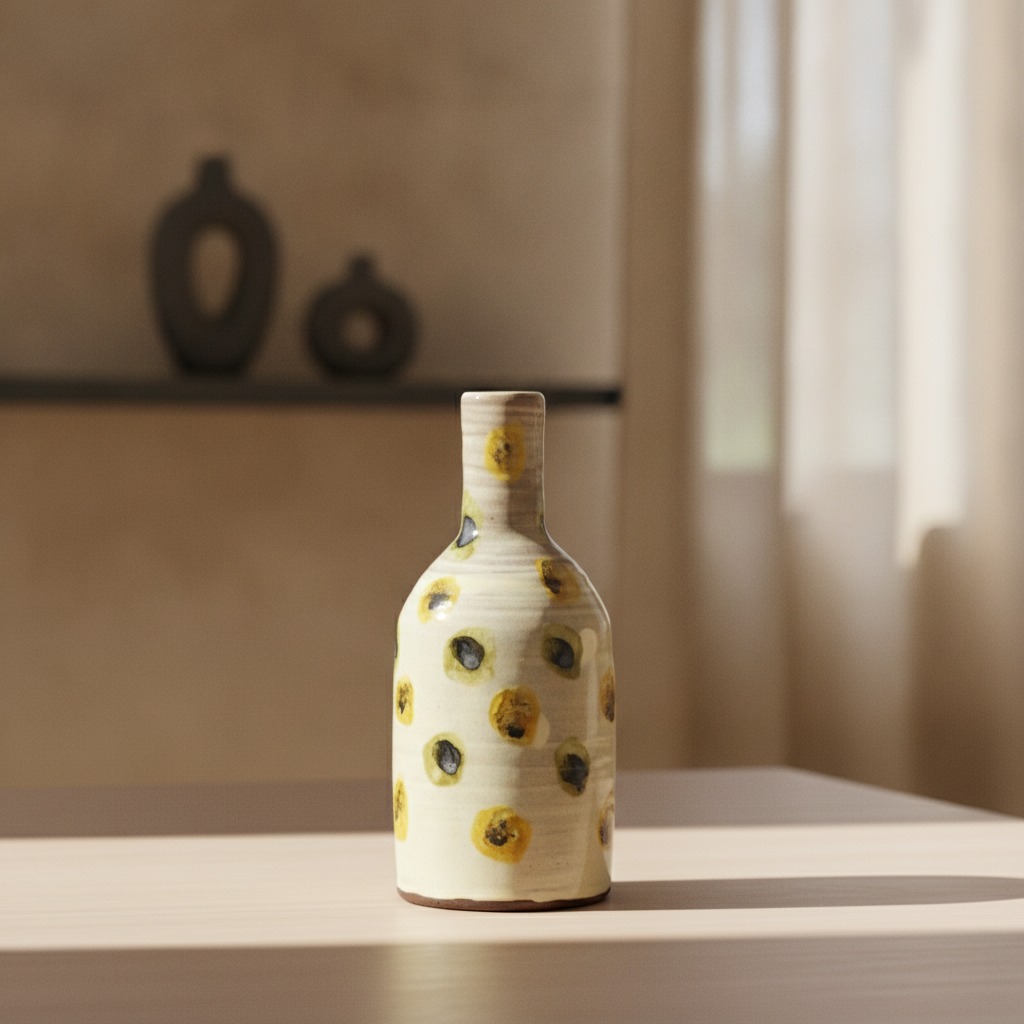
What stands out first is the balance between simplicity and surface detail. The body is narrow and upright, with a short shoulder and a straight neck that gives it a clean bottle profile. The cream or ivory glaze keeps the form calm, while scattered yellow and dark round motifs add movement across the surface. The result is decorative but not busy, which makes it easy to place in modern, rustic, or artisan-inspired interiors.
Product Overview
This piece appears to be a small decorative ceramic bottle or vase, likely intended for display rather than everyday liquid handling. Its compact shape makes it easy to use in a wide range of environments, from home shelving to hospitality styling. Because the silhouette is stable and upright, it can stand alone as a visual object or sit beside books, candles, trays, and dried botanicals.
The visible throwing rings around the body suggest a pottery-making process rather than a molded mass-production look. That surface rhythm gives the piece a handmade presence. For buyers seeking decor with a crafted feel, this is often the deciding factor: the object feels produced by a studio hand, not by an anonymous mold.
Visible Design Features
Shape and Proportion
The form is cylindrical with a modest shoulder and a narrow, straight neck. This profile reads as bottle-like, but the piece also functions visually like a vase. The flat base supports stable placement on shelves, tables, and console tops. The overall silhouette is compact, which helps it fit into small decorative arrangements without overpowering nearby objects.
Surface Texture
Horizontal ring texture is visible across the body, likely created during throwing on a wheel. This texture catches light softly and adds depth to the glaze. Rather than a perfectly smooth industrial finish, the surface has a tactile, crafted quality that encourages closer viewing.
Color and Pattern
The glaze appears light cream or ivory, with scattered round yellow and dark motifs distributed over the surface. The pattern feels irregular in a natural way, which enhances the handmade impression. Because the decoration is understated and organic, it pairs well with neutral interiors and mixed-material decor schemes.
Key Specifications and Capabilities
Only visible characteristics can be confirmed here, so the following should be treated as descriptive rather than technical guarantees:
- Product type: small decorative ceramic bottle or vase
- Form: cylindrical body, short shoulder, narrow neck, flat base
- Surface: glazed, with glossy to semi-glossy appearance
- Decoration: scattered round spot motifs in yellow and dark tones
- Style: handcrafted, studio pottery look
- Use profile: display, styling, small floral presentation, gifting
As a decorative object, the main capability is visual support. It adds vertical structure to a surface and can help balance arrangements that feel too flat or too linear. In merchandising terms, that makes it useful for retail displays, staged room scenes, and curated product groupings. A buyer looking for a water bottle for utility would be choosing a different product category; this item is better understood as decor with bottle-inspired geometry.
Materials and Finish Options
The visible body appears to be glazed ceramic or stoneware. The exact clay body cannot be confirmed from the image alone, but the surface suggests a fired ceramic piece rather than glass or plastic. The glaze has a soft ivory base with glossy reflections, giving the object a clean but warm appearance.
For similar products in ceramic decor lines, finish variations may include matte, semi-gloss, reactive glaze effects, brushed color fields, or speckled surfaces. In this case, the spotted decoration is part of the object’s charm. Buyers who want a more restrained look may prefer plain glaze, while those seeking a tactile studio feel often favor this kind of irregular finish.
It is worth noting that the piece should not be assumed to be watertight unless that has been verified separately. Buyers planning to use it with fresh stems should confirm suitability before purchase. As a decorative glass bottle alternative in styling terms, it offers a similar transparent-object replacement only in silhouette and display role, not in material.
Manufacturing Process and Craft Character
The visible throwing rings strongly suggest a wheel-thrown ceramic process. In practical terms, that means the body may have been shaped on a pottery wheel, then dried, finished, glazed, and kiln-fired. The decoration could have been applied through glaze spotting, hand placement, or a layered glazing method, though the exact technique is not visible and should not be assumed.
This type of production leaves behind subtle signs that many buyers value: slight variation in ring spacing, natural glaze flow, and a less rigid symmetry than machine-made decor. Those marks create personality. They also mean that each unit may have small differences, which is often part of the appeal in handcrafted tableware and art pottery categories.
Typical Application Scenarios
Home Decor
Placed on a bookshelf, side table, mantel, or entry console, the bottle adds a quiet focal point. Its pale base color works especially well against wood, stone, linen, and dark-painted walls. It can stand alone or be grouped with other ceramic objects to create a layered vignette.
Hospitality and Retail Styling
In hotels, restaurants, boutiques, and showrooms, compact decor pieces are often used to soften hard surfaces and build atmosphere. This bottle suits that role because it brings handcrafted texture without requiring much floor or surface area. It can support seasonal styling, shelf merchandising, or table center arrangements.
Gift and Collectible Use
Because of its artisanal appearance, the piece also works as a gift item or a collectible studio-pottery object. Buyers who appreciate craft-driven interiors often respond to objects with visible making marks and unique glaze patterns. That makes the bottle suitable for curated gift assortments and design-forward retail shelves.
Quality Control Considerations
For ceramic decorative products, quality control usually focuses on visible consistency, structural integrity, glaze coverage, base stability, and surface finish. Since exact factory standards are not provided here, buyers should inspect the item for chips, cracking, uneven firing, sharp foot edges, or unstable placement.
Because the decoration is intentionally irregular, some variation may be acceptable and even desirable. The key question is whether the piece still looks balanced and finished. Buyers should also confirm whether the interior is sealed, whether the base is protected for furniture use, and whether the surface is safe for the intended styling environment.
Customization Guidance for B2B Buyers
If this bottle style is being considered for private label, retail assortment, or hospitality sourcing, customization can usually focus on the elements that shape its visual identity. Common directions in ceramic decor include size changes, glaze color adjustments, pattern placement, neck proportion, and packaging presentation. Exact options depend on the maker, but the product category lends itself well to variation.
When requesting custom versions, buyers should clarify the intended use first. A display-only piece may prioritize silhouette and finish. A floral-use piece may need watertight performance. A retail gift item may need stronger packaging and consistent labeling. The more specific the use case, the easier it is to define acceptable design and quality parameters.
Buyer Decision Factors
Several factors usually drive the purchase decision for a decorative bottle like this:
- Visual fit: Does the glaze tone work with the intended interior palette?
- Scale: Is the compact size appropriate for shelf or tabletop placement?
- Handmade character: Does the buyer want a crafted, non-uniform look?
- Use intent: Is the piece for display only, or for holding stems?
- Retail positioning: Does it fit a premium craft, gift, or home decor range?
- Packaging needs: Will it ship individually or as part of a decor set?
These considerations matter because decorative ceramic items are often chosen as much for atmosphere as for utility. The right piece changes a surface from empty to intentional. That is the practical value this bottle offers.
How It Fits Within Decorative Bottle Collections
Within a broader product range, this item would sit comfortably alongside vases, art pottery, and small accent objects. It is not a utility bottle in the everyday sense, but it shares the bottle vocabulary that buyers understand immediately: upright body, narrow neck, and a clear vertical profile. That makes it easy to merchandise in sets, especially when combined with other ceramic forms in related colors or surface finishes.
For buyers building a mixed decor program, the piece can act as a bridge between plain minimalist objects and more expressive handcrafted items. It has enough detail to stand out, yet the palette remains controlled enough to coordinate with many styling environments.
Request Sourcing or Additional Product Details
If you are evaluating this bottle for retail, hospitality, or interior styling use, request confirmation of dimensions, watertight performance if needed, packaging format, and available customization options. Those details will determine whether it is best positioned as shelf decor, a vase, or a collectible ceramic accent. For sourcing questions, ask for clear photos of the base, interior, and glaze finish so the handmade quality can be assessed accurately.
For buyers who want a compact decorative bottle with a warm ceramic presence, this design offers a straightforward answer: simple shape, visible craft, and a surface that adds texture without noise.
评价
Clear filters目前还没有评价