
Coffee Machine for Compact Espresso Service
A Coffee machine like this countertop espresso model is built for a very specific buyer need: turning a simple kitchen, break room, or small service counter into a place where espresso can be prepared with speed and consistency. Instead of relying on a bulky commercial setup or a manual stovetop method, this type of machine brings the essential brewing elements together in one footprint. The visible layout suggests semi-automatic control, so the operator can manage extraction, monitor pressure, and steam milk without complicated workflow changes. For businesses or households that want fresh espresso, a practical espresso machine can reduce waiting time, improve portion control, and make beverage preparation feel more organized.
Product Overview
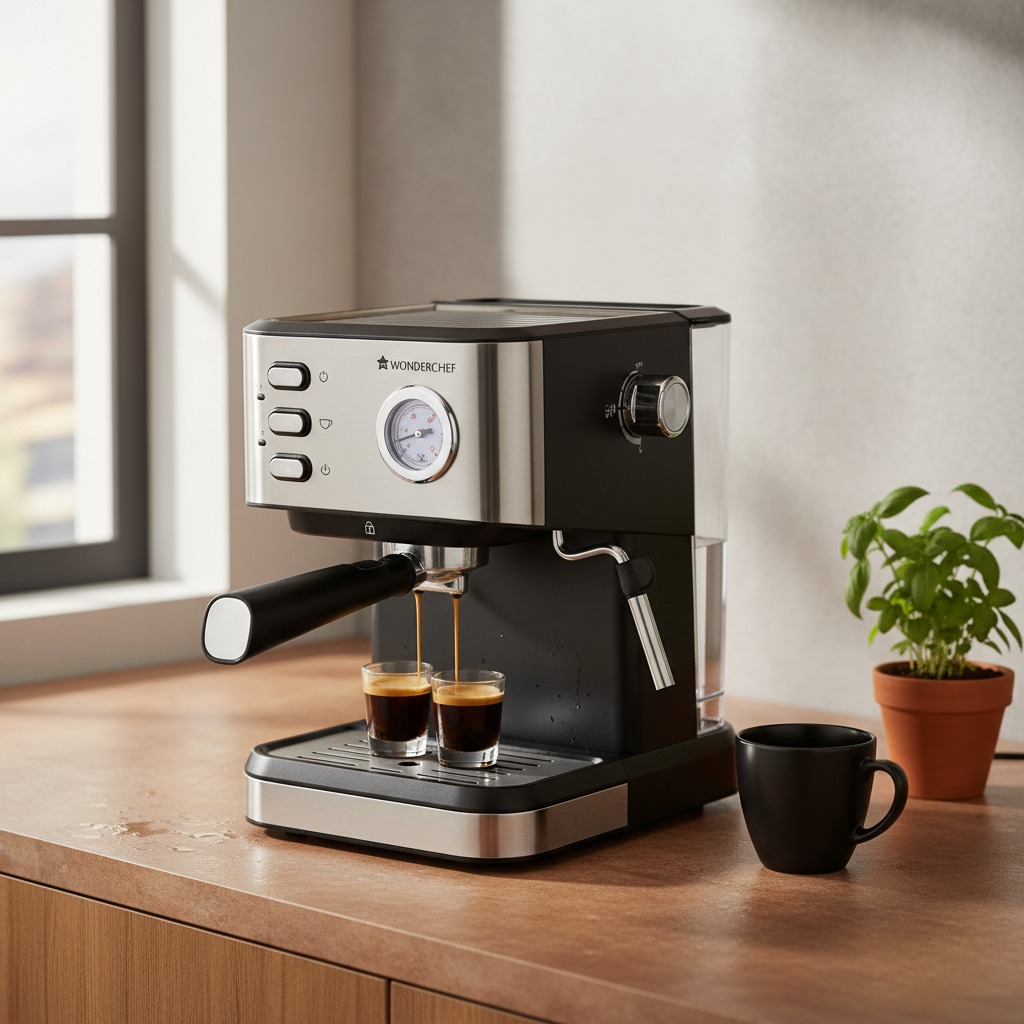
This unit appears to be a countertop espresso machine designed for home or small office use. The front face combines brushed stainless-steel panels with a black body, which gives it a familiar appliance look while keeping the working area easy to read. A portafilter with a black grip is mounted at the front, and the image shows two espresso streams dispensing at once, indicating that the machine is intended for one or two small cup servings.
The control arrangement is straightforward: three rectangular buttons sit on the left, a central round pressure gauge provides visible brewing feedback, and a rotary knob on the right likely handles steam or another manual function. A steam wand on the side supports milk texturing. On the top, a ribbed warming surface offers a place for cups before brewing, which can help maintain serving temperature in everyday use.
What This Coffee Machine Helps Buyers Do
For many buyers, the main challenge is not simply making coffee; it is making espresso in a repeatable way with limited space and limited training. This coffee machine addresses that problem by combining the core parts needed for a small espresso workflow: dose preparation, extraction, pressure observation, and milk frothing. It is especially useful where convenience matters but the drink still needs to feel freshly prepared.
In practical terms, the machine supports:
Single or Double Espresso Servings
The visible dual output suggests that two cups can be brewed at the same time, which is useful for households, shared offices, and small hospitality counters.
Milk-Based Drink Preparation
With a steam wand, the machine can support cappuccino-style or latte-style beverages, depending on the user’s technique and the milk being used.
Space-Conscious Beverage Service
A countertop footprint is easier to place than a full commercial bar setup, making this type of espresso machine suitable for kitchens, pantry areas, and compact café corners.
Key Visible Specifications and Capabilities
Because only visible features are available, the following observations should be treated as practical identification points rather than guaranteed performance claims:
Pressure Gauge
The front-mounted gauge gives the operator a visual reference during extraction. For buyers, this matters because pressure feedback can help guide routine brewing behavior and makes the machine feel more controlled than a purely button-driven appliance.
Manual or Semi-Automatic Operation
The combination of buttons, knob, and gauge suggests a semi-automatic style of use. That usually means the operator has a role in starting, stopping, and managing parts of the process rather than letting the machine fully automate every stage.
Steam Wand
A steam wand is visible on the right side. This is a key feature for any coffee machine intended to serve espresso drinks with milk foam or steamed milk texture.
Drip Tray and Cup Platform
The lower front section includes a drip tray, and the top includes a cup-warming area. These details support cleaner day-to-day operation and more orderly serving.
Dual-Cup Brewing Presentation
The image shows espresso being dispensed into two small cups at the same time. That visual cue is important for buyers who want efficient service without changing equipment between drinks.
Materials and Finish Options
From the visible construction, the housing appears to use brushed stainless-steel front panels with a black plastic body or base. That kind of combination is common in countertop beverage appliances because it balances appearance, cleaning practicality, and weight control.
The portafilter handle uses a black grip, while the warming area appears to have a ribbed or grated metal finish. Those surfaces are chosen for function as much as appearance: the metal sections can handle repeated contact and heat exposure, while the darker body panels help reduce the visual impact of daily use marks.
For manufacturers or sourcing teams, the exact material mix can vary by project. A coffee machine platform may be adapted with different trim finishes, panel treatments, or grip materials depending on brand requirements. Since the image does not confirm hidden construction details, those points should be treated as design possibilities rather than fixed specifications.
Manufacturing and Assembly Considerations
Although exact process details are not confirmed, a product of this type typically involves several standard appliance manufacturing steps:
Metal Forming and Surface Preparation
Front panels and structural pieces may be stamped or formed from sheet metal, then brushed or otherwise finished for a clean exterior appearance.
Plastic Molding
The body, base, knob areas, or internal supports may use molded plastic components to shape the enclosure and manage cost and weight.
Component Integration
Internal brewing modules, gauges, switches, heating elements, pump-related components, and steam hardware must be fitted and aligned carefully so the controls feel consistent and the machine operates as intended.
Final Appliance Assembly
Portafilter fit, wand placement, tray installation, and exterior panel alignment all matter in the last assembly stage because they affect usability and the finished look.
Typical Application Scenarios
This espresso machine style fits several settings where fresh coffee matters but volume is moderate.
Home Kitchens
A home coffee machine should be easy to place on a counter, quick to access in the morning, and simple enough for regular use. This type of machine suits users who want espresso without building a full café setup.
Small Offices and Break Rooms
In an office environment, the ability to make espresso and froth milk can improve break-room beverage options without requiring a large commercial appliance.
Small Hospitality Areas
Guest lounges, boutique reception counters, and light-duty hospitality corners may use a machine like this to provide a more polished coffee experience.
Compact Food Service Operations
For operators serving a limited menu, a machine with visible pressure control and steam capability can handle core espresso drinks efficiently.
Quality Control Points Buyers Should Ask About
Because buyers often compare similar coffee equipment by appearance alone, it helps to focus on practical checks during procurement.
Brewing Stability
Ask how the machine manages repeated espresso pulls and whether the pressure feedback remains readable during use.
Steam Performance Consistency
If milk drinks matter, check the steam wand response and how easy it is to clean after use.
Fit and Finish
Look at how the front panels meet the body, whether the portafilter seats securely, and whether the drip tray can be removed easily.
Serviceability
For business buyers, access to replacement seals, trays, knobs, and filters can matter more than decorative detail.
Customization Guidance for B2B Buyers
If this coffee machine is being considered as a manufactured product platform, buyers often want to adjust the design to suit brand or market needs. Common customization areas may include exterior color, control labeling, front panel graphics, portafilter style, cup-warming finish, and packaging presentation.
For private label or OEM work, it is also worth discussing internal configuration, user interface layout, accessory bundles, and regional power or plug requirements. Since exact internal specifications are not visible, those points should be confirmed directly during engineering review.
Buyer Decision Factors
When comparing this espresso machine with alternatives, the most useful decision factors are often the ones tied to daily use rather than appearance alone.
How much skill the operator has
A semi-automatic machine can be rewarding, but it usually works best when the user is willing to learn basic espresso handling.
How many drinks are needed per day
The visible form suggests small-scale use, so it is better suited to moderate demand than to continuous high-volume service.
Whether milk drinks are part of the menu
The steam wand adds flexibility, especially for cappuccino and latte preparation.
How much counter space is available
A compact machine is valuable when every inch matters, especially in a home kitchen or office pantry.
Conclusion and Next Step
This Coffee machine brings together the essentials of espresso preparation in a compact countertop format: visible pressure monitoring, dual-cup brewing, steam capability, and a practical cup-warming surface. For buyers looking for an espresso machine that fits smaller spaces while still supporting everyday coffee routines, it offers a clear and familiar workflow.
If you are evaluating this model for sourcing, private label development, or product comparison, ask for confirmation of internal specifications, construction details, and available customization options before moving forward. A good fit is not only about making coffee; it is about matching the machine to the space, the users, and the drinks they actually serve.




评价
Clear filters目前还没有评价