


Battery for dependable 12V power storage and starting support
A Battery like the Xplorer Energy XP31MF is used when a system needs stable 12V power, reliable starting current, and a sealed unit that can fit a range of vehicle and equipment duties. For buyers, the main problem is often the same: a power source must deliver enough cranking output for starting, while also storing energy for accessories or auxiliary loads without frequent service interruptions. The visible product data shows a 12V, 110Ah, 770A sealed multipurpose lead-acid battery, which points to a practical solution for automotive, caravan, marine, backup, and general-purpose electrical systems.
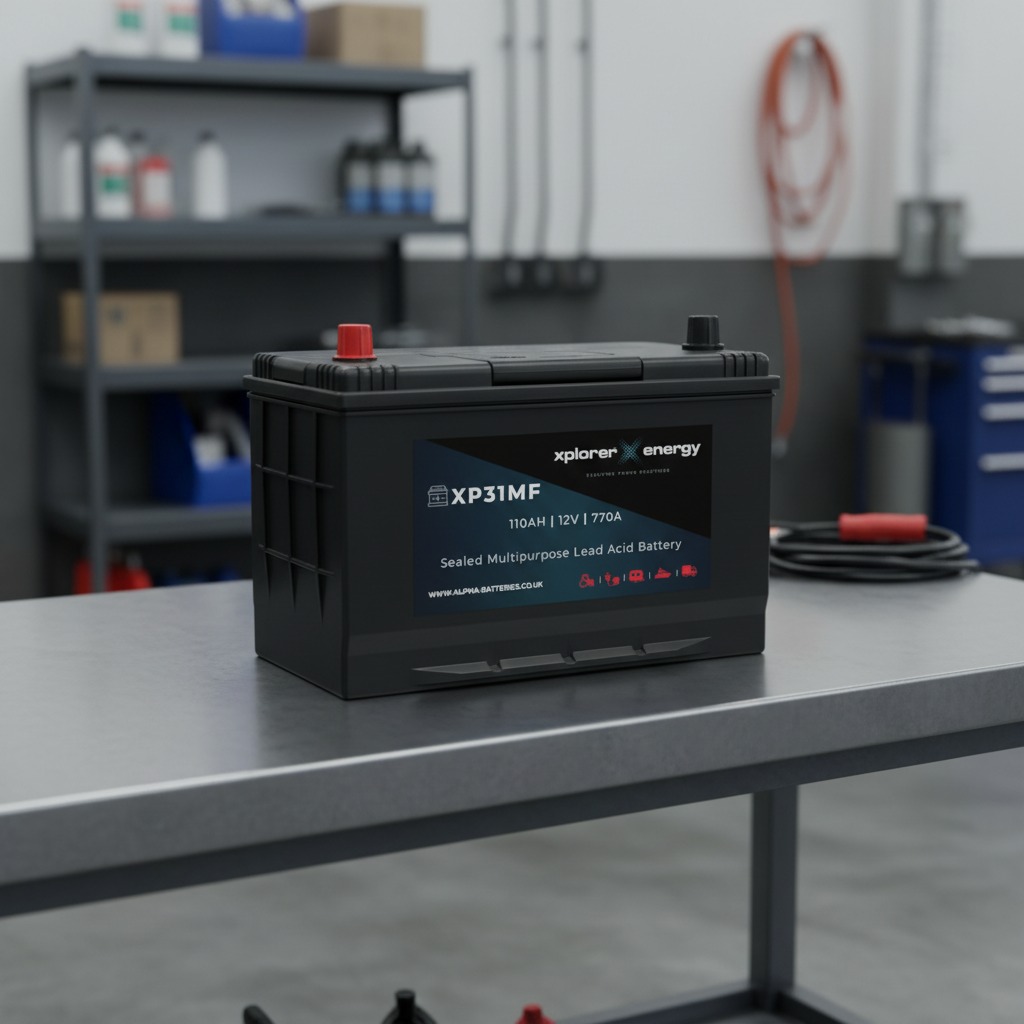
Product overview
The Xplorer Energy XP31MF is identified as a sealed multipurpose lead-acid battery. It comes in a rectangular black molded plastic case with top-mounted terminal posts and clear polarity marking: red for positive and black for negative. The label information visible on the unit includes 110Ah capacity, 12V nominal voltage, and 770A current rating. Those numbers matter because they help buyers match the battery to the load profile of the system. A 12V unit is standard across many vehicles and small power systems, while the 110Ah rating indicates substantial storage capacity for longer runtime. The 770A figure suggests strong current delivery for starting or surge-demand applications, although the exact testing standard is not visible and should be confirmed in technical documentation when required.
What this product is designed to solve
This type of battery is chosen when a user needs more than simple backup power. In many installations, the battery must support engine start-up, onboard electronics, lighting, pumps, or other devices that draw current in short bursts or over extended periods. A sealed multipurpose unit reduces maintenance burden compared with open-service batteries, while also offering a more controlled installation profile for enclosed compartments, caravan boxes, or equipment bays.
Key specifications and visible capabilities
The most reliable specifications available from the product information are the ones printed on the label. Buyers should use these values as the starting point for selection:
Nominal voltage: 12V
Capacity: 110Ah
Current rating: 770A
Construction: sealed multipurpose lead-acid battery
Case color and finish: black molded plastic with a matte-to-satin appearance
Terminal layout: two top terminal posts, with visible red positive and black negative marking
Because exact internal chemistry is not visible, it should not be assumed whether this is AGM, gel, or another sealed lead-acid subtype without product documentation. That distinction can affect charging parameters, vibration tolerance, and installation preferences, so buyers should verify it before final system design.
How to interpret 110Ah and 770A
Capacity and current rating serve different purposes. The 110Ah figure relates to stored energy over time, which is important for systems that run lights, electronics, or auxiliary devices when the engine is off. The 770A rating is more relevant where high instantaneous current is needed, such as engine starting or short high-load events. A buyer comparing this Battery with a rechargeable battery used for low-current electronics should note that lead-acid products like this one are commonly selected for higher surge use and robust 12V integration.
Materials and visible construction
From the visible product view, the outer case is a black plastic housing with a molded finish. This is typical of sealed lead-acid battery enclosures designed to contain internal cells and protect them from external handling damage. The terminals are metal posts positioned on the top surface, which is a familiar layout for many automotive and utility battery installations. The red and black polarity markers help reduce installation errors, especially in cabinets, trays, and vehicle compartments where quick identification is important.
As with any sealed battery product, the external housing is only one part of the system. Internal plates, separators, electrolyte form, and sealing details are not visible here, so performance claims should remain limited to the documented label information and the general function of sealed lead-acid batteries.
Manufacturing and product category notes
This product belongs to the assembled electrochemical battery unit category. In practical terms, that means the unit is built as a complete, ready-to-install power source rather than as a component cell. Manufacturing for this class of Battery typically includes cell assembly, case sealing, terminal integration, formation, and electrical testing. The visible information supports a sealed multipurpose lead-acid format, but does not justify assumptions about internal AGM or gel construction. For procurement teams, that distinction is important because charging method, float voltage range, and cycling behavior may vary by subtype.
Common application scenarios
The product information points to several likely uses. In automotive settings, the battery can supply engine-starting current and support electrical accessories. In caravans and motorhomes, the 110Ah capacity may be useful for auxiliary loads such as interior lighting, control panels, water systems, or small inverters, depending on the system design. Marine use is also a plausible fit where sealed construction and multipurpose function are useful, although vibration, mounting, and charging conditions should always be reviewed for the specific installation.
Other common scenarios include backup power systems, portable equipment, workshop tools, gate controls, and off-grid installations that need a 12V storage source. For buyers comparing a lithium battery to this product class, the deciding factor is often application fit rather than chemistry preference alone. Lead-acid batteries remain common where established charging equipment, cost structure, and broad compatibility are priorities.
Quality control considerations
For a product like this, buyers should focus on verifiable quality checkpoints rather than marketing language. Useful checkpoints include correct labeling of voltage and capacity, terminal polarity consistency, clean molded case finish, secure top posts, and damage-free shipment packaging. Since the exact test standard for the 770A value is not provided, it is reasonable to ask for the manufacturer’s datasheet or test reference before placing the battery into a critical start-duty application.
For incoming inspection, teams often confirm open-circuit voltage, physical dimensions, terminal condition, and case integrity. If the battery will be used in a closed cabinet or vehicle bay, fitment and ventilation requirements should also be reviewed. These checks help reduce installation issues that can be more expensive than the battery itself.
Customization and procurement guidance
Because the visible product data is limited, customization questions should focus on the details that affect compatibility. Buyers may want to confirm terminal style, polarity arrangement, outer dimensions, mounting constraints, and whether the unit supports a specific charging profile. If the battery is intended for fleet, marine, or backup systems, it is also sensible to ask whether matching units are available for multi-battery packs or replacement standardization.
When comparing options, consider three decision factors first: system voltage, required capacity, and peak current demand. Then review installation space, charging equipment, and duty cycle. A battery that is suitable for cranking may not be the best choice for repeated deep discharge unless the application and battery subtype are confirmed. Likewise, a battery marketed as multipurpose may still need a charging regimen matched to its internal design.
Battery selection tips for buyers
If you are sourcing this Battery for a vehicle or equipment platform, start by matching the 12V system requirement. Next, check whether 110Ah is enough for runtime needs and whether 770A satisfies starting or surge demand. Confirm the physical tray size, post orientation, and cable reach before purchase. If the battery will replace an older unit, compare the label values directly and verify the charger settings already in use.
For customers evaluating a rechargeable battery alternative, it helps to define the load profile first. Short high-current duty, standby power, and general-purpose 12V operation often favor sealed lead-acid formats. High-energy-density applications, lighter weight requirements, or frequent deep cycling may lead buyers to compare lithium battery options as well, but that decision should be based on the whole system, not chemistry alone.
Request documentation and confirm fit
The Xplorer Energy XP31MF offers a clear combination of sealed construction, 12V operation, 110Ah capacity, and 770A current rating. Those visible facts make it a practical reference point for sourcing and replacement planning. If you need to evaluate fit for a specific vehicle, caravan, marine setup, or backup power cabinet, request the full technical sheet, terminal details, and charging guidance before final approval. That simple step helps ensure the Battery you select will match both the electrical demands and the physical constraints of the installation.



评价
Clear filters目前还没有评价