
Amber Glass Bottles for Light-Sensitive Liquid Packaging
Amber glass bottles are a practical answer when a liquid product needs protection from light without sacrificing a clean, premium presentation. For buyers in pharmaceuticals, supplements, cosmetics, essential oils, and laboratory supply chains, the packaging challenge is often the same: keep the contents stable, easy to dispense, and ready for shelf or warehouse handling. A tinted glass bottle helps reduce exposure to ambient light, while the narrow neck and threaded closure support controlled filling and secure sealing.
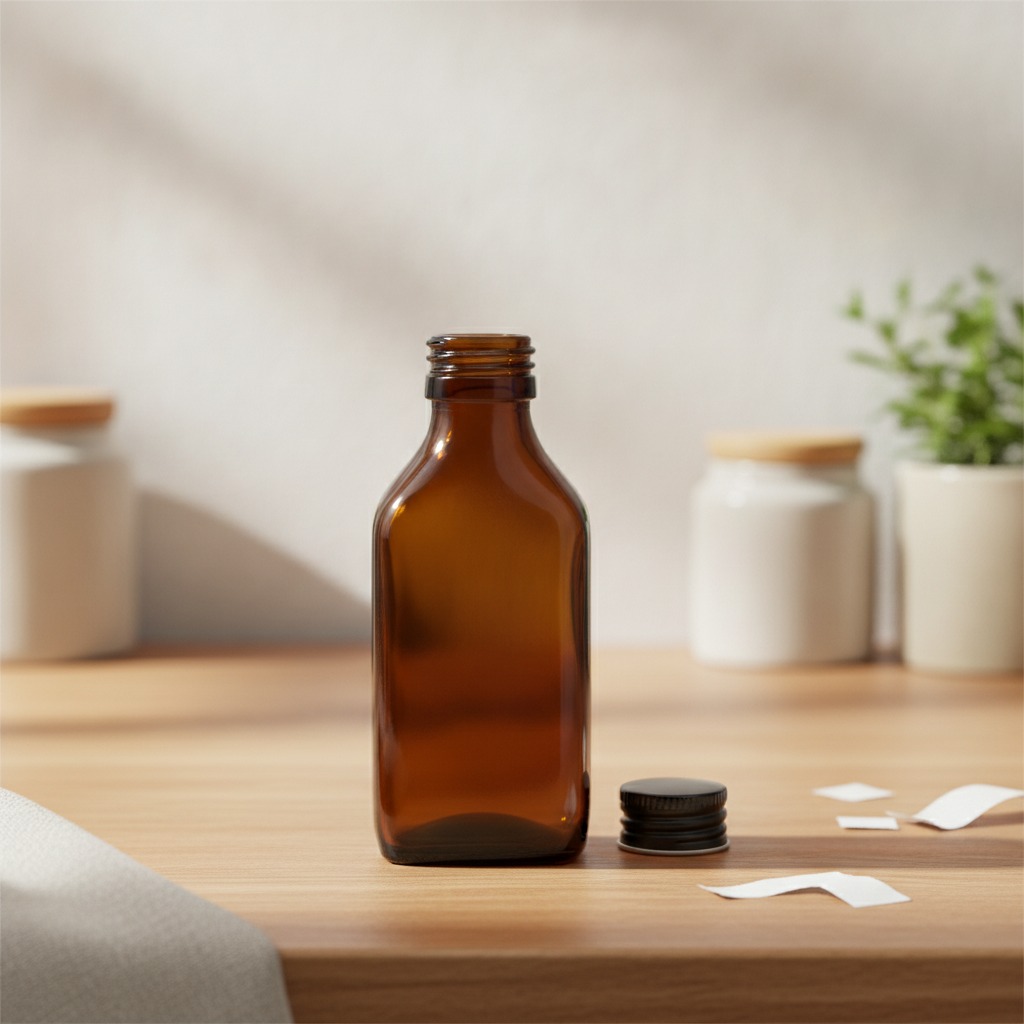
This small rectangular bottle format also speaks to another need that is easy to overlook: efficient storage. The straight-sided body and flat base create a compact footprint that can pack neatly into cartons, trays, and retail displays. When product lines must be labeled, stacked, transported, and stored with minimal wasted space, the shape of the container matters as much as the material.
Product Overview
The bottle shown is a small rectangular glass container with an amber-brown tinted finish and a separate black screw cap. The body appears smooth and glossy, with straight sides, rounded shoulders, a narrow threaded neck, and a flat base. That geometry gives the bottle a stable stance while keeping the profile compact and portable. It is a familiar format for small-volume liquid packaging where appearance, protection, and handling all need to work together.
Because the exact capacity is not visible, this page avoids assuming a precise size. What can be seen clearly is the bottle’s overall construction: a molded glass body designed for screw closure use, suited to products that benefit from reduced light exposure and orderly shelf presentation. The amber tint is especially relevant for formulations that are sensitive to UV or bright indoor lighting.
Key Specifications and Functional Characteristics
Visible structural features
The main components are straightforward: bottle body, threaded neck, and closure. The rectangular profile is more angular than a classic round vial, which can make line-up and grouping more efficient in packaging environments. A flat base helps the bottle stand securely during filling, labeling, and end-user use.
Practical performance attributes
The amber color is one of the most important functional features. It helps reduce light exposure, which is why amber glass bottles are commonly selected for light-sensitive formulas. The screw-thread finish supports use with a matching cap, and the visible black closure suggests a simple, utilitarian sealing solution. The exact liner, torque performance, and leak resistance are not visible here, so those details should be confirmed during procurement.
For many buyers, the value is in predictable handling: a bottle that fills cleanly, labels well, and stores efficiently. Rectangular glass shapes often appeal when carton density and packaging layout matter. In supply chains where every millimeter counts, that can make a noticeable difference.
Materials and Finish Options
The bottle body is glass with an amber or brown tint. Glass remains a preferred material for many liquid products because it presents a stable, non-porous packaging surface and delivers a premium look at retail. The tinted finish adds a protective layer of visual shielding while preserving the clarity of the package silhouette.
The closure shown appears to be black and round, likely plastic or coated metal, though that cannot be verified from the image alone. Buyers often evaluate cap style, liner compatibility, and surface finish together with the bottle. For example, a matte black cap may support a more clinical or apothecary appearance, while a glossy finish can read as more cosmetic or consumer-facing. Since this article is based on visual information, exact cap material and liner type should be checked before ordering.
Manufacturing and Forming Considerations
Glass bottles of this type are typically produced through standard glass forming methods such as blow molding or press-and-blow processes, followed by finishing at the neck to create a threaded mouth. The image confirms a threaded neck finish, but not the exact production route. What matters to buyers is that the mouth is compatible with screw closures and that the neck dimensions remain consistent enough for repeat sealing operations.
After forming, bottles are usually inspected for basic visual defects such as distortion, edge irregularity, and surface flaws. For packaging buyers, the forming stage influences how the bottle feels in hand, how the label lays across the face, and whether the container runs smoothly through filling lines. Even when the bottle is small, a stable neck finish and clean shoulder transition help reduce handling issues.
Application Scenarios
Amber glass bottles are commonly considered for light-sensitive liquid products. Typical use cases include pharmaceuticals, supplements, essential oils, cosmetic serums, tinctures, laboratory samples, and other formulations that benefit from a darker container. The choice of a rectangular bottle can be especially useful when the package needs a neat presence on shelving or a space-saving layout in secondary packaging.
For retail products, the amber tint can become part of the brand story: a traditional, dependable appearance that suggests care and formulation seriousness. In technical and industrial contexts, the same bottle shape may be selected for sample storage or controlled dispensing. The bottle does not need to be oversized to be useful; in fact, small-volume packaging is often where light protection and portability matter most.
Quality Control Points Buyers Should Confirm
When sourcing from amber bottle suppliers, buyers should ask for clear information on the points that affect packaging performance. These include glass consistency, neck finish compatibility, closure fit, cosmetic surface quality, and whether the bottle meets the filling and storage requirements of the intended product. Since this page is based on visible information only, exact details such as glass composition, wall thickness, recyclability, and leak resistance should be verified by supplier documentation or samples.
It is also sensible to confirm bottle-to-cap pairing. A threaded bottle is only as reliable as the closure system used with it. Buyers should evaluate how the cap engages, whether the sealing surface is suitable for the product, and whether the package remains stable through transport vibration and daily handling. For product categories with strict quality needs, a trial run on the actual filling line is often more valuable than a catalog promise.
Customization Guidance
Projects using brown glass bottles often need adaptation beyond the bottle itself. Common customization areas include closure style, label panel design, outer decoration, and carton packaging. The rectangular body may support more consistent label placement than a fully curved bottle, which can simplify branding and batch identification. If the product line requires a different visual tone, the cap color can also shift the package from clinical to natural, or from industrial to premium.
When discussing customization, buyers should provide the intended liquid type, filling method, target shelf environment, and desired closure format. Those details help the supplier recommend a bottle and cap combination that fits the use case. If the formula is oil-based, alcohol-based, or water-based, compatibility questions become especially important. It is better to define those conditions early than to adjust later after filling trials begin.
How to Choose the Right Bottle Format
Selecting among amber glass bottles starts with the product itself. Light sensitivity, viscosity, dispensing frequency, and branding all influence the best choice. If the formula must be shielded from light, amber tint is a practical first filter. If shipping efficiency matters, a rectangular footprint may be more attractive than a round bottle. If the bottle will be handled repeatedly by end users, the neck finish and cap usability deserve close attention.
Buyers comparing options should also look at visual consistency across the line. A bottle that feels sturdy, labels neatly, and stacks predictably can reduce downstream packaging friction. For procurement teams, working with reliable amber bottle suppliers is not just about finding glass; it is about matching a container to the product’s real-world handling demands.
Request Samples and Confirm Fit
If you are evaluating amber glass bottles for a new launch or a packaging upgrade, request samples and test them with your actual formulation, cap, and label setup. Confirm closure fit, filling behavior, and shelf presentation before moving to full production. That small step can save time later and help ensure the packaging supports both product protection and brand appearance.
Share your target liquid type, volume range, closure preference, and packaging goals, and the supplier can help match the bottle format to your application. For light-sensitive liquids, a well-chosen amber bottle is more than a container; it is part of the product’s stability, usability, and shelf identity.
评价
Clear filters目前还没有评价