
Adult Diapers: a practical guide for choosing, using, and specifying the right product
Adult Diapers are designed to solve a very specific problem: managing urine leakage while preserving comfort, dignity, and mobility. For buyers and caregivers, the challenge is not only absorption, but also fit, skin contact, disposal convenience, and how well the product supports daily routines in home care, hospitals, or long-term care facilities. A well-chosen adult diaper helps reduce garment changes, protects bedding and chairs, and makes toileting support easier for both users and caregivers.
Product overview
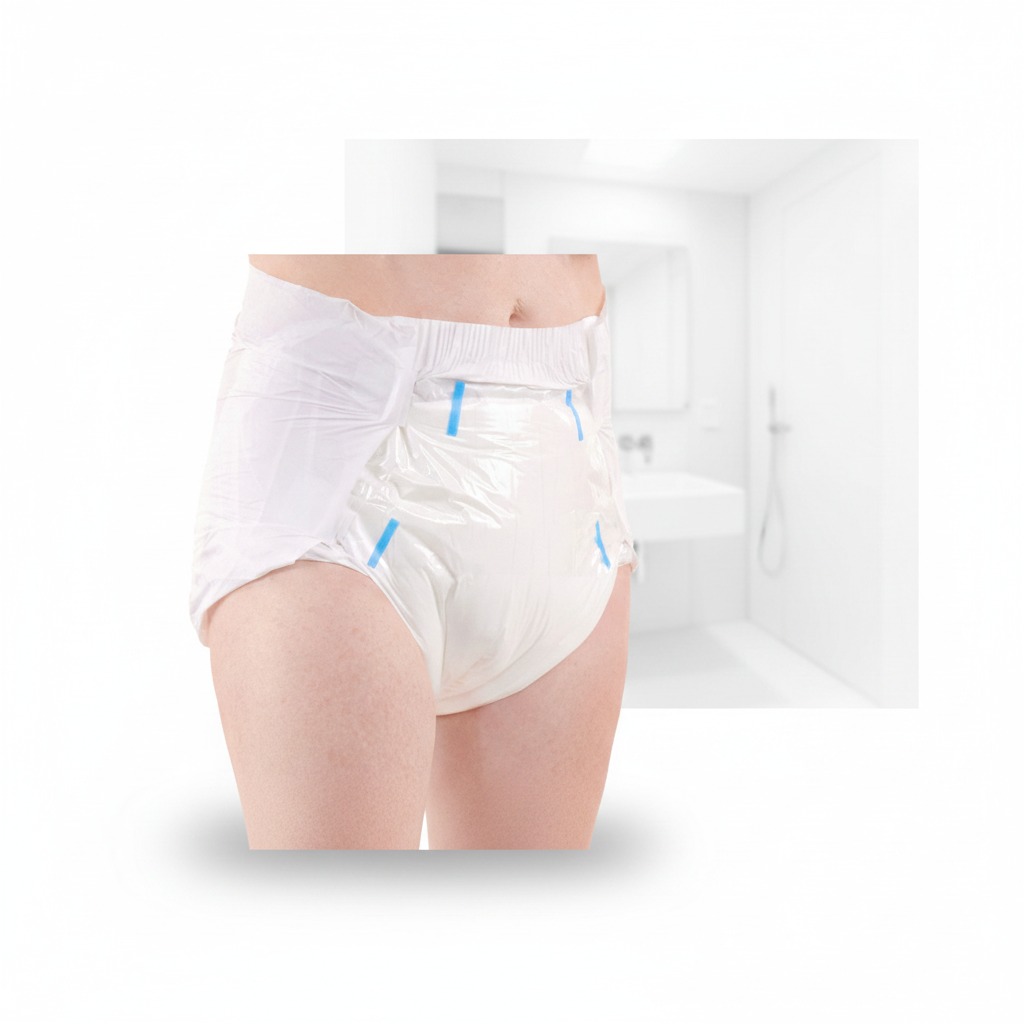
This disposable adult incontinence brief is worn around the lower torso and hips and is intended to absorb urine and contain leakage. Based on the visible structure, it includes a white elasticized waistband, elastic leg openings, gathered side panels, and a contoured absorbent core. A clear or translucent outer cover area is also visible, along with blue printed indicator marks on the front panel.
For procurement teams, this type of adult diaper is typically positioned as a disposable hygiene item for incontinence care, post-operative support, mobility-related hygiene needs, and caregiver-assisted use. Because the product is disposable, the buyer should evaluate it not only by absorbency expectations, but also by ease of application, fit stability, and storage logistics.
How to evaluate the product before buying
Step 1: Confirm the intended care setting
Start by defining where the product will be used. A hospital ward may prioritize fast changes and straightforward caregiver handling. A long-term care facility may need consistent fit across repeated daily use. Home users often need a product that is simple to put on, remove, and discard without complicated handling.
Step 2: Match the fit features to the user’s movement level
The visible elastic waist and leg openings suggest the product is designed to stay close to the body and reduce gaps around the thighs and waist. That matters when the wearer is seated, turning in bed, standing with assistance, or moving short distances. If fit is too loose, leakage risk increases. If fit is too tight, comfort and skin tolerance can suffer.
Step 3: Check the absorbent structure for the use case
The core appears contoured and padded, which is a common design approach in disposable adult diapers. Buyers should still confirm the expected absorbency level through product specifications from the supplier, because absorbency capacity is not visible from the image alone. For procurement, the right question is not simply “How much does it absorb?” but “Does it meet the likely fluid volume and change frequency of the target user group?”
Step 4: Review disposal workflow
Disposable incontinence products are often selected because they simplify cleaning and reduce laundry handling. In facilities, this can help streamline waste collection and replacement cycles. In home settings, it can reduce caregiver workload. Consider whether staff or family caregivers need easy opening, folding, and disposal steps after removal.
Key specifications and visible capabilities
Only the visible and provided facts should be used when assessing this product. From the image and description, the following features can be identified with reasonable confidence:
- Disposable adult incontinence brief/diaper format
- Full lower-torso and hip coverage
- Elasticized waistband
- Elastic leg openings for a closer seal around the thighs
- Gathered side panels for shaping and fit
- Contoured absorbent core
- Clear or translucent outer cover area
- Blue printed front-panel marks or attachment indicators
Some details remain unverified from the image and should not be assumed, including exact absorbency rating, size range, gender targeting, closure mechanism, odor-control features, breathability, and leak-barrier performance.
Materials and finish options
The likely structure includes a nonwoven outer cover, a plastic or polymer moisture barrier, elastic components at the waist and legs, and an internal absorbent pad or fluff/polymer core. That is a common construction for adult diaper products, but the exact composition is not confirmed here.
In buyer discussions, it helps to separate visible finish from hidden material performance. A soft outer hand feel may improve comfort. A smoother backsheet can influence handling. Elastic recovery around the leg and waist openings affects fit retention during movement. If a supplier offers multiple finish options, ask for a clear material breakdown and request samples for practical evaluation rather than relying on catalog language alone.
Manufacturing process: what this product likely involves
As a converted disposable hygiene product, this adult diaper is likely produced through a sequence of web handling, component assembly, elastic application, absorbent core placement, sealing, trimming, and packaging. In general terms, the process may include:
- Forming the nonwoven and barrier layers
- Placing the absorbent core into the body area
- Applying elastic to waist and leg zones
- Joining layers by heat sealing or similar converted-product methods
- Cutting the final shape and adding printed marks
- Inspecting appearance, alignment, and assembly consistency
- Packing for shipment and storage
The exact process is not confirmed, so it is best to treat this as a practical manufacturing framework rather than a guaranteed production route. If you are sourcing at scale, ask the supplier how the product is assembled and what inspection points are used during the line.
Application scenarios
This adult diaper is suitable for a range of practical care scenarios where urinary leakage management is needed. Common uses include:
- Adult incontinence care at home
- Caregiver-managed hygiene support
- Hospital or clinic recovery use
- Long-term care and nursing facility routines
- Temporary post-surgery support
- Mobility-limited users who need disposable protection
In each case, the buying decision depends on how often the product will be changed, how much movement the wearer has, and whether the user needs self-care or assisted care. A product that works well in bed may not be the best choice for daytime mobility, and vice versa.
Quality control points buyers should request
When purchasing adult diapers for professional use, quality control matters as much as the product design. Even without exact test data, buyers can still request evidence of routine inspection practices. Useful questions include:
- How is dimensional consistency checked?
- Are waistband and leg elastic placements inspected?
- Is the absorbent core centered and correctly laminated?
- Are printed indicators aligned on the front panel?
- What packaging checks reduce damage during transit?
For facilities that consume high volumes of incontinence products, consistency across batches is often more important than a single sample’s appearance. A product that fits well one month but changes noticeably the next can disrupt care routines.
Customization guidance for OEM and private-label buyers
If you are sourcing adult diaper products for distribution or institutional supply, customization can be an important part of the specification process. Although the provided data does not confirm available custom options, buyers commonly ask suppliers about the following areas:
- Size range and fit profile
- Packaging format and carton configuration
- Front-panel printing or indicator placement
- Outer-cover appearance and surface finish
- Elastic design around waist and legs
Before requesting custom changes, clarify the user profile. For example, caregiver-heavy environments may prefer clearer positioning cues. A home-care line may emphasize straightforward donning and removal. A distributor may want packaging designed for shelf efficiency and shipping protection. The more clearly the use case is defined, the easier it is to avoid unnecessary specification changes.
Buyer decision factors that matter in real use
When comparing incontinence products, buyers should use a simple decision framework:
- Fit: Does the waistband and leg opening structure appear likely to stay secure?
- Coverage: Does the lower-torso design provide enough protection for the intended use?
- Handling: Is the product easy for caregivers to apply and remove?
- Disposal: Does the disposable format fit the care workflow?
- Consistency: Can the supplier support repeatable production?
For many buyers, the best product is not the one with the longest feature list. It is the one that fits the user reliably, simplifies the care process, and behaves consistently in daily conditions.
How to use and evaluate a sample
If you receive samples, test them in a controlled way. First, check the visual assembly: waistband symmetry, leg opening shape, core alignment, and front-panel markings. Next, assess the tactile feel of the cover and elastic zones. Then simulate the intended use posture, such as sitting, lying down, or assisted movement. Finally, compare fit and comfort across the user group or caregiver team that will handle the product.
Keep the evaluation practical. A sample should answer whether the adult diaper can be integrated into everyday care without friction. If it is difficult to position, too stiff at the edges, or awkward to dispose of, those operational problems will matter more than brochure claims.
Requesting a quotation or product review
When you contact a supplier, include the intended care environment, target user profile, expected change frequency, and packaging preferences. If you are comparing adult diaper options, ask for sample packs, product dimensions, construction details, and available customization guidance. That information will help you choose a product that fits the care routine rather than forcing the routine to adapt around the product.
If you need help specifying this type of adult diaper for private label, facility supply, or distribution, send your application requirements and request a sample review before placing a bulk order.






评价
Clear filters目前还没有评价