
Why WPC decking keeps showing up on buyer shortlists
For outdoor projects, WPC decking sits in a useful middle ground: it aims to look like timber, handle moisture better than conventional wood, and install with less fuss than many buyers expect from a natural material. That is exactly why sourcing teams keep coming back to it for decks, patios, balconies, terraces, and landscape platforms. The appeal is not just appearance. It is the combination of a wood-look surface, a practical profile, and a material choice that is easier to justify when the customer wants something durable without the maintenance burden of painted or stained boards.
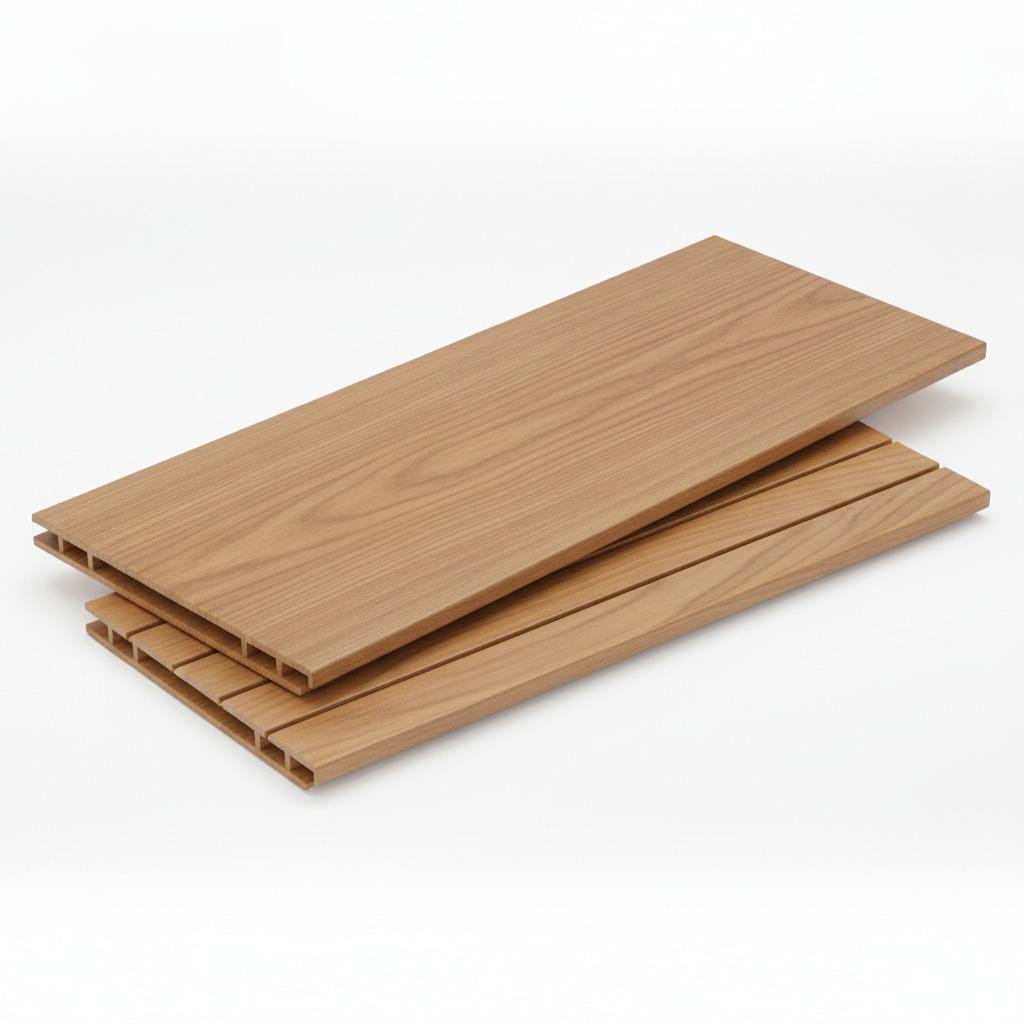
The board type in front of you here is a hollow-core decking plank with a wood-grain face and a grooved reverse side. That profile matters. Hollow chambers reduce weight and material use, which can make handling and installation easier on site. It also signals that this is a product designed for outdoor surface applications rather than structural framing. In other words, the buying decision is not just about color or texture; it is about whether the board’s construction fits the job.
What this product form tells a buyer
A hollow-core composite decking board gives a few immediate clues. First, it is built for surface coverage, not heavy structural duty. Second, the dual-textured finish suggests the manufacturer is trying to give installers and specifiers options: a wood-grain face for a more natural look, or a grooved side that can improve traction and create a more understated finish. Third, the multi-chamber hollow section points to a lighter profile, which is often appreciated when crews are carrying bundles across a site or working on balconies and elevated decks where dead load matters.
This is where wood plastic composite decking has become attractive to buyers who need predictable outdoor performance. The category is usually chosen for one reason and then kept for several more: moisture resistance, dimensional stability relative to untreated timber, and lower day-to-day maintenance. That said, “lower maintenance” does not mean “no maintenance,” and the better procurement decisions are made by people who understand that difference before the purchase order is cut.
Solid board or hollow board: the practical trade-off
When comparing composite decking options, the hollow versus solid discussion is more useful than many glossy brochures admit. Solid boards are often chosen when the project calls for a more substantial feel, potentially better screw-holding behavior in certain systems, or added confidence in demanding locations. Hollow boards, by contrast, are attractive when reduced weight, easier handling, and more efficient material usage matter more than brute mass.
For many outdoor walkway and residential terrace projects, a hollow profile is perfectly reasonable. But buyers should not treat it as a universal substitute for every site condition. The right call depends on span design, support spacing, intended foot traffic, and the fastening system. A lighter board can be a good choice until the substructure is poorly planned. Then the board gets blamed for problems that started underneath it.
What engineers and sourcing managers should verify
The visible board features are useful, but they are not the whole story. Before approving any wpc decking product, ask for the basic technical data that governs the application: exact dimensions, wall thickness, recommended support spacing, fastener compatibility, and the intended installation method. Those details control whether the product will perform in service. A decorative plank and a dependable outdoor flooring system are not the same thing.
Material composition is another point worth pinning down. Buyers sometimes use “composite decking” as a catch-all phrase, but not every composite board is built the same way. The formulation, polymer type, filler content, surface treatment, and color stability approach can vary widely. If a supplier cannot explain the board structure in plain terms, that is usually a signal to slow down, not push faster.
It is also sensible to ask about surface behavior in real conditions. Outdoor planks face foot traffic, rain, grime, and cleaning chemicals. A decorative embossing may look convincing in a sample photo, but the project still needs a surface that can be cleaned without becoming patchy or slippery over time. I would be cautious about any claim that sounds too absolute. Outdoor performance is a system result, not a single-feature result.
Where this board style works best
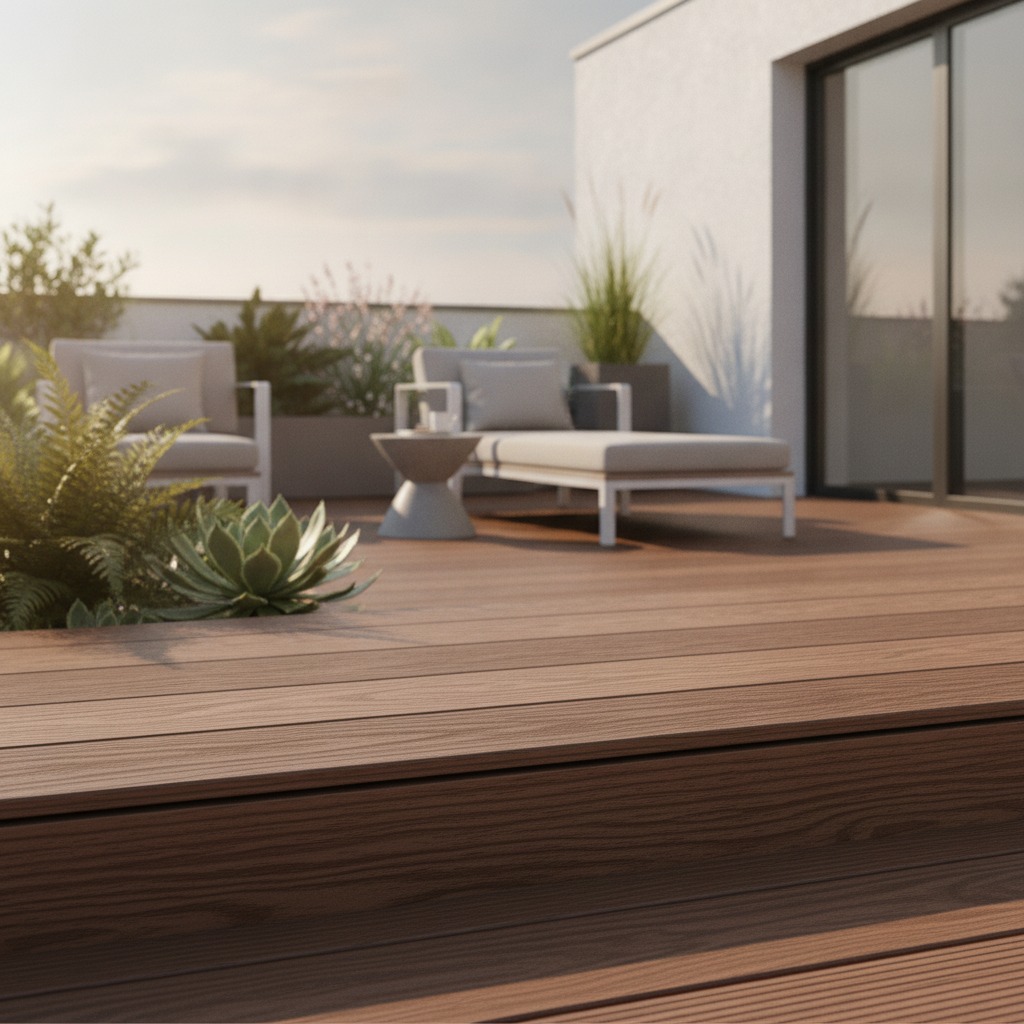
The product form described here fits a range of exterior uses: backyard decks, pool-adjacent walk zones, balcony flooring, cafe terraces, garden platforms, and boardwalk-style installations with moderate traffic. The brown wood-look finish gives it broad visual compatibility, especially where designers want warmth without the variability of real timber grain.
In landscape projects, this kind of board can be useful when a project needs repetition and visual order. Standardized planks simplify layout, and a clip-based decking installation can make for cleaner faces and fewer visible fixings. That does not automatically make installation easy, though. Decking systems still depend on accurate framing, flat substructure work, and proper movement allowance. Neglect those basics and even a good-looking board will telegraph the mistake.
A note on appearance versus durability
Do not let the finish dominate the decision. Wood grain embossing improves the look, and grooved surfaces can add a practical touch, but buyers should still ask whether the texture is mainly decorative or genuinely useful for the site. A deck beside a pool has different expectations than a private garden terrace. The same plank can be acceptable in one and disappointing in the other.
Selection criteria that matter more than brochure language
If you are comparing suppliers, start with the profile itself. Hollow-core construction should be consistent, with chambers that are neatly formed and free of obvious defects. Edges should be straight. Cut ends should look uniform. Surface texture should be repeatable across the batch. Those are basic checks, but they catch a surprising number of quality problems before they become site issues.
Next, look at the fastening and edge details. A lot of composite decking projects fail in the details: clips that do not match the board geometry, poor allowance for thermal movement, or substructure spacing that is copied from another product without checking the current one. A board that looks similar is not necessarily interchangeable.
Finally, think like the person who will maintain the deck. Will it be cleaned often? Will leaves and debris collect between grooves? Will furniture legs leave marks? Will the board face be in sun most of the day? These questions sound mundane, but they often decide whether a product feels premium after six months or merely looks premium in a catalog.
Common mistakes buyers still make
The first mistake is assuming all wood plastic composite decking behaves the same way. It does not. Another common error is overemphasizing color at the expense of structure. A brown finish may suit the design brief, but a poor internal profile is still a poor internal profile.
A third mistake is underestimating installation discipline. Hollow boards are not a shortcut around good deck building. They still need correct framing, suitable fasteners, and careful end treatment. If the board ends are left exposed where the application demands sealing or capping, the project may run into preventable issues later. That kind of oversight is expensive because it is visible.
There is also a buyer habit that deserves a warning: accepting vague performance language without documentation. Phrases such as “high quality,” “weather resistant,” and “long-lasting” are not enough on their own. Ask for the actual product data and confirm that it matches the site requirement. It is a basic procurement discipline, but it saves a lot of argument after delivery.
Why the hollow profile can be the smarter commercial choice
From a commercial standpoint, the hollow profile often makes sense because it balances material efficiency with market expectations for outdoor surface boards. It can reduce shipping weight and simplify handling, which may lower the labor friction on site. For large orders, those practical advantages matter as much as the headline material category. Buyers who only look at the raw board price sometimes miss the installed cost picture.
That is especially true in projects where the decking is part of a broader exterior package. When the product is standardized, visually consistent, and easy to integrate with a clip system, the installer spends less time fighting the material. That is where a good product quietly earns its place. The deck does not need to be heroic; it just needs to be dependable, repeatable, and honest about what it is.
FAQ: quick answers before you request samples
Is WPC decking suitable for all outdoor areas?
It is suitable for many outdoor walking and lounging areas, but it still needs the right substructure and installation method. It is not a universal answer for every load or exposure condition.
Does a hollow-core board mean lower quality?
Not automatically. A hollow profile can be a smart design choice when weight and material efficiency matter. The real question is whether the construction matches the intended use.
Why choose composite decking over timber?
Many buyers choose it for a more consistent appearance, reduced routine maintenance, and better moisture tolerance than untreated wood. The trade-off is that the product needs proper specification and a clear understanding of its limits.
A better next step for buyers
If you are sourcing a deck board for an outdoor project, start with the structure, not the color sample. Ask for the profile drawing, the installation guidance, and the exact material description. Then compare that against the site conditions, support layout, and expected traffic. A good-looking plank is only useful if it is the right plank for the job.
For teams evaluating WPC decking, the smartest move is usually to request samples, check the hollow-core construction in person, and confirm how the board is meant to be fixed. That small amount of due diligence can prevent a great deal of rework later. In outdoor flooring, the cheapest mistake is the one you catch before the boards go down.