
Why WPC decking keeps taking share from timber
If you are comparing outdoor flooring options for a project, WPC decking is usually part of the conversation for one reason: it tries to solve the two jobs wood has always struggled with at the same time, appearance and maintenance. Buyers want a deck surface that looks warm rather than industrial, but they also want less swelling, fewer surface repairs, and a cleaner upkeep routine than natural timber typically demands.
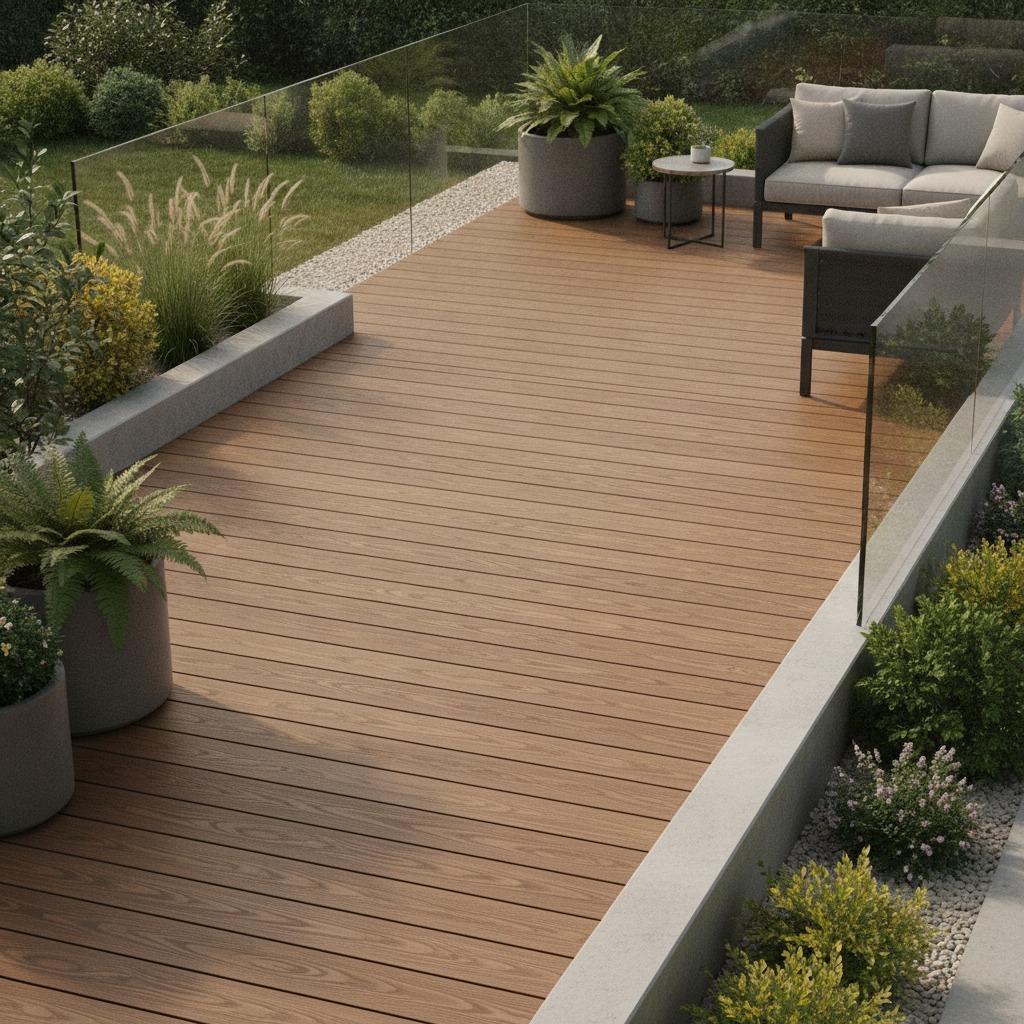
That is why this category keeps showing up in residential terraces, commercial walkways, pool surrounds, balconies, and landscape platforms. The best version is not about selling a fantasy material. It is about choosing a practical exterior board that can live outdoors with less fuss, while still giving an architect or sourcing manager a convincing wood look.
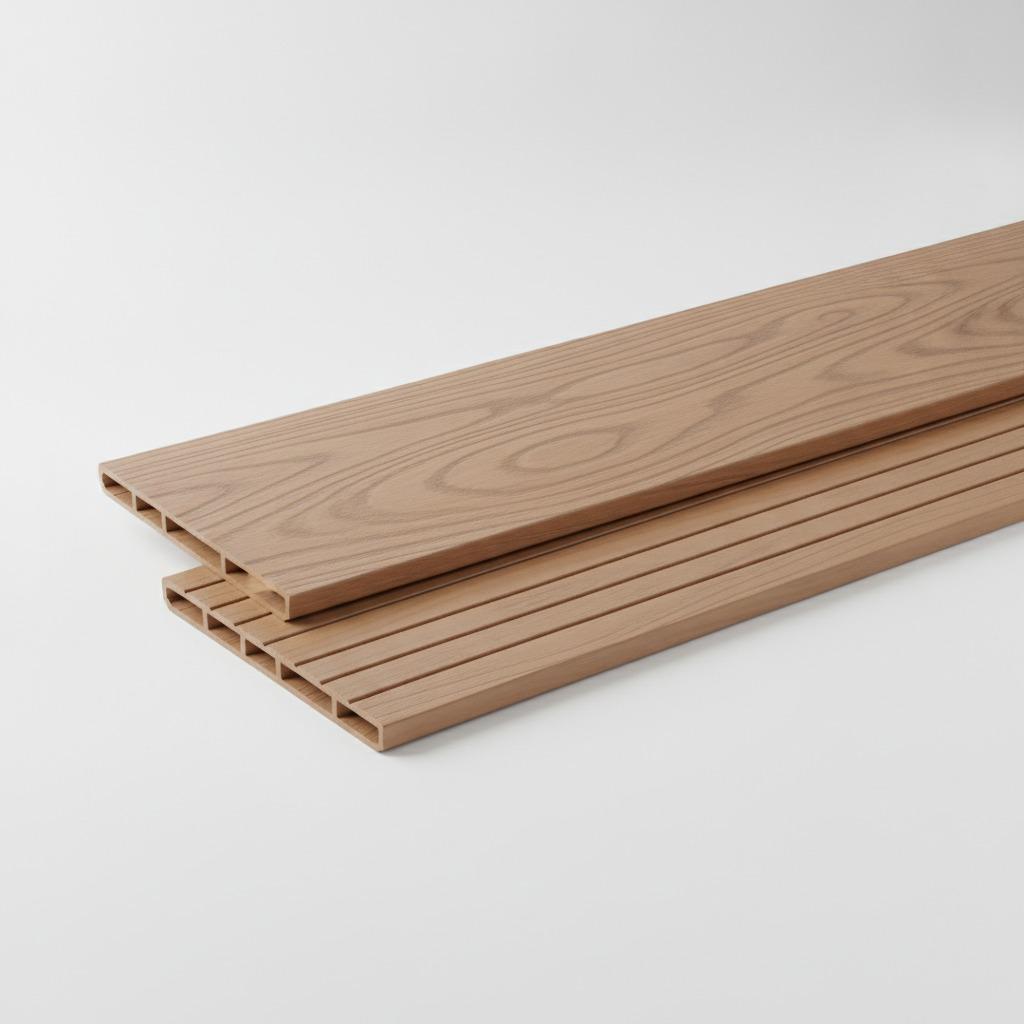
The product type described here is a wood-look composite decking board with a brown grain finish, a grooved face on one side, a more pronounced wood-grain face on the other, and a hollow-core extruded profile. Those details matter. They tell you something useful about weight, appearance, installation behavior, and where the board is likely to fit best.
What the board construction suggests
The hollow-core structure is one of the first things a buyer should notice. Instead of being a fully solid plank, the board has multiple rectangular internal cavities. In practical terms, that usually means lower weight than a solid profile, which can help handling on site and may reduce some shipping burden. It does not automatically make the board better or worse; it simply changes the use case.
Hollow boards often make sense when the application is a standard pedestrian deck, patio, balcony, or garden path where the priority is controlled installation and a finished appearance. They can be a sensible choice when a project needs a reasonable balance of material use, cost discipline, and visual quality. The caveat, and it is an important one, is that hollow profiles are not the same as solid boards in how they should be supported or detailed. Buyers should confirm the recommended substructure spacing and edge treatment before committing, because this is where some projects go wrong.
The two visible surface styles are also worth paying attention to. One face has a wood-grain texture; the other uses linear grooves. That gives installers and designers a degree of flexibility. A grooved surface is often chosen when slip-conscious walking comfort is part of the brief, while a wood-grain face tends to read more like timber in a hospitality or residential setting. The point is not that one is universally superior. It is that the board offers two visual and functional cues in one profile.
Where wood plastic composite decking makes sense
Wood plastic composite decking is most convincing when the buyer wants the look of timber but does not want timber’s full maintenance burden. That sounds simple, but it is the real market driver. Outdoor surfaces are exposed to water, sun, foot traffic, dirt, and seasonal movement. Natural wood can perform well, but it asks for more frequent attention and will not stay visually stable without care.
By comparison, composite decking is often selected for projects where the owner wants a cleaner maintenance routine and a more uniform appearance over time. That can matter in commercial settings where public-facing surfaces need to look tidy without constant refinishing. It also matters in residential work when the end user is unlikely to sand, seal, or stain every season.
For sourcing teams, the key is to match the board type to the environment. A pool deck, for example, puts a different demand on surface texture and drainage than a sheltered terrace. A balcony may care more about weight and profile consistency. A garden platform may care more about appearance and weather exposure. The board in this category, with its square edges and long rectangular geometry, looks suited to conventional linear installation rather than decorative tile-style layouts.
What to ask before you buy
This is where many purchasing decisions get rushed. The board may look good in a sample bundle, but the project still depends on the details you do not see in the photo.
Start with the composition. Ask what polymer and wood-fiber blend is used, if that information is available, and whether the board is capped or uncapped. Do not assume the answer from appearance alone. The surface texture may be molded during extrusion, but that tells you nothing by itself about long-term weathering behavior.
Next, ask how the hollow-core profile should be installed. The number of cavities is visible, but the structural implications are not. You need the recommended joist spacing, fastening method, edge finishing approach, and whether the board is intended for light pedestrian use only. Those are the questions that determine whether the deck will still look tight after a season of heat, rain, and use.
Also ask about the finish. The brown wood-tone color is attractive because it reads warm and familiar, but color stability matters just as much as initial appearance. If a supplier cannot give clear, non-exaggerated guidance on outdoor performance, that is a warning sign. Good suppliers are usually careful with their claims, because they know exterior performance depends on the exact formulation and site conditions.
Common mistakes buyers make with composite decking
The first mistake is treating all composite decking as if it performs the same. It does not. A hollow extrusion, a solid board, and a capped board can look similar in a catalog and still behave differently in service.
The second mistake is overvaluing surface beauty at the sample stage. A board that looks rich and detailed in a showroom may still be a poor fit if the underside, fastening system, or support requirements do not match the job. In exterior materials, the hidden details usually decide the long-term outcome.
The third mistake is ignoring site conditions. Around pools, for example, texture and drainage matter. In rooftop or balcony projects, weight and fixing details matter more than buyers sometimes admit. In shaded areas, dirt retention and cleaning access may become the practical issue. Good purchasing decisions are rarely about a single finish color.
The fourth mistake is assuming a low-maintenance product means no maintenance. Even the best wood plastic composite decking benefits from sensible cleaning and inspection. Leaves, grit, standing water, and poor drainage can still create problems. A buyer who sets realistic expectations will usually have a better project outcome than one who sells the material as maintenance-free miracle decking.
How to judge whether this profile is the right fit
A sensible way to evaluate this type of board is to ask three questions.
First, does the appearance suit the project? The wood-grain face and brown tone are a strong fit for spaces that want warmth rather than a highly technical look. That makes the board useful for residential settings and many public-facing outdoor areas.
Second, does the profile suit the structure? Hollow-core boards are often a smart choice when a project needs manageable weight and a clean extruded section, but they should be paired with the right substructure. If the underlying frame is poorly spaced or badly fixed, the deck surface will not perform well no matter how attractive it looks.
Third, does the supply chain offer enough clarity? If a supplier can describe the board’s visible construction, recommended use, and installation approach in plain language, that is a positive sign. If every answer turns vague the moment you ask about support, edge treatment, or environment limits, proceed carefully.
Buyer advice for sourcing teams and project specifiers
For sourcing managers, the safest route is to request samples, installation guidance, and product data before locking the specification. The visible profile shown here already gives you useful information: dual-face design, hollow cavities, consistent dimensions, and a wood-like exterior. That is enough to begin a serious evaluation, but not enough to close the file.
For engineers and project teams, think in terms of system performance rather than board appearance alone. A deck is a system of board, joist, fixings, edge trim, and drainage decisions. The board may be the most visible part, but the failure often starts somewhere else.
If the project is a deck replacement where the main pain point is moisture-prone timber and recurring upkeep, this type of exterior board is worth serious attention. If the project is highly structural, heavily loaded, or subject to specialized fire or slip requirements, the buyer should insist on confirming suitability rather than relying on assumption. That is a modest caution, but a necessary one.
FAQ: quick answers buyers usually ask
Is WPC decking always better than wood?
Not always. It is often better when the goal is lower maintenance and a stable wood-like appearance. Timber still has its place, especially where a natural material is preferred or where a project accepts more upkeep.
Is hollow-core composite decking a problem?
Not by itself. Hollow-core boards can work very well in the right application. The important part is matching the profile to the support structure and the intended use.
Can the same board be used for several outdoor applications?
Sometimes, but not automatically. A board that works well on a residential deck may need different handling on a balcony, pool surround, or commercial walkway. Always check the installation guidance and intended use.
What should a buyer request from the supplier?
At minimum: material description, profile drawing, installation guidance, maintenance advice, and clarification on whether the board is intended for light pedestrian use or something broader. Clear documentation matters more than a glossy sample sheet.
The practical takeaway
The real argument for WPC decking is not that it replaces every timber product. It is that it gives buyers a more controlled, lower-drama exterior surface for the kinds of projects where appearance matters but constant upkeep is a deal breaker. The hollow-core, dual-face board described here looks like a sensible example of that idea: wood-toned, consistent, and designed for outdoor walking surfaces without the visual heaviness of a solid plank.
If you are specifying materials for a terrace, patio, walkway, or similar project, the next step is straightforward. Review the board structure, confirm the installation requirements, and compare it against the site conditions rather than the sample alone. That is usually where the best decision is made.