
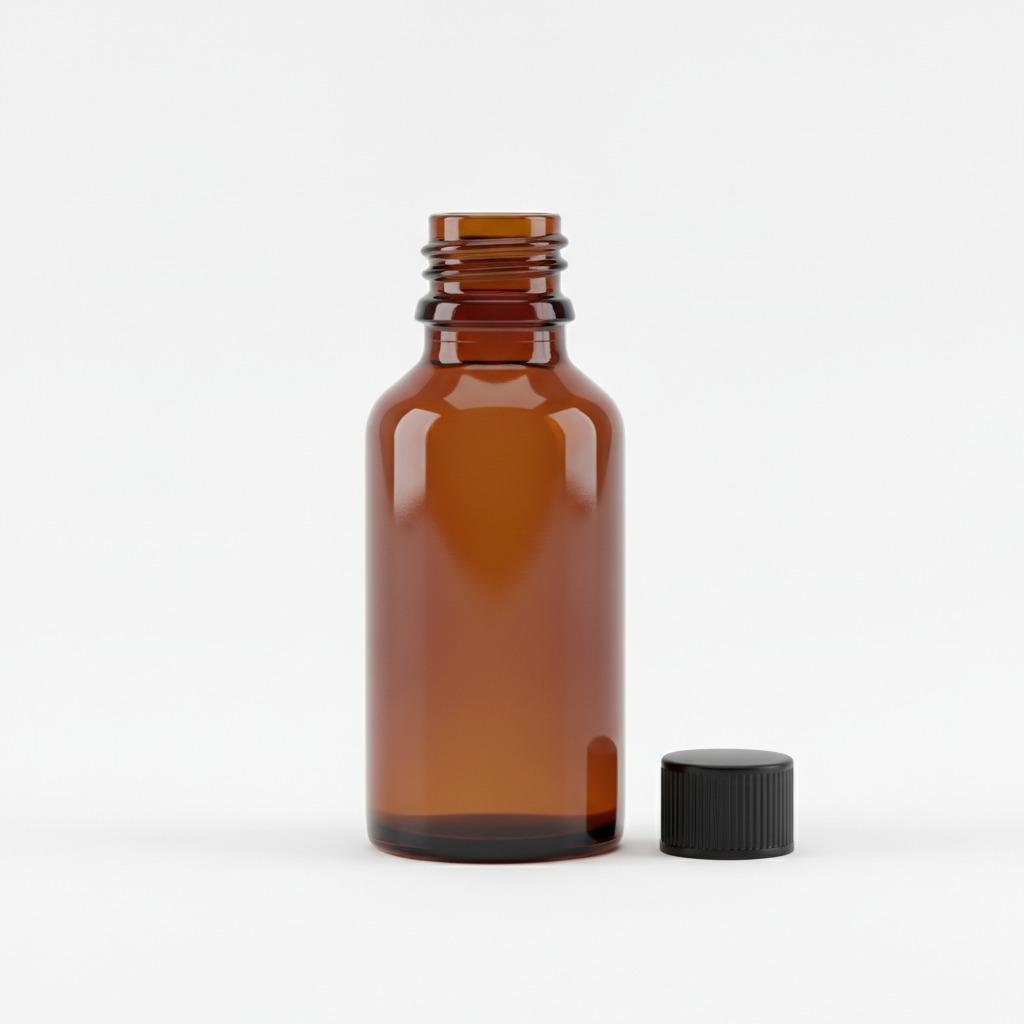
Amber Glass Bottles: A Practical Packaging Choice for Light-Sensitive Products
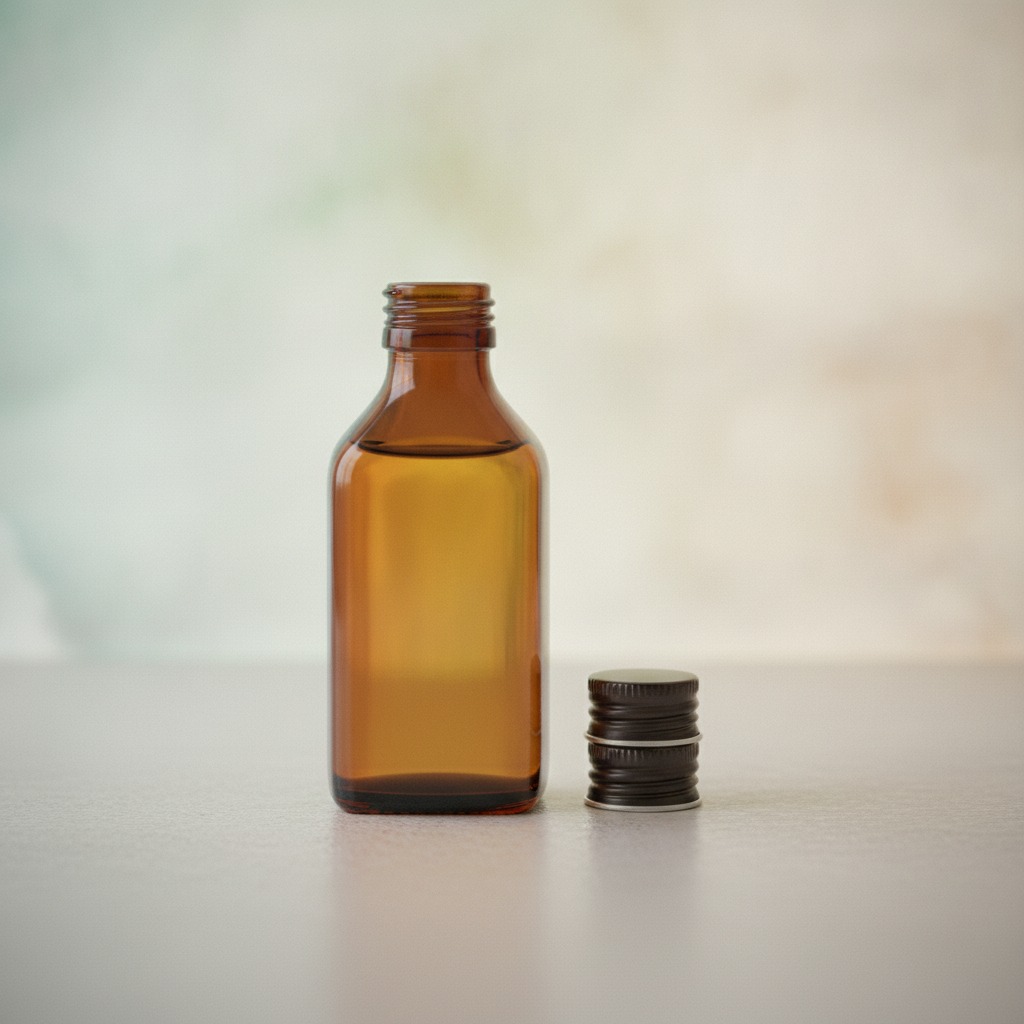
When buyers compare primary packaging for oils, extracts, cosmetics, and lab liquids, amber glass bottles usually enter the discussion for one simple reason: they help keep light off the contents. That matters more than many first-time sourcing teams expect. A clear bottle may look clean on a shelf, but it can also invite premature degradation in products that are sensitive to sunlight or bright retail lighting. For formulations that need a little more protection, amber glass gives you a sensible middle ground between visibility, storage stability, and presentation.
The rectangular amber bottle shown here reflects that logic well. It has a compact footprint, rounded shoulders, a narrow threaded neck, and a separate black screw cap. In practical terms, that means it can be handled like a standard molded glass container while still giving the product a more controlled, premium appearance. It is the kind of container that feels equally at home in a cosmetics line, a sample kit, a small-batch chemical package, or a pharmacy-adjacent product range.
Why buyers keep coming back to amber glass
Packaging decisions rarely come down to looks alone, although looks matter more than some technical teams like to admit. The amber tint is the real draw. By reducing light transmission, the bottle can help limit exposure for contents that are vulnerable to photochemical change. Essential oils, tinctures, serums, and certain liquids used in labs or specialty manufacturing often need that extra layer of defense.
There is also a handling benefit. Glass feels rigid and stable in the hand. It does not pick up odors the way some plastics do, and it tends to suit products where the brand wants to signal cleanliness, seriousness, or controlled formulation. A brown or amber bottle is not a cure-all, of course. If a product is highly light-sensitive, packaging selection still has to be tied to formulation data and storage conditions. But as a general-purpose option, amber glass is hard to ignore.
Quick reference: what this bottle style does well
For sourcing teams sorting through options, this style of container offers a few immediate advantages:
The amber coloration helps reduce light exposure.
The rectangular body packs efficiently on shelves and in cartons.
The threaded neck supports a reusable screw closure.
The compact form suits samples, small batches, and retail trial sizes.
The glass construction gives a more premium look than many plastic alternatives.
That short list is useful because it frames the real decision. You are not just choosing a color. You are choosing a bottle geometry, a closure format, and a packaging message that will follow the product from filling line to end user.
Reading the bottle as a component, not just a container
Body shape and shelf efficiency
The rectangular profile is worth noting. Rounded bottles are common, but rectangular bodies can make better use of shelf space and carton layout. For warehousing, that can translate into cleaner stacking behavior and less wasted air between packed units. For retail, it often gives the product a more orderly visual line. That may sound minor, yet in crowded categories a few millimeters of footprint can matter.
The flat front and back faces also make labeling easier. Labels tend to sit more evenly on a flat panel than on a fully curved bottle. If your design depends on legible typography, small ingredient statements, or batch coding, a flat face is a welcome detail.
Neck finish and closure choice
The narrow threaded neck tells you this is built for a screw cap rather than a stopper or crimp closure. In everyday packaging terms, that makes the bottle straightforward to fill, seal, open, and reseal. The black cap shown separately looks ribbed, which usually improves grip during manual handling. The exact cap material is not visible, so it should be verified during sourcing, especially if liner compatibility or chemical resistance is a concern.
That point is easy to overlook. Many packaging issues are not about the bottle at all, but about the interface between bottle and closure. A neat-looking container can still underperform if the cap, liner, and fill material are mismatched.
Where amber glass bottles fit best
This bottle type is commonly considered for essential oils, herbal extracts, tinctures, serums, fragrances, lab samples, and some specialty chemicals. It also works well for product lines that need small-format packaging for distribution or trial use. The size appears compact, though exact capacity is not provided, so it should not be assumed to suit any particular fill volume without confirmation.
For brands selling through retail or e-commerce, amber glass can support a more professional presentation than a bare utility container. For technical buyers, it can be useful when the priority is a simple, standard-looking vessel with light-reduction benefits and a conventional threaded seal.
How amber glass compares with brown glass bottles and clear packaging
In many sourcing conversations, amber and brown glass bottles are discussed almost interchangeably. In practice, the exact tint can vary by manufacturer, but the buying logic is similar: darker glass is chosen to protect contents from light and to project a more controlled, often more pharmaceutical or apothecary-like appearance. If a supplier uses the term brown instead of amber, the practical question is usually not the name but the actual glass color, consistency, and fit with your product presentation.
Compared with clear glass, amber glass offers less product visibility but more light shielding. That trade-off is often worth it for functional formulations. Compared with opaque packaging, it gives you some product recognition while still avoiding full exposure. In other words, it sits in the middle of the packaging spectrum, and that is exactly why it is so widely used.
What sourcing teams should check before placing an order
With amber bottle suppliers, the first mistake is to approve samples based on appearance alone. A bottle may look right on a desk and still create problems on a filling line. Before moving ahead, buyers should confirm the actual neck finish, closure compatibility, bottle dimensions, and whether the cap includes the liner or seal type the application requires.
It is also worth checking color consistency across the order. Amber glass can vary from batch to batch, and that variation may be visible once bottles are lined up under warehouse or retail lighting. If your brand relies on visual uniformity, this is not a trivial detail.
For regulated or semi-regulated products, do not assume suitability just because the bottle is glass and dark-colored. The product formula, end-use setting, and any compliance requirements must still drive the final packaging decision. If the application is pharmaceutical, food-related, or chemical, the buyer should ask for the relevant documentation rather than filling in the blanks with assumptions.
Common buying mistakes
One frequent error is choosing a bottle that looks elegant but is awkward to fill. Narrow necks can be useful for dispensing and resealing, yet they may slow production if the filling equipment is not matched to the format. Another common issue is ignoring the closure. A screw cap seems simple, but the wrong liner or fit can turn into leakage, odor migration, or a poor user experience.
Another pitfall is ordering for product protection without thinking about secondary packaging. If the contents are highly sensitive, amber glass alone may not be enough. Cartons, sleeves, storage controls, and transport handling can all matter. The bottle is one layer in a broader packaging system.
Buyer advice for product teams and sourcing managers
If you are evaluating this style of bottle for an upcoming launch, start with the use case. Ask whether the contents need light reduction, whether the package needs to be reusable, and whether the shape should support premium branding or efficient warehousing. A small rectangular amber glass bottle is often chosen because it answers several of those questions at once, without becoming complicated.
Then look at the practical details: finish compatibility, cap fit, label space, carton loading, and how the container will behave during filling. The best packaging option is usually the one that causes the fewest surprises later. That sounds obvious, but in packaging projects the obvious details are exactly the ones people miss when deadlines are tight.
FAQ
Are amber glass bottles only for pharmaceuticals?
No. They are used across cosmetics, essential oils, tinctures, specialty chemicals, samples, and many other light-sensitive products.
Is amber glass better than clear glass?
For products affected by light, usually yes. Clear glass is better for visibility, but amber glass is generally the safer choice when light exposure is a concern.
Can these bottles be reused?
The threaded neck and screw cap format support resealing, but reuse depends on the product, cleaning method, and whether the application allows it.
Should buyers assume the cap is chemically compatible?
No. The cap material and liner type should be verified, especially for aggressive formulas or sensitive contents.
What to do next
If your product needs a compact, light-reducing container with a straightforward screw closure, amber glass bottles are worth serious consideration. Review the bottle dimensions, confirm the closure details, and request supplier documentation that matches your product’s actual requirements. A good bottle is not just a vessel; it is part of the product’s stability, handling, and shelf presence. Get those basics right, and the rest of the packaging line tends to behave much better.