
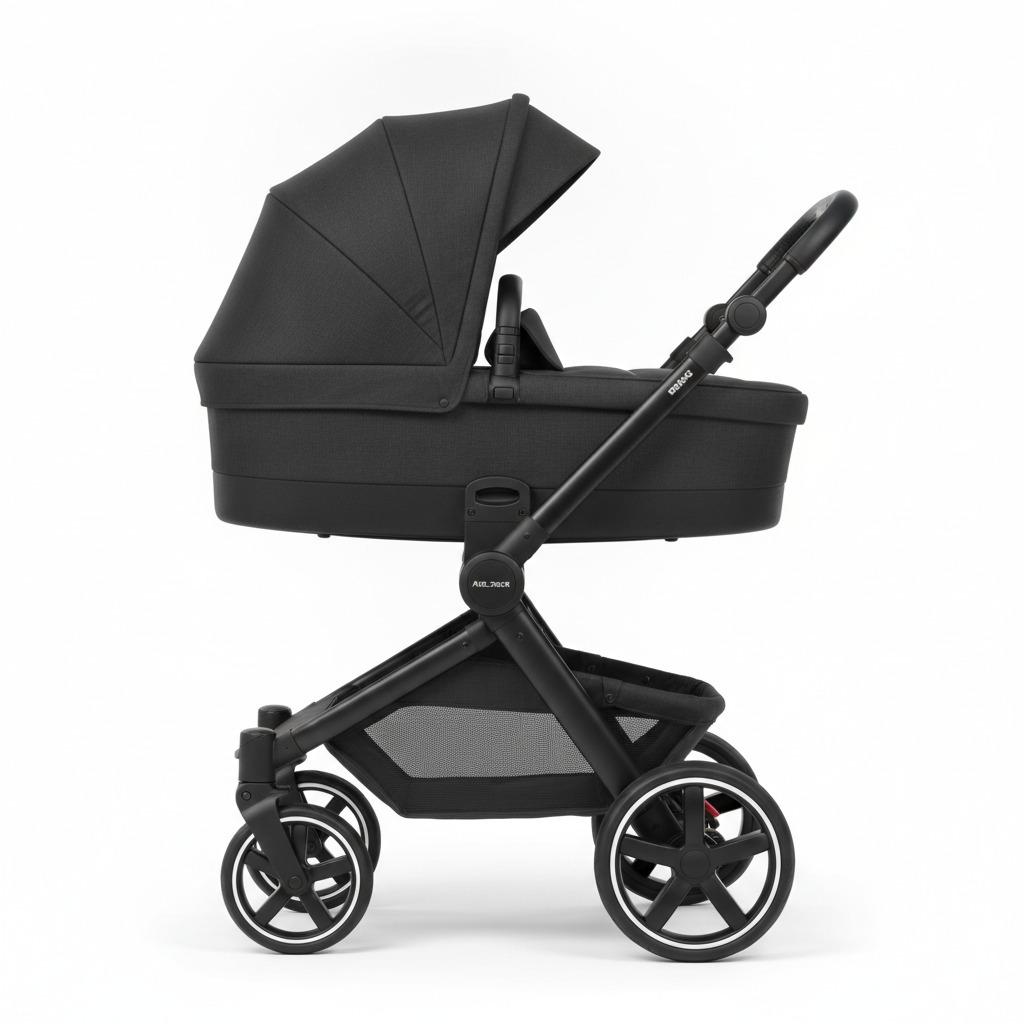
Why the right baby stroller matters more than it first looks
A baby stroller seems simple until you start using one every day. Then the small things become obvious: how steady it feels on a cracked sidewalk, whether the canopy actually blocks the sun, how much the basket swallows, and whether pushing it with one hand is a nuisance or a non-event. For anyone comparing an infant stroller, a newborn stroller, or a pram-style model, the choice is less about appearance and more about how the product behaves in ordinary life.
The stroller in question is a bassinet-style, four-wheel design with a black fabric canopy, an enclosed upper compartment, and a lower storage basket. That combination points toward practical, everyday use for infants or very young children. It is the kind of product that matters not only to parents, but also to sourcing teams and product planners who need to judge stability, usability, and build logic before they commit to a style or supplier.
In other words, this is not a decorative purchase. It is a mobility tool. And once a stroller becomes part of the daily routine, the details stop being minor.
What this stroller style is trying to solve
The basic job is straightforward: move a small child safely and comfortably while leaving room for the caregiver’s hands, bag, and patience. A bassinet-style upper module tends to suit early infancy better than a simple upright seat because it gives a more enclosed, protected lying space. The extended canopy adds shade and visual shelter, which is useful outdoors and in busy public areas. The lower basket adds the sort of practical volume that sounds trivial on a spec sheet and feels indispensable in a parking lot or grocery aisle.
The four-wheel layout also signals a certain design intent. It usually suggests stability and predictable tracking rather than a sporty, three-wheel feel. Large rear wheels and smaller front wheels are common in this category because the geometry helps the stroller roll more calmly over ordinary pavement, storefront thresholds, and uneven paths. I would still be cautious here: wheel size alone does not tell the whole story, and without confirmed suspension or brake details, no one should assume off-road performance.
Quick takeaways for buyers and sourcing teams
If you need the short version, this stroller type is most attractive when the purchase priority is everyday infant transport with a practical undercarriage basket and a protective canopy. It is less about compact athletic handling and more about steady, family-use convenience.
From a sourcing perspective, the visible construction hints at a mixed-material assembly: tubular frame fabrication, sewn textile components, molded wheel parts, and hinge or locking joints. That is a normal product architecture for this category, but the quality differences between suppliers can be significant. A stroller may look similar across listings while performing very differently under load, after folding, or after a few months of curb strikes and repeated opening cycles.
Reading the design: frame, textile, wheels, and storage
Frame and structure
The black tubular frame gives the stroller its skeleton. In products like this, the frame is usually where durability, push feel, and folding behavior begin. Even when exact materials are not disclosed, buyers should pay attention to tube finish, joint alignment, and the consistency of the welds or fastening points. A stroller can appear polished from the side and still feel loose at the hinge or handle junction.
Because the upper module appears bassinet-like, the structural support under the child area matters as much as the visible fabric. A sagging base or poorly supported shell can undermine comfort quickly. For sourcing teams, that means asking for section views, assembly drawings, and load-related documentation rather than relying on a front-facing product photo.
Textile canopy and enclosure
The black fabric canopy and bassinet body are not just aesthetic choices. They affect shade, privacy, and the overall sense of enclosure. On a warm day, a deeper canopy can make a real difference for a small child. It also makes the stroller more visually substantial, which some buyers prefer because it reads as protective and well-built.
That said, dark fabric can absorb heat more readily than lighter tones. This is one of those small practical cautions that is easy to ignore during selection and harder to ignore when the stroller is sitting in the sun outside a clinic or café. If the product is meant for heavy outdoor use, ventilation and breathability should be confirmed rather than guessed at from appearance.
Wheels and ground contact
The stroller appears to use a four-wheel arrangement with larger rear wheels and smaller front wheels. That is a familiar pattern in many infant stroller designs because it balances maneuverability with a sense of planted stability. The wheel bodies look molded, with a multi-spoke form that suggests lightweight consumer-product construction.
For practical use, wheels are where customer satisfaction is won or lost. A stroller that rolls cleanly at home can become frustrating at curbs, tile joints, or crowded retail floors if the caster behavior is poor. Because the exact wheel material and brake system are not confirmed here, it would be unwise to claim more than the visible basics. Still, any buyer reviewing this type should ask for road-test feedback, wheel wear expectations, and service replacement options if the stroller is intended for volume distribution.
Lower basket
The mesh-sided lower storage basket is one of the most obviously useful features. It gives parents or caregivers a place for diapers, wipes, bottles, a light shopping load, or a blanket. In real use, that basket often determines whether a stroller feels like a daily helper or a bulky extra object to manage.
Mesh baskets are practical because they reduce weight and let users see what is inside. The tradeoff is that they may snag or deform if overloaded. Buyers should consider how the basket is attached, whether it sags near the rear wheels, and how easy it is to access without bending awkwardly.
How to judge whether this stroller suits your market
The right choice depends on the use case, not just the silhouette. For daily infant transport, the enclosed upper module and canopy are attractive. For shopping trips, the basket matters. For urban neighborhoods, the large rear wheels may help with curb transitions and rough patches. For compact storage in small apartments, however, a full pram-style stroller can be harder to live with if the fold is bulky. We do not know the folding mechanism details here, so that is a key question rather than a selling point.
If you are a sourcing manager, a good internal checklist would include frame rigidity, textile finish, stitching consistency, hinge smoothness, wheel play, and the feel of the handle under normal pushing force. If you are a product team member evaluating a similar model, think beyond first impression. Ask how the stroller behaves after repeated folding, whether the canopy stays where it should, and whether the storage basket remains usable once loaded.
Common mistakes buyers make with this category
One common mistake is treating all infant stroller designs as interchangeable. They are not. A bassinet-style stroller and a more upright baby stroller may serve different age stages and different customer expectations. The wrong choice can generate returns even when the product itself is technically well made.
Another mistake is focusing on the visual package while neglecting the mechanical joints. A stroller is a moving structure. Hinge wear, frame flex, and wheel wobble matter more than a glossy product image. A third mistake is assuming the under-seat basket is simply a bonus feature. In practice, it often becomes a primary utility point.
There is also a quieter trap: overpromising based on appearance. If a listing or supplier presentation does not confirm weight capacity, age range, fold system, or materials, do not fill in the blanks with assumptions. That is how procurement problems begin.
Practical questions to ask before buying or sourcing
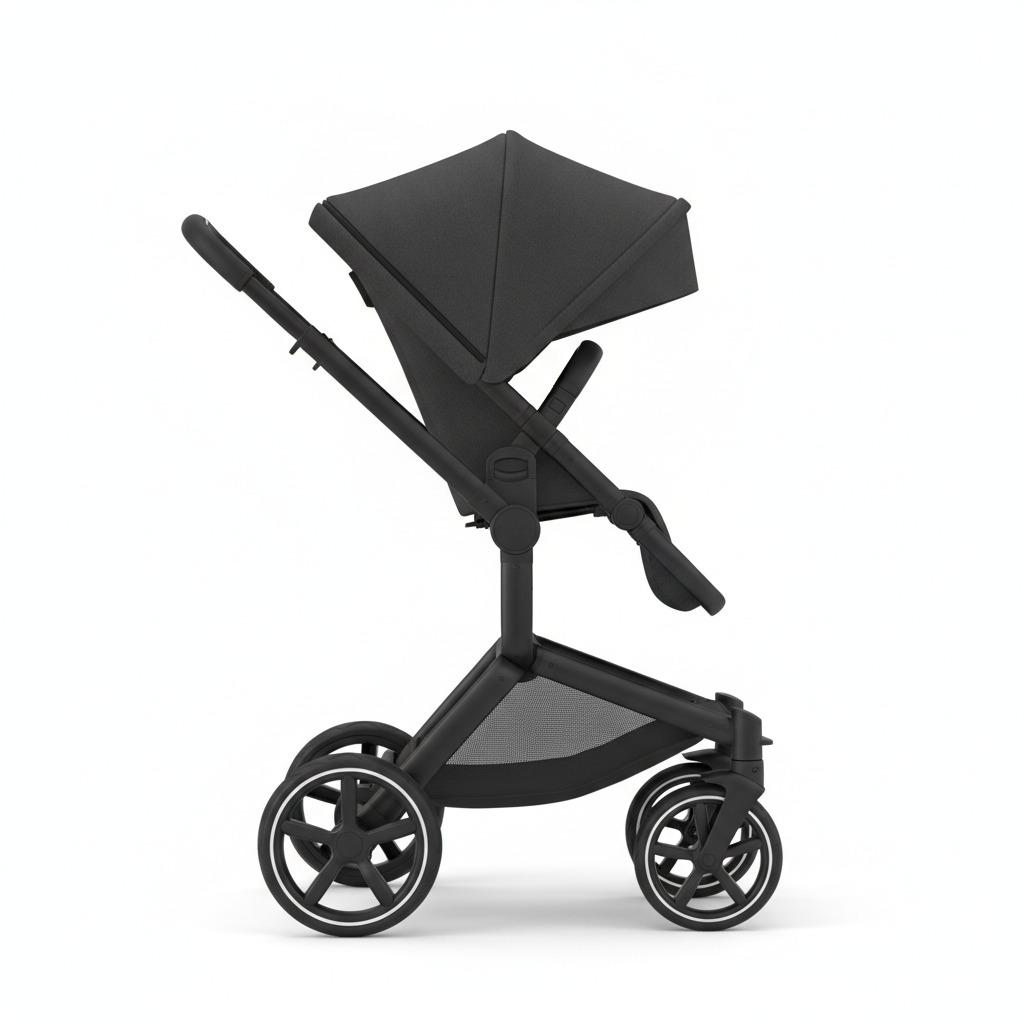
Start with the basics. What exactly is the upper module designed for? Is it intended strictly as a bassinet-style newborn stroller, or does it convert into a different seating position? If that is not confirmed, do not describe it that way in market-facing materials.
Next, ask about the frame material, the locking points, and the wheel construction. If the stroller is going into commercial distribution, request assembly details and quality-control checkpoints. It is also worth asking how the fabric is cleaned and whether spare parts are available for wear items such as wheels or canopy hardware.
Finally, think about the end user. If the stroller is aimed at city families, maneuverability and storage may outrank ruggedness. If it is aimed at broader everyday use, stability and accessory carrying capacity may matter more. The right answer is not universal.
FAQ
Is this stroller more suitable for newborns or older infants?
Based on the bassinet-style upper section, it appears better suited to infants or very young children, but the exact age range should be confirmed by the manufacturer before any claim is made.
What is the biggest visible advantage?
The combination of an enclosed upper compartment, extended canopy, four-wheel stability, and a lower storage basket makes it a practical everyday stroller format.
What information is still missing for a proper buying decision?
Key missing details include exact dimensions, weight, load capacity, fold mechanism, brake design, suspension, fabric composition, and whether the bassinet converts into a seat.
Can the basket handle shopping loads?
It is clearly intended for carrying accessories and light goods, but any specific load claim would need confirmation. Mesh baskets are useful, though they should not be treated as unlimited cargo space.
A sensible next step
If you are evaluating a baby stroller like this for retail, private label, or distribution, the right next move is to request the missing technical details before discussing positioning or packaging. Visual features can tell you what the stroller is trying to be. The specification sheet tells you whether it can truly do the job.
For teams comparing infant stroller options, this style is worth consideration when stability, shade, and storage are central to the brief. Just keep the usual discipline: verify the mechanical details, check the textile quality, and do not let a polished profile stand in for proof.