
Baby Stroller Buyers Still Care About the Basics—and for Good Reason
A baby stroller looks simple from across a showroom floor, but the decisions behind it are not. A bassinet-style baby stroller sits at the intersection of infant comfort, caregiver convenience, and manufacturing practicality. For sourcing managers, product teams, and engineers, the real question is not just whether it rolls well. It is whether the design supports a very young baby in a safe, stable lying position while also holding up to daily use, folding cycles, and the ordinary rough handling that happens in the real world.
That is why buyers keep asking the same practical questions: Is this stroller for baby suitable for newborn use? How does a pram system differ from a seat-based stroller? What construction details matter most when comparing suppliers or product variants? This article breaks those questions down in plain terms, using the visible features of a bassinet-style baby pushchair as a reference point.
What This Type of Baby Stroller Is Designed to Do
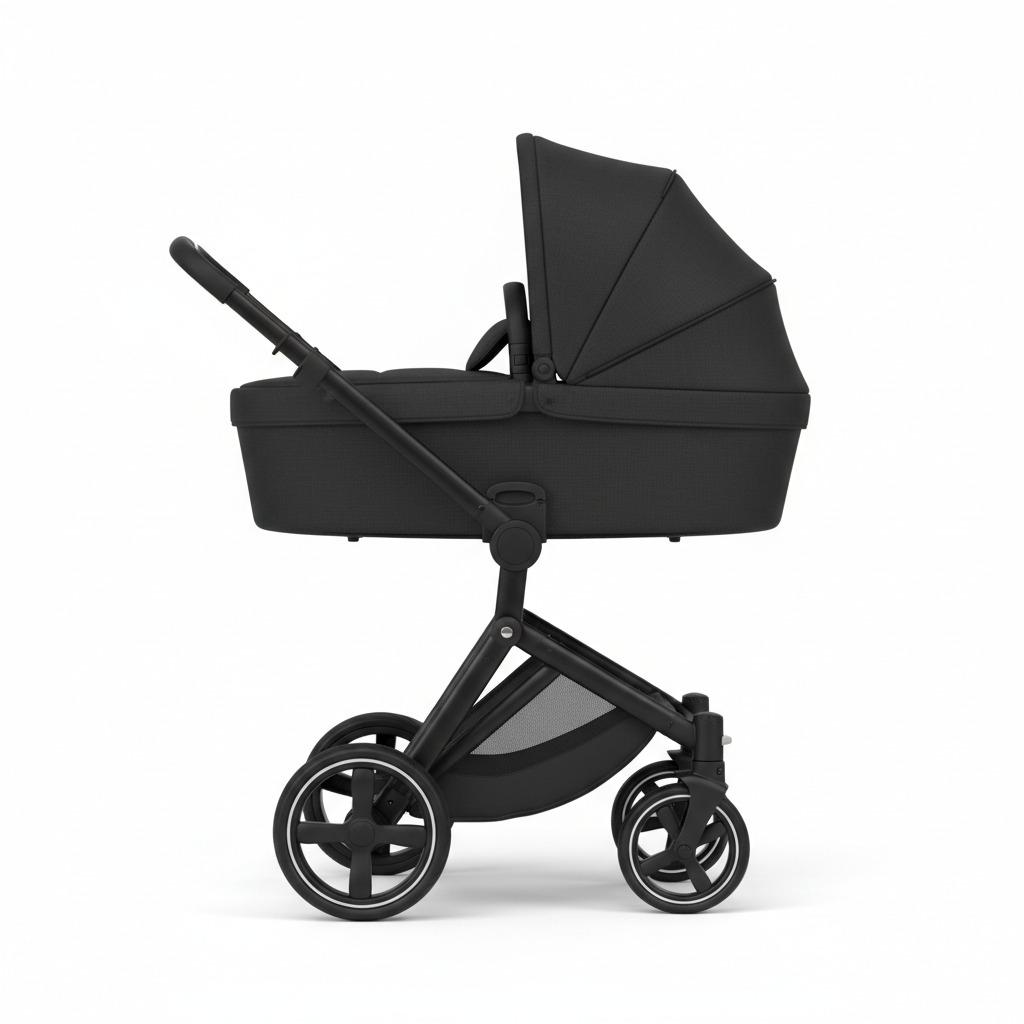
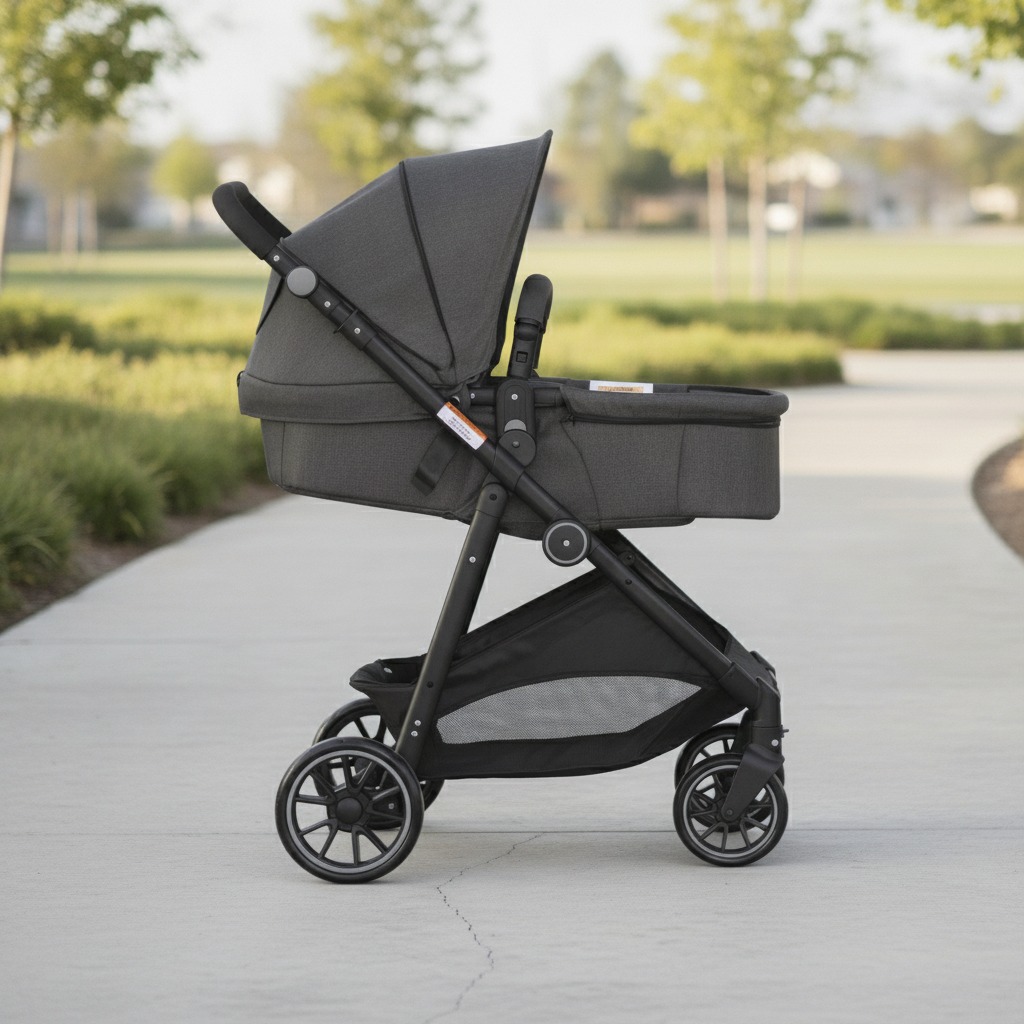
The product in question is a pram system with a bassinet-style carry cot mounted on a wheeled frame. That matters because a lie-flat carry area serves a different age group and use case than a seated stroller. Very young infants need support that keeps them reclined and enclosed rather than upright. In practical terms, this type of baby stroller is aimed at everyday strolling in parks, on sidewalks, in shopping centers, and in other travel situations where a caregiver wants the baby to remain comfortable and reasonably protected from the surroundings.
The visible structure suggests a four-wheel chassis with larger rear wheels and smaller front swivel wheels. That arrangement is common in many stroller formats because it balances stability with easier steering. A large canopy sits above the cot body, and the lower storage basket gives parents room for a diaper bag, blanket, or a few small accessories. None of that is exotic, but the combination is exactly what many buyers expect when they are comparing a stroller for baby use in the infant stage.
Quick Reference: Key Features Buyers Usually Notice First
When buyers inspect a baby pushchair like this, the first pass is visual and practical rather than technical. They look for whether the stroller folds, whether the carry cot feels enclosed enough, and whether the frame looks sturdy enough for repeated use. In this case, the obvious features are straightforward:
Foldable frame design
Large hood or canopy for overhead coverage
Four-wheel configuration for stability
Lower storage basket with mesh paneling
Bassinet-style enclosed carry area
Those are not just marketing points. They shape how the product will be used, stored, and transported. A foldable frame affects carton size and retail handling. A large canopy affects perceived comfort and weather protection. A basket changes the daily value proposition for caregivers who do not want to carry everything by hand.
How the Construction Usually Comes Together
From a manufacturing standpoint, this product category is a mix of tube-frame hardware, textile work, and molded components. The frame appears to be metal, likely aluminum or steel with a matte black finish. That kind of finish is common because it hides scuffs better than brighter coatings and gives the product a more neutral appearance. The body and canopy appear to be woven textile or synthetic fabric, which means cutting, stitching, and assembly quality will matter a great deal in the final fit and appearance.
The wheels appear to be a plastic or rubber composite with molded spokes. In many stroller programs, the wheel set is one of the first areas where sourcing teams check consistency, because rolling feel and durability can vary noticeably even when the product looks similar. The central folding joints, hinge points, and push handle with a foam or grip covering are also worth attention. These are the places that receive repeated stress in everyday use, and they often tell you more about long-term reliability than a glossy product photo does.
Because exact materials are not fully verifiable here, it is better to describe the product cautiously rather than assume more than the image supports. That is especially important for buyers preparing technical comparisons or RFQs. A frame may look aluminum, but unless the supplier confirms it, you should not treat that as settled fact.
Why Bassinet-Style Designs Still Have a Place
Not every baby stroller needs to convert from birth to toddler seat mode. Bassinet-style designs remain relevant because some caregivers prefer a dedicated enclosed lying space for infants. For early-stage use, this can feel more natural and less compromising than a seat unit adapted for newborns. A lie-flat position is also easier for many parents to understand when they are shopping for the first months of use.
There is a trade-off, of course. A pram system can take up more room than a compact folding stroller, and the carry cot format may be less flexible if the buyer wants one product to cover a wider age range. Still, for certain markets, especially those that value infant comfort and a more traditional stroller silhouette, the bassinet-style baby stroller remains a strong category.
What Engineers and Product Teams Should Check Before Approving a Design
1. Folding behavior
The frame is described as foldable, which is useful, but buyers should ask how the fold works under load, whether the cot must be removed first, and how many steps it takes. A fold that looks elegant in a photo may be awkward in a hallway or trunk. Practical handling matters more than brochure language.
2. Locking and hinge quality
Central folding joints and hinge points deserve close review. In a consumer mobility product, tolerances, fastener retention, and lock engagement affect not just usability but also confidence. Even a good-looking frame can feel cheap if the joints rattle or the lock action is vague.
3. Fabric interfaces
The bassinet body and canopy are only part of the story. Stitching placement, seam reinforcement, and attachment points all affect how the stroller holds up after repeated folding and daily use. A buyer should ask for samples or photos that show the fabric close to the frame attachments, not just the outer panels.
4. Storage and balance
The lower basket is useful, but it also changes how the stroller behaves when loaded. A basket that hangs too low can snag on curbs. A basket that is too tight can frustrate parents who need to carry a diaper bag. This is a small detail that often becomes a user complaint later.
Common Mistakes When Sourcing a Baby Pushchair
One common mistake is buying only on appearance. A dark fabric, a black frame, and a generous canopy can make a product look premium, but those features do not automatically mean the stroller will be easy to assemble or durable in use. Another mistake is ignoring how the product will be packed and shipped. A foldable stroller may still create bulky cartons if the cot structure is fixed in an awkward position.
Buyers also sometimes overfocus on accessories and underfocus on the essentials. Cup holders and extra trim are nice, but the first priorities should be frame rigidity, wheel behavior, folding consistency, and the feel of the carry cot attachment. If those are weak, the rest does not matter much.
Practical Buyer Advice for Comparing Suppliers
If you are evaluating a baby stroller program for retail or private label use, ask for the information that helps you compare like with like. Do not rely on a single lifestyle image. Request confirmation of frame material, wheel construction, folding sequence, fabric specification, and what is included in the base configuration. If the supplier cannot clearly describe the assembly stack, that is usually a warning sign.
For teams working on product development, it is also worth asking how the stroller is expected to perform in everyday environments. Parks, sidewalks, malls, and typical urban travel all expose different weaknesses. A design that feels stable on a smooth showroom floor may behave differently once loaded with a diaper bag and pushed over a curb cut. That is not dramatic; it is just normal use.
And for commercial buyers, there is a simple rule: the more a stroller is marketed as an infant solution, the more important it becomes to verify the enclosure, support, and daily handling details rather than assuming the buyer will not notice.
FAQ
Is this baby stroller meant for newborns?
The bassinet-style carry cot suggests it is intended for very young babies who need a reclining, enclosed space. Exact age or weight suitability would still need to be confirmed by the supplier.
Does the frame fold?
Yes, the visible structure indicates a foldable frame design. The exact folding process and whether the cot detaches are not confirmed here.
What makes this different from a standard stroller?
The main difference is the enclosed carry cot in place of a seated unit. That makes it closer to a pram system and more suitable for early infant use.
What should buyers verify before placing an order?
Frame material, folding mechanism, wheel construction, textile quality, basket strength, and any safety or compliance documentation supplied by the manufacturer.
Final Takeaway for Sourcing and Product Teams
A baby stroller in bassinet form is not just a mobility product; it is a bundle of choices about infant comfort, frame engineering, textile execution, and daily usability. The visible design here offers the core elements many buyers want: a foldable frame, a large canopy, four-wheel stability, and storage below. That is a solid starting point, but the real decision still depends on the details that do not always show up in a photo.
If you are evaluating this category, the next step is to compare the supplier’s actual specifications against how the stroller will be used in the field. Ask for the technical details that affect handling, durability, and packaging. The right baby pushchair is the one that performs quietly, folds cleanly, and does not create problems after the first few weeks on the market.