
What a baby stroller buyer is really deciding
A baby stroller is not just a moving frame with wheels. For most buyers, it is the daily tool that has to make newborn transport feel controlled, quiet, and practical enough for real life. The right choice affects how a parent handles sidewalks, elevators, curb cuts, naps on the move, grocery runs, and those unpredictable days when a walk lasts longer than planned.
That is why a stroller for baby should be judged as a working mobility product, not a nursery accessory. Buyers usually compare comfort, handling, storage, folding behavior, and the amount of effort needed to use it every day. If the stroller is for newborn use, the bassinet-style carry cot matters even more because it supports a reclining, enclosed lying position that is more appropriate for early infancy than an upright seat. That difference is easy to overlook when browsing online photos, but it is one of the first decisions that shapes whether the product fits the family’s routine.
Quick takeaways before you compare models
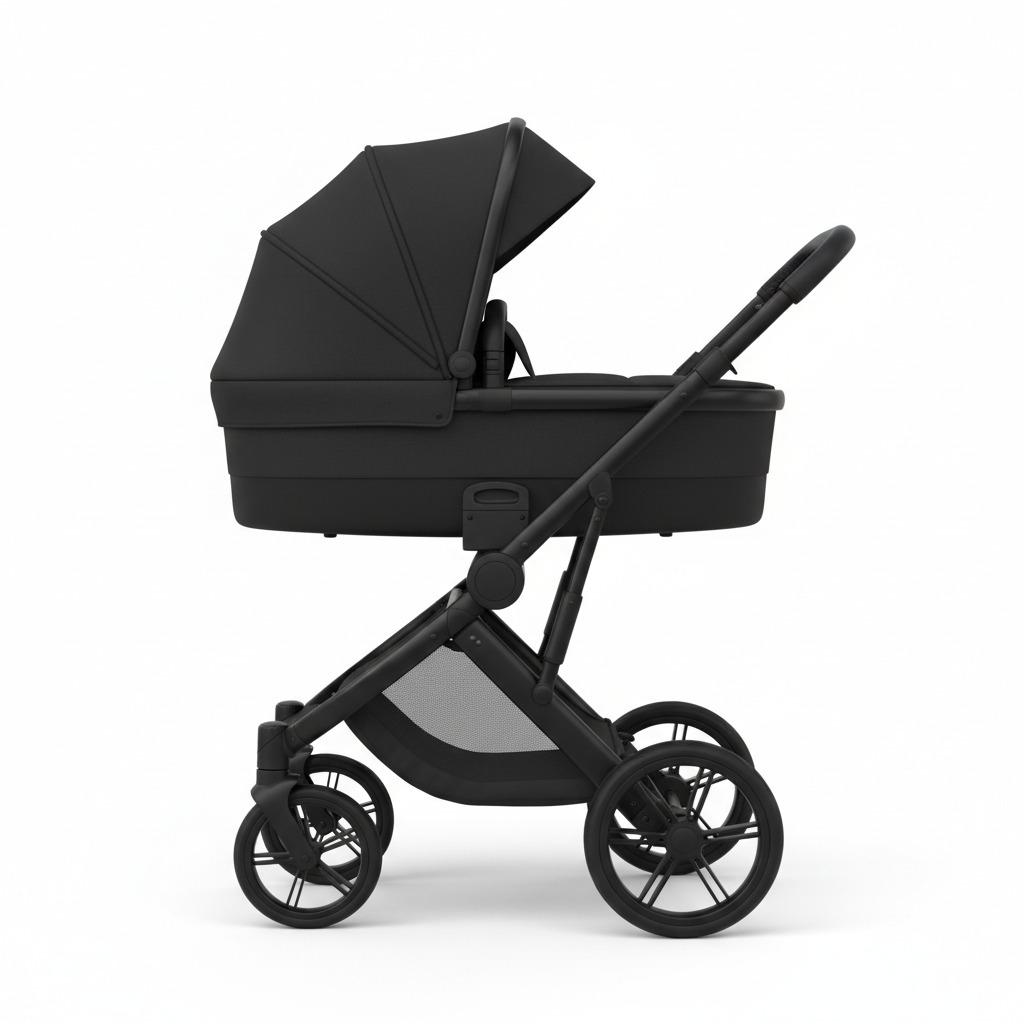
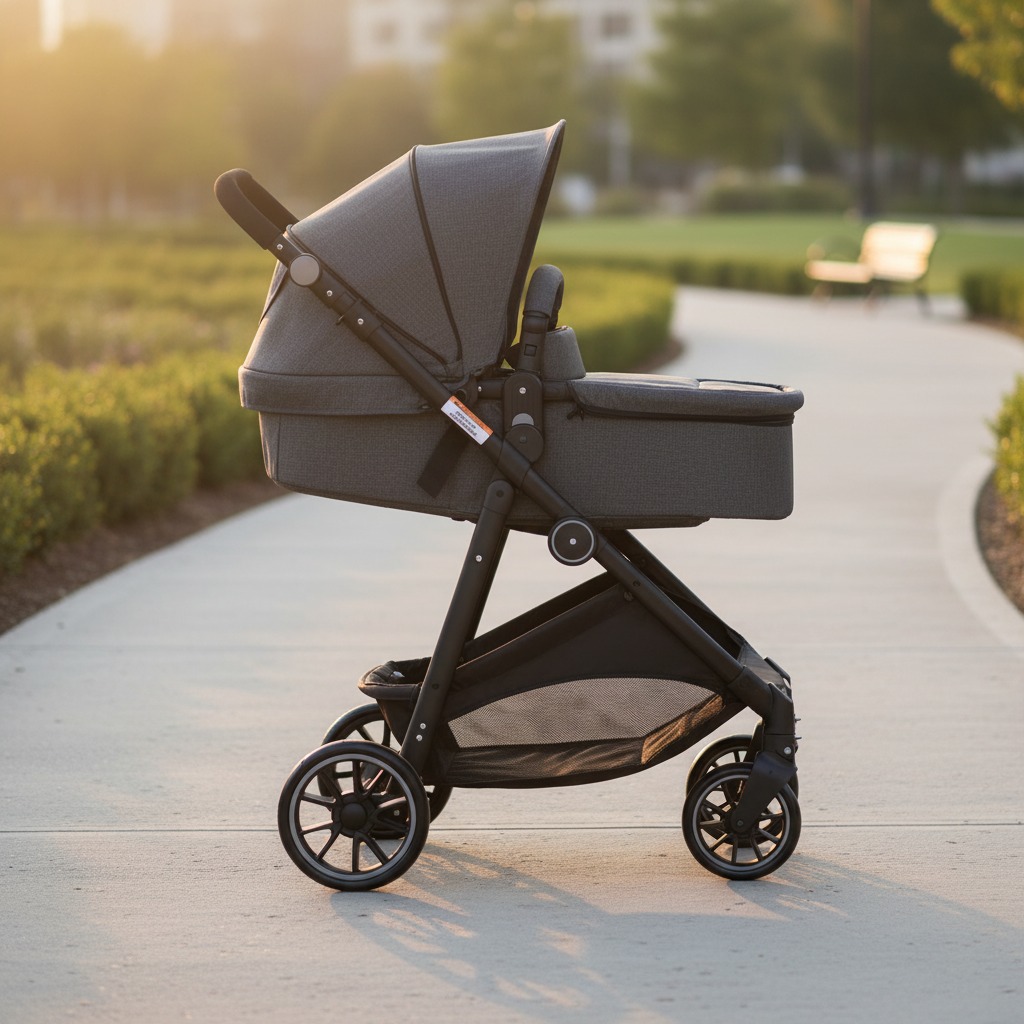
From a product-structure point of view, the stroller described here has several features buyers often look for: a four-wheel layout, large rear wheels, a full-coverage canopy, an enclosed bassinet, and an under-frame storage basket. Those are not flashy details, but they tell you a lot about intended use. The large rear wheels suggest easier rolling over uneven pavement or light mixed terrain. The bassinet suggests newborn-friendly transport. The storage basket suggests the designer expected this stroller to carry more than just the child.
The dark monochrome finish, matte black metal frame, and black fabric body are also worth noting. In consumer mobility products, appearance is not only about style. Dark finishes can hide scuffs better than glossy lighter surfaces, though they may also show dust, lint, and fabric wear depending on the textile used. It is a small point, but one that sourcing and product teams usually notice after the first round of samples.
How this stroller type is built
This is a bassinet-style infant stroller, sometimes discussed alongside a pram or baby pushchair depending on market language. The visible structure is straightforward: a wheeled chassis, an enclosed carry cot mounted above it, a handlebar, folding joints, and a lower storage basket. That simplicity is part of the appeal. Fewer modes can mean fewer decisions for the parent, especially during the newborn stage.
Frame and folding geometry
The frame appears to use tubular metal fabrication with pivot joints and locking points. That is typical for an assembled consumer stroller because the geometry has to balance stiffness, folding convenience, and weight. A folding frame is useful, but buyers should pay close attention to how it feels when opened and closed. A stroller that folds neatly on paper can still be awkward in the hallway, in a boot space, or when one hand is occupied.
Bassinet and canopy
The bassinet-style carry cot has raised sidewalls and a rectangular form that helps create a more enclosed resting space. That enclosure matters for newborn use because it helps the baby lie flat rather than sit up too early. The full-coverage hood or canopy is another practical feature. It can offer shade, reduce visual stimulation, and make the stroller feel calmer for naps outdoors. Still, no canopy should be treated as a substitute for weather judgment; strong wind or summer heat can make any covered space uncomfortable if parents do not keep an eye on airflow.
Wheels and storage
The four-wheel layout includes larger rear wheels and smaller front wheels, a common arrangement where stability and steering ease need to be balanced. In practical terms, larger rear wheels can make the stroller feel less abrupt on rough patches, while smaller front wheels may help with turning in tighter indoor spaces. The lower storage basket is another small feature that changes the product’s daily usefulness. Parents rarely travel light, and a basket for diapers, wipes, a blanket, or shopping bags can make the difference between a stroller that gets used often and one that stays in the corner.
What matters most when choosing a baby stroller
Buyers often start with appearance, but that is usually not where the real decision gets made. The better question is: what kind of walking does the family actually do? A parent who mostly pushes the stroller on smooth city pavements has different needs from someone dealing with brick paths, curb cuts, or mixed outdoor surfaces. For this product style, the large rear wheels and bassinet setup suggest a bias toward calm everyday strolling rather than sporty jogging or heavy terrain use.
Another factor is infant stage. A bassinet-style stroller is useful in early infancy because it supports a lying position. That is not the same as a seat designed for older babies who can sit upright. If a buyer is choosing between a stroller for baby and a convertible model with multiple configurations, they should verify whether the product is meant only for infant transport or whether it later changes into a seated pushchair. Do not assume a conversion feature unless the manufacturer states it clearly.
Common buyer mistakes with infant strollers
The biggest mistake is assuming all stroller categories solve the same problem. They do not. A lightweight travel stroller, a compact umbrella stroller, and a bassinet pram all serve different priorities. A newborn does not need the same seating geometry as a toddler, and a crowded apartment hallway does not care how elegant the stroller looked in the catalog.
Another common mistake is ignoring storage behavior. The basket under the frame can be one of the most used parts of the whole product. If the basket is too shallow, too hard to reach, or blocked by frame tubes, the stroller becomes less practical than it first appeared. Buyers should also avoid judging wheel size only by appearance. Larger wheels may roll better, but they can add bulk. That trade-off is normal, and it should be accepted rather than hidden behind marketing language.
Finally, do not overread the finish. A matte black stroller can look premium and modern, but what matters longer term is how the frame joints hold up, how the textile wears, and whether the folding action remains smooth after repeated use. Looks matter at purchase; mechanics matter after the second week.
Product features that can influence sourcing and manufacturing decisions
From a manufacturing perspective, this kind of baby pushchair is a layered product. The frame likely involves metal tubing, shaped joints, and assembly steps that demand alignment consistency. The textiles require cutting and sewing, especially around the canopy, bassinet body, and basket mesh. Wheels and smaller interface parts are usually molded or finished components. None of that is unusual, but it does mean quality is spread across several processes rather than one simple assembly line operation.
For sourcing teams, the point is not to guess exact materials from a photo. It is to understand where variation tends to appear. Fabric tension, seam neatness, joint smoothness, and wheel rolling feel are often the first areas where differences show up between sample and mass production. If you are evaluating a supplier, ask for clear build specifications and request confirmation of the frame finish, textile composition, wheel construction, and folding mechanism details. Those are the things that affect both user experience and warranty exposure.
Practical advice for retail buyers and product teams
If the stroller is being considered for a retail range, the clearest selling story is newborn comfort plus everyday practicality. The bassinet gives you the infant positioning benefit. The storage basket and four-wheel layout give you everyday utility. The dark finish gives it a straightforward, modern visual profile that can fit mainstream markets.
That said, teams should be careful not to oversell what has not been verified. Do not claim all-terrain capability, shock performance, seat conversion, or safety approvals unless those details are supplied and documented. In this product category, vague claims cause trouble quickly. Parents ask direct questions, and they tend to notice when a product description sounds larger than the actual engineering.
FAQ
Is this type of stroller suitable for newborns?
Based on the bassinet-style carry cot, it appears intended for newborn and early infancy transport in a reclining, enclosed lying position. That is the most relevant use case for this structure.
Can it handle outdoor walks?
It appears suitable for daily walking on pavement and light mixed terrain. The larger rear wheels support that impression, but actual performance still depends on wheel material, frame stiffness, and how the stroller is built overall.
Is the storage basket useful?
Yes, the lower storage basket is a practical feature for everyday outings. In real use, parents often rely on it more than they expect.
Should buyers focus on style or function first?
Function first, then style. A neat black finish is attractive, but the real test is how the stroller folds, rolls, and supports the baby during daily use.
A sensible next step for buyers
If you are comparing a baby stroller for procurement, retail selection, or product development, start with the basics: infant stage, riding position, wheel layout, folding behavior, storage, and textile construction. Those points tell you much more than a polished product photo ever will. Ask for the details that are not visible, and be cautious about features that sound implied but are not actually confirmed.
For sourcing managers and product teams, the best next step is to build a short verification list before sample approval. Check the frame, fabrics, wheels, basket, canopy, and folding points separately. That habit saves time later, and in this category, it often saves a lot of customer complaints too.