
Baby Stroller Buying Advice Starts with the Infant, Not the Frame
A baby stroller looks simple until you have to choose one for everyday use. Then the details start to matter: whether the baby pushchair lies fully flat, how the frame folds, how much room the basket gives you, and whether the wheels will cope with cracked sidewalks or a tight apartment hallway. For a newborn, those questions are not cosmetic. They affect comfort, handling, and how often the stroller actually gets used.
This is especially true for parents shopping for a stroller for baby in the early months. Newborns do not have the neck control or sitting balance to use every type of stroller safely or comfortably. A bassinet or carrycot style changes the equation because it supports a flat lying position. That one feature can be the difference between a stroller that works for daily walks and one that stays in the closet.
What the Baby Stroller Design Tells You at a Glance
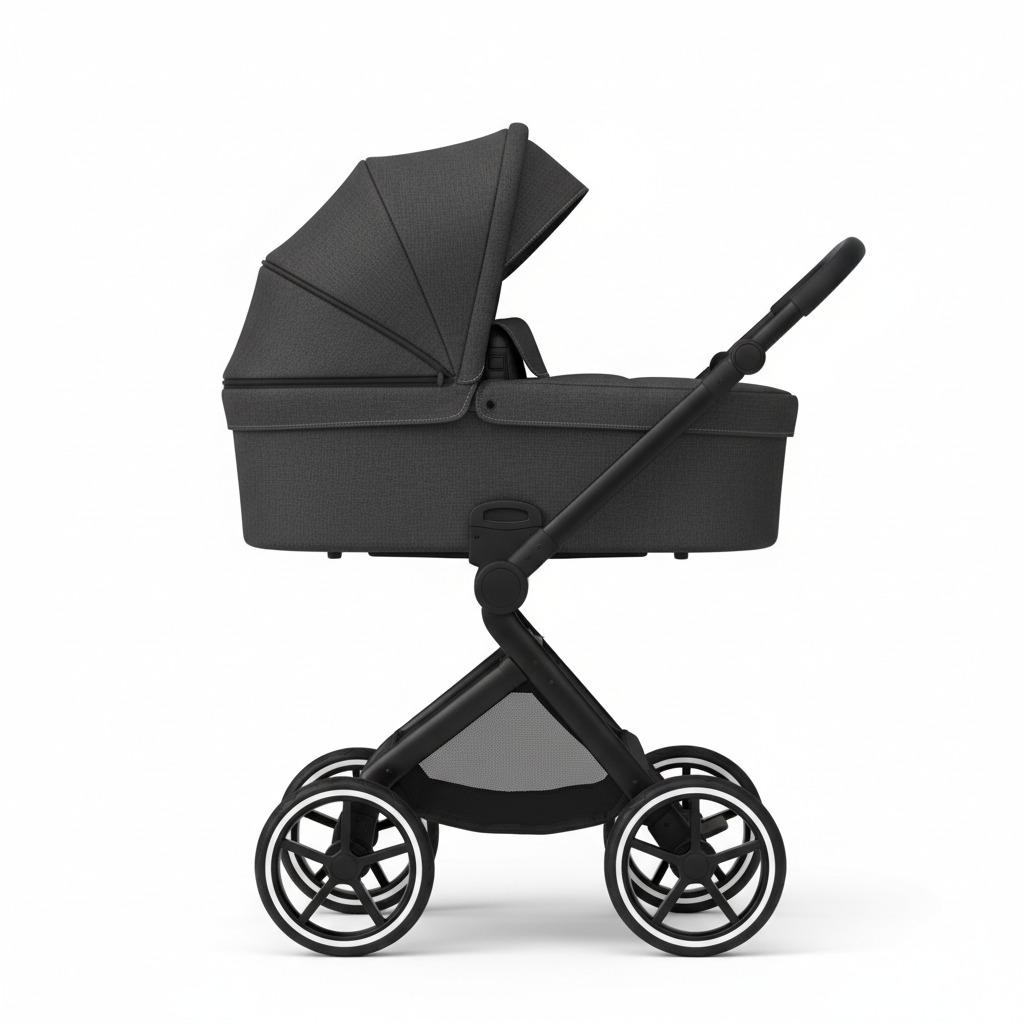
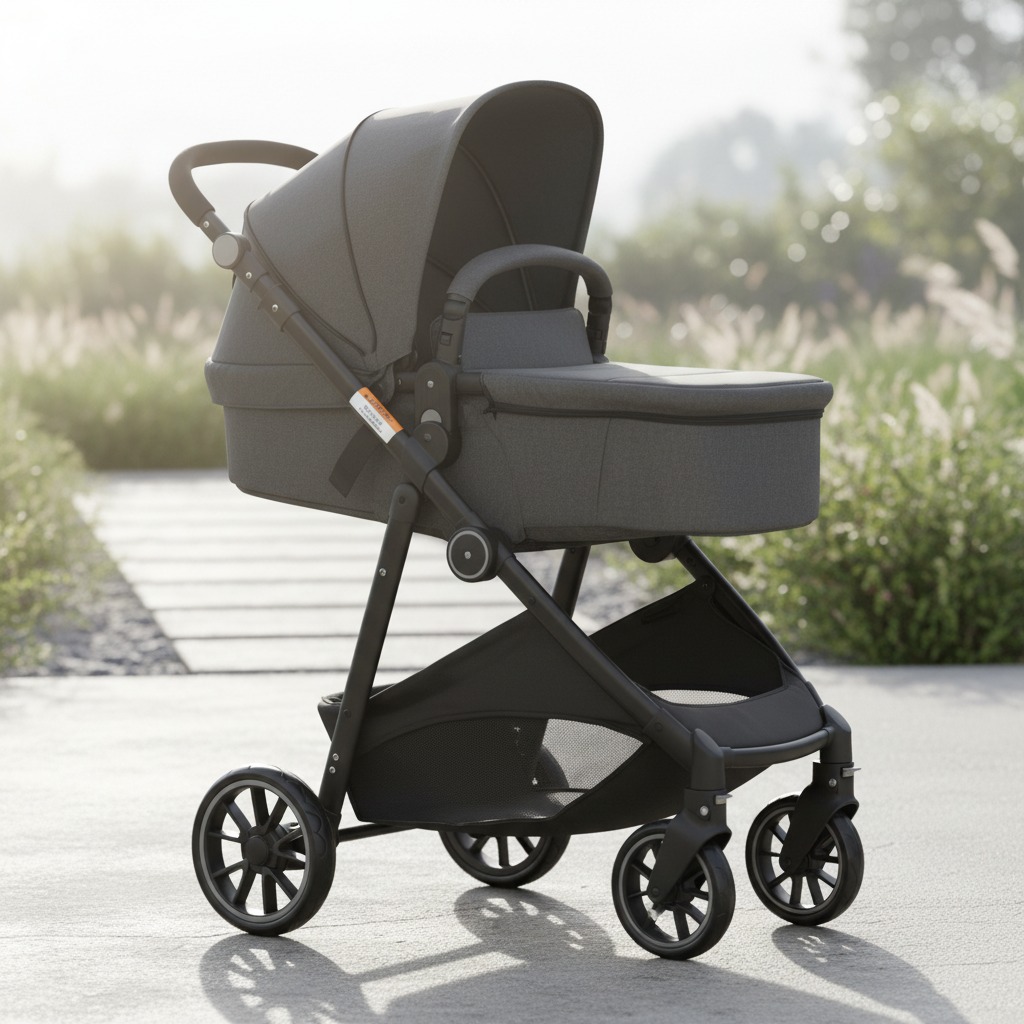
The product described here follows a familiar infant transport format: a wheeled chassis with a newborn bassinet or carrycot mounted on top, a folding metal tube frame, a canopy, and an under-seat storage basket. It is the kind of setup many sourcing teams and retail buyers would classify as a full-size infant stroller rather than a lightweight travel pushchair.
A few structural clues are worth noting.
The frame is black coated metal with a scissor-style folding geometry. That usually points to a product designed to balance rigidity and portability. The carrycot body appears structured rather than soft-sided, which matters because newborn use demands a stable sleeping surface. The four-wheel layout, with larger rear wheels and smaller front wheels, is another practical sign. Bigger rear wheels often help with rolling stability, though real-world ride quality still depends on wheel material, axle design, and whether any suspension is built in. Those details are not visible here, so they should not be assumed.
The storage basket below the carriage is another meaningful feature. For parents, it is often where the stroller earns its keep. A basket that can hold a diaper bag, a blanket, or a few errands’ worth of items saves a separate trip bag and makes short outings less cumbersome.
Why Bassinet Style Matters for Newborns
A newborn should spend much of the day in a fully supported lying position. That is the main reason bassinet-style products remain relevant even as many markets shift toward compact, modular travel systems. A bassinet on a stroller frame gives the infant a flatter surface than a seat unit that reclines partially.
That may sound like a small distinction, but it is not. A partially seated posture can be awkward for very young babies, especially during longer walks. In practical terms, a bassinet-style baby stroller is generally better suited to the first stage of infant use than a standard upright stroller seat.
There is also a parent-facing benefit: routine. If the stroller is comfortable enough for the baby to rest, it becomes more useful for naps, errands, and everyday movement. A stroller that only works for a few minutes is hard to justify, no matter how nice it looks.
Quick Buyer Checklist Before You Compare Models
If you are evaluating a baby pushchair in this category, start with the questions that affect actual use rather than the brochure language.
1. Does it support newborn lying-down use?
For the early months, this is the first filter. If the stroller is only a seat that reclines, it is not the same thing as a proper bassinet or carrycot arrangement.
2. How does it fold?
The visible folding chassis suggests portability is part of the design intent. Buyers should still check whether the stroller folds with the bassinet attached, how compact it becomes, and whether the folded unit fits a car trunk or storage closet.
3. What do the wheels look like, and what do they need to handle?
Large rear wheels may help on uneven pavement or park paths, but wheel size alone does not tell the whole story. Surface type, turning radius, and wheel material all matter. Plastic wheels can be light, while rubberized options may feel more forgiving. The exact specification needs confirmation.
4. Is the basket genuinely usable?
Many buyers notice the basket only after they have loaded it. A mesh or fabric basket can be handy, but the shape, depth, and access from the rear or side affect usability more than the material alone.
5. What is the actual daily footprint?
A stroller that looks manageable in a studio photo can feel bulky in a hallway. Full-size stroller designs usually trade compactness for comfort and stability. That is not a flaw, but it is a decision.
Materials and Manufacturing: What Usually Matters
This type of baby stroller is typically assembled from a mix of metal tubing, molded plastic components, sewn fabric, and textile upholstery. That combination is common because each material has a job.
The metal tube frame provides the load-bearing structure. Fabric and foam contribute comfort and visual finish. Plastic parts typically appear at joints, wheel hubs, adjustment points, and canopy hardware. The sewing and upholstery work are not trivial either; poor stitching shows up quickly in areas that see repeated folding, vibration, or tension.
For sourcing teams, the important part is not just what materials are used, but how they are joined. Tube-to-joint connections, riveted or pinned folding points, wheel mounting quality, and seam reinforcement all influence perceived quality. A stroller can look solid in photos and still feel flimsy if the folding mechanism has play in it or if the basket attachment is weak.
It is also worth being cautious about assumptions. The image suggests a black frame, black fabric, and a grey-black basket panel, but it does not confirm exact textile grade, coating chemistry, or wheel compound. Those are the kinds of details that should be verified in a spec sheet or sample review, not guessed from appearance.
Where This Type of Stroller Fits Best
A bassinet stroller like this is usually a good fit for everyday infant walking transport, short-distance errands, and park use. It is built for the early stage of baby life when comfort and support matter more than a highly compact fold.
That makes it attractive to families who want one dependable daily unit rather than a purely travel-oriented model. The under-basket storage and full-size upper body support that use case. If your routine includes frequent short trips, pediatric appointments, or neighborhood walks, the format makes sense.
It is less obviously suited to travelers who need ultra-lightweight baggage handling, or parents who want one frame to switch rapidly between seat, car seat adapter, and bassinet without checking compatibility. The pictured product may or may not support modular conversion; that cannot be assumed from appearance alone.
Common Mistakes Buyers Make
One common mistake is treating every stroller for baby as interchangeable. They are not. A newborn needs different support than a six-month-old child who can sit upright. Buying only for the older stage can leave parents improvising during the first months.
Another mistake is overvaluing style over folding behavior. A baby stroller can have a polished finish and still be annoying in a stairwell or car boot. Folding geometry matters because it affects not just storage, but daily friction. If a stroller is awkward to open and close, people stop using it as often as they planned.
A third mistake is ignoring the basket. It sounds mundane, but the basket often decides whether the stroller is a hands-free tool or just a vehicle for the baby. If the basket is shallow, difficult to access, or interferes with walking, that convenience disappears quickly.
Practical Advice for Sourcing and Product Teams
If you are comparing versions of this product category, ask for clear confirmation on the points that are not obvious from photos: dimensions, weight, load capacity, age range, brake design, wheel specification, and whether the bassinet detaches or converts to a seat. Those are basic commercial questions, yet they are frequently left vague in early-stage product discussions.
You should also request sample handling feedback from the people who will actually use it. Engineers may focus on structure, while merchandisers look at appearance, but parents judge the stroller by how it moves, folds, and stores. That difference matters.
From a buyer’s perspective, the best stroller is not always the lightest or the most feature-packed. It is the one that matches the infant’s stage and the family’s daily pattern without creating hassle. That sounds obvious, but a lot of returns begin with a mismatch rather than a defect.
FAQ: Baby Stroller Questions Buyers Ask Often
Is a bassinet stroller better for a newborn?
Usually yes, because it supports a flatter lying position. That is one of the main reasons bassinet and carrycot styles remain in demand.
Are large wheels always better?
Not always. Larger rear wheels can improve rolling over rougher ground, but overall performance depends on the wheel material, frame balance, and handling design.
What should I check first in a baby pushchair?
For newborn use, check the lying position first, then the folding behavior, storage basket practicality, and how easy the stroller is to maneuver in the spaces you actually use.
Can you judge quality from appearance alone?
Only partly. Visual cues like frame finish, seam neatness, and joint design are useful, but the real test is in folding smoothness, stability, and how the stroller holds up after repeated use.
What to Do Next
If you are choosing a baby stroller for newborn use, start by matching the product style to the baby’s stage and your daily routine. Then verify the details that matter in practice: fold, basket, wheel behavior, and actual build specification. A well-chosen bassinet stroller can make ordinary outings easier from day one. A poorly matched one becomes expensive clutter.
For sourcing teams and product managers, the next step is simple: confirm the full specification before moving beyond the sample stage. Photos help, but the use case decides whether the stroller belongs on the sales floor or back in development.