
Wood-Plastic Composite Decking for Projects That Need Better Outdoor Flooring Choices
For buyers searching for a decking importer, the real problem is rarely just finding boards. The challenge is sourcing outdoor flooring that installs cleanly, handles moisture better than many natural materials, and still gives a convincing wood look on terraces, balconies, poolside paths, and similar pedestrian areas. The wood-plastic composite decking board in this page is designed for exactly that kind of job: a long-service exterior surface with an engineered profile, low-maintenance handling, and a finish that works in practical building environments rather than only in showroom photos.
This type of WPC decking is especially relevant when a project needs repeatable supply, consistent board geometry, and a surface that can be aligned with clips or interlocking edges. Builders and landscape teams often prefer this format when they want fewer concerns about warping, surface wear from foot traffic, and the maintenance cycle usually associated with solid wood.
Product Overview
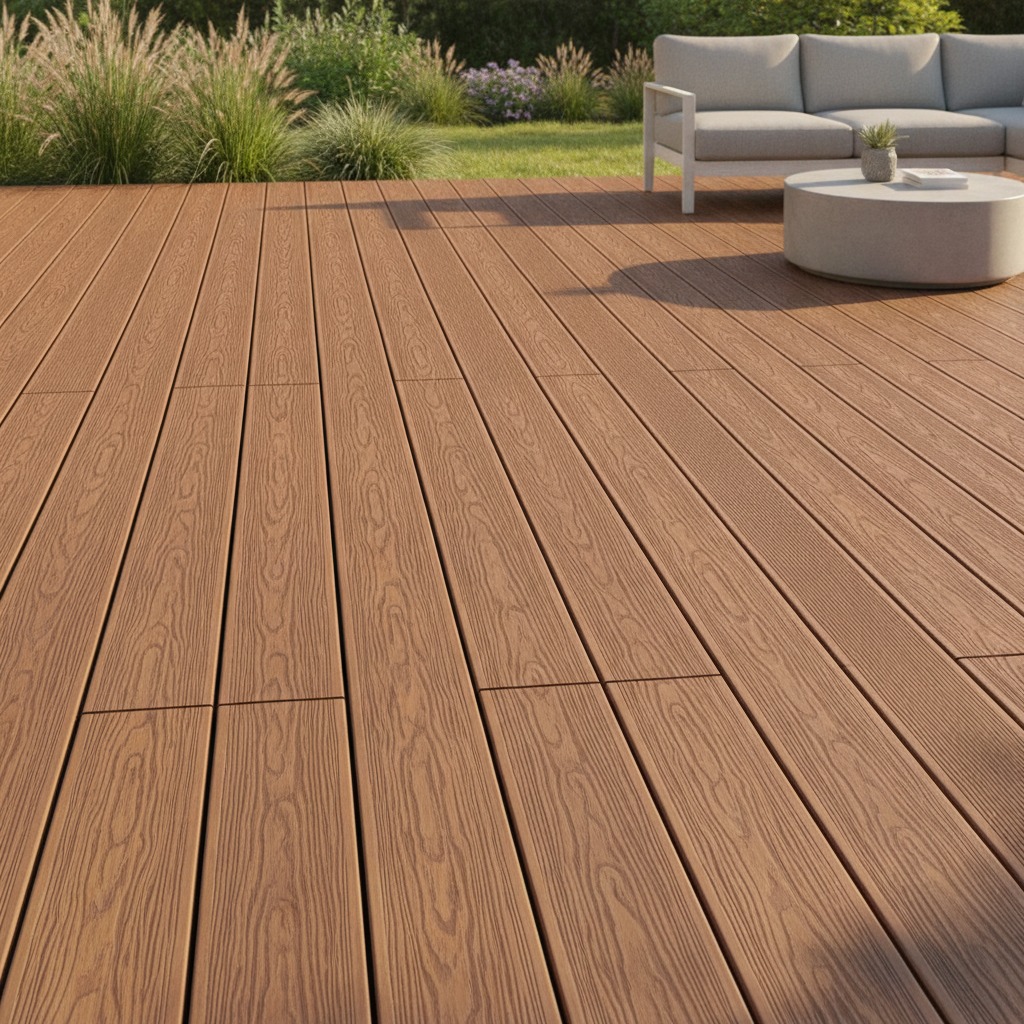
These decking boards are wood-plastic composite outdoor floor planks with a brown wood-grain appearance. The visible structure suggests a hollow-core profile with internal chambers and reinforcing ribs, which helps reduce weight while keeping the board shape more stable for installation. The side edges appear to use a tongue-and-groove or side-lock arrangement, making the boards suitable for coordinated laying across a larger deck surface.
Two surface styles are visible in the provided product information: one board has a more pronounced embossed wood pattern, while another shows fine linear grooves. That gives specifiers some flexibility when matching appearance and texture to a project. In a residential terrace, the embossed look may better resemble timber. In a walkway or pool-adjacent setting, the grooved texture can support a more functional, directional surface feel.
What This Product Helps Solve for Buyers
Anyone acting as a decking distributor or project supplier knows that outdoor flooring decisions are often made around four practical issues: moisture exposure, installation consistency, visual appeal, and maintenance demand. Natural wood can look attractive, but it often requires more upkeep and can react strongly to weather and humidity. Traditional hard flooring can be too rigid or heavy for certain exterior systems.
WPC decking offers a middle path. It is intended for buyers who need a board product that looks like wood, installs in a controlled way, and is engineered for use in exterior pedestrian applications. The hollow-core design and shaped edges make it easier to plan layouts, while the composite construction supports a more utility-driven buying decision than appearance alone.
Key Specifications and Visible Capabilities
Profile and Geometry
The boards are long rectangular planks with repeating internal ribs and chambers. This geometry is useful for reducing material usage while preserving a consistent profile during handling and installation. The engineered edge profile also helps with joining, aligning, and maintaining spacing across the deck surface.
Surface Options
Based on the visible boards, there are at least two surface expressions: embossed wood grain and fine grooved texture. Both are brown in tone and aimed at an outdoor flooring appearance. Since the exact surface treatment details are not supplied, it is best to treat these as visible finish options rather than as performance claims.
Installation Style
The product is likely intended for clip-installed or interlocking installation, which is common for WPC decking systems. That kind of assembly can help streamline work for contractors and reduce the visible fastener count on the finished deck. Exact hardware should be confirmed with the supplier before ordering.
Materials and Finish Options
The visible product information identifies the boards as wood-plastic composite, but the exact resin, fiber, or filler formulation is not provided. For a buyer, that means the safe approach is to evaluate the board as a composite exterior decking profile rather than assuming a specific composition or recycled content.
The finish, however, is easier to describe. The boards use a brown wood-look surface that suits landscape projects, residential balconies, outdoor seating zones, and commercial pedestrian spaces where a warmer visual tone is preferred. The embossed grain creates a stronger timber impression, while the grooved face reads more technical and can be preferred where functional texture is part of the design language.
If your project needs color coordination with railings, wall cladding, or façade elements, this type of product is often chosen because its finish is more uniform than many natural wood alternatives. Still, it is wise to request current sample boards before placing a larger order, since appearance can shift with batch, lighting, or surface method.
Manufacturing Process: What Can Be Safely Inferred
The visible profile strongly suggests extrusion manufacturing, which is standard for WPC decking boards. In that process, the composite material is shaped into a continuous board profile, then cut to length. After extrusion, the surface can be embossed or textured to create the wood-grain or grooved look seen here.
That process matters because it supports repeatability. For a project manager or decking importer handling volume orders, a stable extrusion profile is easier to coordinate across shipments than irregular natural timber sections. The repeating internal ribs also indicate a design aimed at structural efficiency and lower board weight, both of which can simplify site handling.
Where These Decking Boards Fit Best
These boards are suited to pedestrian outdoor flooring in settings where moisture resistance and dimensional consistency are important. Common applications include:
Residential terraces and patios
Balcony flooring for apartment or hotel projects
Poolside walkways where a finished deck surface is needed
Garden paths and landscape platforms
Outdoor seating zones for cafés, resorts, and public gathering spaces
Cladding-style flooring areas that need a board look rather than tile appearance
In practice, builders often select WPC decking when they want the visual warmth of wood without taking on the same maintenance rhythm. For developers and property owners, that can simplify long-term upkeep planning.
Quality Control and Buyer Checks
Because exact test data and certifications are not provided here, buyers should focus on practical incoming checks and supplier documentation. A serious decking supplier should be able to confirm board dimensions, profile consistency, color batch control, installation method, and packaging condition.
When evaluating a sample, inspect the following:
Board straightness along the full length
Consistency of the hollow chambers and edge lock profile
Uniformity of surface embossing or groove spacing
Color match between samples and repeat pieces
Clean cut edges without crushing or deformation
Fit with the intended clip system or joining method
These checks are especially important for import programs, where replacement logistics can be costly once a site is underway.
Customization Guidance for Project Buyers
For custom projects, buyers usually need to confirm three things early: board size, color, and surface pattern. The visible images show a brown tone, but the exact dimensions are not supplied, so these should be requested directly from the manufacturer or exporter.
If you are managing a large order, ask whether the supplier can keep a consistent profile across multiple production runs. That matters more than many first-time buyers expect. A board that looks correct in the catalog may still create installation issues if the groove depth or locking edge changes between lots.
It also helps to confirm whether the boards are intended for visible finish use only or if they are part of a larger system that includes clips, trims, starter strips, and matching accessories. A decking distributor usually benefits from offering the full system rather than just the planks, because installers want fewer compatibility surprises on site.
How to Decide If This Is the Right Decking Product
This product makes sense when your priority is a practical outdoor board with wood styling, engineered geometry, and lower upkeep than traditional timber. It is not the right choice if you need exact load specifications, fire performance data, or highly specialized environmental certifications and those values are not yet confirmed.
For importer teams and project buyers, the best decision factors are usually profile stability, installation compatibility, surface appearance, and supply consistency. If the site is a terrace, balcony, garden deck, or pool walkway, this product category sits in a useful middle zone between decorative flooring and hard-wearing exterior construction material.
When comparing offers from different vendors, ask the same questions each time: What is the board profile? What installation system is supported? Are surface textures available in multiple styles? Can the supplier maintain repeat production quality? Those answers often matter more than broad marketing claims.
Request Samples and Confirm Project Details
If you are sourcing for a development project, retail stock plan, or export program, start with samples and profile drawings. A reliable decking importer workflow usually begins with visual approval, then technical matching, then order scaling. That sequence reduces risk and helps the finished deck match the intended design.
For a buyer comparing a decking supplier or building a long-term channel as a decking distributor, this WPC decking format offers a straightforward product story: wood-look exterior boards, hollow-core engineered construction, and visible surface options suited to real-world outdoor use. If you need help matching the board style to your project, request a sample, confirm the installation system, and review the profile before placing volume orders.




评价
Clear filters目前还没有评价