
What a decking importer is really buying
A decking importer is rarely just purchasing “boards.” More often, the buyer is trying to solve a bigger problem: how to source an outdoor surface that looks consistent, installs cleanly, survives weather, and arrives in a form that does not create headaches at the job site. With composite deck planks and interlocking decking boards, the decision is not only about appearance. It is about profile geometry, material stability, packaging, and whether the product matches the way contractors actually build decks, balconies, patios, or façade systems.
That is why this category deserves a closer look. The boards in this product family typically have a long rectangular shape, a hollow-core structure, and a tongue-and-groove or slot-style edge. Those details affect shipping weight, installation speed, and how the finished surface performs over time. If you are evaluating a decking supplier or decking distributor, the right question is not “Does it look good?” but “Will this profile hold up in the real market we sell into?”
Why hollow-core interlocking boards keep winning attention
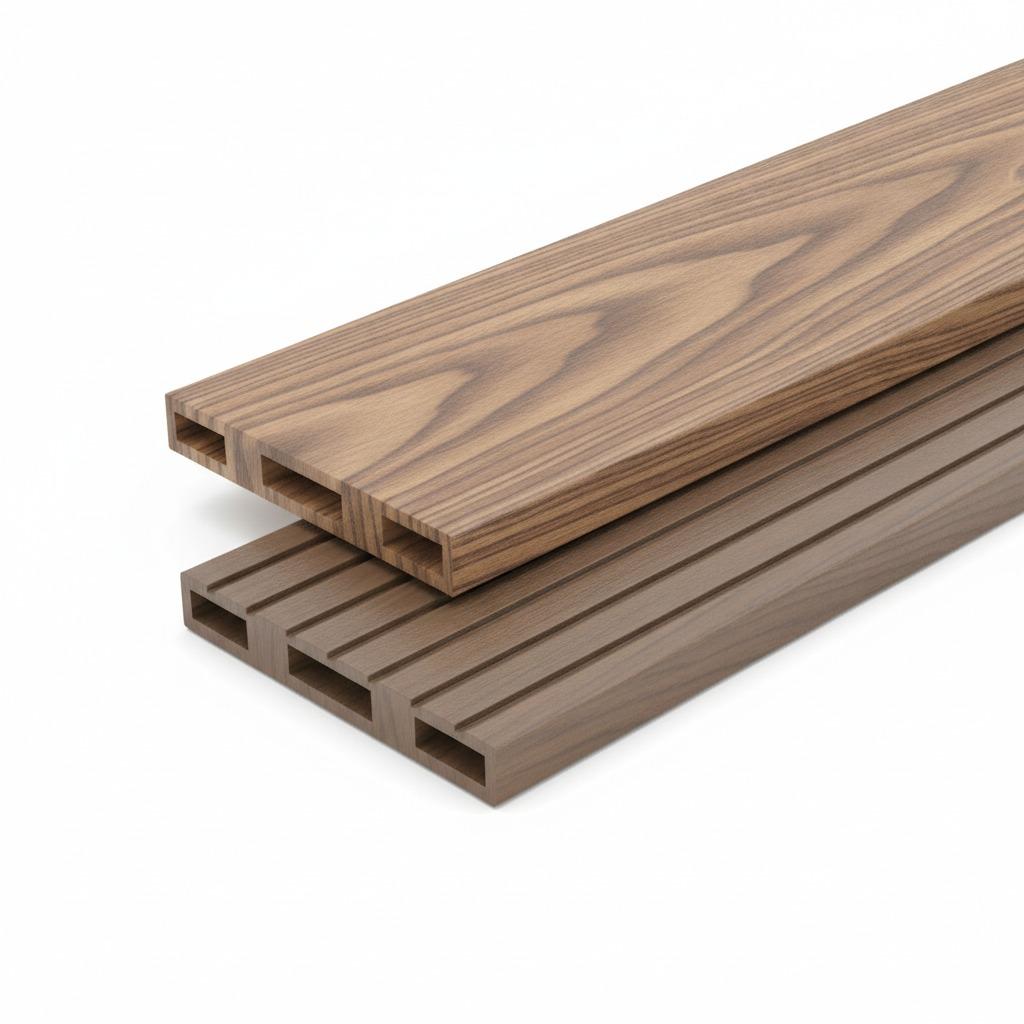
The visible construction tells a familiar story. These boards appear to use a synthetic timber substitute, likely a wood-plastic composite or a similar extruded profile. One face has a brown wood-grain appearance; another shows narrow linear grooves. The cut end reveals multiple rectangular cavities inside the board, which is a practical signal to buyers. Hollow-core construction usually means less material, lower weight, and easier handling than a solid board of the same overall size.
For importers, that can matter in more than one way. Freight efficiency improves when the product is lighter. Installers also tend to appreciate a board that is easier to lift, cut, and align during a long deck run. The trade-off, of course, is that hollow profiles need to be evaluated carefully for stiffness, edge behavior, and the intended fastening method. A product that looks fine in a sample photograph may still be a poor match if it flexes too much under load or if the profile does not accept the installer’s preferred hidden-clip system.
A small practical caution here: some buyers focus so heavily on surface texture that they forget the side profile and end geometry are what make or break modular installation. The board has to join cleanly, or the whole promise of fast assembly disappears.
Quick reference: what to check before you place an order
1. Profile compatibility
The board appears to use interlocking edges. Confirm whether the system is designed for decking only, or whether it can also serve as cladding for exterior walls or ceilings. That distinction affects accessory selection and even how customers describe the product in their own catalogs.
2. Surface style
One face shows a wood-grain texture; another has a ribbed look. Those finishes are not interchangeable from a sales standpoint. Retail and project buyers may prefer one appearance for residential decks and another for commercial walkways or poolside use where traction and maintenance perception matter.
3. Hollow-core construction
Hollow interiors can reduce material use and shipping weight, but buyers should ask how the board behaves at edges, around cutouts, and near supports. That is a real-world issue, not a theoretical one.
4. Installation expectations
Ask whether the board is intended for hidden fastening, clip-based installation, or another joining method. Do not assume the profile tells the entire story.
Where these boards fit in the market
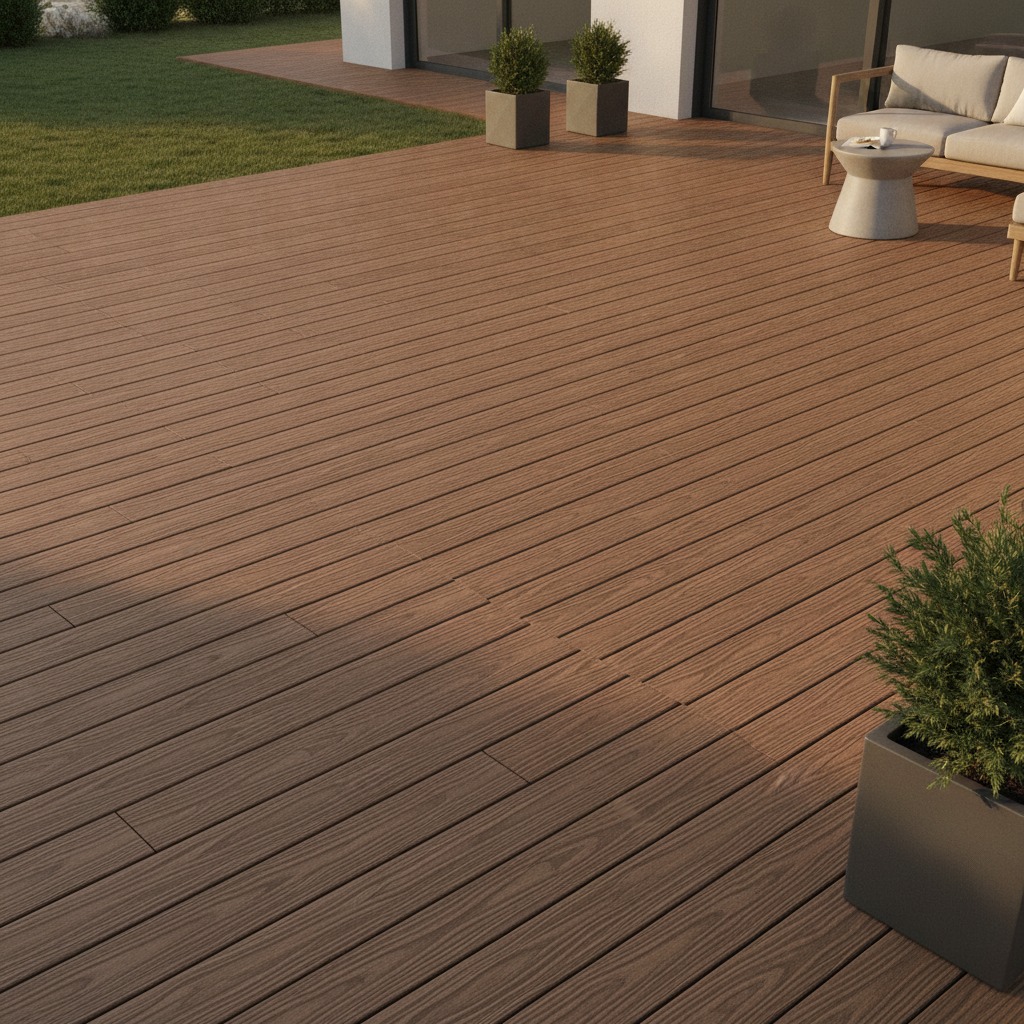
From a sourcing point of view, composite deck planks like these sit in a broad outdoor-surface category. They are often used for residential decks, balconies, patios, garden walkways, poolside decking, and sometimes exterior cladding where an interlocking panel system makes sense. The appeal is obvious: buyers want a surface that looks more finished than plain concrete or untreated wood, yet asks for less upkeep than many natural materials.
That said, the market is not one-size-fits-all. A decking importer serving residential renovation channels will likely care about visual warmth, easy installation, and predictable pack sizes. A commercial buyer may care more about how the surface looks after heavy foot traffic and whether the profile is easy to replace board by board. The same product line can be a good fit in one channel and a poor fit in another.
This is where a careful decking supplier conversation pays off. If the supplier can explain the intended use case with clarity, it usually means the profile has been thought through rather than copied casually from a trend sample.
Material questions that buyers should ask early
The product appears to be a wood-plastic composite or similar synthetic timber substitute, but the exact formulation is not confirmed. That uncertainty matters. In practice, buyers need to understand enough about the material family to judge whether it suits their market, even if they are not being handed a full laboratory report.
Ask about the following in plain language:
Whether the board is primarily intended as a deck surface or whether it is also sold for cladding
How the surface is finished and whether the texture is part of the body or a surface treatment
Whether the hollow-core design is consistent across sizes
What fastening approach the profile expects
How the manufacturer recommends handling cuts and exposed ends
Those are not glamorous questions, but they are the ones that save returns later. A product can look excellent in a sample box and still create issues if the end-user market expects a different feel or installation method.
Common mistakes importers make with this product type
One common mistake is treating every outdoor board as interchangeable. It is easy to do when photographs all show brown, wood-like surfaces and clean lines. But profile shape matters. Groove pattern matters. Hollow-core behavior matters. A product that works as a balcony surface may not satisfy a contractor who needs a heavier-feeling board for a public terrace.
Another mistake is underestimating the role of surface perception. A matte or satin finish, like the one visible here, often reads as more practical than glossy plastic. That may help sales. But if your target market associates gloss with premium finish, you may need to position the product carefully rather than assuming the texture will sell itself.
A third problem is forgetting that importers are also translators. You are not only buying a board from a decking distributor; you are turning a technical profile into a retail or project-ready offer. If the application story is fuzzy, the channel story becomes fuzzy too.
How to evaluate a decking distributor without getting lost in samples
The best discussions with a decking distributor are concrete. Ask for profile drawings, not just marketing photos. Ask whether the board is extruded or molded if that information is available. Ask how the cavities are arranged and whether the profile has been used in similar climate conditions before. You do not need grand claims; you need enough evidence to understand the product’s shape and likely behavior.
It also helps to inspect packaging and labeling logic. If a supplier cannot clearly identify which face is decorative, which edge locks, and how the board should be oriented during installation, the channel will struggle later. Small details such as that are often what separate a workable importer relationship from a frustrating one.
If you are comparing several sources, pay attention to the language they use. The more a supplier can describe the board in installation terms rather than only decorative terms, the more likely they understand the product as a system.
Buyer-facing questions worth asking before you commit
What is the intended application: decking, cladding, or both?
Which side is the visible face after installation?
How does the interlocking edge work with standard hidden-fix methods?
Are the hollow cavities part of a consistent structural design?
What handling advice is given for trimming and end sealing?
Are the wood-grain and grooved finishes sold as separate variants or as reversible options?
These questions may sound basic, but they help uncover whether the product line is ready for market or still a loose concept.
A practical next step for importers
If you are sourcing this kind of interlocking decking board, start by building a short comparison sheet around profile, surface finish, intended use, and installation method. That will tell you more than a dozen style photos. Then ask your decking supplier for documentation that clarifies the board’s geometry and recommended application. If the board is meant to work as both flooring and cladding, make sure that claim is supported by the profile itself, not just by broad sales language.
For importers, the useful decision is simple: choose the board that matches the channel you serve, not the board that merely looks attractive in a catalogue. The difference shows up later, when the installer is on site and the customer is standing there watching the first few meters go down.