
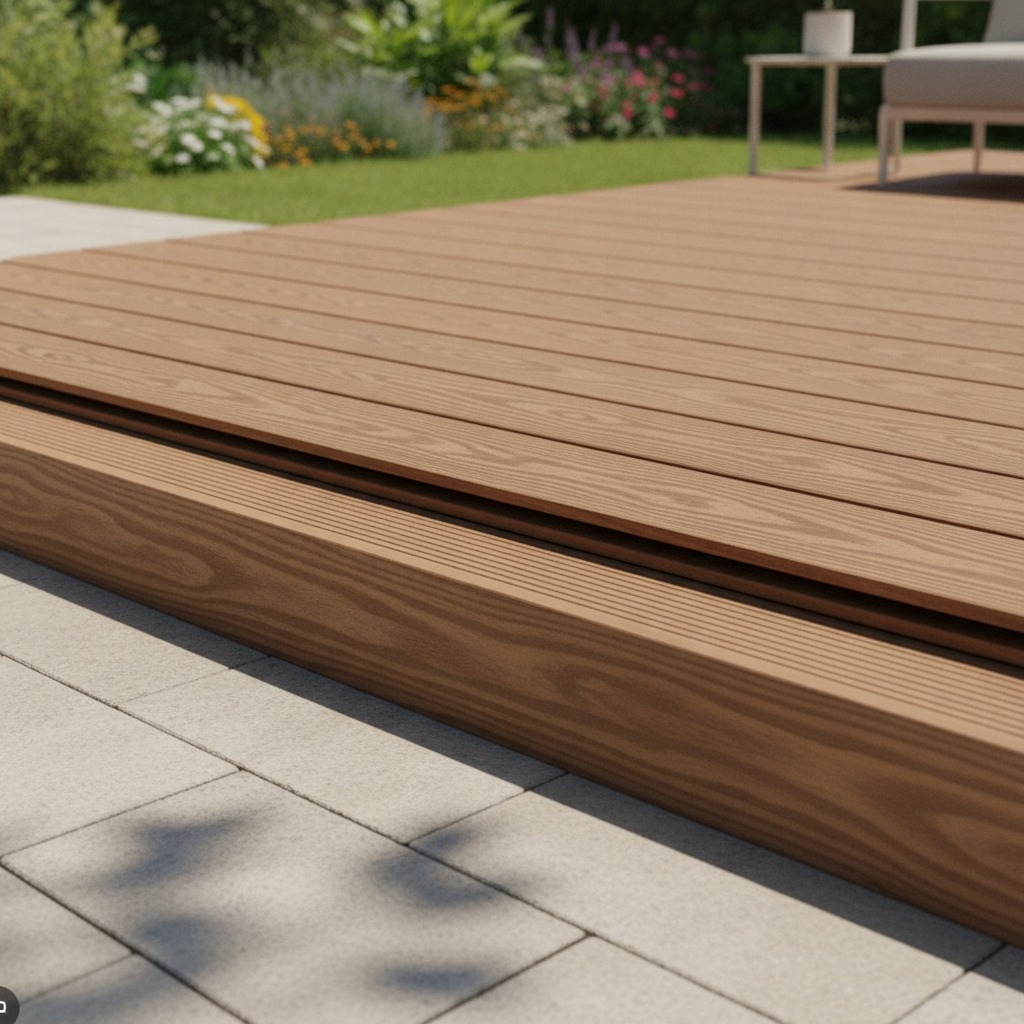
What a decking importer is really buying
A decking importer is not just buying boards. In practice, they are buying a surface system that has to survive weather, foot traffic, installation mistakes, and the occasional impatient contractor. That matters because outdoor decking is one of those categories where the sample board can look straightforward, while the actual project fails on details: profile consistency, color stability, fastening compatibility, or simply whether the board behaves the same from the first pallet to the tenth.
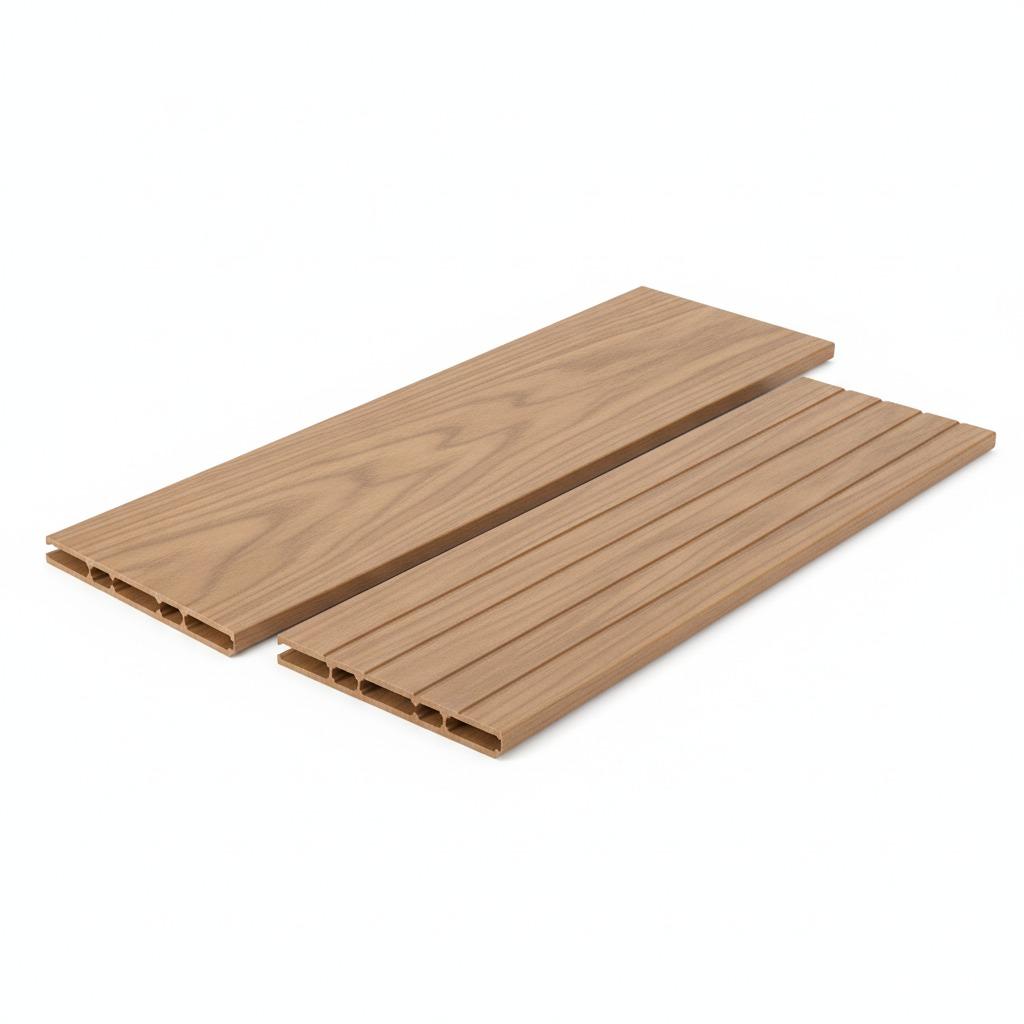
The product in question here is a composite deck board, the kind used for exterior flooring on terraces, balconies, poolside zones, garden paths, and rooftop decks. The board shown has a brown wood-look finish, a hollow-core profile, and two visible surface styles: a wood-grain face and a grooved face. For importers, those details are not cosmetic trivia. They shape how the board is positioned in the market, how it is installed, and what kind of buyer will accept it.
If you are comparing a decking supplier against a decking distributor, or trying to decide which product line to bring in, the real question is not “Does it look good?” It is “Will this board arrive consistent, install cleanly, and hold up in the outdoor use case I’m targeting?”
Why the board design matters before the first shipment leaves port
Hollow-core composite decking has a practical appeal for importers because it can reduce weight and material use while keeping a structured profile. That can be useful in shipping, handling, and positioning the product as a value-conscious exterior solution. But hollow boards are not all the same. Internal cavity design, wall thickness, and overall extrusion quality can change how the board feels underfoot and how confidently installers handle cuts and fastening.
The dual-surface appearance is also worth paying attention to. A wood-grain side gives the deck a more natural visual story, which is still what many residential buyers ask for. The grooved side may be used for a different aesthetic or functional preference, depending on installation method and brand positioning. When a product offers two faces, importers should think about how that choice will be presented in the catalog, because end customers often want a simple answer: which side goes up, and why?
There is a small but important caution here: a board that looks like timber is not timber. That sounds obvious, yet it affects the entire buying conversation. Engineers and sourcing teams need to think in terms of engineered performance, not wood assumptions. Outdoor composite products can be a strong choice for low-maintenance applications, but only if the system is matched to the environment and installed with the right accessories.
Quick-reference view: what this type of decking is good for
For a decking importer, this kind of composite plank usually fits projects where buyers want the visual warmth of wood without regular sealing, staining, or replacement cycles. The likely use cases include:
Residential decks and patios
Commercial terraces and outdoor seating areas
Balcony flooring
Pool surrounds and wet-adjacent walkways
Garden paths and rooftop decks
That list matters because it tells you where the product can be sold with confidence and where you should be more careful. Poolside and rooftop applications, for example, can raise questions about slip resistance, drainage, thermal behavior, and local code expectations. Those are not details to wave away in a sales brochure. They are often the reasons a project gets approved or rejected.
How importers should evaluate the product, not just the picture
1. Profile consistency
Composite decking is often sold by appearance, but the extrusion profile does a lot of the real work. Consistent board geometry affects clip fit, surface alignment, and visual straightness once installed. If profiles vary too much, installers will notice quickly, and the complaint usually lands on the importer, not the factory.
2. Surface finish and color tone
The brown wood-look finish on this board positions it toward buyers who want a familiar outdoor aesthetic. That is useful, but it also means color matching across batches can become a sensitive point. Slight variation is common in engineered products, especially when pigments and polymer blends are involved. A good sourcing team will ask how color is controlled and whether production lots can be kept close enough for real projects.
3. Hollow-core trade-offs
Hollow-core construction can be a smart compromise between material use and stiffness, but it is not a universal answer. Some buyers will prefer the lighter weight; others will worry about impact resistance or the feel under load. This is where a decking supplier should be able to explain the intended use case clearly instead of pretending one board suits every job.
4. Installation logic
Because the side profile may be tongue-and-groove or clip-compatible, importers should understand what fastening approach the board requires before selling it into a market. A deck board that depends on hidden clips, for example, needs a matching accessory package and a contractor audience that actually knows how to use it. Selling the board alone and assuming the rest will sort itself out is a common mistake.
What engineers and sourcing managers should ask before placing an order
When a deck board looks broadly right but the technical information is thin, the buyer has to slow down. Not every supplier package will arrive with full test data, and this is where practical sourcing discipline matters more than marketing language.
Ask what the material actually is. In this case, the board appears to be a wood-plastic composite or similar engineered polymer-composite profile, but that is an inference from the visible structure, not a confirmed specification. Ask what is in the mix, how it is manufactured, and whether the product is intended for flooring, cladding, or both. Those are not minor questions; they shape durability expectations and regulatory review.
Ask whether the product is offered with both wood-grain and grooved faces as standard, or whether that is just a visible feature of the sample shown. Ask how the board behaves in wet conditions, what fastening system is expected, and whether accessory compatibility is already defined. Even without exact certification data, a competent supplier should be able to discuss installation practice, handling precautions, and the usual project limitations.
Ask for clarity on dimensions, load ratings, UV performance, fire behavior, and warranties if those are relevant to your market. Do not fill in the blanks yourself. That is how import programs end up with products that sell fine in a showroom and become troublesome on site.
Common mistakes when buying composite decking for import
One frequent mistake is treating outdoor decking as a commodity board purchase. It is not. The board, the fastening system, the surface finish, and the end-use environment all need to line up.
Another mistake is overestimating the appeal of a wood-look surface without considering maintenance expectations. Buyers often say they want the look of timber and the convenience of composite, but they still want a product that behaves well in heat, rain, and repeated cleaning. If the product story is too vague, the first installation becomes the test case, and that is an expensive way to learn.
A third issue is relying too much on a sample. A clean sample board can conceal batch variation, profile inconsistency, or packaging problems. For a decking importer, the commercial risk often sits in repeatability rather than in the one-off specimen on the table.
Practical advice for choosing a decking supplier or decking distributor
If your market already understands composite decking, you may be looking for a supplier that can support a broader product line with steady output and predictable appearance. If your market is newer to the category, you may prefer a distributor model that helps with local logistics and product positioning. Either way, the same basic rule applies: choose the partner who can explain the board honestly.
Look for clean answers about material type, profile structure, and intended use. A serious partner does not need to oversell. In fact, a measured explanation is often a better sign than a polished pitch. If the answer to every question is just “high quality,” keep looking.
Also think about how the board will be sold. A residential buyer may care most about color and texture. A contractor may care more about installation speed and accessory availability. A commercial specifier may ask for documented performance. The import program should not force all three audiences into one vague product description.
FAQ for first-time buyers
Is this board solid wood?
No, it appears to be an engineered composite decking plank rather than solid timber. The visible structure suggests a manufactured profile, likely extrusion-based, but the exact material composition is not confirmed here.
Can it be used outdoors?
Yes, the visible design and stated use cases point to exterior applications such as decks, patios, balconies, and walkways. That said, specific site conditions still matter, especially in wet or high-traffic areas.
Why does hollow-core construction matter?
It can reduce weight and material usage while keeping a shaped profile. The trade-off is that the buyer should understand stiffness, fastening, and impact behavior before committing to a large order.
Should I sell it as a flooring product or cladding product?
Only after confirming the intended application with the manufacturer or supplier. The board may suit both in some cases, but that should not be assumed from appearance alone.
A sensible next step for import teams
If you are evaluating a decking importer program, start with the basics that matter on the ground: profile consistency, installation method, surface choice, and the environments you plan to serve. The board shown has the sort of features many outdoor buyers want, especially a wood-grain look and a practical hollow-core shape, but the commercial decision depends on how well those features are documented and supported.
Before placing volume orders, request technical clarity from the decking supplier, compare how the product is positioned against any local decking distributor options, and make sure the accessory story is complete. A deck board can be attractive on a sample rack and still be the wrong fit for your market. The safest import decisions are rarely the fastest ones, and that is usually money well spent.